Roof Inspection Hampshire
Roof Inspection Services in Hampshire
A roof inspection identifies small defects before they develop into significant problems. A loose ridge tile left unattended, for example, can allow water to reach the timbers beneath before the following winter. Catching faults early is the most reliable way to protect the underlying structure.
C J Roofing & Renewables Ltd carries out comprehensive roof inspections across Hampshire. We categorise each roof section as pass, monitor, or repair, and deliver a detailed written report with photographs so you have a clear picture of your roof’s condition.
Your written, itemised quote follows within 48 hours of the inspection. Call 07512976384 for a complimentary site visit. We respond within 48 hours.

What are the signs your roof needs a roof inspection?
Damp patches, missing slates and granules in gutters are clear indications that a roof inspection is warranted. Each sign points to active wear or potential damage that should be assessed by a professional.
Common signs include:
Damp patches indicating active water intrusion
Damp patches are a reliable sign of active water intrusion and indicate that a roof inspection is needed. Brown stains on upstairs ceilings following rain are a common symptom of water penetrating the roof covering.
Damp patches, missing slates and granules in gutters all point to active wear and potential damage that requires professional identification.
Missing slates or slipped tiles visible from outside
Missing slates or slipped tiles visible from the street or garden indicate fixing failure or wind damage that leaves the roof open to water entry. Loose verge tiles and lifted ridge caps are among the most common faults found during inspections.
A roof inspection is advisable within the first two years of a new installation, as manufacturer defects and poor workmanship often become apparent within that period.
Granules in gutters showing surface wear
Granules collecting in gutters indicate surface wear on tiles or slates and show that the roof covering is beginning to degrade. This wear can reduce the roof’s protective capacity and increase its vulnerability to water penetration.
Identifying this early through a professional assessment keeps any resulting repair work small and manageable.
Cracked mortar around chimneys and ridge lines
Cracked mortar around chimneys and ridge lines allows water to penetrate the bedding and seep behind flashings. Cracked mortar bedding on ridge or hip tiles is one of three critical signs that require attention within two weeks.
Coastal properties in Hampshire are particularly exposed to salt spray and strong winds, and the county’s winter weather accelerates the rate at which mortar deteriorates on these roofs.
Daylight visible through loft boards or felt joints
Daylight visible through loft boards or felt joints means there are gaps in the roof structure that are allowing both light and water to penetrate. Visible daylight through the deck or felt joints is one of three critical signs requiring prompt action within two weeks.
If you have noticed any of these signs, call us on 07512976384 for a survey.
How often should you book a roof inspection?
Most pitched roofs benefit from an inspection every 12 to 24 months, while flat roofs should be examined twice a year. Coastal homes and roofs over 30 years old may require more frequent attention.
Neglecting routine maintenance is a common cause of insurance claims for water ingress. An annual check allows warning signs to be identified and addressed before they escalate.
For older terraced properties, a regular roof and gutter inspection is particularly advisable, as blocked downpipes can cause more damage than slipped tiles.
Coastal properties often require additional checks, as exposure to salt air and strong winds accelerates surface wear at a greater rate than on inland roofs.
What does our roof inspection involve?
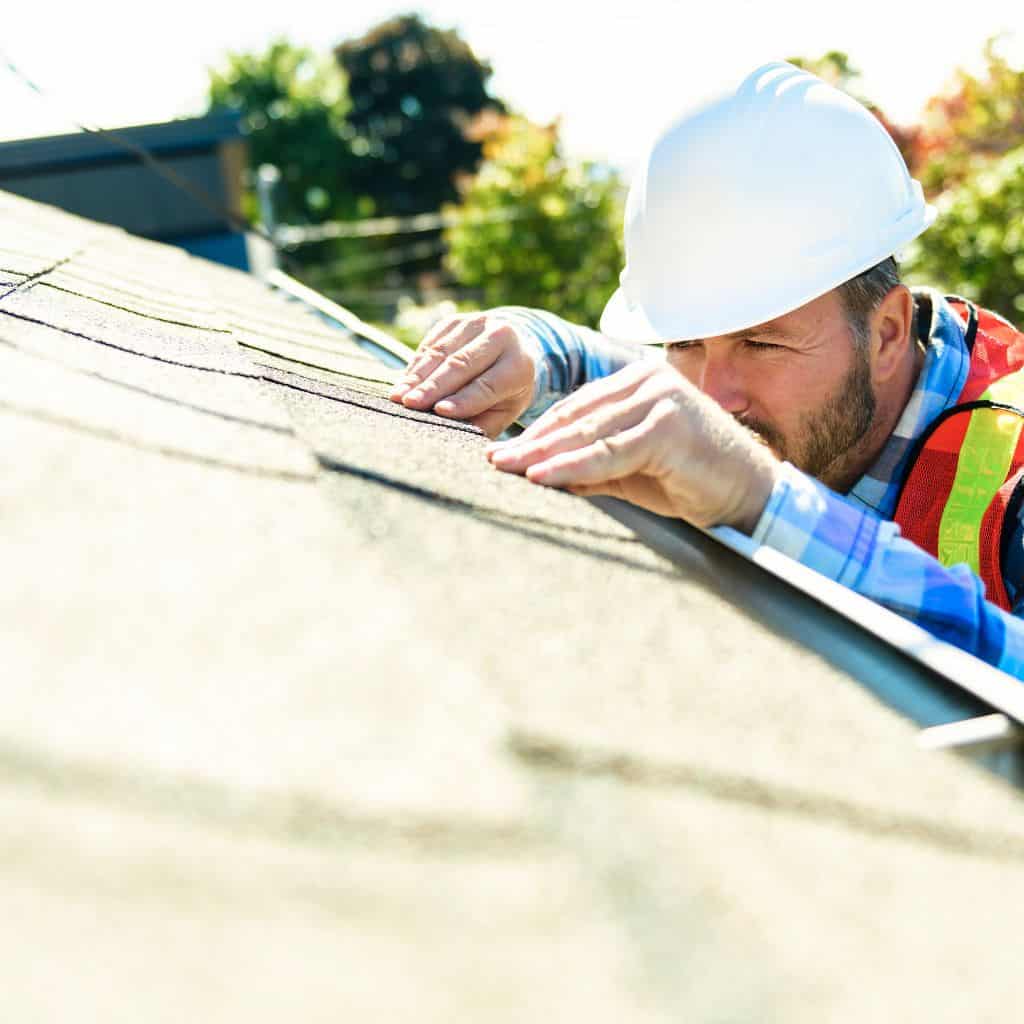
Our roof inspection covers a comprehensive visual, structural and moisture assessment of the entire roof system. A typical visit lasts 60 to 90 minutes from arrival to completion.
During the inspection, we:
External survey of tiles, ridges, hips, valleys, and verges
We carry out an external survey of tiles, ridges, hips, valleys and verges from ladder height to identify surface defects. Slipped tiles visible from the street or garden are a common finding during this part of the assessment.
A typical visit lasts 60 to 90 minutes from arrival to completion. We photograph each defect and categorise it as pass, monitor, or repair.
Check junctions including flashings around chimneys, skylights, walls
We examine all junctions, including flashings around chimneys, skylights and party walls, as these are the points where water most commonly penetrates. Flashing is designed to seal these joints, and when it splits or lifts, water can seep behind the tiles.
Cracked mortar around chimneys and ridge lines is one of the signs visible from ground level. Each defect is assigned a priority rating so you understand what requires immediate attention.
Inspect rainwater goods: fascias, soffits, gutters, downpipes
We inspect the rainwater goods (fascias, soffits, gutters and downpipes) for blockages, sagging or damage. On older terraced properties, a blocked downpipe can cause more damage than a slipped tile, which is why we include this check as standard.
Sagging or detached gutter sections often result from weakened fascia timber. Each roof section is categorised as pass, monitor, or repair, and the findings are presented in a detailed written report with photographs.
Loft survey assessing underlay, battens, insulation, timbers
We carry out a loft survey to assess the underlay, battens, insulation and visible timbers for hidden damage. The loft is often where problems first become apparent. Wet insulation, blackened rafters and visible daylight each point to issues that are not detectable from the outside.
Daylight through loft boards or felt joints indicates gaps allowing water entry. Each year, a significant proportion of our Hampshire inspection reports identify urgent structural issues that were discovered during the loft survey.
Drone inspection for high ridges, chimneys, dormers plus report
We use drones to capture close-up images of high ridges, tall chimneys and dormers that cannot be safely accessed from a ladder. We photograph the loft, eaves and every elevation, and provide a detailed written report with annotated photographs following the inspection.
Each defect is categorised as pass, monitor, or repair, and the report includes close-up images alongside a recommended repair schedule.
For those buying or selling a property, a pre-purchase inspection can identify hidden defects that a standard valuation may overlook, providing solid grounds for negotiation.
How do you tell serious roof damage from minor wear?
Active leaks, sagging timbers and multiple slipped tiles indicate serious damage requiring prompt attention. Moss growth and faded coatings are considered minor wear that can be planned into routine maintenance.
We begin inspections in the loft, where signs such as wet insulation, blackened rafters and visible daylight reveal problems that are not apparent from the outside. Each year, a significant proportion of our Hampshire reports identify urgent structural issues discovered at this stage.
Three critical signs require action within two weeks:
- Water tracking past the underlay onto ceilings
- Visible daylight through the deck or felt joints
- Cracked mortar bedding on ridge or hip tiles
We can carry out a storm damage check following a serious weather event to identify fresh faults. Gales exceeding 60mph can crack ridge tiles on exposed gables, and three cracked ridge tiles can produce slow leaks that rot the central purlin over winter.
Surface wear can generally wait for the next planned maintenance window. Any issue that allows water to penetrate, however, must be addressed without delay. Where the deck or structure has failed across a wide area, a full roof replacement may be the only lasting fix.

What do you receive after the roof inspection?
You receive a detailed written report with annotated photographs. The report covers tiles, ridges, flashings, gutters, fascias and visible chimney structures.
Each defect is assigned a priority rating so you understand clearly what requires immediate attention and what can be monitored over time. Where faults are isolated, a targeted roof repair resolves them before they spread.
We photograph the loft, eaves and every elevation. Insurance loss adjusters accept photographs as evidence for storm-damage claims, and the records are equally useful in buyer negotiations during a pre-purchase survey.
Why Choose C J Roofing & Renewables Ltd for Roof Inspection in Hampshire?
Over 15 years of experience
Connor and Jack bring over 15 years of combined hands-on roofing experience, delivering everything from small domestic repairs to large-scale commercial projects across Hampshire.

Locally based in Hampshire
Based in Portsmouth with deep local roots, we understand Hampshire's homes, weather and building styles, which allows us to deliver roofing work that lasts.
5-star rated service
We are proud to be rated 5 stars on Google by our customers, reflecting the quality of our workmanship and our commitment to reliable, professional service.
Competent & highly trained team
Our team is fully trained and certified in asbestos awareness, working at height and manual handling, ensuring every project is carried out safely and to industry standards.
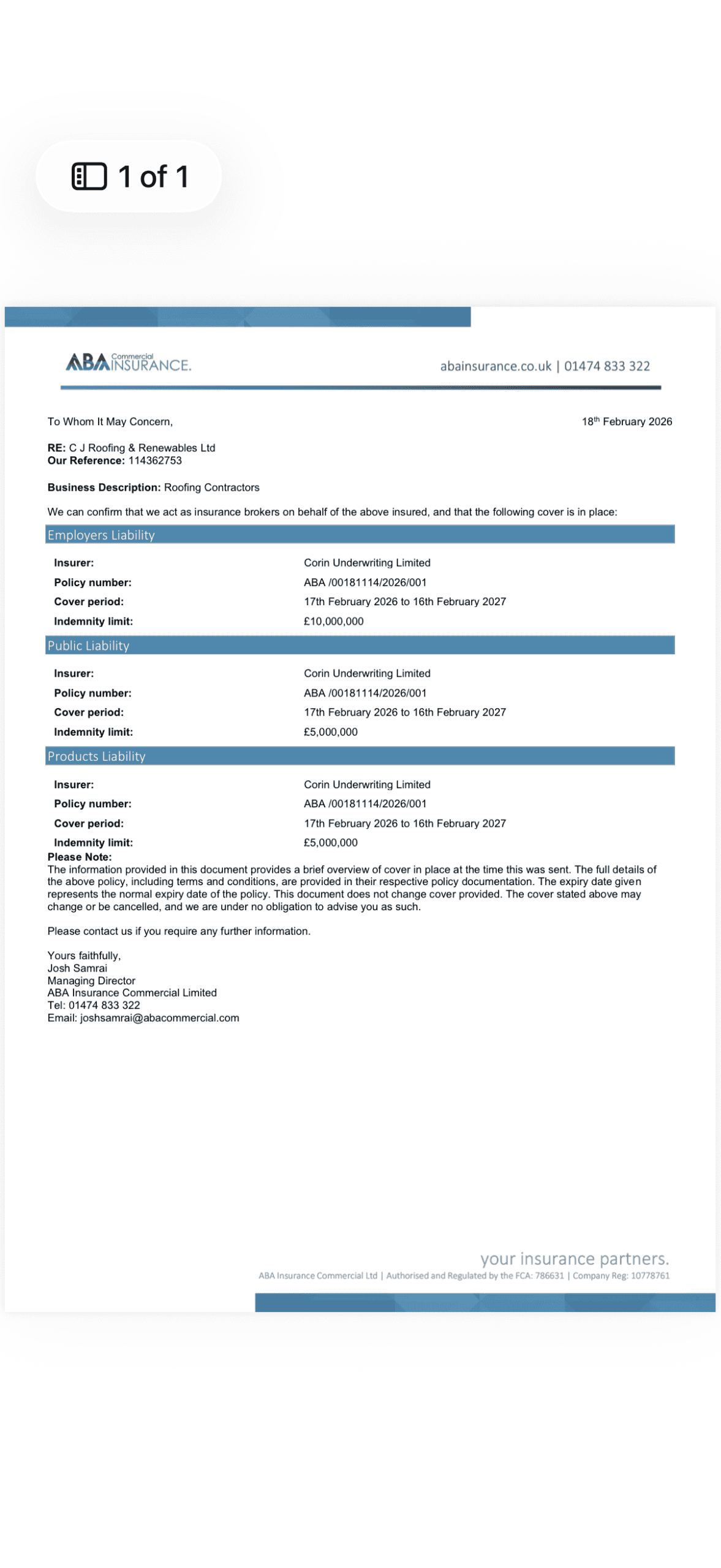
£5 million public liability insurance
We carry up to £5 million in public liability insurance, giving you complete peace of mind that your property is fully protected while we work.
10 year workmanship guarantee
All new roof installations and replacements come with a 10-year workmanship guarantee, so you are covered in the unlikely event of any issues.






Frequently asked questions
Take a look at the Frequently Asked Questions regarding our Roof Inspection service.
How long does a roof inspection take?
A standard inspection on a typical three-bedroom Hampshire home takes 45 to 90 minutes from arrival to final notes. Roof pitch, access difficulty and the type of survey required all influence the duration.
We complete inspections on semi-detached homes with simple gable ends in under an hour, while larger properties with multiple dormers may take close to two hours. Most routine appointments conclude within the 90-minute timeframe.
For a pre-purchase survey, we allow approximately two hours on site in order to document every defect fully for legal purposes.
What should you prepare before the inspector arrives?
Ensure there is clear access to the loft, remove parked cars from the driveway, and gather any previous roofing paperwork. A blocked loft hatch is the most common cause of delays on arrival.
Removing boxes from beneath the loft hatch the evening before can save time on the day, and keeping pets contained during the visit is advisable.
Please inform us of any fragile tiles or recent patch repairs, and provide previous guarantees, FENSA certificates or installer invoices if the visit is for a pre-purchase survey.
The more documentation you can provide, the more precise the resulting report will be.
Can a roof inspection run in bad weather?
Roof inspections can proceed in light rain, and we schedule some visits while a leak is active, as moisture trails are easier to trace before they dry out.
Severe storms, ice or winds exceeding 25mph require drone-only or loft-side methods to be used in place of ladder access.
We reserve emergency slots for storm-damaged properties and attend most callouts within 24 to 48 hours.
Are flat roofs inspected the same way as pitched roofs?
Flat roofs require a separate survey because EPDM, GRP and felt systems each fail in different ways. Bubbling, ponding and lifted seams are the primary indicators of water damage on a flat roof.
For rear extensions, garage roofs and single-storey flat dormers, we use walk-on or drone access to check seam laps, drainage outlets and upstand flashings against parapet walls.
Hampshire homes with both pitched and flat sections often book a combined survey, with the report covering each surface type and its individual condition grading.
What happens if you find urgent damage on the day?
We discuss any urgent findings with you on site and recommend temporary safety measures before we leave. Slipped tiles, exposed underfelt and unstable chimney stacks may require same-day tarping or scaffold cover.
From the on-site conversation, you receive three things:
- A written hazard notice for any immediate safety risk
- A prioritised repair list ordered by urgency
- Clear guidance on whether buildings insurance may cover the work
Many of our Hampshire inspections uncover defects requiring resolution within 30 days. Insurers accept survey reports as evidence for storm-damage claims, which can expedite payouts during a busy winter period.