Roof Repair Hampshire
Roof Repair Services in Hampshire
A roof repair is most effective when the problem is caught early, before a minor fault begins to affect the ceilings, insulation or timbers beneath it. The work involved varies considerably: a slipped tile is a straightforward fix, whereas storm damage across several slopes calls for more extensive work to restore the roof properly.
C J Roofing & Renewables Ltd specialises in roof repair across Hampshire. We match new tiles, mortar and flashing to your existing roof so the repair performs reliably and sits in with what is already there. At survey we identify exactly what your roof needs and explain the reasoning, giving you confidence in the work and its long-term durability.
Your written, itemised quote follows within 48 hours of the survey. Call 07512976384 for a free quote. We respond within 48 hours.

The types of Roof Repairs we provide
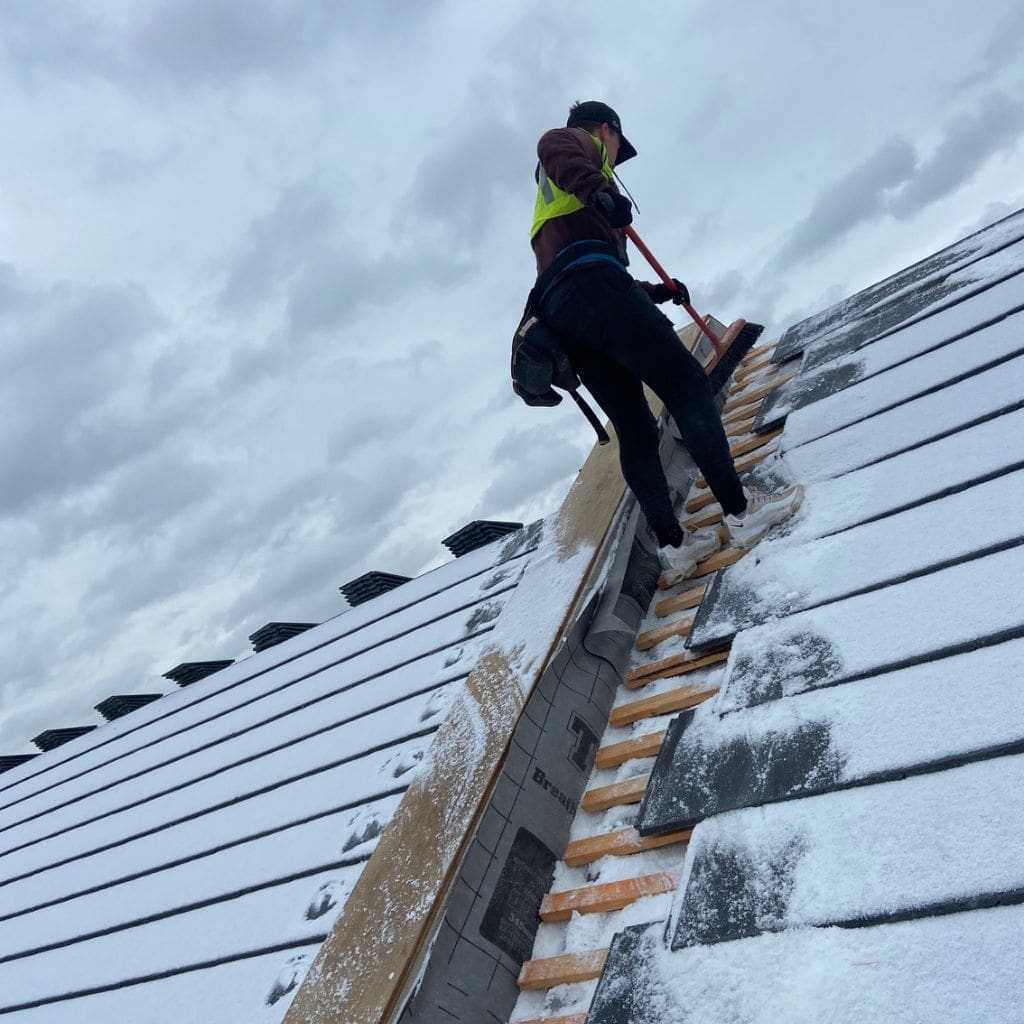
What are the signs your roof needs a repair?
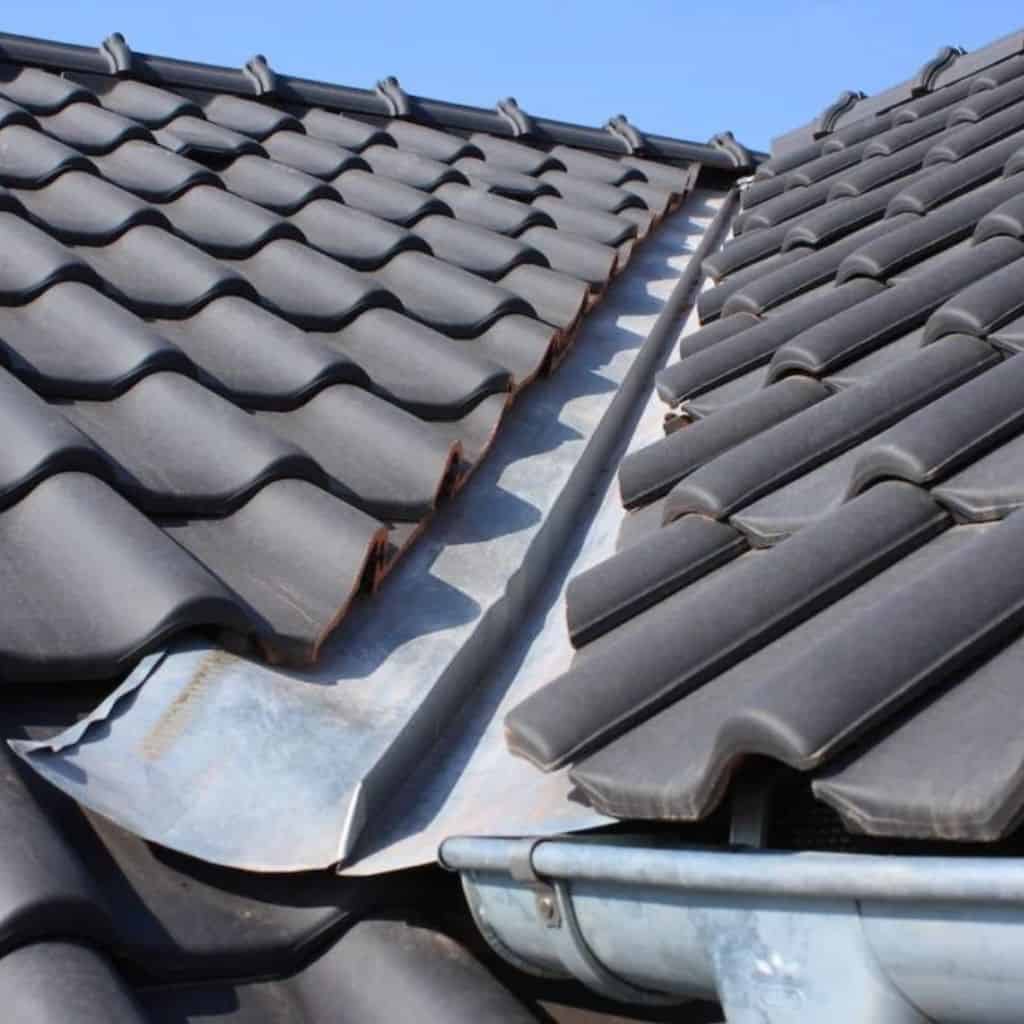
Daylight, water or a draught in your loft are clear indications that the roof needs attention. These usually point to failures in the tiles, flashing or felt joints that allow air and water through. Damaged flashing is one of the most common causes, particularly around chimneys and where the roof meets a wall.
From ground level, the signs to look for include:
Daylight, water or draughts in your loft
Daylight, water or a draught entering your loft is one of the clearest signs that a repair is needed. It indicates that the tiles, flashing or felt joints have failed and are allowing air and water into the roof structure.
Damaged flashing is among the most frequent causes, particularly around chimneys and the points where the roof meets a wall.
Cracked or slipped tiles on the main slope
Cracked or slipped tiles on the main slope are usually visible from the ground and point to tile failure or wind damage. Left in place, a single cracked tile allows water to reach and rot the batten and rafter beneath it.
Addressing this early keeps the work contained, preventing a minor fault from spreading to the ceilings, insulation or timbers below.
Missing slates after a storm or strong gust
One or more slates missing after a storm indicates that the fixings have failed, leaving the roof exposed to water. This calls for prompt emergency attention, before further rain reaches the gap.
Hampshire’s wet winters are particularly demanding on older properties and flat sections, where open seams on felt or rubber roofs readily allow water in.
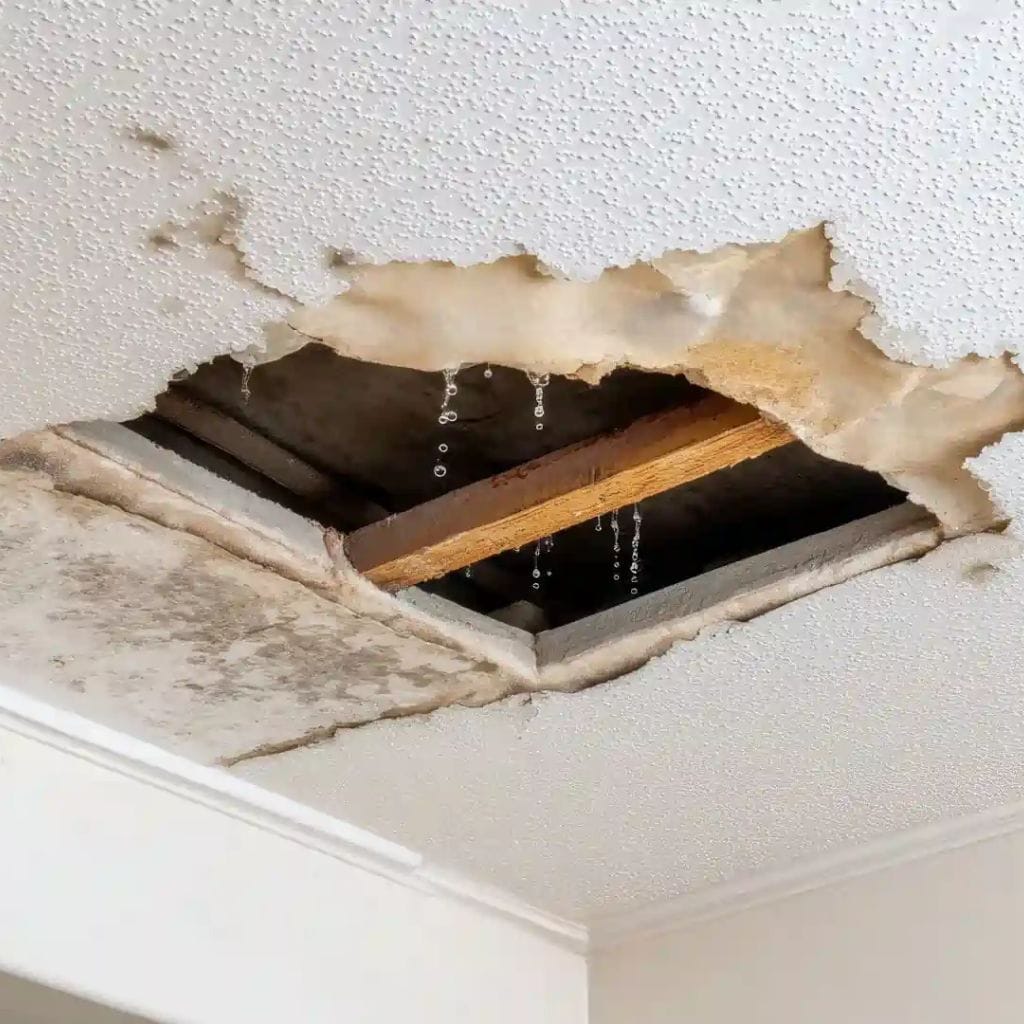
Damp patches on ceilings after rain
A damp patch on the ceiling after rain indicates that water is penetrating the roof and spreading across the plaster beneath. It is worth acting before the staining becomes pronounced, as the earlier the leak is traced, the more contained the repair.
A patch that enlarges with each period of rain points to an active leak, whereas a stain that remains static usually reflects an old, dried-out one. In either case, we inspect the loft, eaves and chimney areas to establish the source.
Granule loss from concrete tiles in gutters
Granules from concrete tiles collecting in the gutters indicate surface wear on the tiles and a roof covering that is ageing. It is a sign worth investigating, as it points to gradual degradation over time.
Because it is easily overlooked until a leak develops, identifying it early keeps any resulting repair small and straightforward.
How do you tell roof leaks from condensation or plumbing leaks?
Trace the stain to its highest point, then inspect the loft directly above in daylight. Wet felt, damp battens or visible daylight typically confirm that the roof is the source.
Common causes include gaps at the ridge, cracked mortar and lifted lead flashing, frequently seen on the Edwardian and Victorian homes found across Hampshire.
A roof leak often travels along a rafter before it drips, so the wet patch below rarely sits beneath the actual point of entry. We trace each roof leak to its origin before any repair begins.

What does our roof repair process involve?
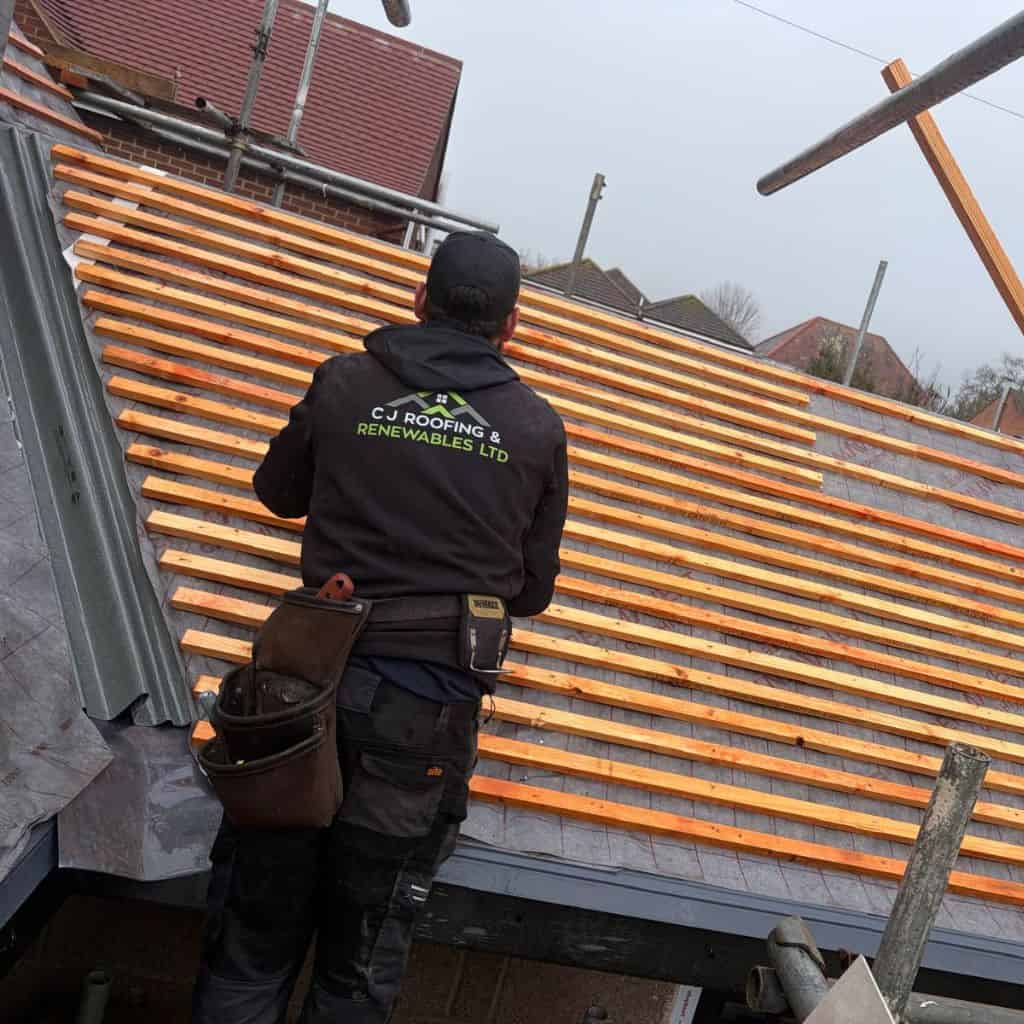
Our roof repair process follows five stages: survey, scope, fix, sign-off and documentation. Each stage is recorded with dated photographs, so you have a clear account of what was found and what was done.
Survey: ladder-height inspection and loft scan of the affected slope
During the survey, we carry out a ladder-height inspection and a loft scan of the affected slope. Any problems are documented before we quote, and we share these images with you so the issue is clear.
The indicators we look for are the familiar ones: daylight, water or draughts within the loft, and failed flashing around chimneys and abutments.
Scope: a written estimate detailing each defect
At the scope stage you receive a written estimate detailing each defect, supported by photographic evidence so the work is clear and accountable.
Should any additional repairs come to light once work is under way, they are presented and discussed with you before anything further proceeds.
Fix: matched materials, manufacturer fixings, BS 5534 detailing
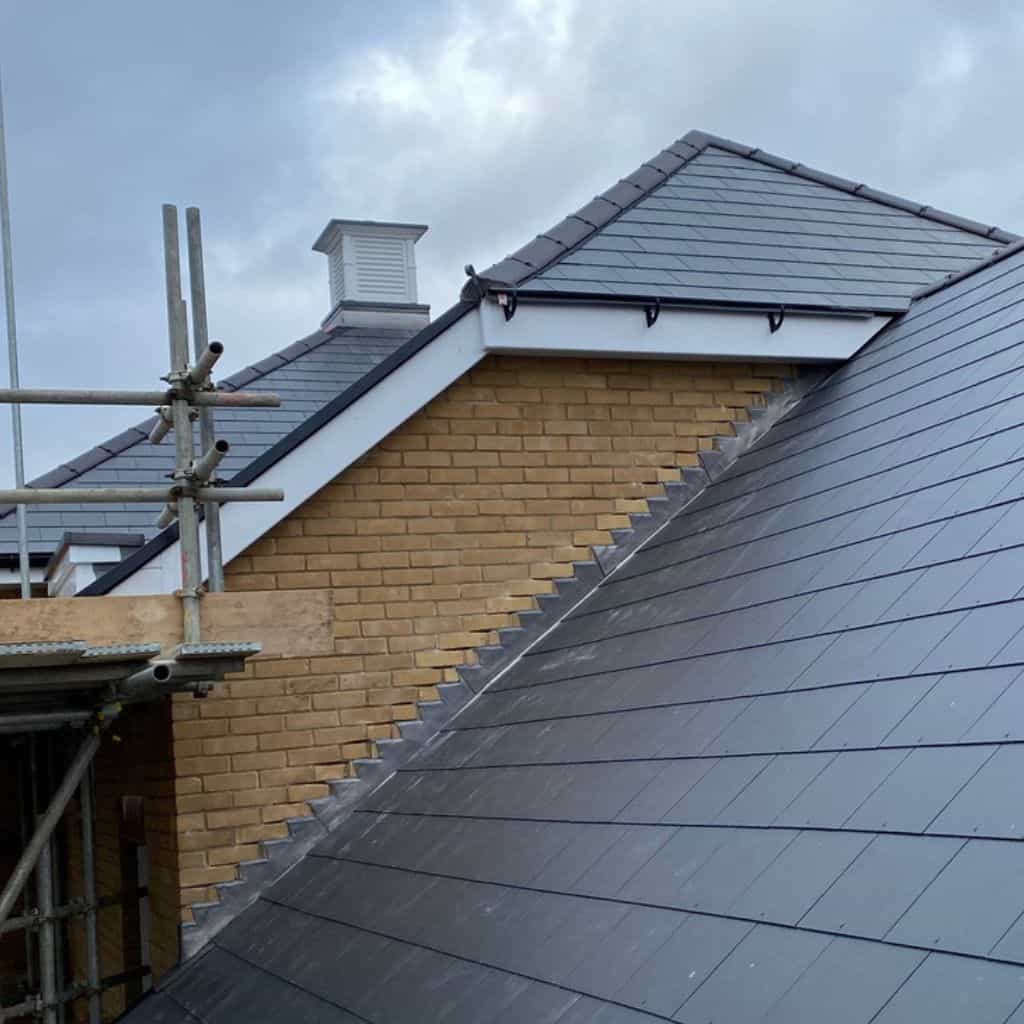
During the fix, we use matched materials, manufacturer fixings and BS 5534 detailing, ensuring the tiles, mortar and flashing align with the existing roof’s style and materials.
For traditional Hampshire cottages with porous tiles, we source matching reclaimed slate or clay in the correct batch from regional reclamation yards. This keeps the repair both sympathetic and durable.
Sign-off: photo report with water and smoke testing
At sign-off you receive a photo report, and the work is validated on site. A water test on flat sections identifies any leaks, while a smoke test on the flashings reveals potential draught paths.
Every job passes through three checks: a pre-fix survey, a mid-work sign-off and a final walk-around. Your handover package includes photographs of all repairs undertaken.
Documentation: dated photographic records from survey to sign-off
Each stage is recorded with dated photographs, providing a complete visual record from the initial survey through to final sign-off. The record covers tile alignment, flashing, mortar consistency and fixing patterns.
Which roof parts fail first and need repair?
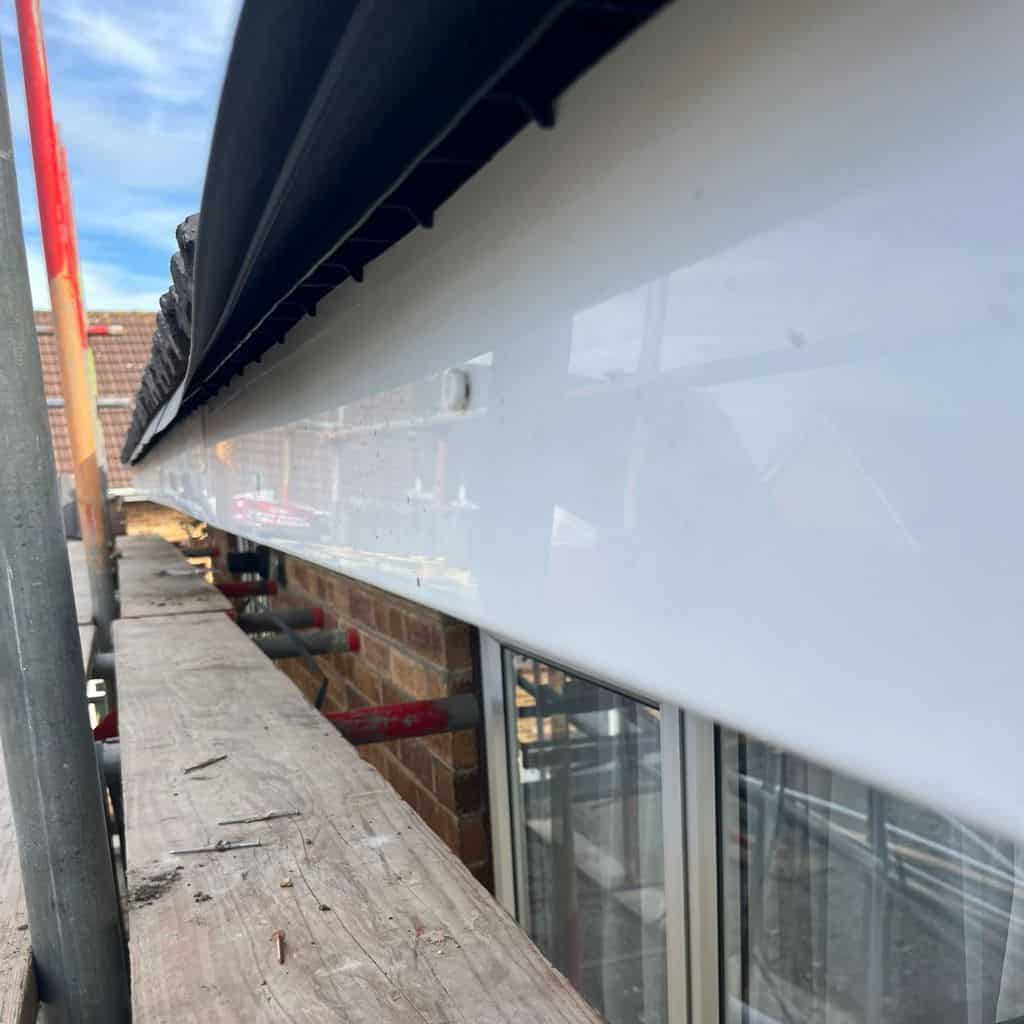
Ridge tiles, valleys and flashings tend to fail first, as they bear the heaviest water flow and the greatest thermal movement. Wind gradually displaces ridge mortar, valleys collect debris that retains moisture, and lead can crack as the masonry behind it shifts.
Early failures also appear at:
- Gutter joints and downpipe brackets, strained by ice and the weight of leaves
- Verge mortar along gable ends, where wind-driven rain is most severe
- Soakers and step flashings against party walls on terraced houses
- Felt edges at the eaves, where birds and rodents cause damage
We match new materials to the original structure, as modern replacements can sit awkwardly alongside features such as 1930s clay ridge tiles. This is a particular consideration on older and heritage properties.

Why Choose C J Roofing & Renewables Ltd for Roof Repair in Hampshire?
Over 15 years of experience
Connor and Jack bring over 15 years of combined hands-on roofing experience, delivering everything from small domestic repairs to large-scale commercial projects across Hampshire.

Locally based in Hampshire
Based in Portsmouth with deep local roots, we understand Hampshire's homes, weather and building styles, which allows us to deliver roofing work that lasts.
5-star rated service
We are proud to be rated 5 stars on Google by our customers, reflecting the quality of our workmanship and our commitment to reliable, professional service.
Competent & highly trained team
Our team is fully trained and certified in asbestos awareness, working at height and manual handling, ensuring every project is carried out safely and to industry standards.
£5 million public liability insurance
We carry up to £5 million in public liability insurance, giving you complete peace of mind that your property is fully protected while we work.
10 year workmanship guarantee
All new roof installations and replacements come with a 10-year workmanship guarantee, so you are covered in the unlikely event of any issues.







Frequently asked questions
Take a look at the Frequently Asked Questions regarding our Roof Repair service.
How do you tell minor repairs from structural problems?
Minor repairs deal with the surface of the roof: a cracked tile or a length of worn flashing. Structural problems sit deeper, in the rafters, purlins and load-bearing timbers that carry the weight of the roof.
The signs that point to structural work include:
- A sagging or uneven ridge line visible from the street
- Roof slopes that bow between the eaves and the ridge
- Snapped rafters or decayed wall plates in the loft
Structural repairs usually involve a structural engineer, as the key question is whether the load path has been altered or remains sound. Where the damage is too widespread to patch, a full roof replacement may be the more reliable course.
A cracked tile may take half a day, whereas a snapped rafter is a far larger undertaking. Where a leak has reached the plasterboard, the ceiling often requires attention at the same time. In every case, you receive a detailed written estimate identifying each defect, supported by photographs.
How does the repair work with the existing roof layers and ventilation?
An effective repair integrates with the layers already in place: the underlay, battens, tiles and any insulation between the rafters. On a 1980s tiled roof, for example, that means preserving the original underlay rather than puncturing it with stray nails.
For a garage roof adjoining the house, we tie fresh flashing into the existing wall courses. Mismatched layers can create cold bridges and trap moisture, leading to further callouts within a couple of years.
Ventilation is equally important. Blocked eaves vents are often the true cause of damp wrongly attributed to the roof. Soffit, ridge and over-fascia vents each help maintain airflow, and any new insulation must leave a 50mm gap above it.
What preparation is needed before repairs start?
A little preparation helps the work proceed smoothly: clear nearby parking, move pots and plants aside, and let your neighbours know about the scaffolding in advance.
We assess access routes and obtain any pavement licence required from the Council. It also helps to cover loose items in the loft and to isolate anything roof-mounted, such as an aerial or solar panels.
Inside, the following steps are worth taking:
- Move anything of value from beneath the affected ceiling
- Lift rugs near windows to avoid dust settling on them
- Keep pathways clear for the removal of debris
- Cover stored loft items near the work area
Tile repairs generate sharp debris, which we contain within a designated area, keeping it clear of your lawn.
How does weather affect repair timelines and materials?
Weather has a significant bearing on the work. Adhesives, sealants and lead patination oil each perform only within set temperature ranges, and working outside those ranges risks premature failure.
Four weather-related factors shape every repair plan:
- Heavy rain washing away fresh mortar before it cures
- Sub-zero temperatures preventing bitumen from bonding
- Winds above 25mph making tiles unsafe to handle
- Hot summer sun softening felt and causing slips
Felt and EPDM membranes require temperatures above 5°C to bond, which limits flat-roof repairs between December and February.
We therefore select dry periods of at least 48 hours for mortar work and avoid relaying tiles when gales are forecast. We will always reschedule rather than work in unsuitable conditions. Following the manufacturer’s guidance in this way also keeps your warranty valid.
What quality checks happen during and after the repair?
Every job passes through three checks: a pre-fix survey, a mid-work sign-off and a final walk-around. For roofs where the extent of the fault is unclear, a standalone roof inspection establishes the full picture first.
We photograph the details that matter: tile alignment, flashing, mortar consistency and fixing patterns. Our mid-job checks confirm that the underlay laps and batten gauges meet the BS 5534 standard.
We also support the visual checks with testing. A water test on flat sections detects leaks that inspection alone might miss, while a smoke test on the flashings reveals draught paths around the chimney.