Emergency Roof Repair Hampshire
Emergency Roof Repair Services in Hampshire
When water is entering your home through the ceiling, the situation requires an immediate response. If plaster is sagging, carpets are saturated, or water is in contact with electrical circuits, the roof needs urgent attention – the priority is to stop further damage from occurring.
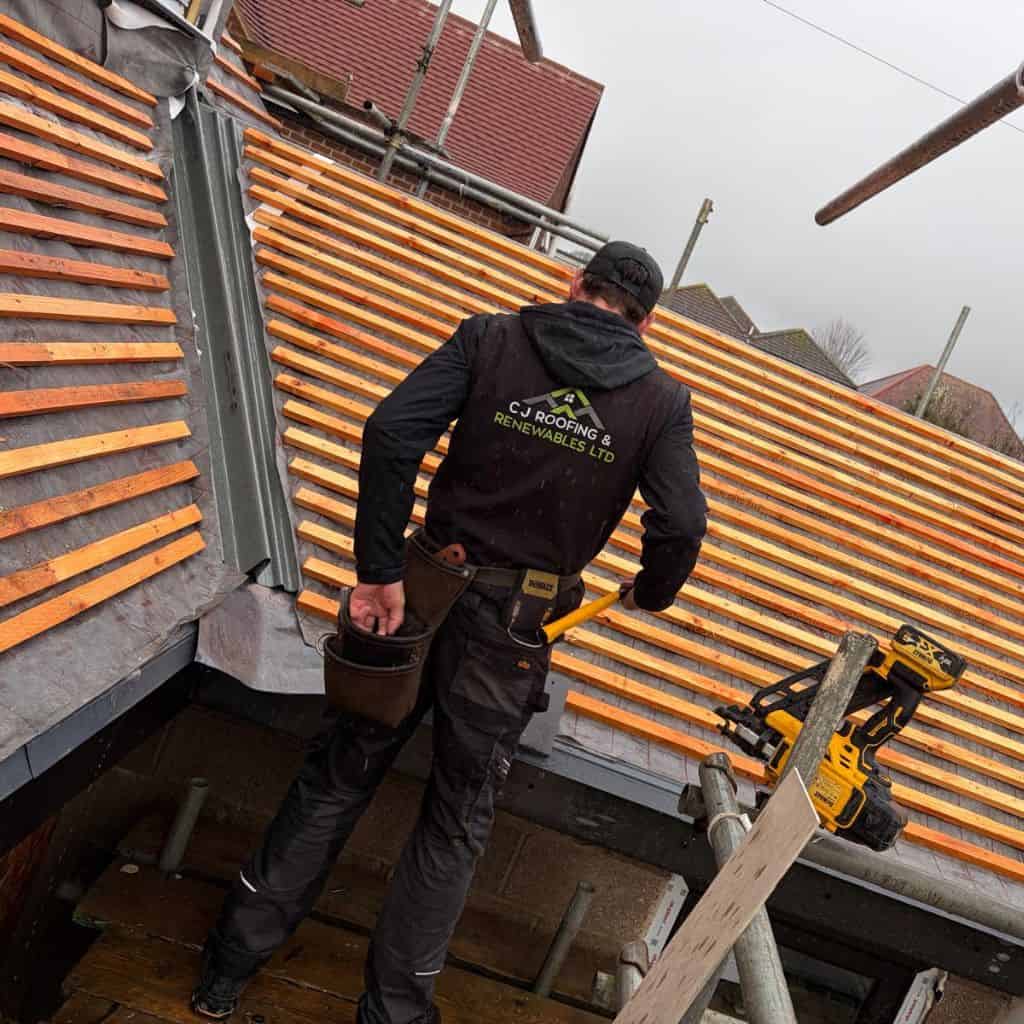
C J Roofing & Renewables Ltd provides emergency roof repair across Hampshire. We make the property safe, stop water ingress, and set out a clear plan for a permanent repair.
Call 023 9387 3756 now. We respond to emergency call-outs within 24 hours.
What counts as an emergency roof leak?
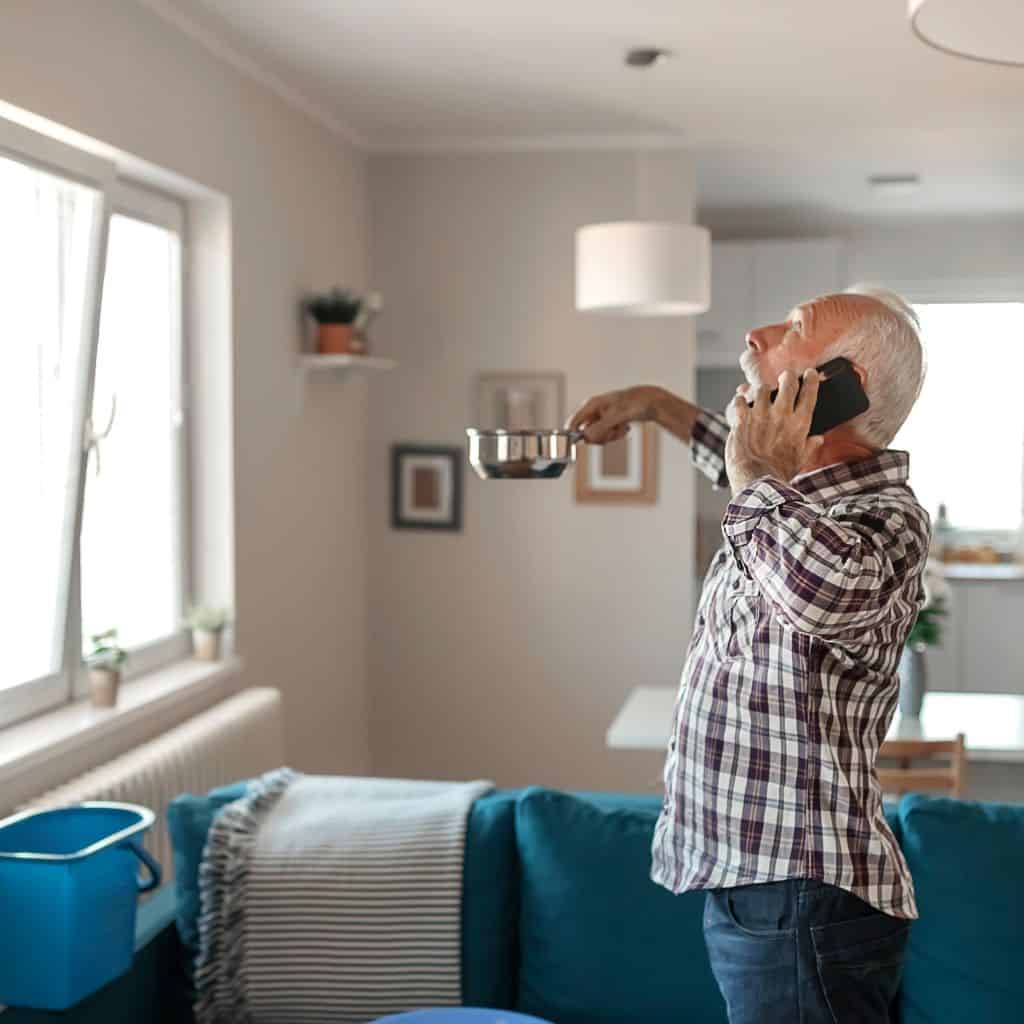
A roof leak becomes an emergency when water is entering the home or threatening electrical systems. Active water ingress calls for immediate action and is distinct from a slow seep that has been present for some time.
Look for these warning signs in your home:
Brown rings that expand rapidly
Brown rings that are visibly expanding indicate that water is actively penetrating the roof and spreading through the plasterboard. Unlike a slow seep that has persisted over weeks, rapid expansion points to an increasing volume of water and a situation requiring urgent attention.
A roof leak becomes an emergency when water enters the home or threatens electrical systems. Active water ingress requires immediate action to prevent further structural and interior damage.
Sagging plasterboard bowing downward
Plasterboard that is bowing downward indicates that water has accumulated above the ceiling and the material is approaching the point of failure. This is a serious warning sign that a ceiling collapse may be imminent, presenting a real safety risk to anyone below.
Where plaster is sagging, carpets are saturated, and live circuits are at risk, immediate emergency roof repair is essential. The first priority is to stop the water from causing further damage.
Water tracking through light fixtures or sockets
Water tracking through light fixtures or sockets creates a serious electrical hazard, as water in contact with live circuits requires immediate action. This represents a genuine emergency that cannot safely be left.
When live circuits are at risk, immediate emergency roof repair is essential to restore safety. This is not a situation where it is advisable to wait for a routine appointment.
Drips landing on beds or fuse boards
Drips falling onto beds or fuse boards indicate that water is entering critical areas of the home, where it creates both safety risks and problems of habitability. Water near a fuse board presents an electrical hazard, while water entering sleeping areas makes those rooms unusable.
A roof leak becomes an emergency when water enters the home or threatens electrical systems.
Plaster wet to the touch in multiple rooms
Plaster that is wet to the touch in more than one room indicates widespread water penetration across the roof rather than an isolated defect. This pattern suggests that the leak is affecting a large area and requires immediate make-safe protection.
Most interior damage results from a delayed response rather than the initial leak itself. Water can continue to spread long after the rain has stopped, saturating insulation and weakening structural components.
If you notice any of these signs, call us at 07512976384. We respond to emergency call-outs within 24 hours.
How to stop damage from spreading inside your home
A heavy-duty tarp secured on all four sides to sound timber will stop further damage overnight. Tarping provides between 7 and 14 days of weather protection while permanent materials are sourced.
Most interior damage results from a delayed response rather than the initial leak. Water can continue to spread long after the rain has stopped, saturating insulation and weakening structural components.
Inside the property, we place protective coverings over carpets and relieve ceiling pockets to prevent further damage. We also advise on which circuits to isolate at the consumer unit, and ensure that the tarp overlaps the ridge by 600mm to resist wind.

What does our emergency roof repair process involve?
Our emergency roof repair process follows five steps: making the property safe, diagnosing the source, documenting the damage, applying a temporary fix, and providing a permanent repair quote. We begin every call-out with a phone assessment to establish severity before attending on site.
On-site actions include:
Make safe: isolate circuits and drain bulging ceilings
We begin by isolating affected circuits at the consumer unit and draining any ceilings that are bulging with retained water. Inside the property, the team places protective coverings over carpets and relieves ceiling pockets to prevent further damage.
Where plaster is sagging, carpets are saturated, and live circuits are at risk, immediate emergency roof repair is essential. The primary objective at this stage is to stop the water from causing further harm.
Diagnose: identify entry point using torch, moisture meter, inspection
We identify the point of water entry using a torch, a moisture meter, and a thorough roof inspection to trace precisely where the penetration is occurring. Every call-out begins with a phone assessment to gauge severity before the team arrives on site.
Water can spread through plasterboard long after a leak begins, which is why accurate diagnosis is essential before any work proceeds. A damaged roof requires prompt attention to prevent water from weakening structural components.
Document: capture photographs for insurance purposes
We photograph the damage thoroughly to provide the evidence insurers require before approving extensive repairs. Insurers need photographic evidence and a cause-of-loss statement before a claim can be progressed.
After the visit, the director supplies a detailed report, photographic evidence of the damage, and a make-safe invoice. The claims handler can receive these directly to support the assessment.
Temporary fix: apply weighted tarp, batten frame, or cold-applied patch
We apply a weighted tarp, batten frame, or cold-applied membrane patch to provide immediate weather protection. A heavy-duty tarp secured to sound timber stops further damage overnight and provides between 7 and 14 days of weather protection while permanent materials are sourced.
Cold-applied bitumen patches suit flat roof leaks during light rain. Hot work waits for a dry surface, because liquid waterproofing will not bond during an active downpour.
Permanent quote: deliver written follow-up quote within 24 hours
We provide a written follow-up quote for the permanent repair within 24 hours of the site visit. Emergency call-out quotes are divided into two sections: the make-safe visit and the permanent roof repair, both presented before any work commences.
Both quotes come at no charge and carry no obligation, so the full picture of the work is clear before any commitment.
Which parts of a Hampshire roof fail first in extreme weather?
Ridge tiles, valley flashings, lead chimney aprons, and skylight felt are among the first components to fail during extreme weather. This pattern is common across Hampshire, where loose mortar bedding on ridge tiles frequently causes sudden leaks, particularly on older properties.
Wind can dislodge a single ridge tile, allowing rain to enter the loft, and storm damage of this kind often appears suddenly after a gale. Ceilings below can show staining rapidly once water reaches them.
Other common failure points include:
- Lead flashings detaching from chimneys
- Blocked valleys causing standing water
- Lifted felt at the eaves of flat dormers
- Cracked or slipped slates above bay windows
- Failed silicone around solar panel mounts
Coastal exposure compounds these risks. Salt air in Portsmouth, Gosport, and Hayling Island reduces the working life of galvanised fixings, so the team fits marine-grade stainless fixings as replacements on coastal properties.
A damaged roof requires prompt attention, as water can spread through plasterboard long after a leak begins.
How quickly can you reach a Hampshire emergency?
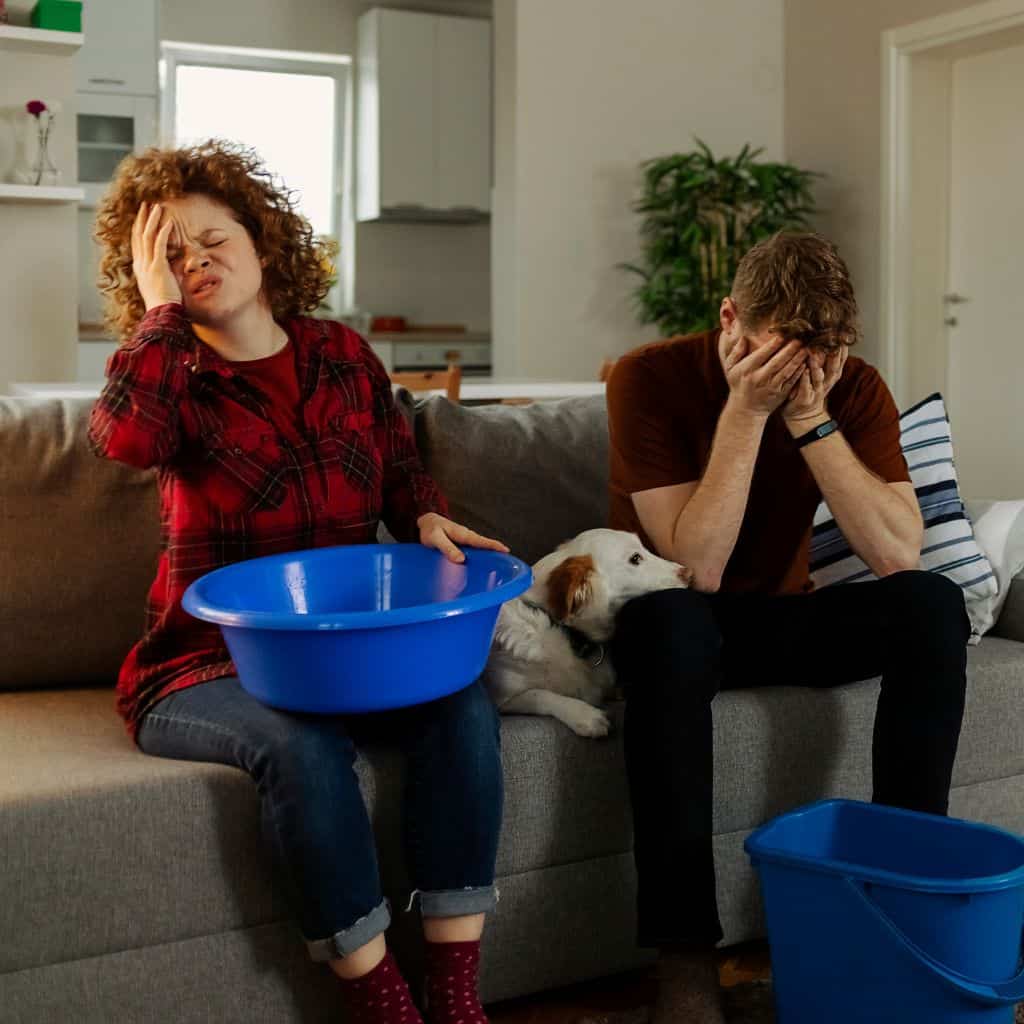
We respond to emergency call-outs within 24 hours across Hampshire. Active leaks and properties exposed to heavy rain receive priority scheduling.
Three things help to speed up our arrival:
- A clear description of the leak’s location when you call
- A photograph or short video sent to our number
- Safe parking and unlocked side access on arrival
Why Choose C J Roofing & Renewables Ltd for Emergency Roof Repair in Hampshire?
Over 15 years of experience
Connor and Jack bring over 15 years of combined hands-on roofing experience, delivering everything from small domestic repairs to large-scale commercial projects across Hampshire.

Locally based in Hampshire
Based in Portsmouth with deep local roots, we understand Hampshire's homes, weather and building styles, which allows us to deliver roofing work that lasts.
5-star rated service
We are proud to be rated 5 stars on Google by our customers, reflecting the quality of our workmanship and our commitment to reliable, professional service.
Competent & highly trained team
Our team is fully trained and certified in asbestos awareness, working at height and manual handling, ensuring every project is carried out safely and to industry standards.
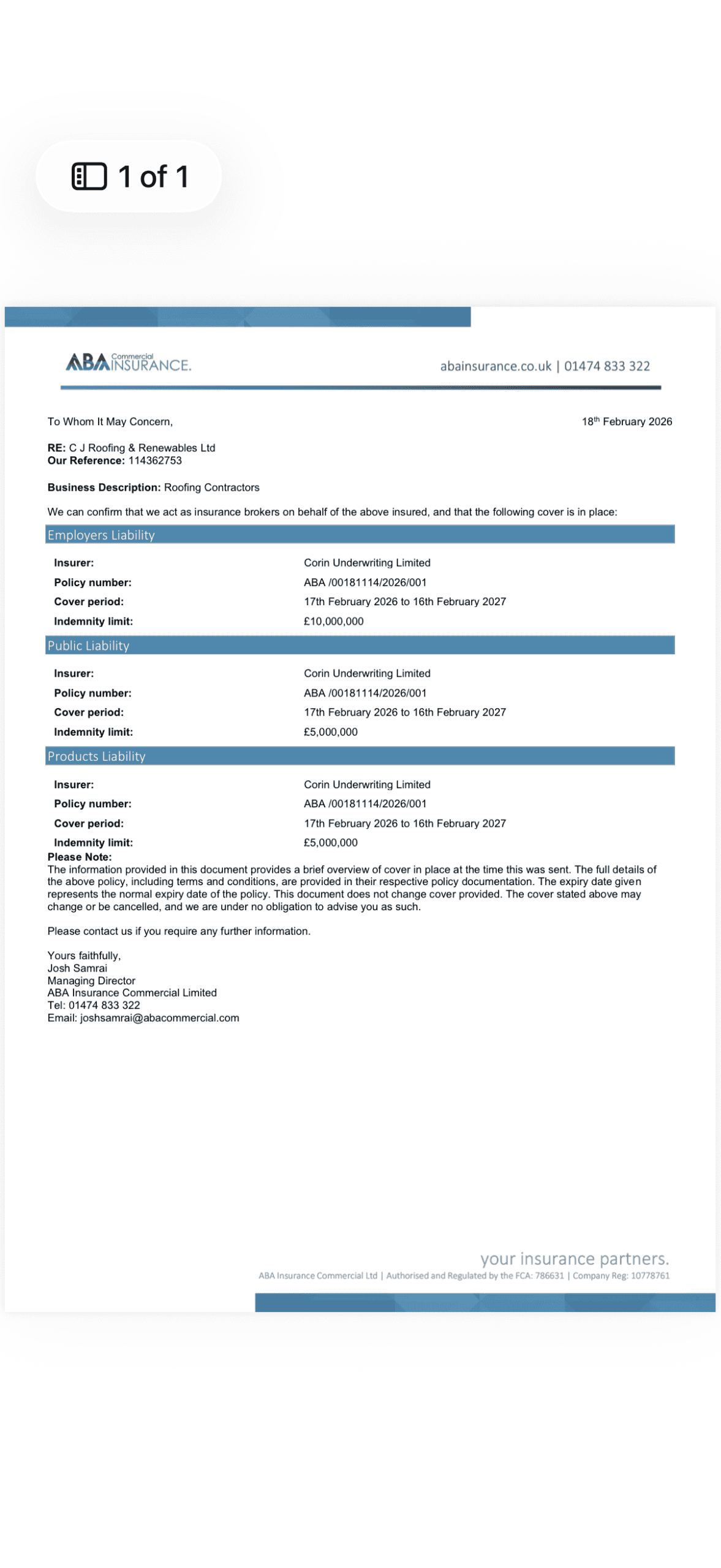
£5 million public liability insurance
We carry up to £5 million in public liability insurance, giving you complete peace of mind that your property is fully protected while we work.
10 year workmanship guarantee
All new roof installations and replacements come with a 10-year workmanship guarantee, so you are covered in the unlikely event of any issues.






Frequently asked questions
Take a look at the Frequently Asked Questions regarding our Emergency Roof Repair service.
How does a fast emergency response protect your home and support your insurance claim?
A prompt response is important both for limiting secondary damage and for supporting any insurance claim you may need to make. A two-hour delay during heavy rainfall can escalate a damp spot into a situation requiring full ceiling replacement.
Insurers require photographic evidence and a cause-of-loss statement before approving extensive repairs. We provide images and a written report for you to pass to your insurer.
Loss adjusters assessing a claim look for evidence that the building was protected promptly, and a separate make-safe invoice can help to expedite settlement. Skylight emergencies may require separate claim lines, as skylights span both roofing and glazing coverage.
What temporary fix lasts longest in wet weather?
A heavy-duty tarp secured on all four sides provides the most durable protection in wet weather. Battens fixed into sound timber ensure the covering holds for between 7 and 14 days.
For flat roof leaks during light rain, we use cold-applied bitumen patches. We do not carry out hot work during active downpours, as liquid waterproofing requires a dry surface to bond correctly.
Our van is stocked with:
- Heavy-duty tarps
- Sand-filled weight bags for lower edges
- Cold-applied bitumen for flat roof patches
- Replacement ridge tiles and lead flashing stock
- Stainless fixings and capping for coastal work
We will advise on the temporary fix that is most appropriate for your situation and the prevailing weather conditions.
What happens if the temporary fix uncovers worse damage?
Work stops and the area is left secure. You receive a revised quote before any additional labour proceeds, as we do not extend the scope of work without your written agreement.
Some call-outs reveal rotten deck timbers, asbestos cement, or a compromised chimney stack. In these cases, our team will stabilise the tarp, isolate the relevant electrical circuits, and arrange a follow-up survey. The property remains weathertight in the meantime.
Keeping the original emergency and any new findings separately documented also protects the integrity of your insurance claim.
How are emergency call-out quotes structured?
Emergency call-out quotes are divided into two sections: the make-safe visit and the permanent repair. Both are provided before any work begins.
The make-safe quote covers the immediate response, diagnosis, and temporary cover. The permanent repair quote follows within 24 hours of the site visit. Both quotes are provided at no charge and carry no obligation.
Can you handle insurance paperwork on our behalf?
We do not manage insurance claims directly or act as an intermediary with your insurer, but we provide the comprehensive evidence needed to support your emergency roof repair claim. Following our visit, we supply a detailed report, photographic evidence of the damage, and a make-safe invoice. You can submit these directly to your claims handler to support the assessment process.