
Roof Leak Repair Hampshire
Roof Leak Repair Services in Hampshire
Roof leaks can cause considerable damage in a short time – rotting timbers, saturated insulation, and stained ceilings – and the point of entry is often far removed from where water first appears inside. Prompt identification and repair are essential to limit the extent of the damage.
C J Roofing & Renewables Ltd specialises in tracing and repairing roof leaks across Hampshire. Our approach follows the water trail from the internal ceiling stain back to the precise point of entry on the roof exterior. Because water frequently migrates along rafters and felt before it drips, the source is not always obvious. We do not rely on visual inspection alone – our team uses moisture meters and thermal imaging to identify hidden damp paths. This methodical process ensures we address the root cause of the leak, rather than treating only the visible symptoms.
Your written, itemised quote follows within 48 hours of the survey. For immediate assistance, call 07512976384. We respond within 48 hours.
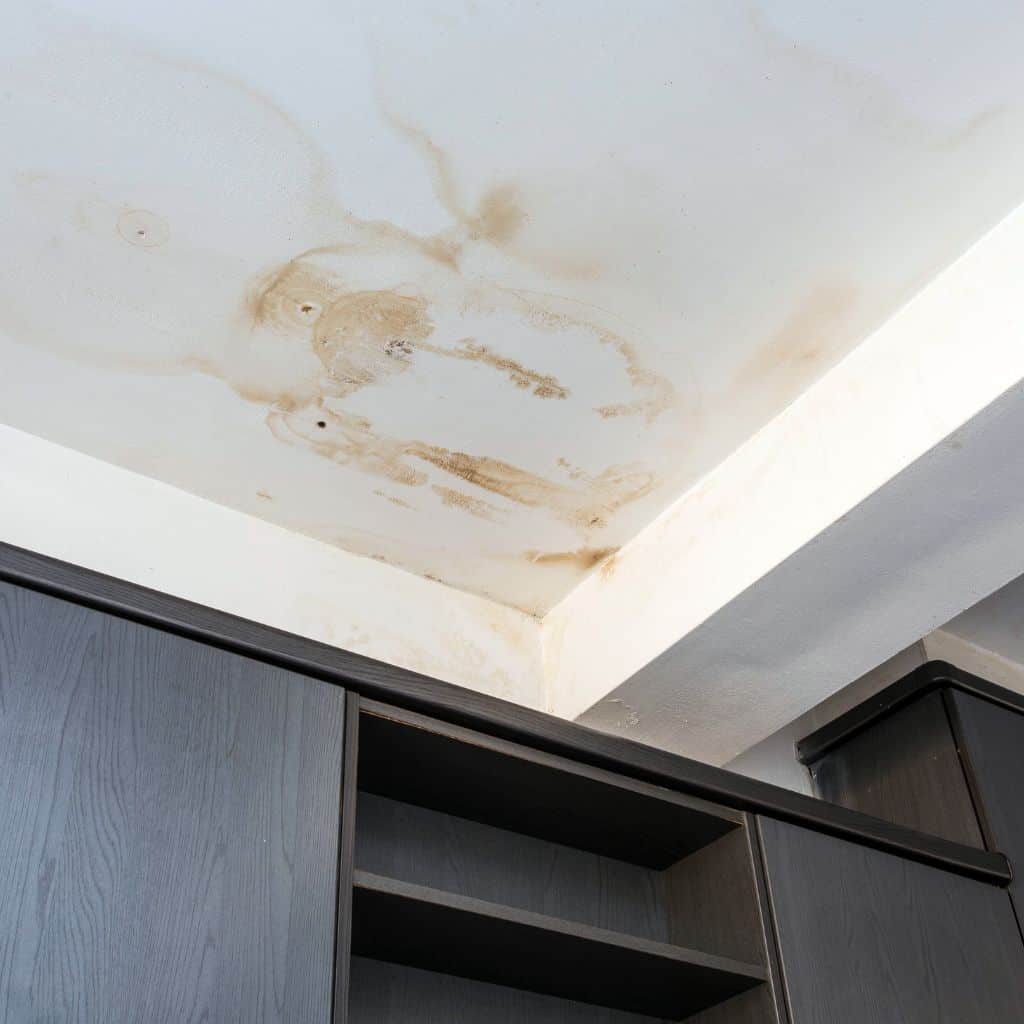
What are the signs of a roof leak inside your home?
Brown or yellow patches on ceilings that expand after rainfall are the most recognisable indicators. These patches suggest water is penetrating the roof deck and entering the building.
Other common signs include:
Brown or yellow patches on ceilings expanding after rainfall
Brown or yellow patches on ceilings that enlarge after rainfall are the most visible sign of a roof leak. These patches indicate that water is seeping through the roof deck and actively entering the building.
A damp area that grows with each period of rain confirms an active leak, whereas a static stain usually points to an old, dried-out one. During each visit, we inspect the loft, eaves and chimney areas to trace the source.
Peeling paint or bubbling plaster on upper walls
Peeling paint or bubbling plaster on upper walls indicates that water has worked its way behind the surface and is compromising the finish. Water often travels along rafters, battens and felt before it becomes visible at ceiling level.
Attempts to address the leak from inside are generally temporary. A patch repair may hold for a short period, but water will usually find another path through.
Musty odour in the loft or upper bedrooms
A musty odour in the loft or upper bedrooms points to damp and mould resulting from ongoing water ingress. Wet insulation can reduce the loft’s thermal performance for an entire season, so we lift affected quilt batts to inspect the joists beneath.
Early identification and repair are important: trapped moisture can cause timber rot even after the original leak has been resolved.
Dripping or ticking noises inside wall cavities
Dripping or ticking sounds inside wall cavities indicate that water is moving through the structure, likely entering from above. Because water often migrates along rafters and felt before it drips, the source is not always immediately apparent.
We regularly find, for example, that a leak above an upstairs bedroom originates several metres from the wet patch, and a stain above a stairwell can be traced to a cracked ridge tile.
Wet spots on rafters or felt during rain
Wet spots on rafters or felt during rain are a clear sign that water is penetrating the roof deck and actively entering the loft space. These are among the most direct indicators that a repair is needed.
A damp area that grows with each period of rain confirms an active leak, whereas a static stain usually points to an old, dried-out one. During each visit, we inspect the loft, eaves and chimney areas to establish the source.
Attempts to address the leak from inside are generally temporary. A patch repair may hold for a short period, but water will usually find another path through.
If you notice any of these signs, contact us at 07512976384 for a same-day visit.
How do you find the source of a roof leak?
Tracing the damp patch upwards is the essential first step, as water rarely travels directly downward. It frequently migrates along rafters, battens and felt before becoming visible at ceiling level.
We regularly find, for example, that a leak above an upstairs bedroom originates several metres from the wet patch, and a stain above a stairwell can be traced to a cracked ridge tile.
In the loft, we use moisture meters and thermal cameras. A thermal camera reveals cold water trails that are not visible to the naked eye, while small leaks may only become apparent during strong winds. Proper equipment is therefore essential for accurate diagnosis.
Displaced ridge tiles are a frequent cause of leaks, and we can often repair these in a single visit where access is straightforward.
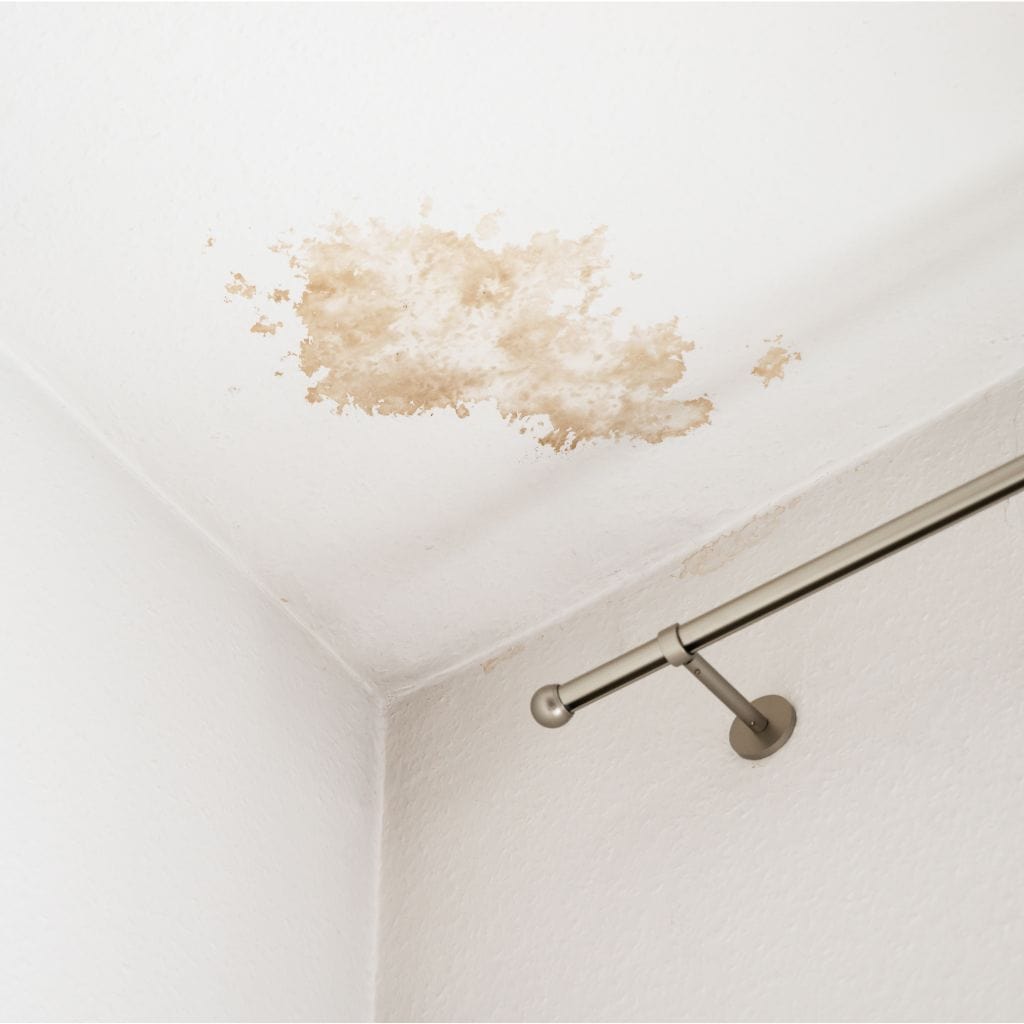
What does your roof leak repair process involve?
Our roof leak repair process follows five stages: loft survey, external check, fix, water test, and documentation. Each stage is recorded with dated photographs, providing a complete visual record from initial diagnosis through to final validation.
On site, we:
Loft survey: mark water trails on rafters to trace the source
During the loft survey, we mark water trails on rafters to trace the damp patch upwards to its origin. Tracing upwards is essential, as water rarely travels directly downward.
In the loft, we use moisture meters and thermal cameras. A thermal camera can reveal cold water trails that are not visible to the naked eye.
External check: examine suspect tiles, valleys and flashing with ladder or scaffold
We use a ladder or scaffold tower to examine suspect tiles, valleys and flashing during the external check. Displaced ridge tiles are a frequent cause of leaks, and we can often repair these in a single visit when access is straightforward.
Appropriate equipment is essential for an accurate diagnosis. Small leaks may only become apparent during strong winds.
Fix: replace tiles, dress lead, or patch underlay with matching materials
At the fix stage, we replace tiles, dress lead or patch underlay using materials matched to the existing roof. Most jobs are completed in a single visit where parts align with existing materials.
For older roofs, we often source salvaged tiles from local reclamation yards to maintain the appearance. Where storm damage is involved, we may fit a temporary tarp initially, with permanent repairs following once conditions allow.
Water test: controlled hose test over repair while loft is observed
We conduct a controlled hose test over the completed repair while the loft is observed beneath. Fresh drips during the test confirm that the source has been identified, while no drips indicate the repair is successful.
This methodical process ensures we have addressed the root cause of the leak, rather than treating only the visible symptoms. For a free quote, please call 07512976384.
Documentation: photograph each stage from survey through water test validation
We photograph each stage of the process for your records, documenting the work from the initial loft survey through to water test validation. This provides a complete visual record of everything found and everything done.
What causes most roof leaks on pitched roofs?
Cracked tiles, slipped slates, deteriorated underlay, blocked gutters and worn ridge mortar are the most common causes of roof leaks, each arising for different reasons.
Coastal air can shorten the lifespan of roofing nails, and older homes frequently lose slate fixings as the nails rust through. Old mortar bedding on hip rolls may crack after 20 to 25 years of frost exposure.
Three common failure types include:
- A cracked tile allowing water to rot the batten and rafter beneath it
- A blocked gutter causing water to back up under the eaves
- A failed felt underlay affecting a broader area of the roof
Temporary patches on a failed underlay may arrest a surface leak, but wind pressure can reveal further holes. A comprehensive re-felt is the only lasting solution.
A ceiling leak can develop into a more extensive roof repair once the plaster has become thoroughly saturated.

Which roof areas leak first?
Valleys, lead flashings around chimneys, abutments where extensions meet the main structure, and box gutters behind parapets are the areas most prone to leaking first. Each of these zones manages water from multiple roof planes and bears the greatest movement and load.
A leaking valley can cause severe ceiling damage, and cracked lead flashing at mortar joints where the masonry behind it has shifted is a frequent culprit. Leaks are also common where extensions adjoin the original structure, particularly when abutment lead becomes loose.
We lift suspect flashings to inspect for hidden splits, as hairline cracks can be concealed by oxidation. Temporary lead-sealant bandages maintain the joint until full re-leading can be carried out.
Many insurance claims involve valley failure rather than tile damage, as water can travel across several metres of ceiling before becoming visible.
Why Choose C J Roofing & Renewables Ltd for Roof Leak Repair in Hampshire?
Over 15 years of experience
Connor and Jack bring over 15 years of combined hands-on roofing experience, delivering everything from small domestic repairs to large-scale commercial projects across Hampshire.

Locally based in Hampshire
Based in Portsmouth with deep local roots, we understand Hampshire's homes, weather and building styles, which allows us to deliver roofing work that lasts.
5-star rated service
We are proud to be rated 5 stars on Google by our customers, reflecting the quality of our workmanship and our commitment to reliable, professional service.
Competent & highly trained team
Our team is fully trained and certified in asbestos awareness, working at height and manual handling, ensuring every project is carried out safely and to industry standards.
£5 million public liability insurance
We carry up to £5 million in public liability insurance, giving you complete peace of mind that your property is fully protected while we work.
10 year workmanship guarantee
All new roof installations and replacements come with a 10-year workmanship guarantee, so you are covered in the unlikely event of any issues.







Frequently asked questions
Take a look at the Frequently Asked Questions regarding our Roof Leak Repair service.
How does the repair affect insulation and ventilation?
We remove, dry or replace wet loft materials before closing the roof. Soaked mineral wool loses much of its thermal efficiency, and wet insulation can reduce the loft’s thermal performance for an entire season, so we lift affected quilt batts to inspect the joists beneath.
Trapped moisture can lead to timber rot even after the leak has been repaired. We therefore restore eaves vents, soffit gaps or ridge ventilation where these have been blocked by old insulation.
Repeat leaks are often the result of inadequate ventilation – a pattern we observe regularly in older homes with shallow eaves.
How do you rule out plumbing or window leaks first?
We isolate the mains, hose the window frame and inspect loft pipework before lifting tiles. Some apparent roof leaks are in fact the result of plumbing or window faults, and ruling these out is a necessary part of an accurate diagnosis.
Five diagnostic steps:
- Isolate the mains water and monitor for fresh moisture
- Hose the window frame while observing the inside reveal
- Check loft central heating pipes for slow drips
- Inspect waste-pipe joints in bathrooms above damp ceilings
- Dry the affected patch and monitor for 24 hours without rain
A water stain that grows without rain points to a plumbing fault. Any roofer who does not check alternative sources before quoting is not conducting a thorough assessment.
How do you cover the roof if it stays exposed?
Heavy-duty tarpaulins, plywood capping and silicone bandaging serve as temporary protective covers. Tarps are secured to ridge boards, plywood caps open valleys, and silicone bandages seal cracked lead. Covering a leaking roof within 24 hours is important to prevent joist rot from taking hold.
We deploy heavy-duty tarps promptly following an emergency call and can cover several properties in an afternoon after a storm. Sandbags, batten weights and ropes are used to secure tarps during strong gusts, with additional ballast applied in exposed positions.
Tarps should not remain in place for longer than a month, as ultraviolet light degrades polyethylene rapidly. Most insurers accept photographs of tarp cover as evidence for storm damage claims.
How does the leak affect ceilings, plaster, and coving?
A roof leak can stain plaster, damage coving, lift skirting and in severe cases cause ceiling sections to collapse. Some areas require complete board replacement, with ceiling repair typically following the roof fix within 7 to 14 days.
Plaster requires time to dry. In period homes with saturated lath-and-plaster ceilings, we often apply a full skim once the joists have dried, while modern plasterboard requires a cut-out patch using matching 12.5mm board.
Stain blockers, fresh emulsion and matching coving complete the repair, typically taking around three days once moisture levels fall below 15%.
Many leaks necessitate plaster replacement rather than a simple touch-up, as water frequently spreads across several joists before it is detected.
Who handles scaffold, access, and neighbour notices?
We manage scaffold and access for every roof leak repair. A single point of contact coordinates scaffolders, roofers and plasterers from start to finish. Written party-wall notices are required where scaffold poles cross property boundaries, and you are responsible for serving those notices. Scaffold towers are suitable for most two-storey homes, while full scaffolding is used for more complex structures.