Roof Repair for Storm and Wind Damage Hampshire
Roof Repair for Storm and Wind Damage Services in Hampshire
Broken tiles in the garden, a lifted ridge or daylight visible in the loft after a storm are clear signs that the roof covering has been breached and requires urgent attention. Wind-driven rain exploits every gap created by a storm, and the resulting damage spreads quickly beyond the exterior – into the deck, insulation and ceilings below.
C J Roofing & Renewables Ltd carries out storm and wind damage repairs throughout Hampshire. We secure the roof within 24 hours and follow up with a written quote for permanent repairs. Replacement materials carry manufacturer warranties, and every repair is documented with photographs throughout.
Call 07512976384 for an emergency response. We attend to emergency call-outs within 24 hours.
How do I know if my roof has storm or wind damage?
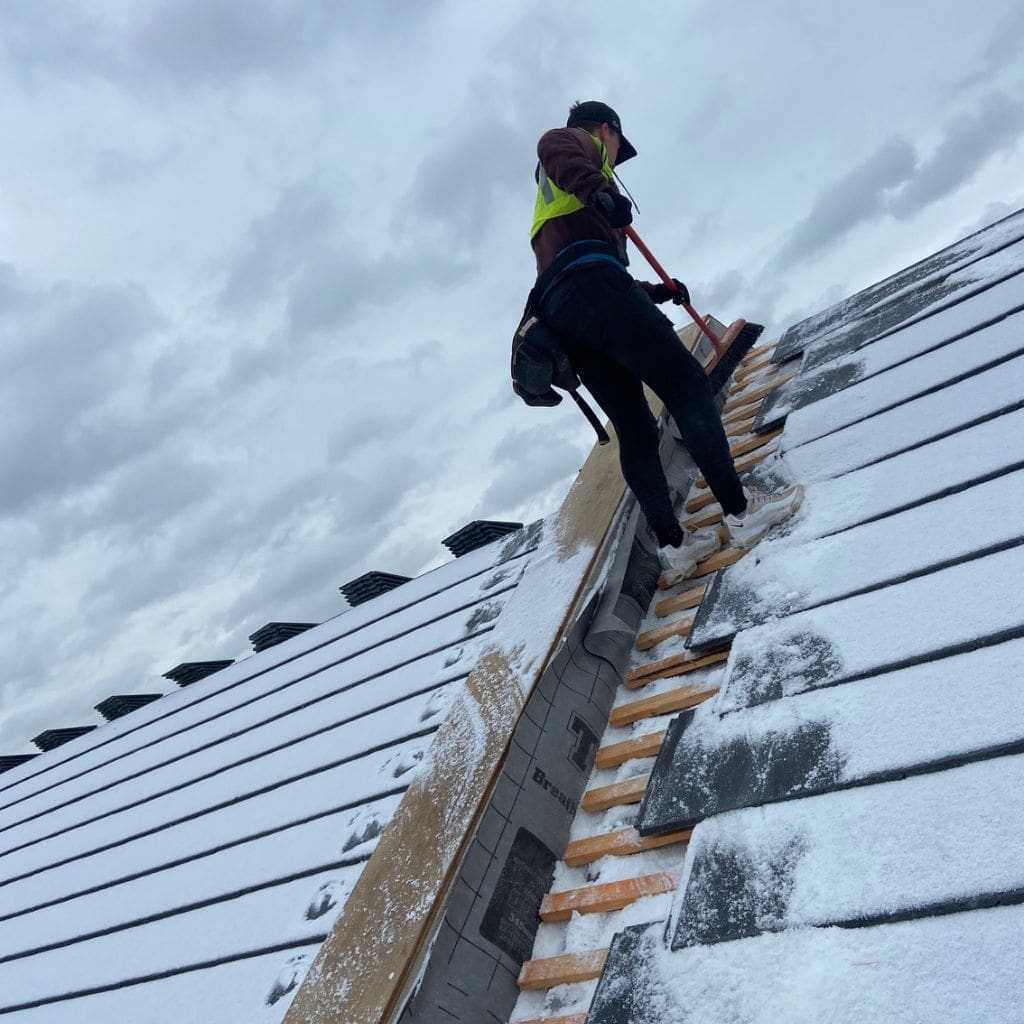
Signs of roof damage are often visible from ground level in the hours after a storm. Broken tile fragments on the lawn, dislodged ridge tiles and lead aprons lifted from chimney stacks are clear indications that the roofing system has been compromised.
Key warning signs include:
Tiles or slates blown into the garden or driveway
Tiles or slates in the garden or driveway are a clear sign that the roof covering has been displaced by wind uplift. Broken tile fragments on the lawn confirm that individual tiles have been dislodged, leaving the underlying felt and battens exposed.
Lifted or slipped ridge tiles visible from the street
Ridge tiles that appear lifted or displaced when viewed from the street indicate that the bedded mortar beneath them has failed under wind suction. Dislodged ridge tiles represent a breach in the roof that requires prompt repair to prevent further water ingress.
Daylight in the loft through the felt or boarding
Daylight visible through the felt or boarding in the loft indicates that the roof covering has been breached and water is able to reach the deck. A loft inspection using a torch can reveal fresh daylight or wet underlay in the hours following a storm.
Wind-driven rain enters through every gap that a storm creates, and the consequent damage extends quickly beyond the exterior breach. Leaving the roof exposed allows water to penetrate the deck, insulation and the ceilings below.
Damp patches on upstairs ceilings shortly after the storm
Damp patches appearing on upstairs ceilings shortly after a storm indicate that wind-driven rain has entered through the breached roof covering. These patches confirm that water is tracking through the structure and causing interior damage.
Lead flashings peeled back at chimneys, abutments, or skylights
Lead flashings lifted or peeled back at chimneys, abutments or skylights show that wind suction has separated the flashing from the masonry behind it. Lifted lead flashings are a reliable warning sign that the weatherproof seal around roof interruptions has failed.
A morning walkaround after high winds will reveal most external damage. A torch inspection of the loft can uncover fresh daylight or wet underlay. Photographing any findings you identify is important for initiating an insurance claim promptly.
If you notice any of these signs, call 07512976384 for a same-day response.
What should happen during a professional roof inspection after a storm?
A thorough storm inspection involves two stages, both completed during the same visit where access allows. The inspection begins outside, assessing the structural condition of the roof, before moving inside to identify secondary damage that is not visible to the occupier.
The exterior stage includes:
- Drone or pole survey of high pitches where ladder access is unsafe
- Ground-level walkaround to identify fallen tile, slate and lead
- Scaffold quote where working at height is required for safety
- Chimney stack and skylight check from the highest safe access point
The interior stage involves a loft inspection to examine the underlay for tears and damp patches, moisture readings from any suspect timber, and photographs of every defect for the written report.
A written report follows within 48 hours of the survey, setting out the cause, scope and an itemised quote. The make-safe visit proceeds independently of insurance approval, allowing us to secure the roof first and address the paperwork afterwards.
What are the common types of wind-induced damage to roofs?
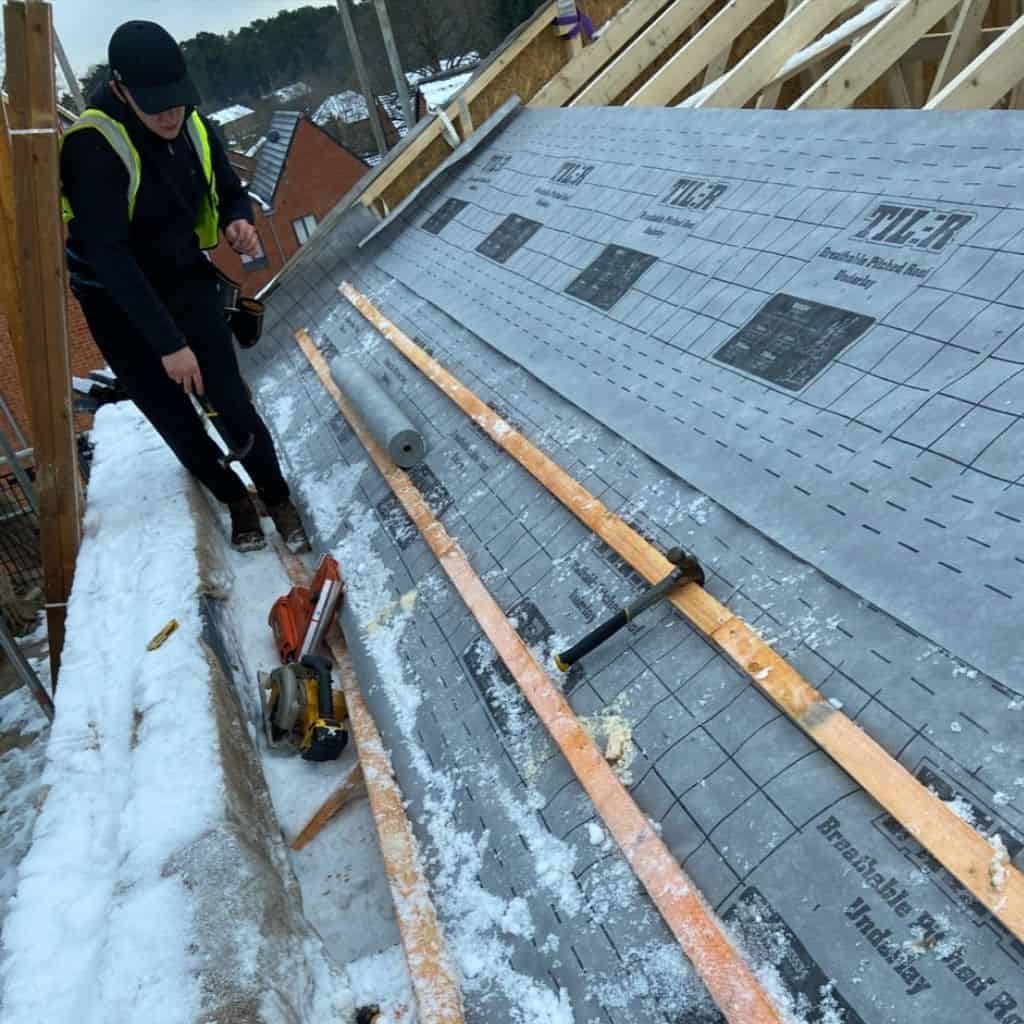
Wind damage tends to follow predictable patterns. Suction at the ridge and verges lifts tiles first, while debris carried by the wind causes impact damage to other areas. This combination produces a mixture of visible and concealed damage that we address systematically on site.
Typical wind-damage categories include:
Tile and slate uplift from single tile to whole-course displacement
Tile and slate uplift ranges from the loss of a single tile through to the displacement of an entire course, with the most severe effects occurring at verges and ridges. Wind damage follows recognisable patterns, with suction at the ridge and verges lifting tiles before other areas are affected.
This produces a combination of visible and concealed damage that we work through systematically on site. C J Roofing & Renewables Ltd addresses the full range of storm and wind damage across pitched and flat roofs.
Ridge and hip displacement when bedded mortar fails
Ridge and hip displacement occurs when bedded mortar fails under wind pressure, as mortar is more susceptible than dry-fix systems to this type of loading. Ridge and hip displacement is among the most common wind-damage categories that C J Roofing & Renewables Ltd repairs.
Lead flashing peeling at chimneys, skylights, and abutments
Lead flashings at chimneys, skylights and abutments are among the first elements to fail under wind suction. Roof interruptions such as chimney stacks and skylights are particularly vulnerable because the lead around them is lifted by suction before the tiles themselves are displaced.
Gutter and fascia damage from debris impact and hanger pull-out
Gutter and fascia damage results from the impact of wind-borne debris, disconnection of downpipes and the pull-out of gutter hangers during storms. Sagging gutters displaced by falling tiles or debris are a visible indicator of storm damage to the roof perimeter.
Secondary water ingress when wind-driven rain enters under underlay
Secondary water ingress occurs once the roof covering is breached and wind-driven rain enters beneath the underlay. This type of damage extends well beyond the exterior breach, causing significant interior damage if the roof is not secured promptly.
Verges and ridges experience the highest wind-uplift pressure and typically lose tiles first. The most vulnerable zones are verges and ridges, followed by chimney stacks, skylights and other roof penetrations.
How quickly should roof storm damage be assessed and repaired?
Prompt action is important because secondary damage can begin within hours of a breach. An emergency make-safe visit should take place on the same day where possible, with permanent repairs scheduled as soon as weather and materials permit.
Our response timeline runs in two stages:
Immediate response within 24 hours: temporary weatherproofing of the exposed deck using tarpaulin, sandbag-battened sheet, and internal containment where ceilings are at risk.
Same week: permanent repair scheduled once weather conditions are suitable and replacement materials have been sourced.
Timber decking absorbs moisture within 24 to 48 hours of a breach, plasterboard ceilings begin to sag within a week of sustained drip, and electrical installations in the loft become hazardous after prolonged exposure. The cost of a rapid make-safe visit is typically a fraction of the cost of replacing a saturated ceiling and rewiring the lighting circuits above it.
For an emergency response, call 07512976384. We attend to emergency call-outs within 24 hours.
Will storm damage roof repairs protect my home from future leaks?
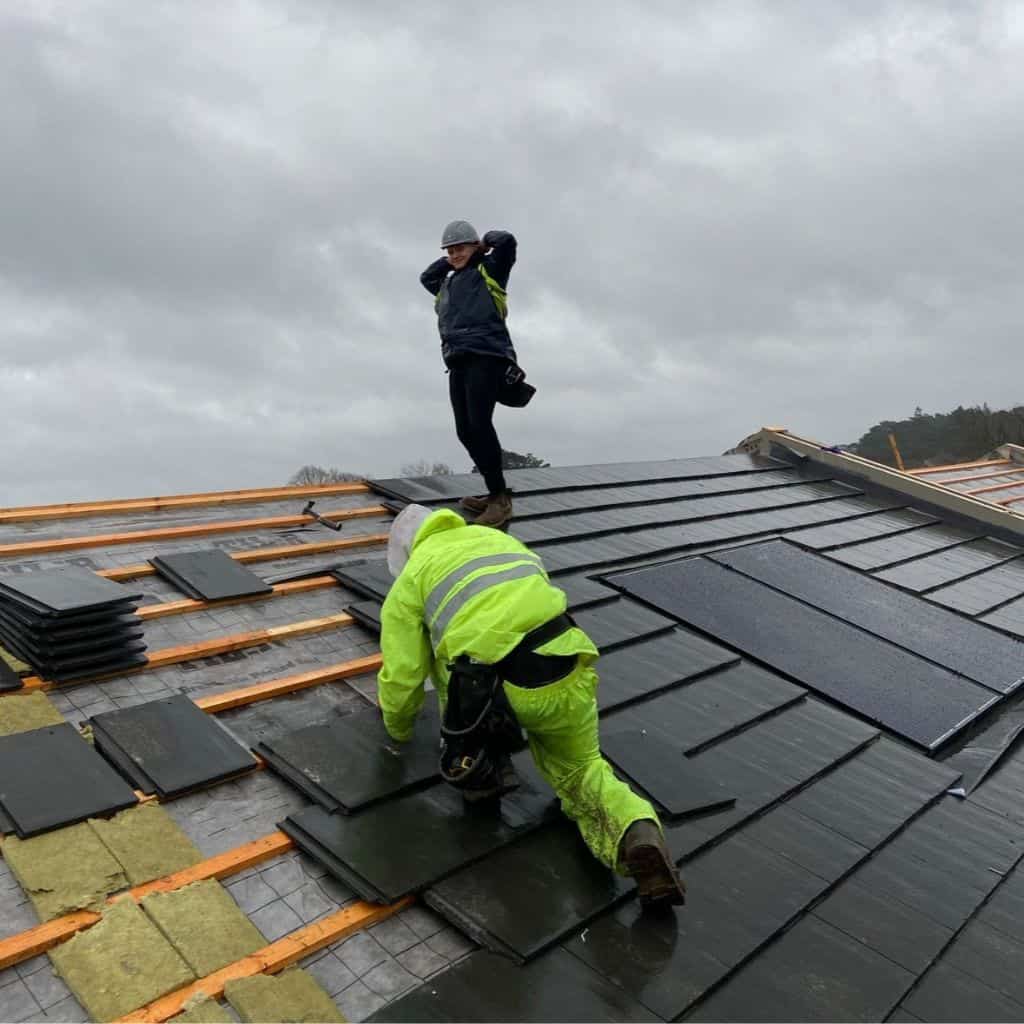
A permanent repair reinstates the weatherproof envelope to current standards. We dress new Code 4 lead to chimneys and abutments, refit ridge tiles with stainless screw fixings under a dry-fix system where the roof construction allows, and use 316 stainless ring-shank nails or proprietary clips for every tile replacement.
Replacement materials carry manufacturer warranties. Code 4 lead flashings typically last 50 to 60 years on sheltered sites, with coastal exposure reducing that lifespan; breathable underlay typically carries a 30-year warranty, and dry-fix ridge components come with warranties of 15 years or more.
We provide straightforward scope assessments. A storm-damage roof repair restores the original construction at the point of failure. Where the remainder of the roof has reached the end of its serviceable life – with brittle fixings and aged felt across the slope – a partial repair will not prevent failure elsewhere during a subsequent storm. The written report identifies any broader concerns observed during the survey, so you can plan further repairs or replacement before the next incident.
For a free quote on the permanent repair, call 07512976384. We respond within 48 hours once the make-safe visit is complete.
Why Choose C J Roofing & Renewables Ltd for Roof Repair for Storm and Wind Damage in Hampshire?
Over 15 years of experience
Connor and Jack bring over 15 years of combined hands-on roofing experience, delivering everything from small domestic repairs to large-scale commercial projects across Hampshire.

Locally based in Hampshire
Based in Portsmouth with deep local roots, we understand Hampshire's homes, weather and building styles, which allows us to deliver roofing work that lasts.
5-star rated service
We are proud to be rated 5 stars on Google by our customers, reflecting the quality of our workmanship and our commitment to reliable, professional service.
Competent & highly trained team
Our team is fully trained and certified in asbestos awareness, working at height and manual handling, ensuring every project is carried out safely and to industry standards.
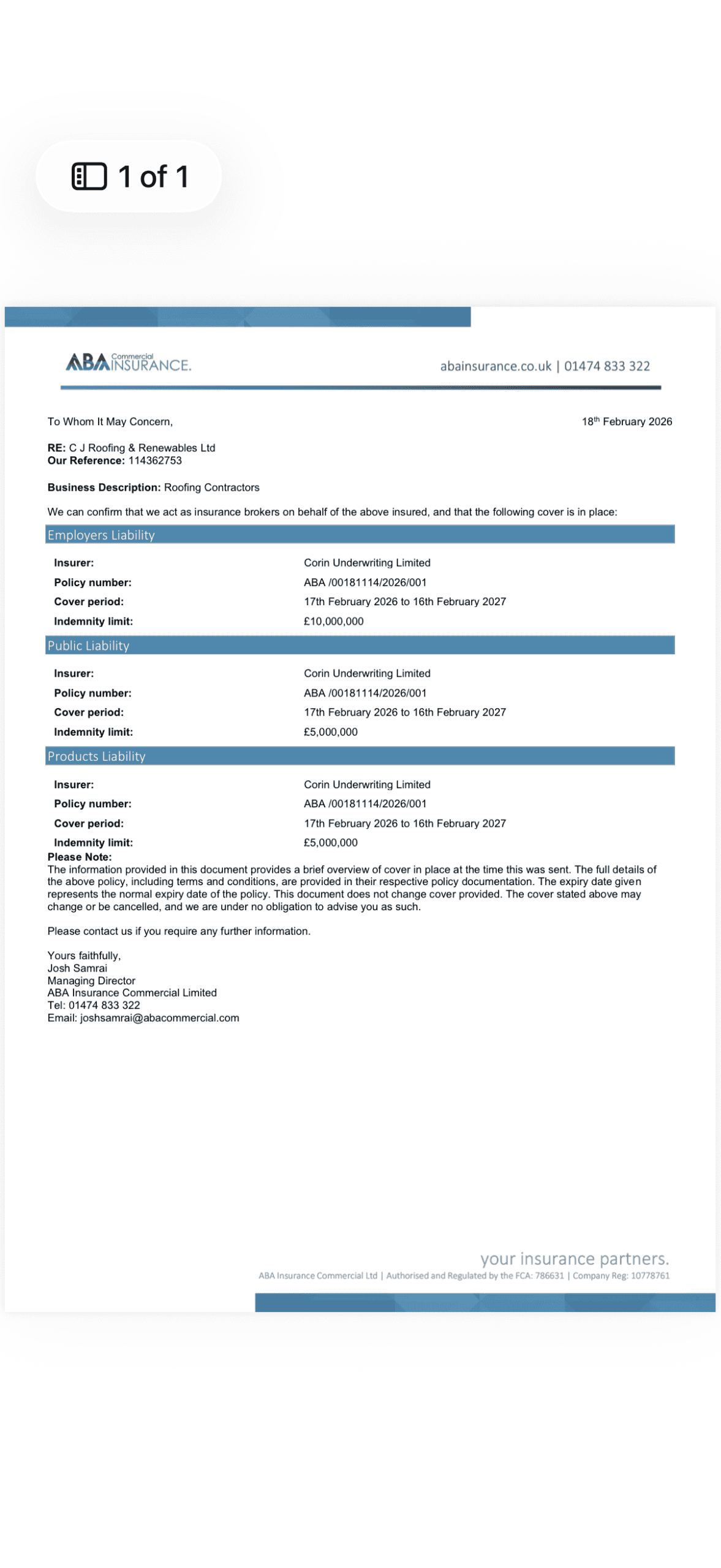
£5 million public liability insurance
We carry up to £5 million in public liability insurance, giving you complete peace of mind that your property is fully protected while we work.
10 year workmanship guarantee
All new roof installations and replacements come with a 10-year workmanship guarantee, so you are covered in the unlikely event of any issues.






Frequently asked questions
Take a look at the Frequently Asked Questions regarding our Roof Repair for Storm and Wind Damage service.
What types of storm and wind damage do you repair?
C J Roofing & Renewables Ltd addresses the full range of storm and wind damage across pitched and flat roofs. This includes tile and slate uplift, ridge and hip displacement, lead flashing failure at chimneys and skylights, valley and abutment leaks, gutter and fascia damage, and chimney stack masonry damage from impact.
Common repair categories include:
- Single tile or slate replacement after isolated uplift
- Whole-course or whole-slope replacement after severe damage
- Ridge tile rebedding or dry-fix conversion
- Lead flashing strip and replacement at chimneys and abutments
- Gutter and fascia reinstatement after debris impact
- Chimney stack repointing and pot resetting after wind-loosening
Where a storm has compromised structural timber, we coordinate timber repair as part of the permanent works.
Do you provide temporary protection before the full repair is completed?
Yes. The make-safe visit is the first stage of every storm call-out. A heavy-duty tarpaulin, secured to sound timber with sandbags, batten weights or ropes, provides 7 to 14 days of weatherproofing while the permanent repair is arranged.
Inside the property, we drain bulging ceilings where water has pooled, cover carpets and furniture in affected rooms, and advise on which circuits to isolate at the consumer unit. The tarp overlaps the ridge by 600mm to resist wind, and additional ballast is added on exposed coastal pitches.
Tarpaulin cover is not a long-term solution and should not remain on a roof for more than a month, as UV exposure degrades polyethylene rapidly. We schedule the permanent repair as soon as weather and materials allow.
What signs of hidden roof damage should I look for after severe weather?
Hidden damage typically presents inside the property and in the gutters, rather than on the roof surface itself. Reliable indicators include fresh daylight or damp underlay visible from the loft, staining around chimney breasts or skylight reveals, and granules from displaced felt collecting in the gutters.
Doors and windows that stick may indicate frame movement from debris impact, and a sudden draught in an upstairs room often points to a lifted ridge tile or torn underlay above. A loft check with a strong torch within 48 hours of the storm will identify most hidden damage before moisture has the opportunity to spread further.
Photograph any findings. Damp underlay, daylight gaps and granules in the gutter all support insurance claims if a permanent repair is required.
How do you document roof damage for insurance or property records?
Every storm call-out results in a complete photographic record and a written report. We photograph the damage from ground level, from the scaffold or drone survey, and from inside the loft. The written report sets out the cause of the damage, the scope of the repair and an itemised quote for the insurer.
We do not manage insurance claims or act as an intermediary with insurers, but the report and photographs provide the evidence required for claims processing. A separate make-safe invoice for the emergency visit often speeds up settlement, and we issue this before starting the permanent repair where insurance is involved.
The make-safe visit does not depend on insurance approval. We secure the roof first, document the damage, and provide the paperwork for you to take forward.
What areas of the roof are most vulnerable during high winds and storms?
Verges and ridges experience the greatest wind-uplift pressure and are typically the first areas to shed tiles. Chimneys, skylights and other roof interruptions follow, as the lead flashings around them lift before the tiles are displaced.
The vulnerable zones, in order of priority, are:
- Verges and ridges where suction is highest
- Chimney stacks, skylights, and roof penetrations
- South-westerly elevations facing the prevailing storm direction
- Eaves with worn or corroded fixings
- Valleys and lead aprons where two slopes meet