How to Identify Skylight Leaks in Your Hampshire Home
10 September 2026
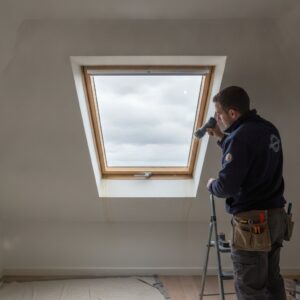
Skylight leaks in Hampshire homes usually show up first as staining, damp patches or a musty smell near the reveal,…

The life expectancy of a tile roof in Hampshire is 40 to 100 years, depending on the tile material and installation quality. Concrete tiles typically last 40 to 60 years, while clay and slate can exceed 80 to 100 years. Correct fixing to BS 5534 and sound underlying components determine how close your roof reaches its full lifespan.
The tile itself is only part of the story. A tile roof is a system, and its weakest component sets the true lifespan. In Hampshire’s south-coast climate, several factors decide whether your roof reaches the top of its range or falls short.
We assess all of these during a free director-led site survey, so you get an honest picture of your roof’s remaining life rather than a guess based on age alone.
Hampshire’s mild, wet, and often windy coastal weather is a fair test for any roof covering. Properties in exposed locations near the Solent see more wind-driven rain and salt-laden air than inland homes in Alton, Petersfield or Basingstoke.
Concrete and clay tiles both cope well with this climate. The parts that need closer attention are the mortar bedding on ridges and hips, and the underlay beneath the tiles. Salt air and repeated wetting cycles wear these components faster than the tile surface. Dry-fixed ridge and hip systems, mechanically clipped rather than mortared, extend service life in exposed south-coast positions.
If you are searching for roof tiles near me to match an existing covering, exposure matters for that decision too. We match original profiles on heritage properties and specify current manufacturer ranges suited to your site.
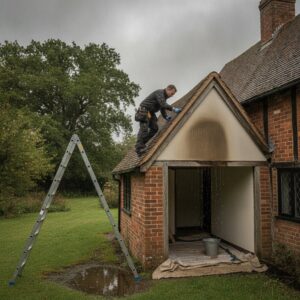
A tile roof rarely fails all at once. It gives warning signs first. Look for these indicators, ideally from ground level or a window rather than the roof itself.
Spotting one or two slipped tiles usually means a repair rather than a full re-roof. Widespread mortar failure or a tired underlay often signals it is time to plan a replacement. Our team is trained in working at height, manual handling and asbestos awareness, so we can inspect older roofs safely and report back plainly.
Tile roofing performs reliably without heavy upkeep, but a few simple checks help it reach the upper end of its range. Keeping gutters clear prevents water backing up under the eaves. Periodic inspection of ridge mortar and flashings catches small issues before they let water into the structure.
We recommend a professional inspection every few years, and after any severe storm. As tile roofers near me serving the whole of Hampshire, we cover Portsmouth, Southampton, Fareham, Waterlooville, Havant, Eastleigh, Fareham and surrounding towns with a 48-hour callout response.
For the full range of materials, profiles and installation detail, see our Tile Roofing service page.
Replacement makes sense when the underlay, battens or fixings have aged beyond the point that patch repairs can address. A roof with sound tiles but failed felt will keep leaking despite repeated visits, because the problem sits beneath the surface. Reclaiming and re-laying good tiles onto new underlay and battens is often practical, and we assess this during the survey.
Every new tile roof we install is backed by our 10-year workmanship guarantee, and we carry £5 million public liability insurance for your reassurance.
Clay plain tiles commonly last 80 to 100 years or more, while concrete interlocking tiles typically last 40 to 60 years. Clay holds its colour and resists weathering well, which is why it suits period and conservation-area properties across Hampshire.
Yes. If the underlay and battens are still sound, individual slipped or cracked tiles can be replaced without a full re-roof. Matching the original profile and colour is the key challenge, and we hold and source concrete, clay and reclaimed tiles to suit.
Look for a local, certified team with insurance, a workmanship guarantee and genuine reviews. We are Portsmouth-based, 5-star Google rated, and fully trained in working at height and asbestos awareness. We provide free director-led surveys with a written, itemised quote.
If you are unsure how much life is left in your tile roof, we can tell you honestly after a free site survey. There is no pressure and no obligation. Call us on 02393873756 for a free quote. We respond within 48 hours.
Posted by: Connor Stanley
Date: 24 September 2026