Is a Leaking Roof Classed as an Emergency in Hampshire?
11 June 2026
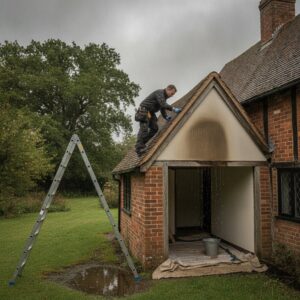
Yes, a leaking roof is classed as an emergency in Hampshire when it causes water ingress into your home, risking…

Skylights transform dark rooms by drawing daylight in from above, where it spreads more evenly and reaches deeper into a space than light from a vertical window. A roof-mounted unit can deliver noticeably more natural light across the day, brightening rooms that walls and hallways would otherwise leave gloomy.
Below we look at how that daylight actually behaves, which rooms in a typical Hampshire home benefit most, and the design choices that shape the result. For the technical detail on roof types and flashing, see our Skylight Installation page.
Skylights brighten a dark room because overhead glazing captures light from the whole sky, not just the narrow slice a wall window can see. Roof glazing also sits above furniture, walls and neighbouring buildings, so nothing blocks the path of daylight into the room.
The angle matters too. Light entering from above falls onto floors and worktops directly, then reflects around the space. That is why one well-placed skylight often lifts a room that two side windows could not.
In Hampshire, where many terraces and semis sit close together, roof glazing solves a common problem – rooms boxed in on the ground floor with limited wall space for windows.
The benefits of skylights go beyond brighter rooms. For homes across Portsmouth, Southampton and Fareham, the practical gains include:
These gains hold across pitched tiled, slate and flat roofs, which are all common on Hampshire housing stock. Each roof type takes a different weathering detail, and we match the unit and flashing to your existing covering.
The rooms that gain most from skylights for dark rooms are those with limited wall space or a single aspect. In practice, we install most often in the following:
Lofts sit directly beneath the roof, so a between-rafter unit is the natural way to bring in light. A skylight turns an unused roof space into a bright bedroom, study or playroom.
Rear kitchen extensions often run deep into the plot, leaving the middle of the room dark. Roof glazing over an island or dining area lights the space that side windows cannot reach.
Bathrooms need light and ventilation but also privacy. An opening skylight delivers both, clearing moisture while keeping the room bright.
Internal landings and stairwells rarely have any window at all. A skylight above the stairwell can flood the core of the house with daylight from top to bottom.
The amount of daylight a skylight delivers depends on its size, position, glazing and the depth of the roof. A larger unit and a shorter light shaft let more light through, while orientation shapes how that light changes across the day.
The main factors we consider on a site survey are:
Because these factors vary house by house, we recommend a free director-led site survey rather than a fixed answer. We assess your roof, the room below and the light you want, then advise on the unit and position that suits.
Yes, opening skylights help with ventilation by letting warm air rise and escape at the highest point of the room. Because heat and moisture collect near the ceiling, roof-level ventilation clears them more effectively than a low wall window.
This makes opening units a sound choice for Hampshire kitchens and bathrooms, where steam and cooking moisture need somewhere to go. A fixed unit brings light only, so we discuss which suits each room during the survey.
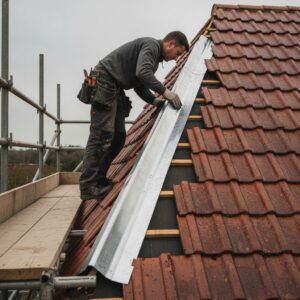
The light you gain depends heavily on the quality of the fit. A skylight has to sit flush with the surrounding covering, with the correct flashing for your roof, so it stays weathertight for years.
Our team is fully trained and certified in working at height, manual handling and asbestos awareness. We carry £5 million public liability insurance, and every new installation is backed by our 10-year workmanship guarantee. Based in Portsmouth, we work across Hampshire and the South of England, from Gosport and Havant to Eastleigh, Basingstoke and Petersfield.
If a dark room in your home could do with more daylight, we can talk you through the options with no pressure. Get a free quote by calling 02393873756 or sending us a message. We respond within 48 hours.
Posted by: Connor Stanley
Date: 3 September 2026