Roof Fascia Repair Hampshire
Roof Fascia Repair Services in Hampshire
The fascia is the board that carries the gutter and seals the rafter ends against rain. When it softens, water tracks behind it and begins to rot the timbers above. Addressing a small affected section early can prevent what would otherwise become a costly structural rebuild.
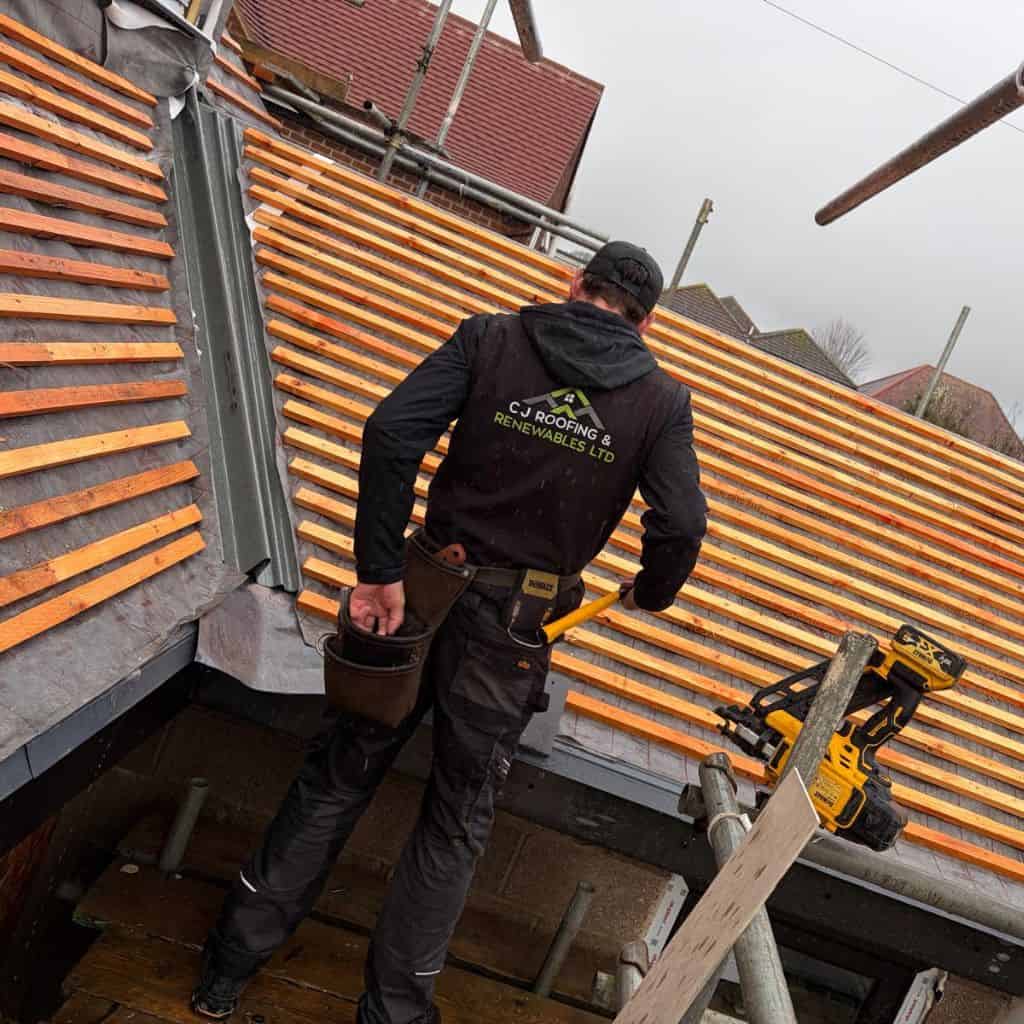
C J Roofing & Renewables Ltd specialises in roof fascia repair across Hampshire. We remove the decay, replace the damaged sections, and ensure the guttering is properly refitted to the new board.
Your written, itemised quote follows within 48 hours of the survey. Call 07512976384 for a free quote. We respond within 48 hours.
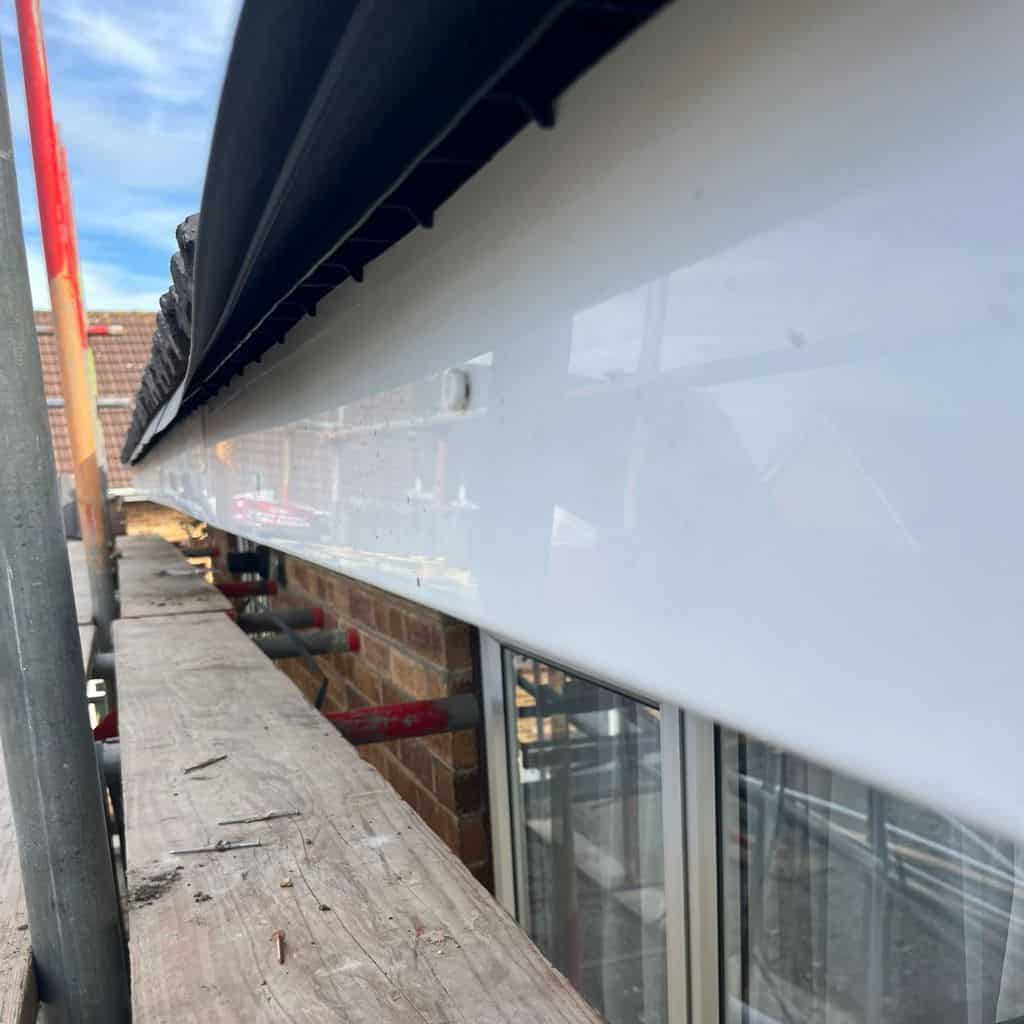
What are the signs your roof fascia needs a repair?
Soft timber, peeling paint, water staining, and sagging gutters are the clearest indicators of fascia damage. Each one suggests that water is seeping behind the board.
Common warning signs include:
Flaking paint with dark patches beneath
Flaking paint with dark patches beneath indicates that water is seeping behind the fascia board and causing rot underneath. Peeling paint on the north-facing elevation after a wet winter can conceal early rot, which may spread considerably by spring if it is not addressed.
Soft timber, peeling paint, water staining, and sagging gutters are the clearest indicators of fascia damage. Each one suggests water is working behind the board, and addressing a small affected section early can prevent a costly structural rebuild later.
Gaps between the fascia and roof tiles
Gaps between the fascia and the roof tiles indicate that the board has shrunk, warped, or pulled away from the roof edge. These gaps allow water, pests, and wind to penetrate behind the fascia and damage the timbers above.
Where the fascia softens, water can track behind it and cause rot in the timbers above. Understanding the nature of fascia failure is central to maintaining the integrity of the roof edge.
Sagging or detached gutter sections
Sagging or detached gutter sections occur when the fascia timber weakens and the screws lose their grip. The fascia supports the gutter along its full length, and when the timber deteriorates, gutters can tilt forward and allow water to spill over during heavy rain.
Damaged fascia undermines the support behind gutter brackets, leading to sagging, overflow, and potential water damage to the house wall.
Birds, wasps, or squirrels nesting behind the board
Birds, wasps, or squirrels nesting behind the board indicate that a gap or hole has opened up, allowing access behind the fascia. These pests frequently exploit softened or damaged timber to establish nests that cause further deterioration over time.
Damp staining on the soffit below
Damp staining on the soffit below indicates that water is tracking behind the fascia board and spreading into the soffit material. A screwdriver pressed into the board near the gutter brackets can reveal wet rot if the tip sinks more than 3mm into the timber.
Routine cleaning addresses dust, grime, and algae, while a proper repair deals with damage beneath the paintwork. A morning walk-around the property can help identify faults from the ground before damage has the opportunity to spread further.
How does fascia damage affect gutters and drainage?
Damaged fascia undermines the support behind gutter brackets, leading to sagging, overflow, and potential water damage to the house wall. As the timber softens, screws lose their grip and the gutter line begins to shift.
The fascia supports the gutter along its full length. When the timber weakens, gutters can tilt forward and allow water to spill over during heavy rain rather than directing it to the downpipe.
We restore the anchor using sound timber or new uPVC behind the bracket line, ensuring the gutter directs water correctly to the downpipe. This prevents water splash-back on the brickwork within weeks of the repair.
Many blocked-gutter issues in Hampshire are in fact fascia failures, as sagging gutters can conceal rot at the rafter feet. We address the fascia first, then follow with any necessary gutter repairs.
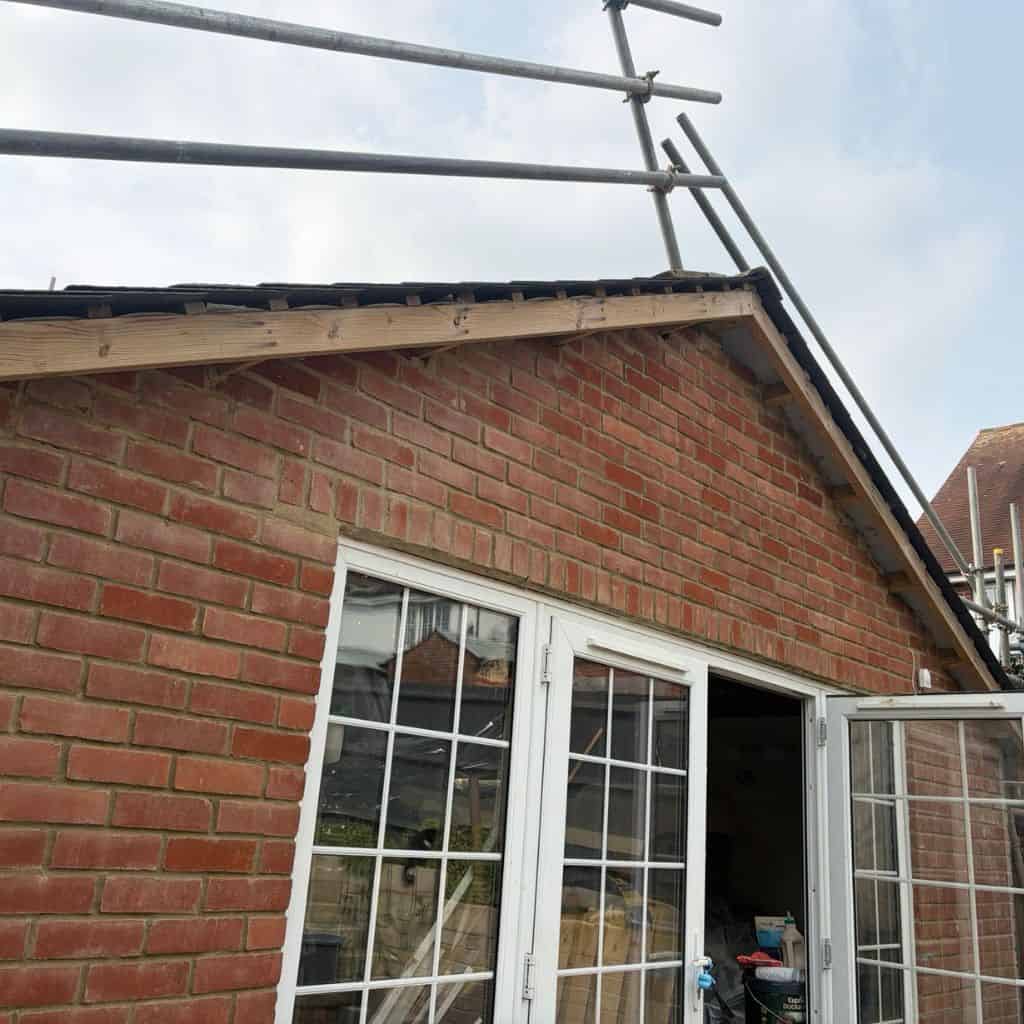
What does our roof fascia repair process involve?
Our roof fascia repair follows five stages: survey, strip, fit, refit gutters, and documentation. Each stage is recorded with photographs, providing you with a complete visual record from strip-out to final fix.
Our on-site process includes:
Survey: probe boards with awl, level gutter line with string
We probe each board with an awl to check for soft rot and level the gutter line with a string to assess the fall. We typically spend 45 to 90 minutes surveying a semi-detached property, and our report includes images, measurements, and a detailed assessment.
The preliminary check takes 20 to 40 minutes per elevation, inspecting rafter feet, wall plate, eaves felt, and batten ends for concealed decay. We sometimes find properties with sound fascia at the front while the rafter feet are failing at the rear, identifying hidden faults before any quote is provided.
Strip: remove gutter, lift bottom tiles, take out failed board
We remove the gutter, lift the bottom row of tiles, and extract the failed board. Temporary battens support the eaves felt during removal to prevent damage to the roof edge.
We detach the gutter, lift the bottom row of tiles, replace the board, and refit to the original specifications. On bungalows, uPVC capping often appears sound from the street while the rafter feet have deteriorated behind it, so we verify timber condition before providing a quote.
Fit: insert fresh timber or uPVC, secure to sound rafter ends
We insert fresh timber or new uPVC and secure it to sound rafter ends. Any rotten rafter feet, batten ends, or eaves felt are replaced during the same visit, making efficient use of a single scaffold lift.
On terraced properties we frequently encounter widespread rafter feet rot resulting from fascia failure that went unnoticed over several years. Where neglected, the rot can extend to the wall plate on the masonry, requiring extensive structural repairs rather than a single board replacement.
Refit gutters: adjust fall to 1:600, salvage brackets, hose test
We refit the gutters by adjusting the fall to 1:600, salvaging sound brackets, and performing a hose test to confirm drainage. Intact gutter brackets are reused where they sit flush against the new board, secured with fresh screws into clean timber along the rafter line.
We restore the anchor using sound timber or new uPVC behind the bracket line, ensuring the gutter directs water correctly to the downpipe. This prevents water splash-back on the brickwork within weeks of completion.
Documentation: photos from strip-out to final fix
Each stage is recorded with photographs for your records, providing complete photo documentation from strip-out to final fix.
How does fascia damage lead to rot in the roof edge?
Failed fascia allows water to penetrate the roof edge, where it can rot the rafter feet, batten ends, and wall plate. The fascia acts as the final barrier against the elements at the eaves.
Once it is compromised, rain can seep behind the board with every downpour. The timber may remain damp throughout the cooler months, encouraging fungal growth within weeks during Hampshire’s wet winters.
Where rot is left unaddressed, it can extend to the wall plate on the masonry, requiring extensive structural roof repairs rather than a straightforward board replacement.
On terraced properties we frequently find widespread rafter feet rot because fascia failure was not noticed over several winters. Peeling paint is often mistaken for a cosmetic issue rather than a structural warning sign.
A full rebuild – replacing the wall plate and batten run – can take a week to complete. Catching rot early, however, reduces the scope to a single board patch.
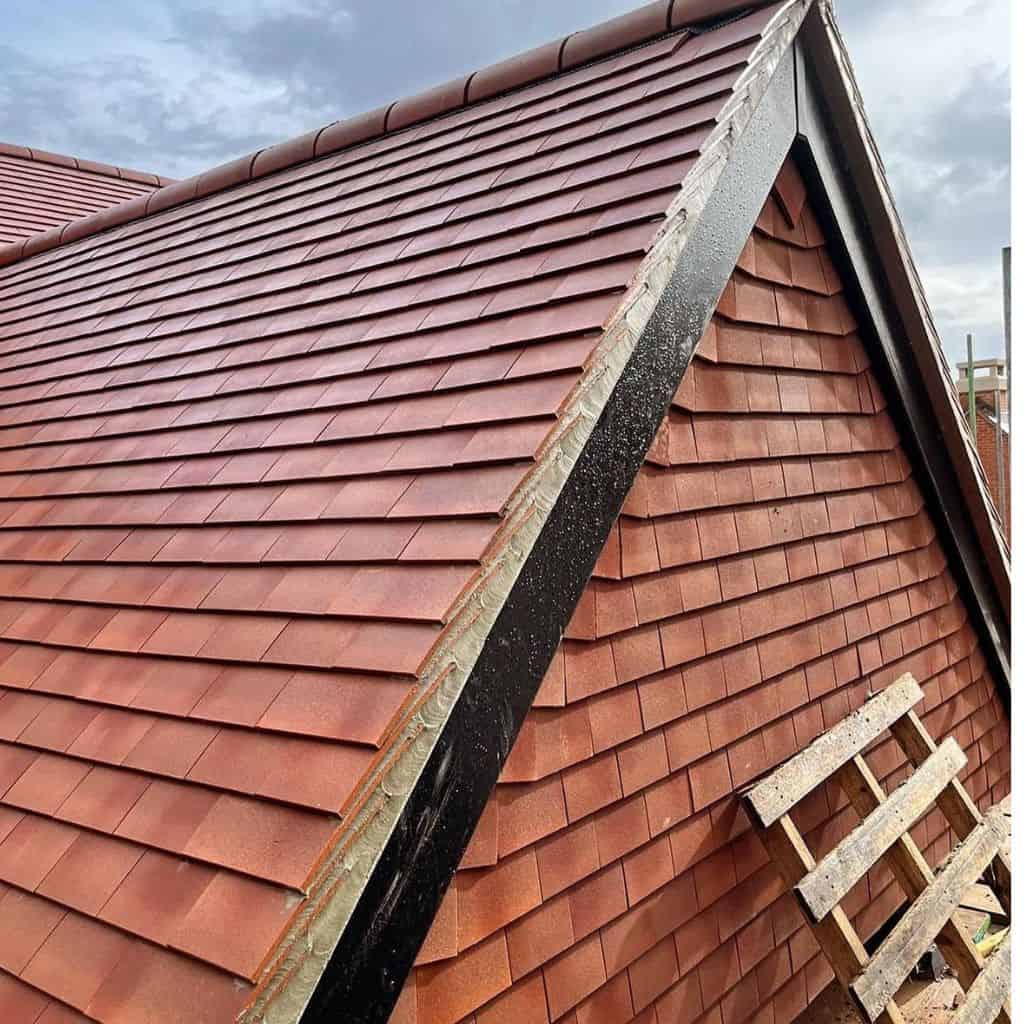
When does fascia need full replacement rather than a patch?
Full replacement is advisable when rot extends beyond a one-metre section. Boards older than 15 years or with loose fixings also warrant complete replacement, while patch repairs are appropriate for localised damage where the surrounding boards remain firm.
A patch repair is quicker than a full replacement on a typical semi-detached property, reducing scaffold time. The trade-off is colour matching, as new paint or fresh uPVC rarely blends seamlessly with weathered sections in the short term.
Three indicators that full replacement is required:
- Rot covering more than one-third of any single run
- Visible sag along the eaves line
- Multiple rafter feet failing beneath the board
We often retain most of the original boards, replacing only the south-facing run where sun damage is most severe. This targeted approach prevents the scope from expanding into a full-line job, while a sound patch holds firmly against the gutter brackets for years.
Why Choose C J Roofing & Renewables Ltd for Roof Fascia Repair in Hampshire?
Over 15 years of experience
Connor and Jack bring over 15 years of combined hands-on roofing experience, delivering everything from small domestic repairs to large-scale commercial projects across Hampshire.

Locally based in Hampshire
Based in Portsmouth with deep local roots, we understand Hampshire's homes, weather and building styles, which allows us to deliver roofing work that lasts.
5-star rated service
We are proud to be rated 5 stars on Google by our customers, reflecting the quality of our workmanship and our commitment to reliable, professional service.
Competent & highly trained team
Our team is fully trained and certified in asbestos awareness, working at height and manual handling, ensuring every project is carried out safely and to industry standards.
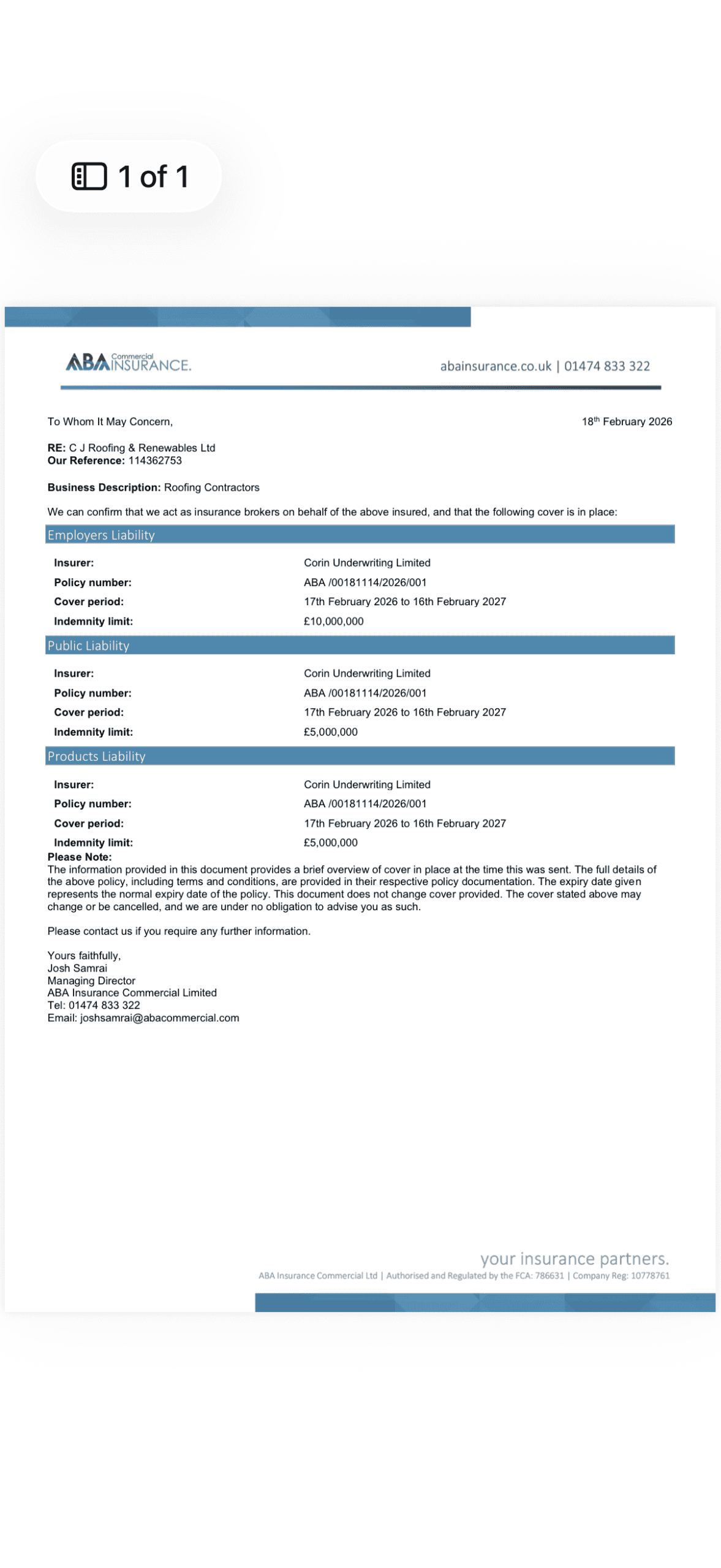
£5 million public liability insurance
We carry up to £5 million in public liability insurance, giving you complete peace of mind that your property is fully protected while we work.
10 year workmanship guarantee
All new roof installations and replacements come with a 10-year workmanship guarantee, so you are covered in the unlikely event of any issues.






Frequently asked questions
Take a look at the Frequently Asked Questions regarding our Roof Fascia Repair service.
How does fascia repair work with existing gutters and soffits?
We detach the gutter, lift the bottom row of tiles, replace the board, and refit everything to the original specifications. Temporary battens support the eaves felt during removal to protect the roof edge.
We inspect the soffit for ventilation gaps and insect damage, coordinating fascia and soffit work as a single task rather than separate visits.
Intact gutter brackets are reused where they sit flush against the new board, secured with fresh screws into clean timber along the rafter line. The gutter fall is reset to approximately 1:600 toward the downpipe.
For bungalows with original cast iron gutters, we preserve their character by salvaging the ironwork, replacing the fascia, and refitting the gutters with new stainless brackets, improving both appearance and drainage.
What structural checks happen before and after the work?
We inspect the rafter feet, wall plate, eaves felt, and batten ends for concealed decay at the outset. The preliminary check takes 20 to 40 minutes per elevation.
Five checks before the strip:
- Probe rafter feet with a pointed tool
- Check wall plate level against a string line
- Inspect eaves felt for tears or sagging
- Tap tile batten ends for soft patches
- Gauge the gutter line for sag and fall
- After the repair, we reassess each of these points and provide photo documentation from strip-out to final fix.
We sometimes find properties with sound fascia at the front while the rafter feet are failing at the rear, identifying hidden faults before a quote is issued. Many Hampshire fascia inspections reveal additional structural work behind what appears to be sound paintwork.
How do you cover the eaves if the fascia comes off?
Tarpaulin sheets, drip trays, and a sealed eaves strip cover the exposed area. The cover remains in place until the new board is installed, ensuring no roof edge is left open overnight in Hampshire.
Storm fronts can move in from the Solent between October and March. We use heavy-duty tarps, secure them with timber strips, and angle them to direct rain away from the wall.
We expedite uPVC repairs by cutting new sections on site, completing a full board swap in one day on a typical semi-detached property. Clear access keeps the project on schedule.
Should a storm arrive unexpectedly, we cover the open section with a tarp to maintain a dry loft overnight and resume work once conditions improve.
How does the repair affect the roofline appearance?
Fascia repair may alter the texture, gloss, and colour where new boards meet old ones. Achieving a precise colour match is inherently challenging.
Existing paint weathers under UV and coastal air, new paint may initially appear brighter, and uPVC can fade over a decade of sun exposure.
Patched areas rarely match exactly on the first day, but the difference diminishes as the new sections weather over time. We feather paint at the joins and offer full-elevation replacements where the contrast is significant.
uPVC options commonly selected in Hampshire:
- White uPVC for modern semis and new builds
- Anthracite grey uPVC for contemporary refurbishments
- Oak-effect uPVC for period and conservation properties
- For older cream uPVC, we source matched stock from a specialist supplier, making the patch undetectable from the street within a month.
Who handles scaffold, access, and neighbour notices?
We manage scaffold, parking permits, and ladder access for every job. A standard semi-detached property requires two to four days of scaffold. On uPVC replacements in terraced areas, customers are responsible for obtaining neighbour consent for ladder rest or tower access, providing written notice seven days in advance. The notice should include contact details and the planned working hours. For terrace jobs, customers may also need to arrange access through a neighbour’s side passage, which we recommend coordinating in advance to avoid delays. We complete the work without disruption to neighbours.