Gutter Repair Hampshire
Gutter Repair Services in Hampshire
Leaking gutters present a genuine risk to the fascia of your property, and if left unaddressed, timber rot can develop within months – at which point fascia repair may be needed alongside the gutter work. Water working behind the fascia may cause stained render and bubbled plaster inside the building before the problem becomes obvious from the outside. Attending to a gutter fault early keeps the repair straightforward and prevents secondary damage from taking hold.
A gutter is a channel fitted along the roofline to collect rainwater and direct it away from the structure. When a joint fails, a bracket drops or a section cracks, that purpose is lost and water begins tracking where it should not.
C J Roofing & Renewables Ltd specialises in gutter repairs across Hampshire. We trace each fault to its precise cause – whether a failed joint, a dropped bracket or a damaged section – before any work begins.
Your written, itemised quote follows within 48 hours of the survey. Call 07512976384 for a free quote. We respond within 48 hours.
What are the signs you need a gutter repair?
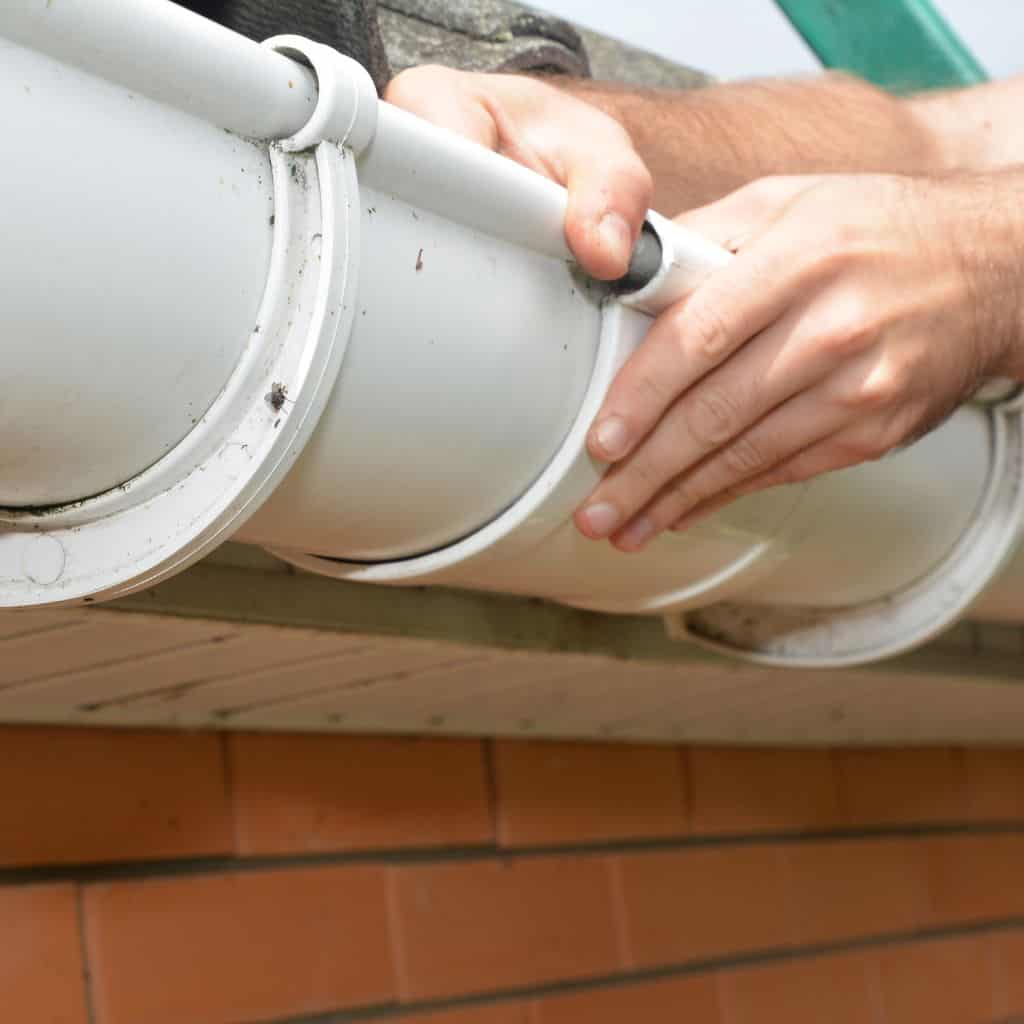
Water tracking down your property’s external wall often points to a gutter fault. A persistent drip after rainfall, or water that pools in the channel for hours after rain has stopped, are further indicators that attention is needed. These symptoms typically trace back to a failed joint or bracket somewhere in the run.
Common indicators include:
Water marks or stains along brickwork below the gutter line
Water marks or staining along the brickwork typically indicate a failed joint, a split bracket, or an overflowing gutter allowing water to run down the wall. A staining trail running directly down the wall often traces to a single failed joint above a bay or a parted swan-neck offset.
Water infiltrating behind the fascia can cause stained render and bubbled plaster inside the building within months. Prompt repair prevents the issue from escalating to timber rot and internal damage.
Moss growth along the back lip and blistered soffit paint
Moss growth along the back lip of the gutter and blistered soffit paint indicate persistent moisture and poor drainage. Moss develops from accumulated organic matter and standing water in the channel.
Pooled water remaining hours after rain suggests the fall has flattened or a bracket has dropped. This pooling accelerates uPVC fatigue, particularly at corner mitres on coastal Hampshire properties exposed to salt spray.
Water sheeting off the front lip during normal rain
Water sheeting off the front lip during ordinary rain indicates that the gutter is blocked, undersized, or has lost its proper fall. This overflow bypasses the downpipe system and causes damage to the fascia, render and brickwork below.
A hopper overflowing during heavy showers presents a similar pattern, often caused by blockages in the downpipe or insufficient capacity. Both symptoms can point to a failed joint or bracket upstream that requires targeted repair.
Pooled water in the channel hours after rain ends
Water remaining pooled in the channel hours after rain has stopped means the fall has flattened or a bracket has dropped, preventing water from flowing to the outlet. Proper fall is maintained at 1 in 600 toward the outlet for effective drainage.
When brackets loosen as the timber behind them softens, the gutter drops and water pools instead of flowing. Refitting failed brackets and correcting the fall prevents continued pooling and extends the working life of the system.
A continuous drip after a shower ends or hopper overflowing
A continuous drip after a shower has ended signals a failed joint or socket that is still releasing trapped water. Dripping that persists well after rain has stopped typically points to a failed joint above a bay or a parted swan-neck offset.
In coastal Hampshire, salt-driven uPVC fatigue often appears first at corner mitres. A single failed length in a half-round uPVC system may be suitable for a section swap, whereas multiple failed joints may warrant part-run replacement.
A staining trail running directly down the wall typically indicates a split bracket or a parted swan-neck offset. A long vertical stain below an upstairs window often traces to a single failed joint above the bay. Dripping that persists well after rain has stopped is a further sign worth investigating.
Pooled water in the channel can mean the fall has flattened or a bracket has dropped. In coastal Hampshire, salt-driven uPVC fatigue often appears first at the corner mitres.
How long does a gutter repair take?
Most gutter repairs range from 60 minutes to a full day, depending on the extent of the work and ease of access. Fixing a single leaking socket on a typical semi-detached property takes between one and two hours; a full gutter replacement on a detached property may take up to half a day.
Rear extension wrap-arounds with multiple corners take longer, as each mitre requires its own seal. Two-storey terrace work with scaffold-tower access generally takes four to six hours to complete. Cast iron repairs tend to take longer still, as bolt-fix joints require cleaning, re-bedding and mastic curing time.
A Victorian terrace with 100mm half-round cast iron can require a full day for a typical four-metre section swap, as each bolt-fix joint sets overnight before the water test.
Most domestic jobs achieve same-day completion, while multi-day projects are identified at the survey stage.
What does our gutter repair process involve?
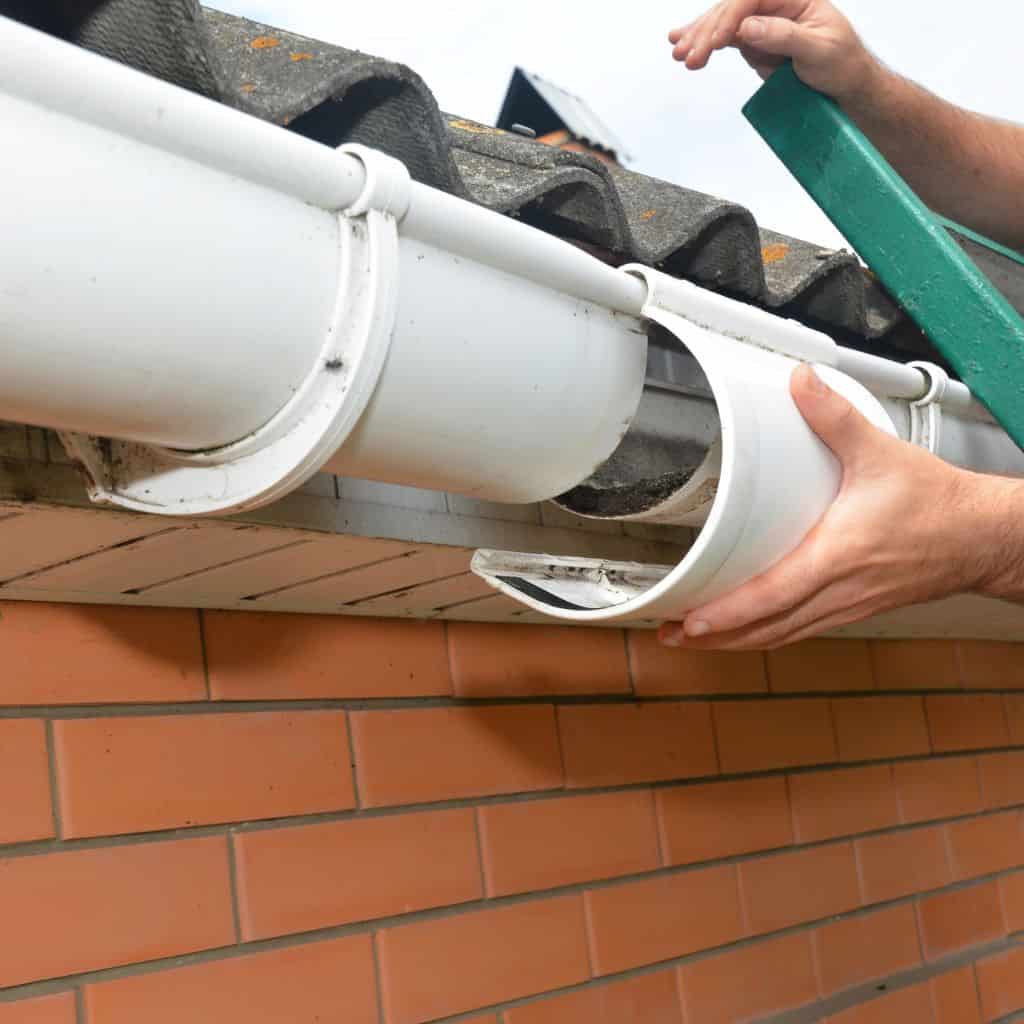
Our gutter repair process begins with a diagnosis from the ground, followed by a ladder survey leading to a targeted fix on the failed joint, bracket or section. A complete strip-out is considered only when the entire run has reached the end of its service life.
Our on-site procedures include:
Survey: assess falls, test joints, document every leak from ground and ladder
We begin with a diagnosis from the ground, followed by a ladder survey to assess falls, test joints, and document every leak – the same checks carried out in a full gutter inspection. We trace the issue to the faulty joint, bracket or section before any work begins.
A complete strip-out is considered only when the entire run has reached the end of its service life. The survey establishes whether a single failed length can be swapped or whether UV-aged profiles warrant part-run replacement.
Quote: record findings, create repair plan, confirm with you on-site
We record all findings, prepare a repair plan, and confirm it with you on-site before any work begins. Decisions about repair or replacement are made with your input, so you understand the options clearly.
An aged white uPVC run on a south-facing elevation may crack at each mitre, where piece-by-piece reseating is often short-lived. You will have the opportunity to choose between targeted repair or part-run replacement before anything proceeds.
Clear: remove debris from the run before removing any brackets
We remove debris from the run before taking out any brackets, to avoid clogging the system during the repair. Leaves, moss mats and bird nests obstruct the channel and must be cleared before work begins on joints or brackets.
Clearing debris first ensures that the flow test at the end accurately identifies any remaining faults. This step is essential to confirm that the system functions correctly once the repair is complete.
Refit: replace failed brackets, adjust fall to 1 in 600 toward outlet
Failed brackets are replaced and the fall is adjusted to 1 in 600 toward the outlet. Bracket spacing is set at 800 to 1000mm centres for uPVC, with closer spacing required for heavier cast iron sections.
Stainless steel screws are used for pre-drilled fascia to prevent rusting into the timber. Correct spacing and fall ensure water is directed effectively away from the wall and pooling is eliminated.
Test: pour water at highest point to confirm clear flow; seal joints with LMN silicone
Water is poured at the highest point to confirm clear flow to the gully in the final test. Low-modulus neutral cure silicone is applied on joints and fresh EPDM is inserted in each socket, as old gaskets tend to harden after ten years.
A properly executed gutter repair can last 10 years or more. LMN silicone significantly outlasts builder’s silicone, and like-for-like uPVC ensures alignment under the original tile drip for long-term durability.
What materials do we use in gutter repairs?
We supply and install uPVC clip-fit profiles, marine-grade aluminium, and cast iron sections. Each type is matched to the original profile on your property. Available profiles include half-round, ogee, deepflow and square-line.
Brackets may be fascia-fixed or rafter-fixed, depending on the existing installation. Correct spacing is important: 800 to 1000mm centres for uPVC, with closer spacing for cast iron. Rubber seals are replaced with fresh EPDM inserts, as old gaskets tend to harden after ten years.
We use:
- Low-modulus neutral cure silicone for joint reseats
- Butyl mastic strip for bolt-fix cast iron
- Gutter sealant cartridges as a temporary measure
- Stainless steel screws for pre-drilled fascia
South-facing elevations in direct sun can cause seals to harden faster than shaded areas. For coastal properties, we recommend marine-grade aluminium, as uPVC may degrade more quickly against salt spray.
How long will a gutter repair last?
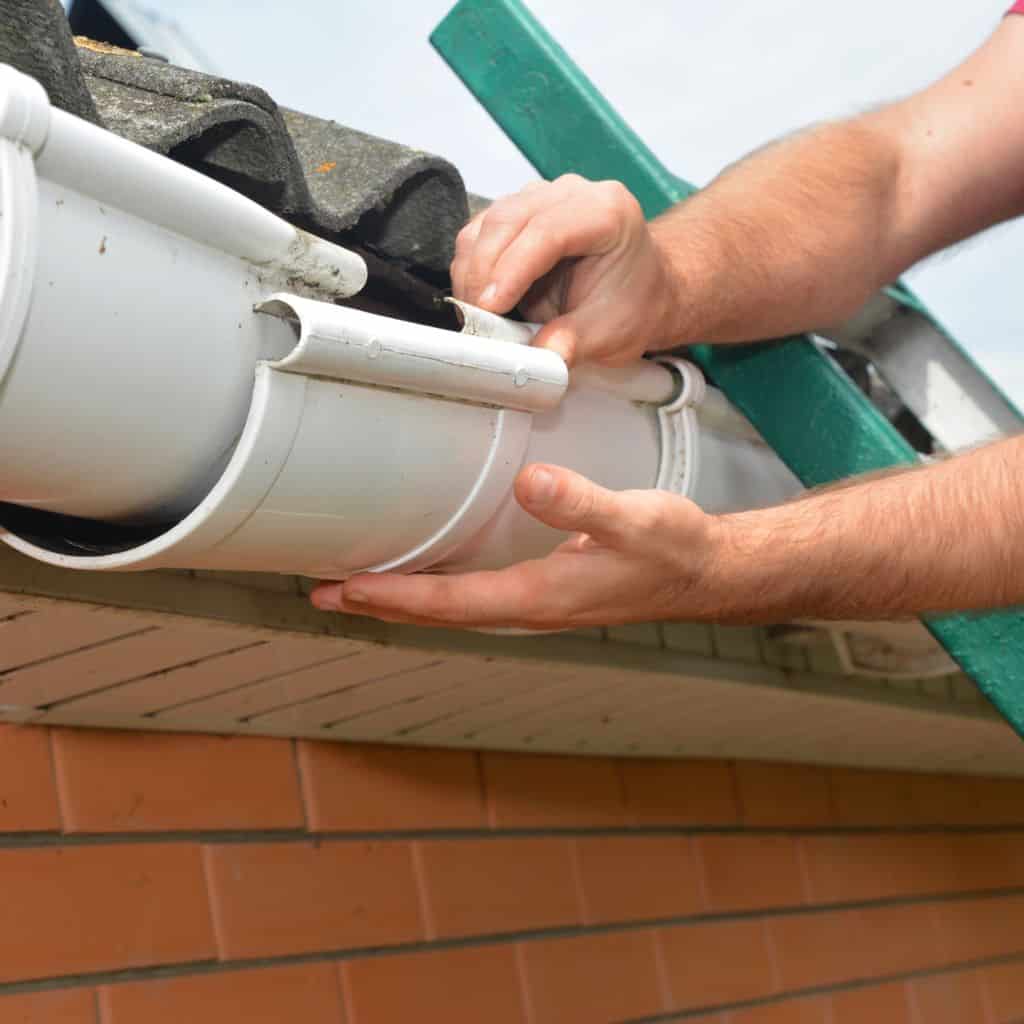
A properly executed gutter repair can last 10 years or more, though the exact lifespan depends on the conditions the system is subject to.
Three factors influence durability:
- Sealant chemistry: LMN silicone significantly outlasts builder’s silicone
- Bracket fixings: stainless steel screws prevent rusting into the fascia
- Profile match: like-for-like uPVC ensures alignment under the original tile drip
Why Choose C J Roofing & Renewables Ltd for Gutter Repair in Hampshire?
Over 15 years of experience
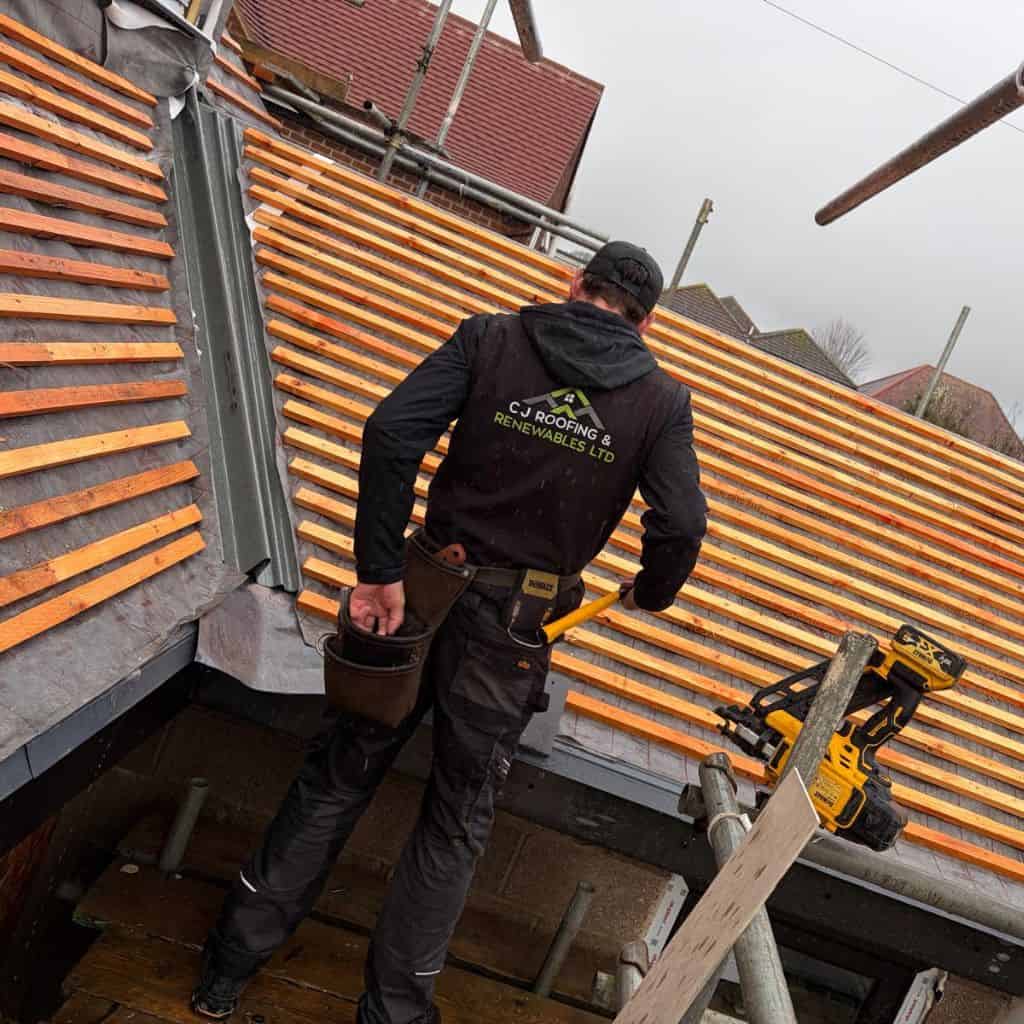
Connor and Jack bring over 15 years of combined hands-on roofing experience, delivering everything from small domestic repairs to large-scale commercial projects across Hampshire.

Locally based in Hampshire
Based in Portsmouth with deep local roots, we understand Hampshire's homes, weather and building styles, which allows us to deliver roofing work that lasts.
5-star rated service
We are proud to be rated 5 stars on Google by our customers, reflecting the quality of our workmanship and our commitment to reliable, professional service.
Competent & highly trained team
Our team is fully trained and certified in asbestos awareness, working at height and manual handling, ensuring every project is carried out safely and to industry standards.
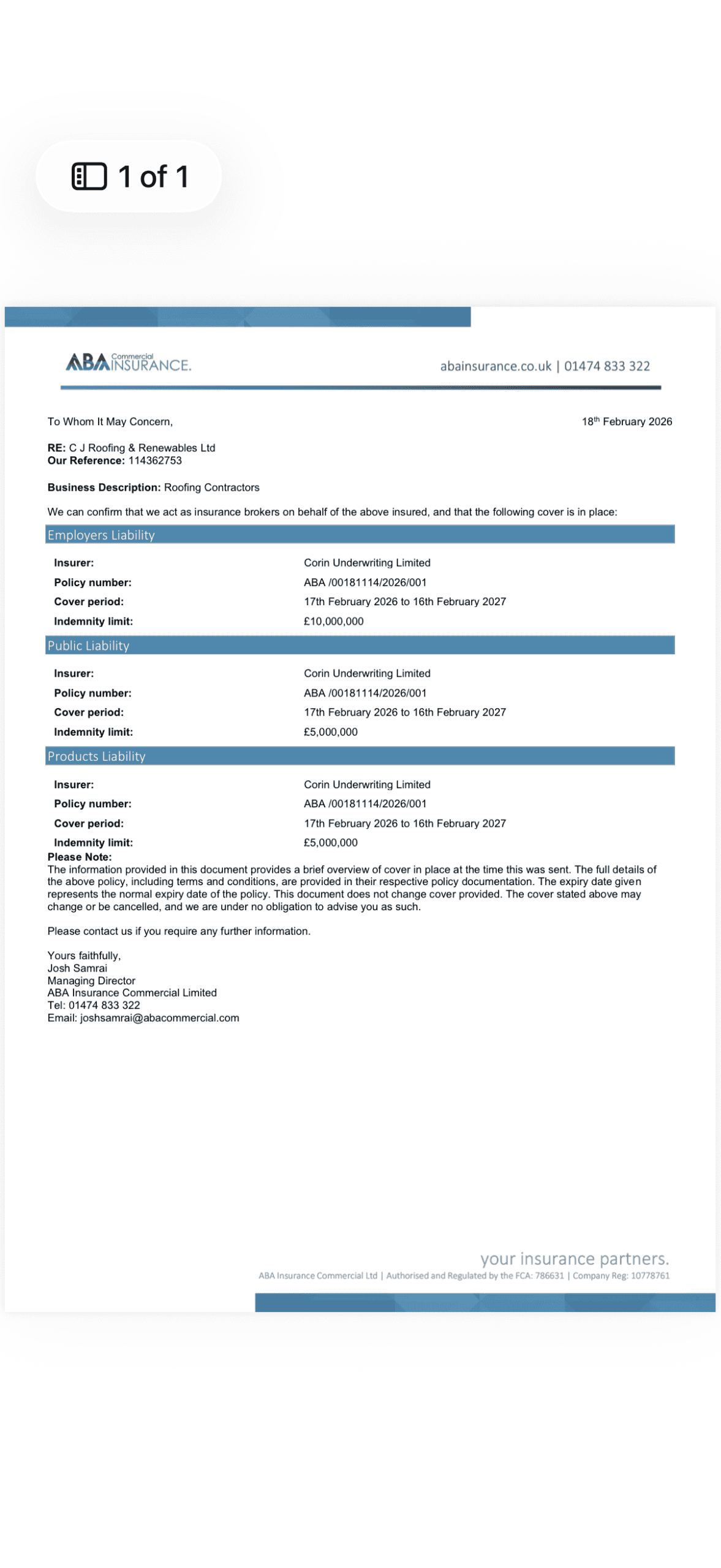
£5 million public liability insurance
We carry up to £5 million in public liability insurance, giving you complete peace of mind that your property is fully protected while we work.
10 year workmanship guarantee
All new roof installations and replacements come with a 10-year workmanship guarantee, so you are covered in the unlikely event of any issues.






Frequently asked questions
Take a look at the Frequently Asked Questions regarding our Gutter Repair service.
Do you offer guarantees on gutter repair workmanship?
We are unable to offer guarantees on remedial repair work. Our 10-year workmanship guarantee applies to new installations only.
What insurance and certifications does your team hold?
Our team holds £5 million in public liability cover and £10 million in employers’ liability cover. Each team member is certified in working at height, manual handling and asbestos awareness.
How do you handle storm damage to a gutter run?
We offer emergency gutter repair for same-day or next-day callouts. Where conditions require it, we can carry out temporary make-safes to prevent further water damage, with permanent repairs following once wind speeds drop below 25mph to allow safe ladder work.
Storms can detach uPVC runs from brackets and break downpipe clips, and water may force back through tile underlays. Our aim on the first visit is to prevent water from entering the property. Water should not reach the cavity, soak insulation or track onto plasterboard. Where overflow cannot be resolved immediately, we may use a tarp or diverter spout until conditions allow permanent repair.
Do you provide a written report after the repair?
Yes. We can provide a written job report with photographs documenting each completed repair on request.
Can you repair gutters on listed or heritage properties?
Yes. Heritage repairs involve using like-for-like cast iron or lead-lined timber to meet planning requirements. Listed Building Consent is facilitated through your local conservation officer. Like-for-like repairs are generally considered routine maintenance and do not typically require approval, though it is advisable to verify this with your local authority. Replacement with a different material usually requires approval.