
Roof Underlayment Installation Hampshire
Roof Underlayment Installation Services in Hampshire
Roof underlayment is the protective layer installed between the rafters and the outer roofing materials (tiles or slates), and its purpose is to intercept wind-driven rain that passes the outer covering and divert water away from the structural deck. When this layer fails, the resulting damage to timbers and insulation can develop for some time before it becomes apparent to the occupant.
C J Roofing & Renewables Ltd provides roof underlayment installation and replacement across Hampshire, whether as part of a new roof installation, a complete re-roof or a targeted membrane upgrade. All new installations are supported by a 10-year workmanship guarantee.
Your written, itemised quote follows within 48 hours of the survey. Call 02393873756 for a free quote. We respond within 48 hours.
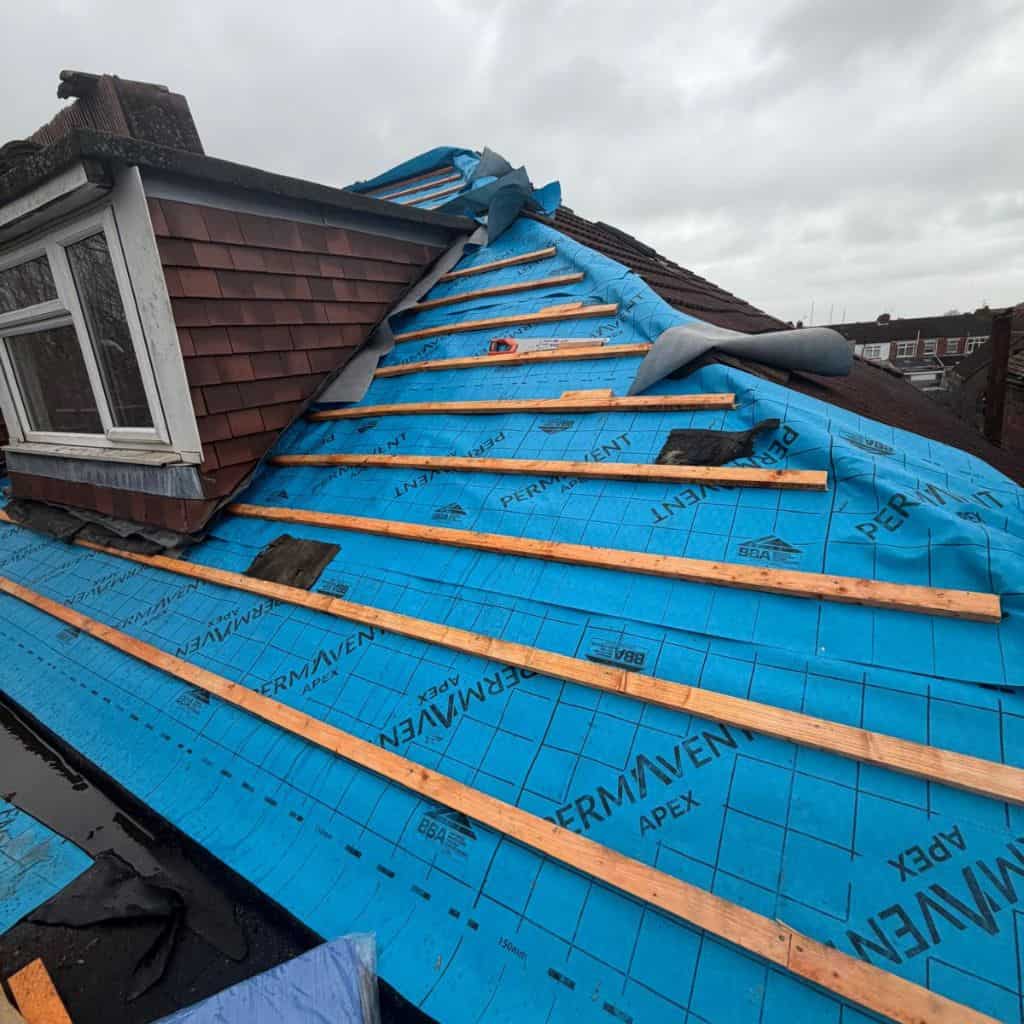
How do I know if my roof underlayment needs replacing?
Most underlayment damage is detectable from inside the loft rather than from outside the property. A torch sweep of the underside of the roof deck can reveal tears, sagging areas and damp staining that indicate a membrane approaching the end of its serviceable life.
Warning signs to look for in the loft include:
Daylight visible through tears, splits or detached sections of felt
Daylight visible through tears, splits or detached sections of felt in the loft indicates underlayment that is nearing the end of its lifespan. Most underlayment damage of this kind is detectable from inside the loft rather than from outside the property.
Damp patches or staining on the underside of felt or boarding
Damp patches or staining on the underside of the felt or boarding in the loft indicate that water is penetrating through the deck. Underlayment failure of this kind can lead to broader roof issues that often go unnoticed until the damage becomes significant.
Brittle, cracked or flaking traditional 1F felt at lap joints
Brittle, cracked or flaking traditional 1F felt at lap joints is a sign of bituminous felt that has exceeded its useful life. Felt over 50 years old is typically friable, sheds granules into the gutter and tears at lap joints under normal wind conditions.
Felt sagging between rafters where fixings have failed
Felt sagging between rafters indicates that the fixings have failed and the underlayment is no longer properly supported. This is a clear warning sign that the underlayment requires replacing.
Recurring leaks despite tiles being intact, granules in gutters
When tiles appear intact but leaks persist in the same area of the ceiling, the underlayment is often the source of the problem. Granules from the felt collecting in the gutters are a further indication that the felt is shedding and deteriorating.
If you notice any of these signs, contact us at 02393873756 for a survey.
What signs show that roof underlayment has been damaged by leaks or weather?
Underlayment damage typically falls into identifiable categories, each with distinct visual markers. Our surveys examine these patterns carefully before a replacement quote is provided.
Common damage patterns include:
- Storm uplift: felt torn at perforations where battens are nailed, exposing the deck
- Sustained moisture exposure: bituminous felt softening, bubbling or delaminating
- UV degradation: breathable membranes losing their micro-porous structure after prolonged exposure
- Rodent or bird intrusion: torn felt at eaves where small animals have entered the loft
- Old age: traditional 1F felt over 50 years old is typically friable and shedding
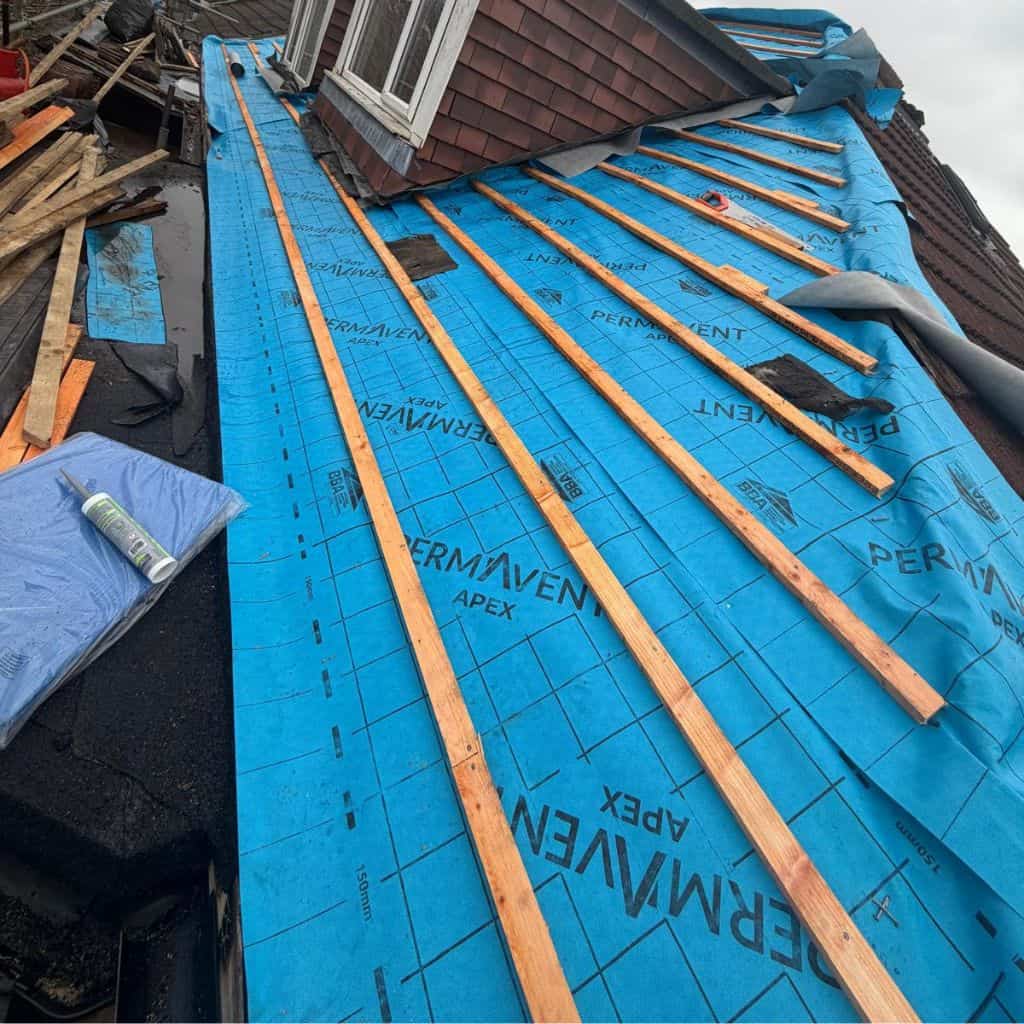
What does our roof underlayment installation involve?
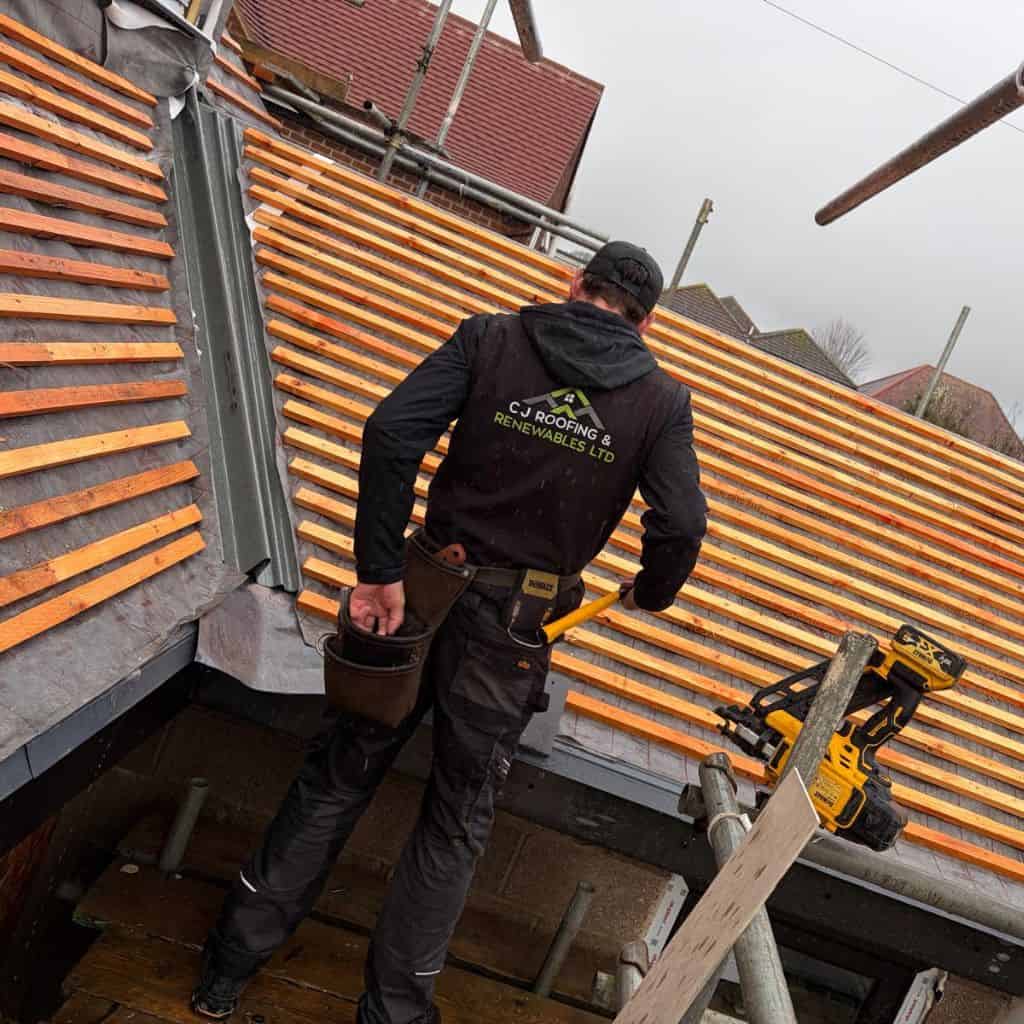
Our underlayment installation involves more than rolling out a membrane. It requires a clean, dry and structurally sound deck to ensure the longevity of the new underlay. Each stage is documented with photographs for your records.
Our process includes five stages:
Strip and inspect: remove old underlay, clear deck of debris and nail residue
During the strip and inspect stage, we remove the old underlay and clear the deck of debris and nail residue. A proper underlayment installation requires a clean, dry and structurally sound deck; without this preparation the longevity of the new membrane cannot be assured.
Timber check: probe battens for rot, moisture readings above 18% indicate replacement
At the timber check stage, we probe battens for rot and take moisture meter readings across the deck. Readings above 18% indicate that replacement is required before the membrane is laid.
A low-cost underlay installed over wet timber will cause both the timber and the membrane to deteriorate within five years. We do not seal a roof over timber with moisture readings above 18%, and proper lap seating demands dry conditions. We avoid sealing joints during active rain.
Membrane laying: eaves course first, horizontal and vertical laps per BS 5534
During the membrane laying stage, we lay the eaves course first and then proceed with horizontal and vertical laps in accordance with BS 5534. There are three principal types of roof underlayment, each suited to different pitched-roof applications depending on the property’s age, ventilation strategy and site exposure.
Breathable HR underlay is the standard choice for modern pitched roofs, allowing moisture vapour to escape while shedding bulk water. The membrane type is confirmed during the survey, before any tiles are removed.
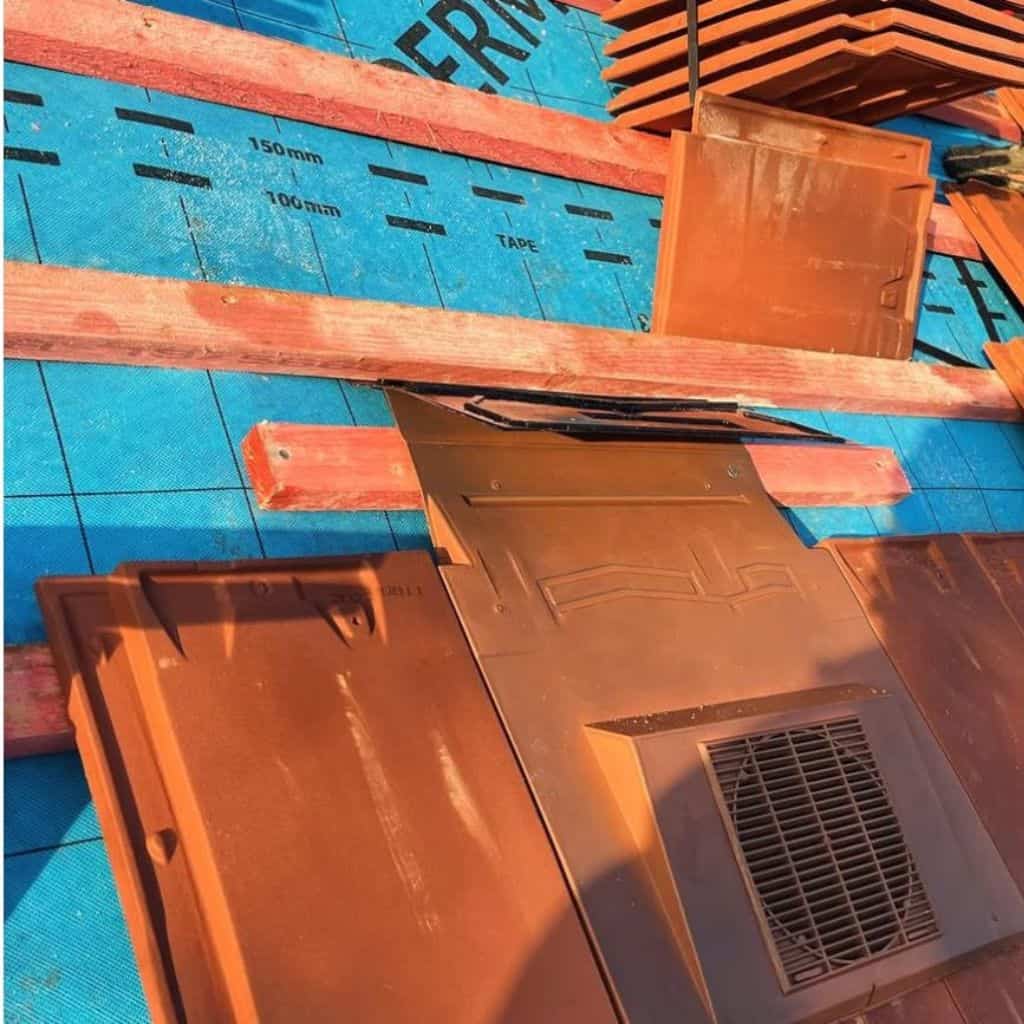
Counter-batten where required: create drained air gap over breathable membranes
Where required, we install counter-batten over breathable membranes to create a drained air gap. Vapour-permeable membrane with integral counter-batten is a premium option for low-pitch or exposed applications and is BBA-certified for temporary covering during installations.
For pitches below 17.5°, specialist underlay with integral counter-batten is often necessary, as not all tile or slate manufacturers warrant their products below this pitch. We confirm the roof pitch and manufacturer specifications before providing a quote.
Ridge dressing: carry membrane over ridge and seal accordingly
At the ridge dressing stage, we carry the membrane over the ridge and seal it accordingly. Breathable membranes serve an additional function here: they allow water vapour generated inside the home to escape through the roof, preventing condensation on the cooler deck side. The result is drier timber, longer-lasting insulation and a warmer loft.
What type of roof underlayment is best for my home?
There are three principal types of roof underlayment, each suited to different pitched-roof applications. The most appropriate choice depends on the property’s age, the existing roof ventilation strategy and the degree of site exposure.
The three categories are:
- Breathable HR (high-resistance) underlay: the standard choice for modern pitched roofs, allowing moisture vapour to escape while shedding bulk water; suitable for both warm-roof and cold-roof constructions.
- Traditional 1F bituminous felt: heavier and non-breathable, used in conservation areas where original felt types must be matched, or where separate ventilation is provided.
- Vapour-permeable membrane with integral counter-batten: the premium option for low-pitch or exposed applications; BBA-certified for temporary covering during installations.
The membrane choice is confirmed during the survey, before any tiles are removed.
How long does roof underlayment installation usually take?
The duration of an underlayment installation depends on whether it forms part of a standalone replacement or a broader re-roofing project. Standalone underlayment replacement is less common because it involves removing and reinstating the tile covering.
Typical timings include:
- Standalone underlay replacement: 2 to 3 days for a typical semi-detached property
- As part of a full re-roof: 1 day for the membrane stage of a 3 to 5 day re-roof
- As part of a roof replacement on a larger detached property: 1 to 2 days for the membrane stage of a 5 to 10 day project
Weather conditions are an important factor. Proper lap seating requires dry conditions and we do not seal joints during active rain. Temporary tarpaulins protect exposed battens when installation spans more than one day.
Why Choose C J Roofing & Renewables Ltd for Roof Underlayment Installation in Hampshire?
Over 15 years of experience
Connor and Jack bring over 15 years of combined hands-on roofing experience, delivering everything from small domestic repairs to large-scale commercial projects across Hampshire.

Locally based in Hampshire
Based in Portsmouth with deep local roots, we understand Hampshire's homes, weather and building styles, which allows us to deliver roofing work that lasts.
5-star rated service
We are proud to be rated 5 stars on Google by our customers, reflecting the quality of our workmanship and our commitment to reliable, professional service.
Competent & highly trained team
Our team is fully trained and certified in asbestos awareness, working at height and manual handling, ensuring every project is carried out safely and to industry standards.
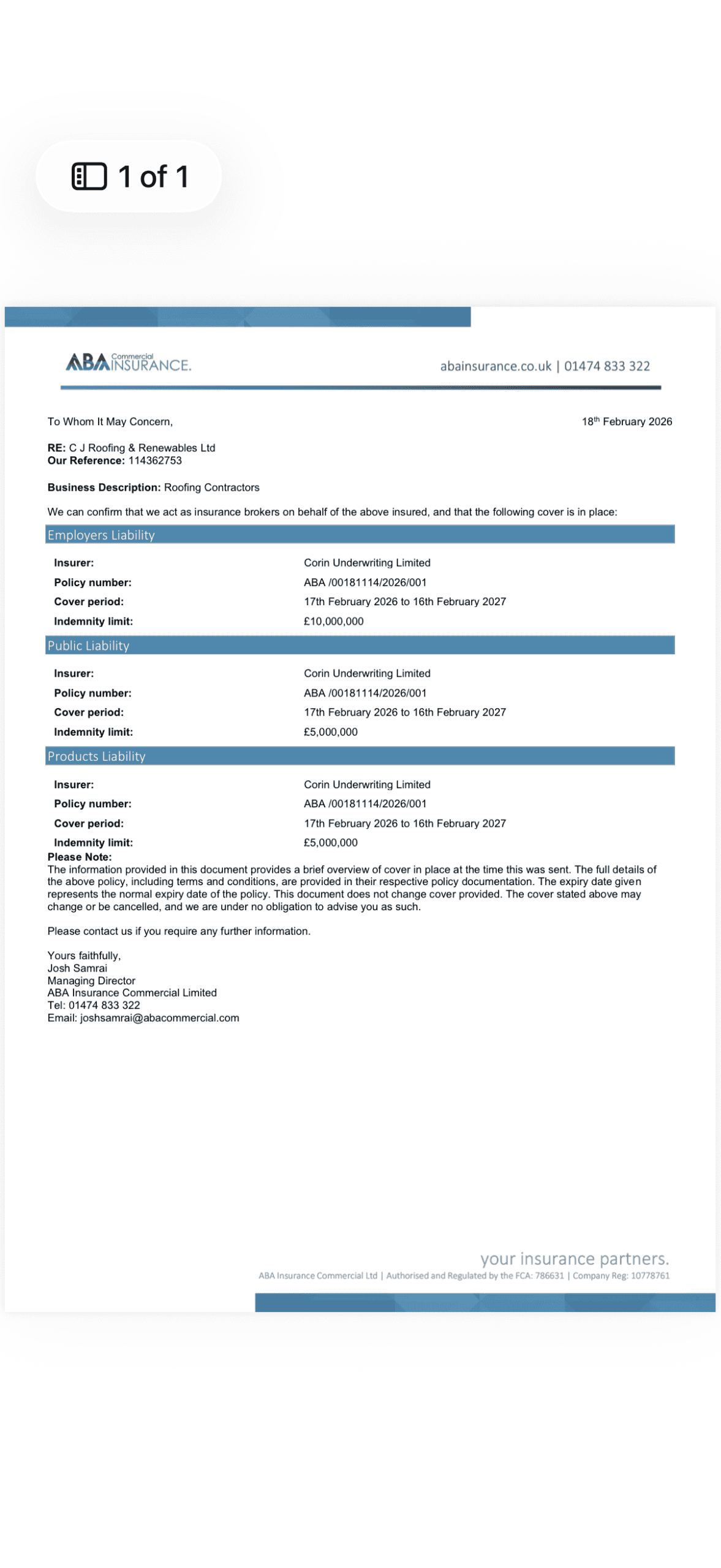
£5 million public liability insurance
We carry up to £5 million in public liability insurance, giving you complete peace of mind that your property is fully protected while we work.
10 year workmanship guarantee
All new roof installations and replacements come with a 10-year workmanship guarantee, so you are covered in the unlikely event of any issues.






Frequently asked questions
Take a look at the Frequently Asked Questions regarding our Roof Underlayment Installation service.
What causes roof underlayment to fail before the tiles do?
Underlayment typically fails before the overlying tiles or slates because it is thinner and more exposed to the conditions that act on the underside of the roof. Common causes include UV exposure during a delayed installation, sustained moisture from leaks, mechanical damage from foot traffic, fastener corrosion and the natural ageing of older bituminous felt.
The fixing pattern has a significant bearing on durability. Wind uplift can cause underlay tears at nail perforations, one of the most frequent failure modes. Correct lap dimensions and underlay weight specifications help prevent such failures.
How does roof underlayment protect against water ingress and moisture damage?
Roof underlayment provides a secondary weatherproofing layer beneath the tiles or slates. It intercepts wind-driven rain, water displaced by missing ridge tiles, water entering through tiles lost in a storm, and condensation, all before these reach the structural timber.
Breathable membranes perform an additional function: they allow water vapour generated inside the home to escape through the roof, preventing condensation on the cooler deck side. The result is drier timber, longer-lasting insulation and a warmer loft.
What are the different types of roof underlayment, and how do they compare?
There are three primary underlayment types for standard applications. Traditional 1F bituminous felt is heavy and non-breathable, and is preferred for conservation-area work where original materials must be matched. Breathable HR membranes are the modern standard: lighter, breathable and suitable for most applications. Vapour-permeable membranes with integral counter-batten are the premium choice for coastal sites and low-pitch roofs.
These types can be compared on the basis of weight per square metre, breathability, UV tolerance and compliance with BS 5534 for lap dimensions and fixings. We discuss these trade-offs with you during the survey.
Can roof underlayment be installed on all roof slopes and roof styles?
Underlayment can be installed on any pitched roof with a slope of 12.5° or more. For low pitches under 25°, lap dimensions are increased to ensure adequate weatherproofing.
For pitches below 17.5°, specialist underlay with integral counter-batten is often necessary, as not all tile or slate manufacturers warrant their products below this pitch. We confirm the roof pitch and manufacturer specifications before providing a quote.
Does roof underlayment need maintenance or inspection after installation?
Roof underlayment requires no routine maintenance after installation. However, a loft inspection every two to three years can identify unexpected damp patches or tears, and we recommend carrying this out alongside annual gutter cleaning.