
New Roof Installation Hampshire
New Roof Installation Services in Hampshire
A new roof installation provides reliable protection for your home for 50 years or more, preventing water ingress, reducing heat loss through the roof structure, and restoring the appearance of the building. Most installations are completed within two to five days.
C J Roofing & Renewables Ltd carries out new roof installations across Hampshire, selecting tiles, battens and felt to suit your property and the demands of the local climate. Every new roof includes a 10-year workmanship guarantee.
Your written, itemised quote follows within 48 hours of the survey. Call 07512976384 for a free quote. We respond within 48 hours.
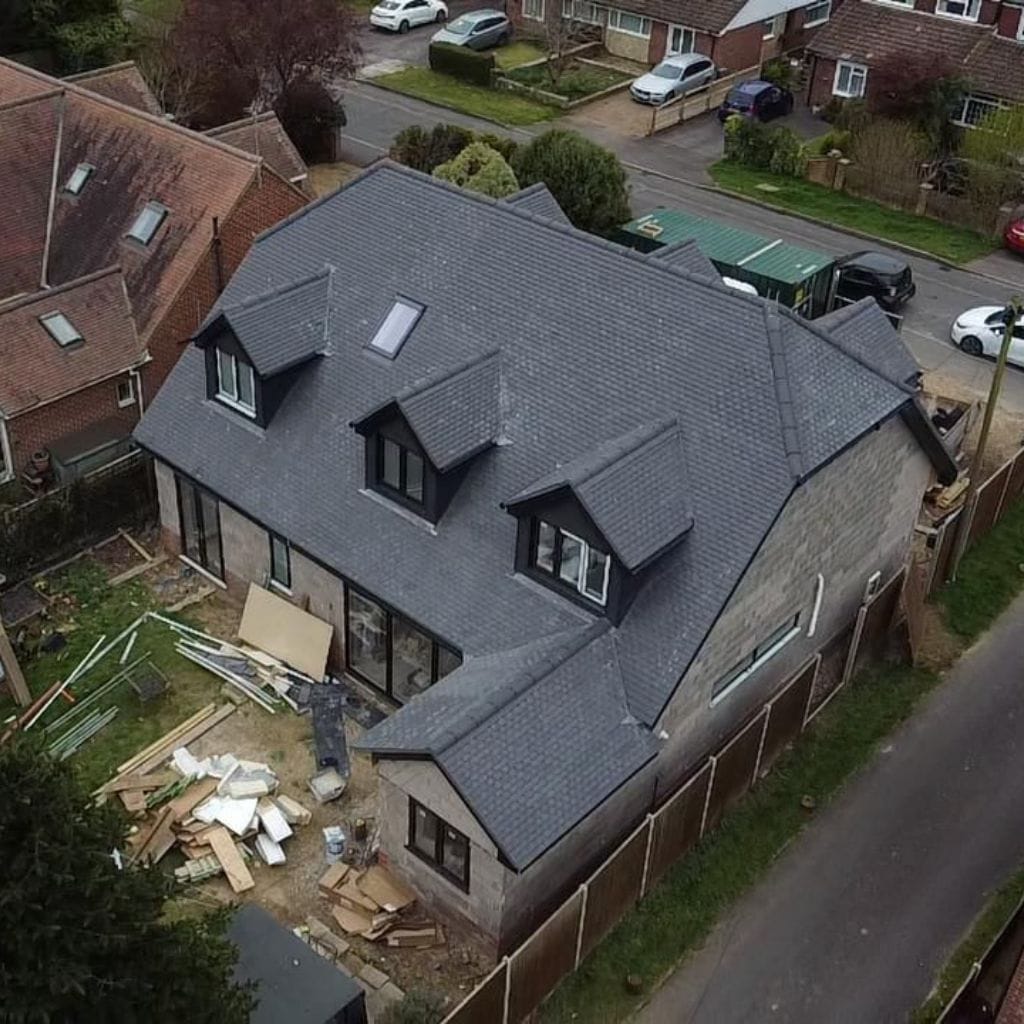
The types of New Roof Installations we provide
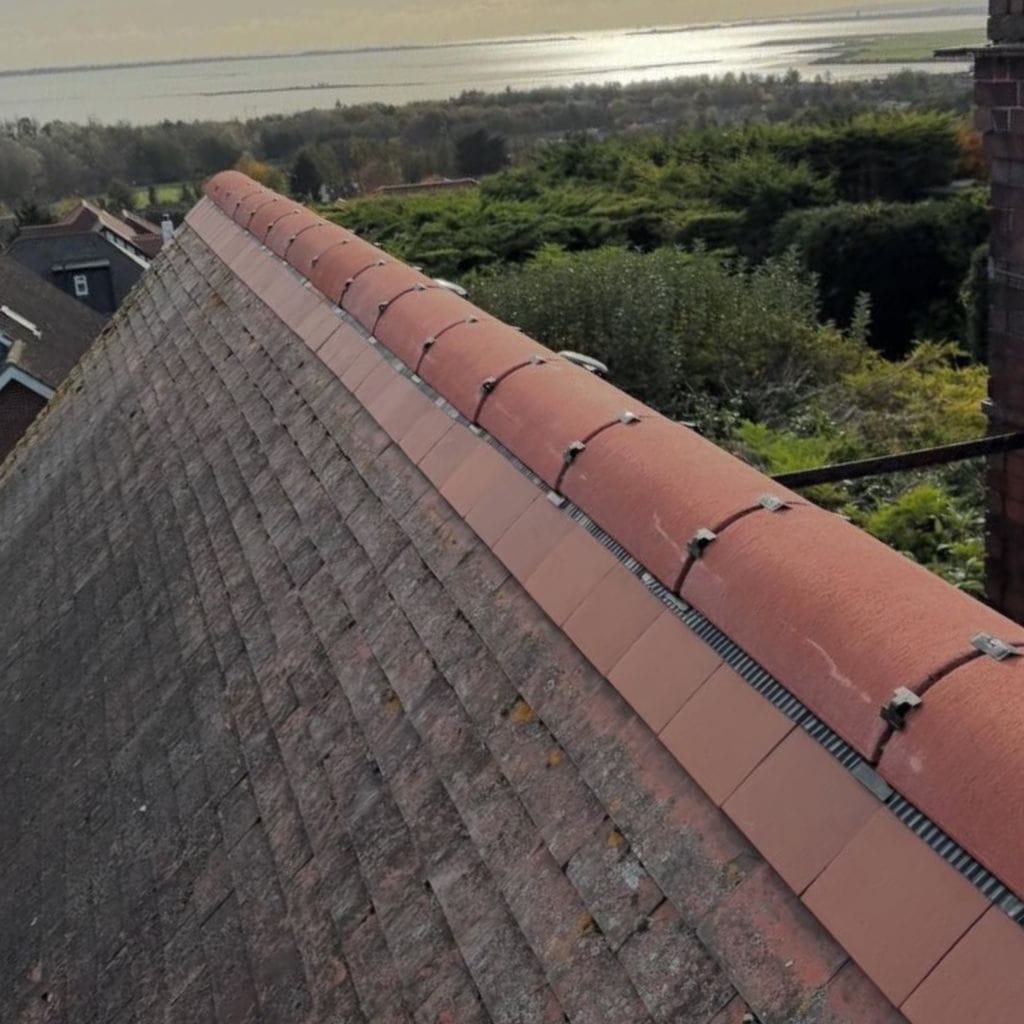
How do you know your roof needs replacing rather than repairing?
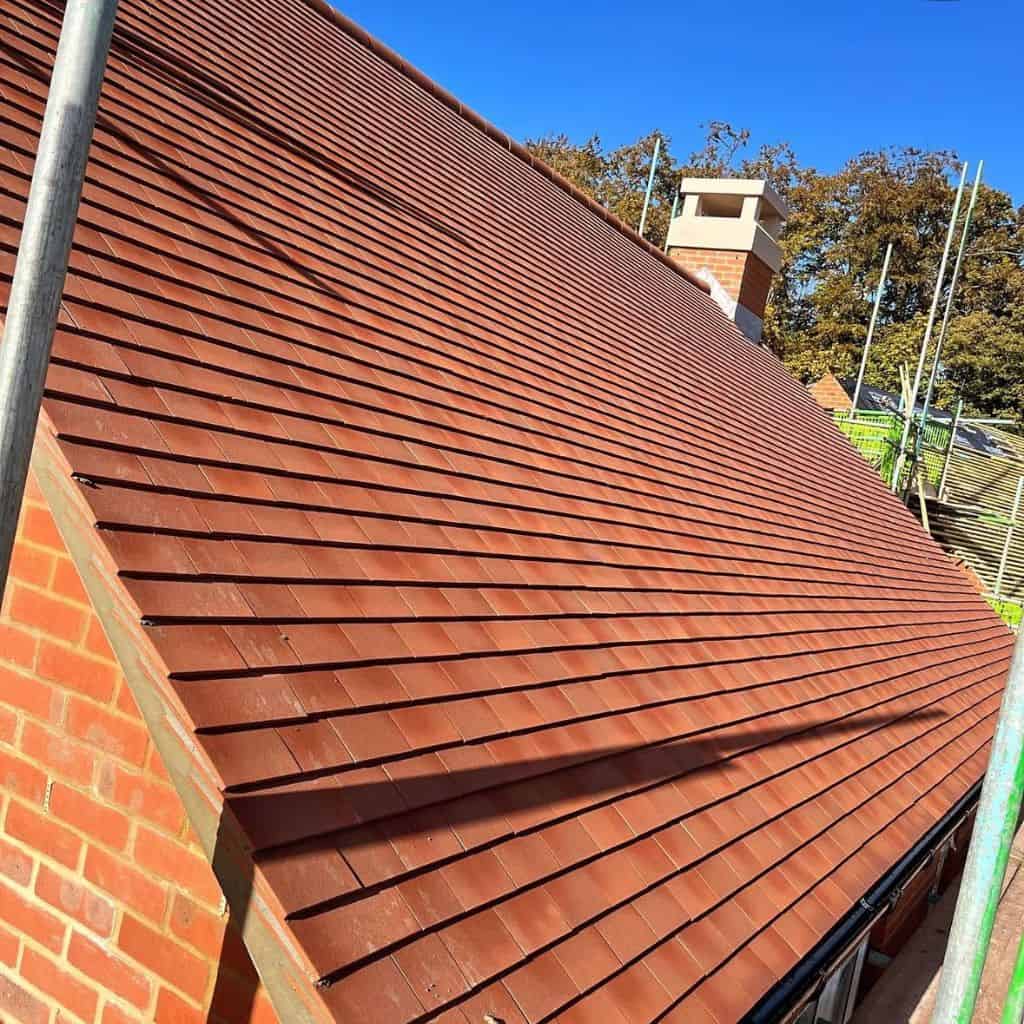
Roof replacement becomes necessary when damage extends across multiple slopes or when the underlying timber structure has deteriorated beyond what localised repair can address. Patch repairs on roofs over 50 years old are rarely long-lasting, and a professional roof inspection confirms whether replacement or repair is the right course.
Look out for these warning signs:
A sagging or dipped roofline visible from the street
A sagging or dipped roofline visible from the street indicates structural failure in the rafters or decking beneath the tiles. This is a serious sign that the underlying timber has lost its integrity and cannot be addressed through patch repairs alone.
Roof replacement is required when damage of this kind is present. Where our team encounters spongy decking during the survey, it typically points to rotten battens or rafters beneath – a condition particularly common in older Hampshire homes with original concrete tiles.
Slipped or missing tiles across more than one slope
Slipped or missing tiles across more than one slope indicate widespread failure of the fixing system rather than isolated damage. Fixings that have become brittle around previously patched areas can fail during adverse weather, making further patch repairs on older roofs an unreliable solution.
When damage spans multiple slopes, replacement is the appropriate course of action. A new roof installation provides protection for your home for 50 years or more, preventing water ingress, reducing heat loss and restoring the building’s appearance.
Daylight in the loft through the deck or felt
Daylight visible in the loft through the deck or felt means the roof covering has failed and water can enter the property freely. This level of deterioration affects the membrane or deck across a wide area and cannot be resolved with localised repairs.
Damp patches on upstairs ceilings after rain
Damp patches on upstairs ceilings after rain indicate that water is penetrating the roof deck and spreading across the ceiling below. This suggests the membrane or covering has failed across a substantial area rather than at a single point.
Where our team encounters spongy decking during the strip, it typically points to rotten battens or rafters beneath. Patch repairs on roofs over 50 years old are rarely a durable solution, and full replacement tends to be the more cost-effective approach.
Cracked mortar along the ridge and hip lines
Cracked mortar along the ridge and hip lines shows that the bedding has degraded and the ridge or hip tiles are no longer properly secured. Deteriorated mortar bedding on ridge tiles can cause sudden leaks, particularly on older properties, and a new roof is the ideal point to add ridge ventilation for better loft airflow.
Where our team encounters spongy decking during the strip, it often indicates rotten battens or rafters beneath – a condition seen regularly on older Hampshire homes with original concrete tiles. Fixings that have become brittle around patched areas can fail during adverse weather.
Which roofing materials suit the Hampshire climate?
Clay tiles, natural slate and concrete interlocking tiles are well suited to Hampshire’s weather conditions, withstanding wet winters, salt air and occasional summer heat.
Clay tiles, capable of lasting 60 to 100 years, resist frost effectively and are a natural choice for heritage and conservation properties. Welsh and Spanish slate roofing suits older Victorian and Edwardian terraces, with its thin profile sitting cleanly against original verges.
Match the material to the building:
- Clay plain tiles for period and conservation homes
- Natural slate for Victorian and Edwardian terraces
- Concrete interlocking tiles for modern semis and new estates
- Fibre cement slates for exposed coastal locations
Concrete interlocking tiles are well suited to modern estates and post-war properties, while fibre cement slates with 316 stainless fixings are used on coastal homes to resist salt exposure. We pair every roofing material with a breathable roof underlay, ensuring compliance with the highest industry standards.
What does our new roof installation process involve?
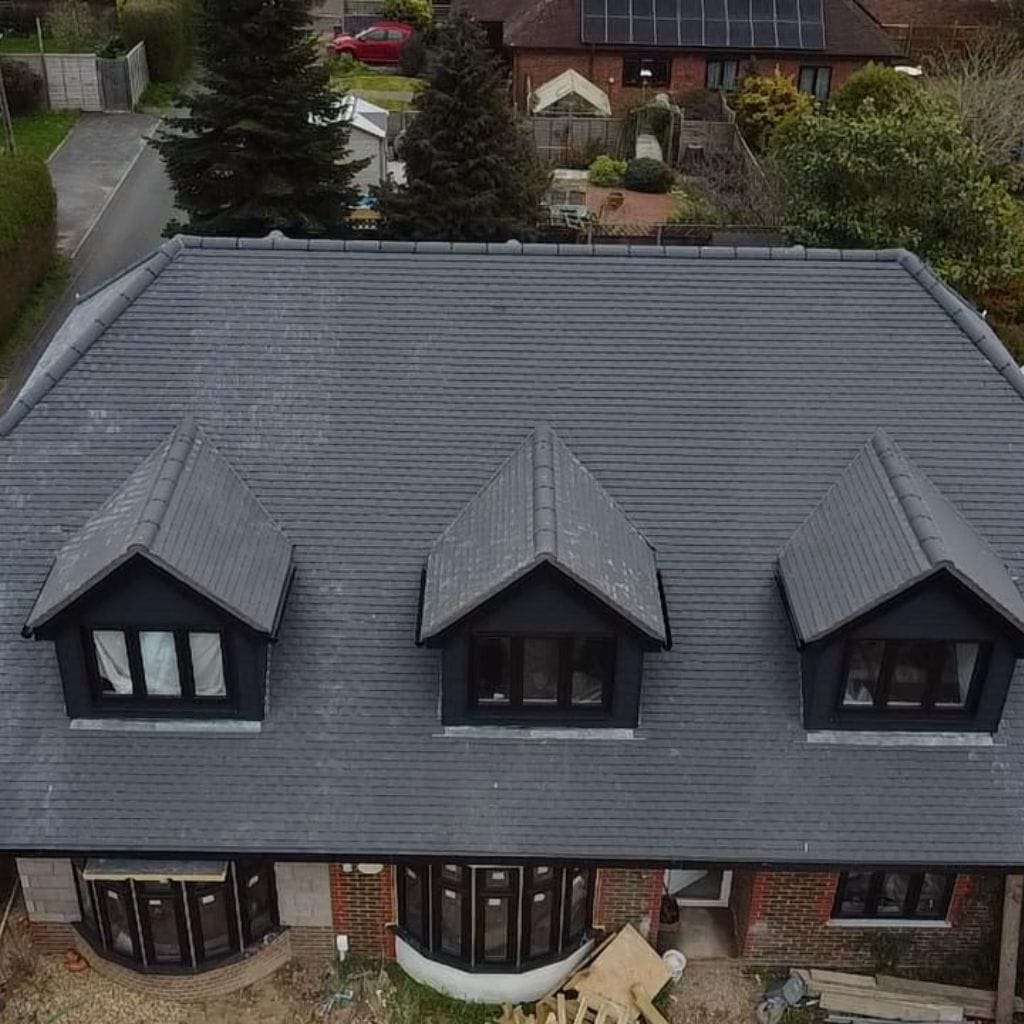
Our new roof installation follows a structured, five-stage process:
Scaffold: install edge protection on day one
Scaffolding with edge protection is installed on the first day, before any work on the roof begins. A skip is placed on the drive or road as required, and the scaffold is erected before the first tile is removed.
We provide a detailed day-by-day programme before scaffolding goes up, so you can anticipate the strip date, felt date, tile date and scaffold-down date in advance. Our team inspects the scaffold each morning as a matter of routine.
Strip: remove old covering down to rafters, dispose in skip
The old covering is stripped back to the rafters and removed by skip. The majority of noise occurs during the first two days when the old tiles come off; we cover your loft hatch and tape open vents to prevent dust from entering the rooms below.
Waste removal, daily site cleaning and protection of the surrounding property are included in every quote we issue, with skip hire for old slates and felt covered within the scope.
Timber check: replace rotten rafters, battens or deck boards
Any rotten rafters, battens or deck boards are replaced during the timber check stage. This is one of three quality checks carried out throughout the installation, with photographs taken at each stage for your records.
Where our team encounters spongy decking, it typically points to rotten battens or rafters beneath. Building control sign-off is required where structural alterations are made at this stage.
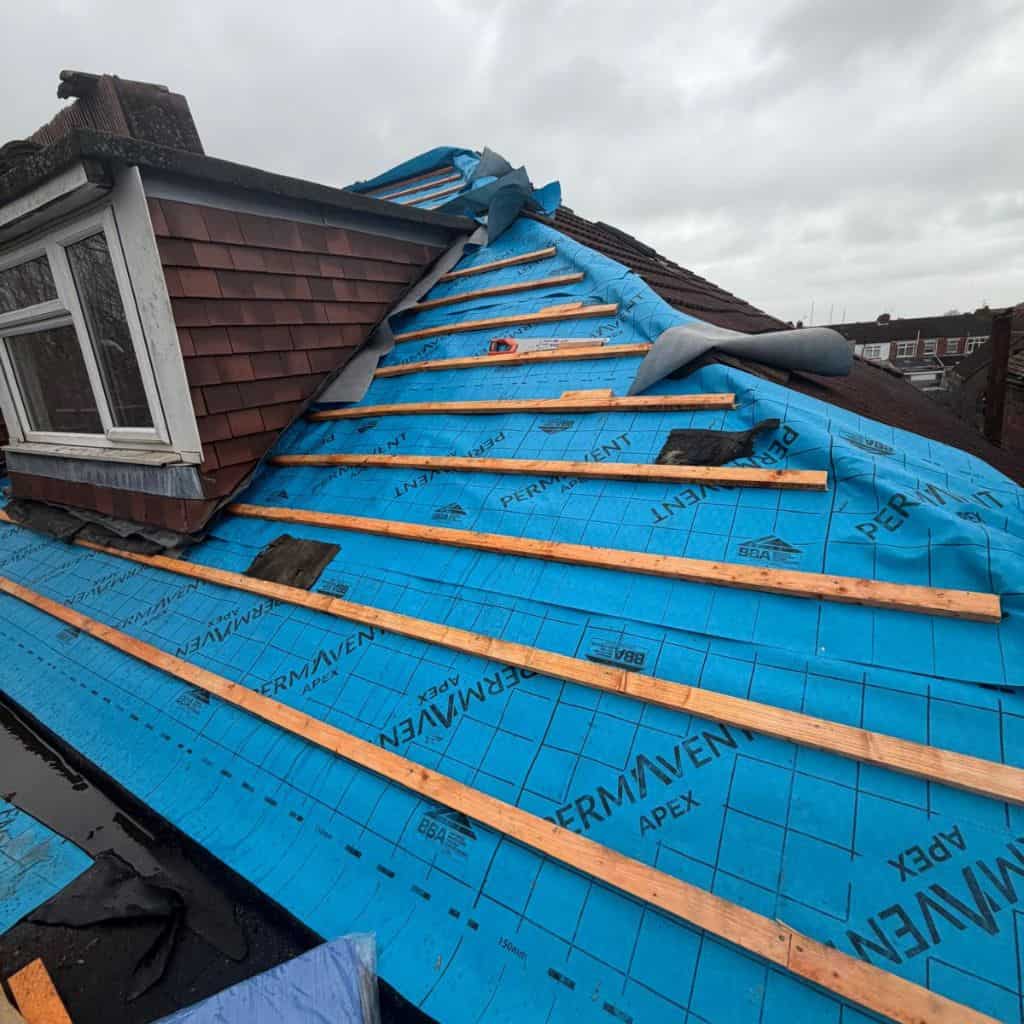
Membrane and battens: lay breathable underlay, align battens to specifications
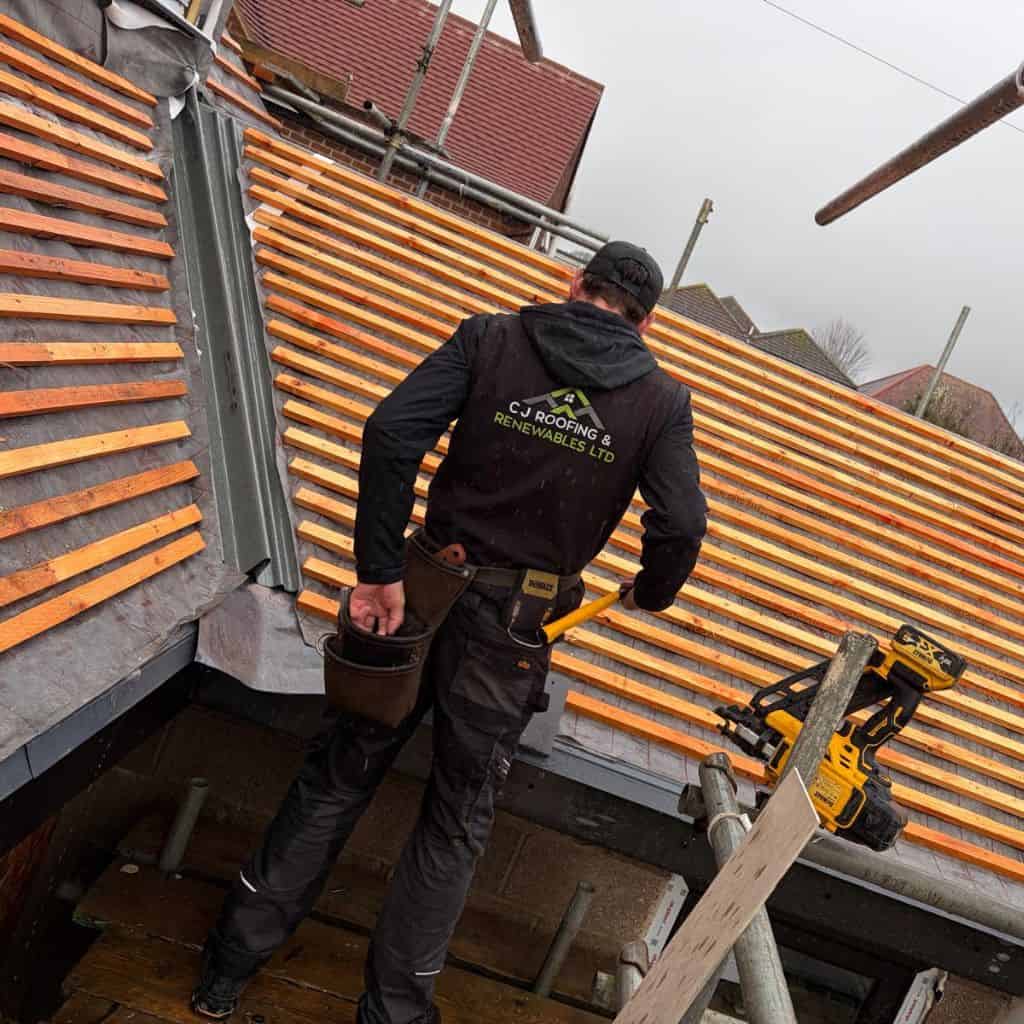
A breathable underlay is laid and battens are aligned to tile specifications, then secured with stainless ring-shank nails. Every roofing material we fit is paired with a breathable underlay, ensuring compliance with current industry standards.
Our team verifies nail spacings, batten gauges and underlay laps against manufacturer specifications. A mid-job felt and batten sign-off is carried out before tiles cover the joints.
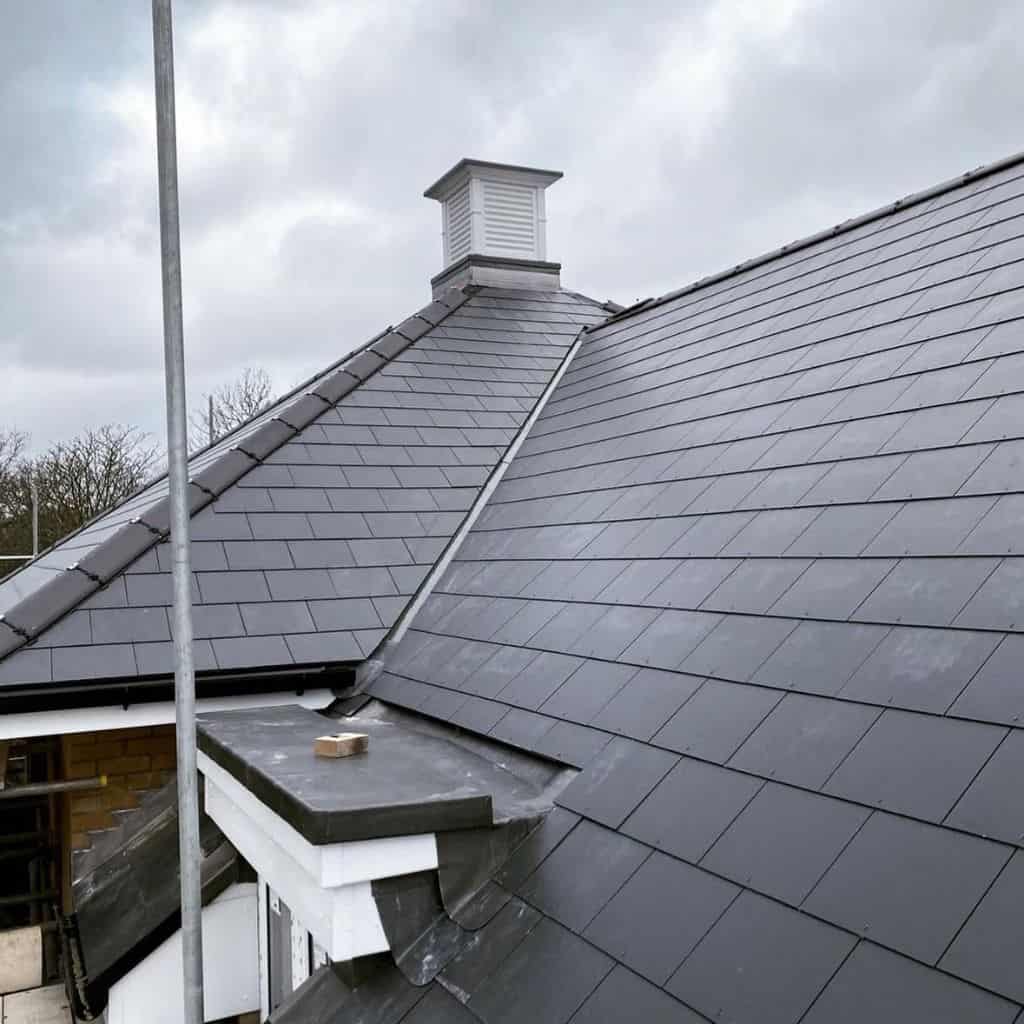
Tiling and finishing: install tiles eaves to ridge, apply dry ridge and flashings
For tile roofing, tiles are installed from eaves to ridge with every tile mechanically secured. Finishing includes applying the dry ridge system, lead flashings, gutters and downpipes to complete the roof.
Once the final tile is in place, you receive a written sign-off, photographs of every elevation and a 10-year workmanship guarantee. We provide images of the felt, battens and each finished elevation as part of your handover documentation.
How long does a new roof installation take?
A new roof installation typically takes two to five days for a standard Hampshire home. The exact duration depends on factors including roof size, pitch and tile choice.
A typical three-bedroom semi-detached home takes three to four working days, while a four-bedroom detached property may take up to a week. Smaller terraced homes are generally completed more quickly.
Weather can extend the programme, as rain, frost and gusts exceeding 25 mph may halt work for safety reasons. We provide a detailed day-by-day plan before scaffolding is erected, allowing you to anticipate the strip date, felt date, tile date and scaffold-down date in advance.
All work takes place outside the building, so you are able to remain in your home throughout the installation.
Why Choose C J Roofing & Renewables Ltd for New Roof Installation in Hampshire?
Over 15 years of experience
Connor and Jack bring over 15 years of combined hands-on roofing experience, delivering everything from small domestic repairs to large-scale commercial projects across Hampshire.

Locally based in Hampshire
Based in Portsmouth with deep local roots, we understand Hampshire's homes, weather and building styles, which allows us to deliver roofing work that lasts.
5-star rated service
We are proud to be rated 5 stars on Google by our customers, reflecting the quality of our workmanship and our commitment to reliable, professional service.
Competent & highly trained team
Our team is fully trained and certified in asbestos awareness, working at height and manual handling, ensuring every project is carried out safely and to industry standards.
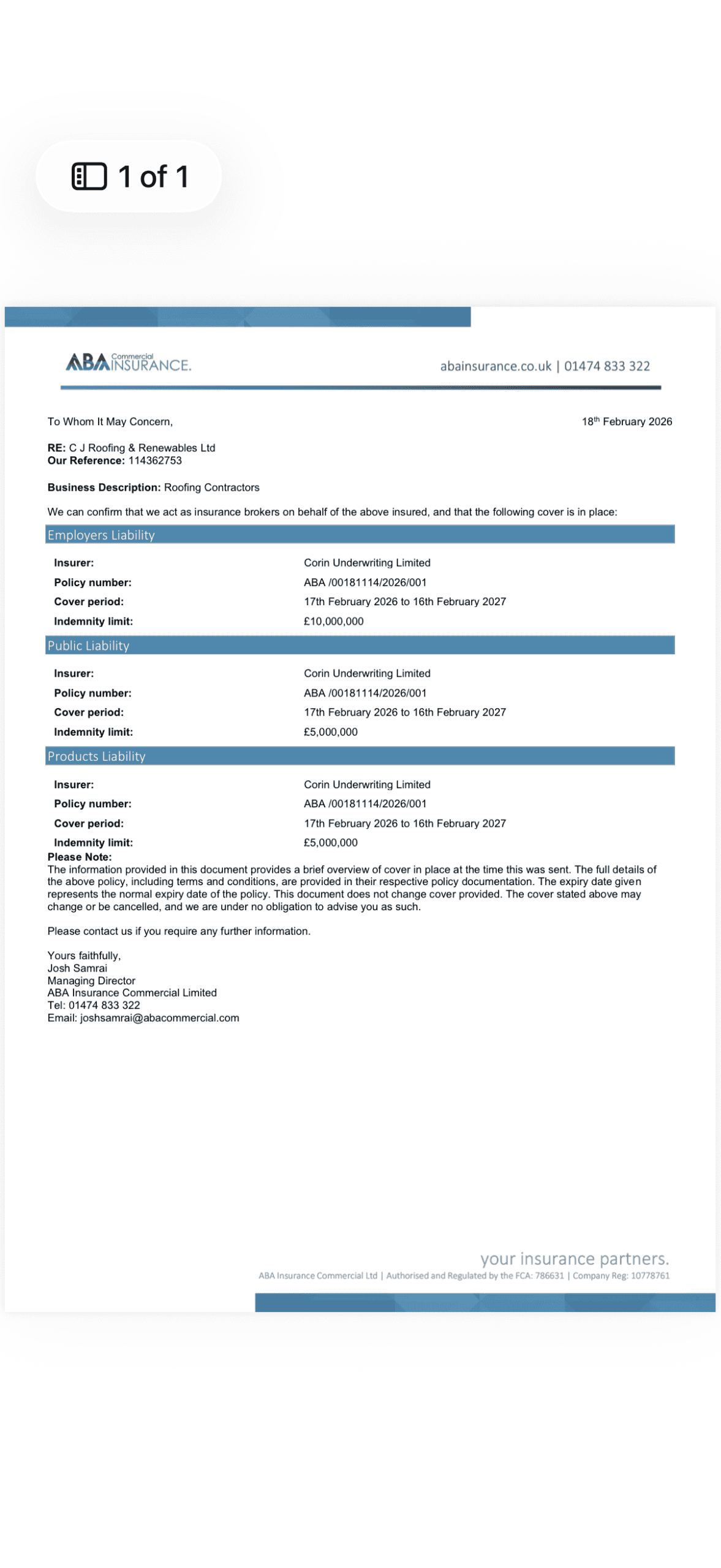
£5 million public liability insurance
We carry up to £5 million in public liability insurance, giving you complete peace of mind that your property is fully protected while we work.
10 year workmanship guarantee
All new roof installations and replacements come with a 10-year workmanship guarantee, so you are covered in the unlikely event of any issues.






Frequently asked questions
Take a look at the Frequently Asked Questions regarding our New Roof Installation service.
Will you need to leave your home during the work?
You are able to remain in your home for the entire installation. All work is carried out outside the building envelope.
Practical steps to prepare include:
- Moving your car off the driveway to allow skip and scaffold access
- Keeping pets and small children away from the working area
- Removing stored items from your loft
- Letting neighbours know about the noise and any shared access arrangements
What preparation work happens before installation begins?
Preparation involves a site survey, scaffolding setup, skip placement and protection of your drive and garden. We measure pitches, check rafter spans and confirm tile loadings before ordering materials.
Scaffolding is erected before the first tile is removed, and a skip is positioned on the drive or road as required.
How does weather affect the build?
Wet, frosty or windy days with gusts over 25 mph halt work for safety reasons. Rain can compromise the breathable membrane, and frost can crack freshly laid mortar.
Winter installations in Hampshire may lose scheduled days to adverse weather, so we build flexibility into every winter roof replacement programme. Temporary tarpaulins cover exposed battens overnight, dry-fix ridge systems replace wet mortar between November and March, and mechanical fixings are re-torqued by our team after each rain pause.
What quality checks happen during and after installation?
Three quality checks are conducted throughout the installation: a pre-strip timber inspection, a mid-job felt and batten sign-off, and a final completion survey.
Our team inspects the scaffold each morning and verifies nail spacings, batten gauges and underlay laps against manufacturer specifications. Flashings around chimneys, valleys and dormers are checked mid-job, before tiles cover the joints.
Once the final tile is in place, you receive a written sign-off, photographs of every elevation and a 10-year workmanship guarantee. Building control sign-off is required where structural alterations are made.
Who handles waste removal and protects the surrounding property?
Waste removal, daily site cleaning and protection of the surrounding property are our responsibility and are included in every quote we issue. The scope covers skip hire for old slates and felt, as well as protecting anything at risk of damage during the works.
Should asbestos cement sheets be found during the strip, work is paused and referred to a licensed contractor, as licensed asbestos removal falls outside our scope. Our team holds certifications in asbestos awareness, working at height and manual handling.
Our work is backed by £5 million public liability insurance and £10 million employers’ liability cover, providing protection against any unlikely damage to fences, conservatories or parked vehicles during the project.