Roof Ridge Vent Installation Hampshire
Roof Ridge Vent Installation Services in Hampshire
Sealing a roof without adequate ventilation traps moisture above the insulation, causing condensation to form on the underside of the felt. Left unaddressed, this leads to mould growth on stored items and timber rot in the rafters. This often happens before any leak becomes apparent. A continuous roof ridge vent installation resolves this by establishing a reliable airflow path from eaves intake to ridge exhaust at the roof’s highest point.
C J Roofing & Renewables Ltd specialises in roof ridge vent installation across Hampshire, covering retrofits, re-roofs and new roof installations. Each installation is supported by our 10-year workmanship guarantee, and dry-fix ridge components carry manufacturer warranties of 15 years or more.
Your written, itemised quote follows within 48 hours of the survey. Call 07512976384 for a free quote. We respond within 48 hours.
How does roof ridge vent installation improve loft ventilation and roof performance?
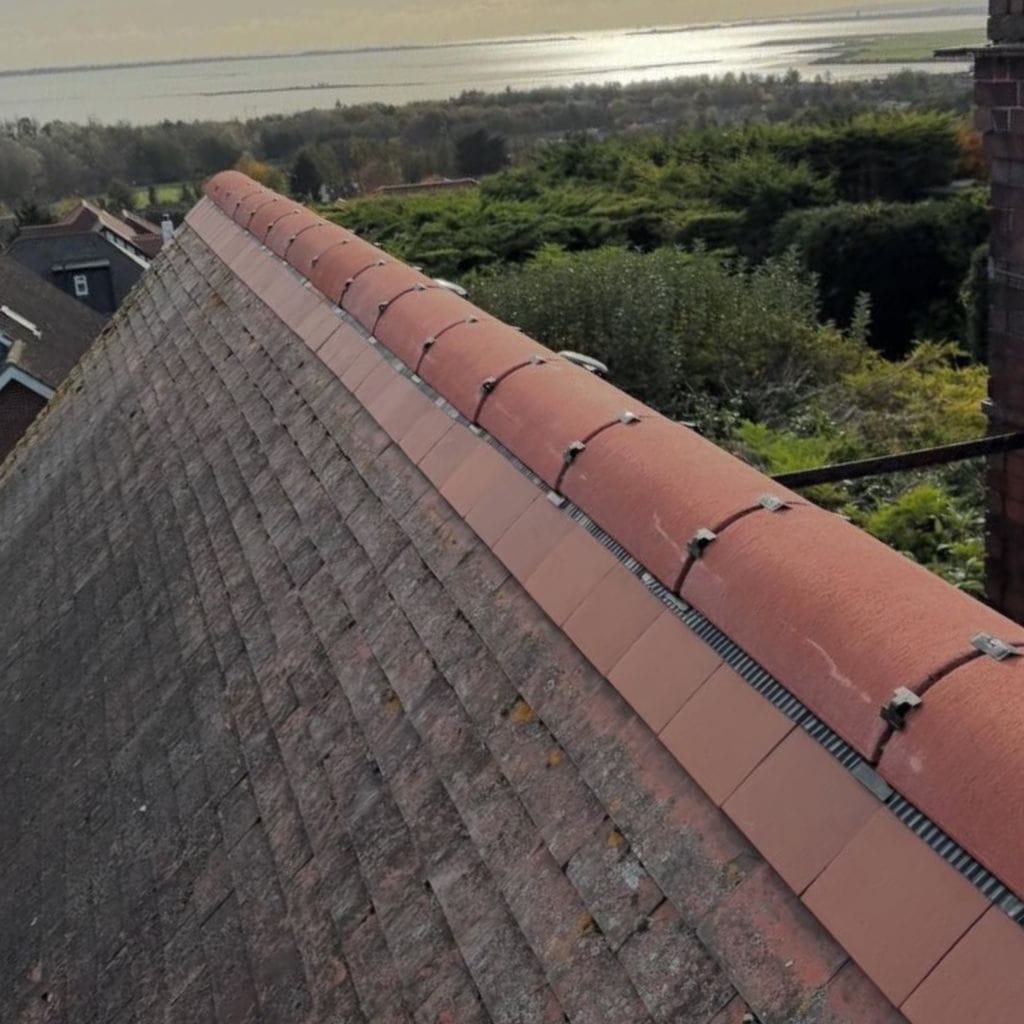
Roof ridge vent installation creates a continuous airflow through the loft. Cool air enters at the eaves, warms as it rises against the underside of the deck, and exits through a slot at the roof’s highest point. This stack effect operates continuously, removing moisture vapour and excess heat.
The performance improvements are significant:
Creates continuous airflow from eaves intake to ridge exhaust
Roof ridge vent installation establishes a continuous airflow through the loft. Cool air enters at the eaves, warms as it rises against the underside of the deck, and exits through a slot at the roof’s highest point. This stack effect operates without interruption, drawing out moisture vapour and excess heat.
Sealing a roof without proper ventilation traps moisture above the insulation, leading to condensation forming beneath the felt. A continuous ridge vent provides an effective solution, ensuring a clear airflow path from eaves intake to ridge exhaust.
Extends timber lifespan by preventing condensation on felt underside
Timber lifespan is extended once moisture is no longer able to condense on the underside of the felt. Without adequate ventilation, that condensation promotes mould growth on stored items and timber rot in the rafters. This often happens before any leak appears at ceiling level.
Enables insulation to function at its full R-value without damp degradation
Insulation performs at its full R-value once moisture is no longer allowed to accumulate above it. Sealing a roof without adequate ventilation traps moisture above the insulation layer, causing it to absorb dampness and lose thermal performance over time.
Reduces summer loft temperatures by 10 to 15°C in previously sealed roofs
Summer loft temperatures decrease by 10 to 15°C in previously sealed roofs once a ridge vent is installed. Where loft temperatures are noticeably higher than outside air in summer, this is a reliable sign of inadequate ventilation that ridge vent installation directly addresses.
The improvement is measurable: roof ridge vent installation creates a continuous airflow through the loft that operates without interruption to remove accumulated heat.
Reduces heating bills in winter as the loft remains drier
Heating bills reduce in winter as the loft remains drier and insulation performs as intended. A warm, musty smell entering the home through the loft hatch indicates moisture vapour present in the loft space. This is exactly the condition that ridge ventilation removes.
Ridge ventilation also satisfies Building Regulations Part L for energy efficiency and BS 5250 for controlling condensation in roof voids.
What signs indicate that a home needs roof ridge vent installation?
Signs of inadequate ventilation are most evident inside the loft. We recommend a loft inspection after cold snaps or humid summers, when condensation issues are at their most apparent.
Look for these warning signs:
- Visible condensation droplets on the loft side of the felt or boarding
- Mould or dark staining on insulation, rafters, or stored items
- A warm musty smell entering the home through the loft hatch
- Frost forming on the loft side of the underlay in winter
- Sealed warm-roof construction installed before 2010 without ventilation
- Noticeably higher loft temperatures compared to outside air in summer
Older Hampshire properties with traditional 1F bituminous felt are particularly vulnerable to ventilation problems, as the non-breathable felt traps moisture above the insulation. A roof ridge vent installation is often the most cost-effective intervention for roofs of this type.
What does a professional roof ridge vent installation process involve?
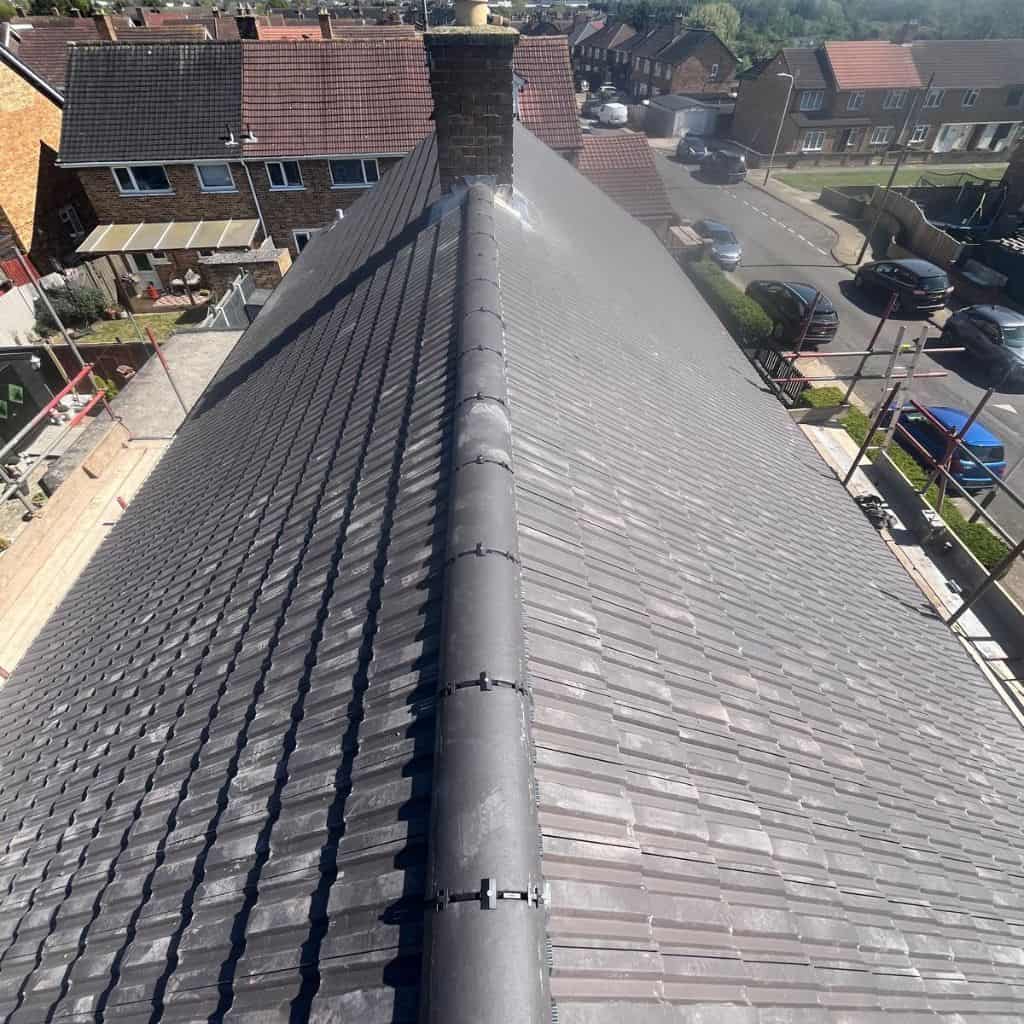
Roof ridge vent installation involves lifting ridge tiles, fitting a continuous ventilator along the roof apex, and reinstating the ridge with a dry-fix system. The work is confined to the ridge line and does not disturb the tiles below.
Our installation process consists of five stages:
Survey: measure ridge length, check eaves intake, inspect loft for blockage
During the survey stage we measure the ridge length, check the existing eaves intake, and inspect the loft for any insulation blockage. Compatibility with the existing roof is confirmed at this point, before a quote is issued.
Our checks cover ridge type, underlay condition, insulation position, and the state of existing eaves ventilation. A retrofit roof ridge vent is suitable for nearly all pitched roofs, though the method varies according to what is already in place.
Strip: lift ridge tiles, remove mortar bed, cut underlay to ridge line
During the strip stage we lift the bedded ridge tiles, remove the mortar bed, and cut the underlay back to the ridge line. The work is confined to the ridge line and does not disturb the tiles on the slopes below.
Vent install: fit continuous ridge ventilator, seal against underlay
During the vent install stage we fit the continuous ridge ventilator along the ridge and seal it against the underlay. We follow manufacturer specifications throughout and ensure the underlay is correctly sealed against the new vent before proceeding.
Ridge refit: reinstall tiles with dry-fix system, stainless screws, BS 5534 compliant
During the ridge refit stage we reinstall the ridge tiles using a dry-fix system with stainless steel screw fixings, in full compliance with BS 5534. Each installation is supported by our 10-year workmanship guarantee, and dry-fix ridge components carry manufacturer warranties of 15 years or more.
Eaves check: confirm over-fascia or under-eaves vent, adjust insulation for airflow
During the eaves check stage we confirm that over-fascia or under-eaves vents are present and adjust the insulation position to ensure a clear airflow path. Soffit vents provide the intake side of the system, while ridge vents act as the exhaust; both ends of the path are required for effective ventilation.
We verify the soffit airflow path during the survey, checking for blocked vents, insulation packed against the eaves, or sealed soffits without perforation. Where intake is missing or compromised, we recommend remedial work alongside the ridge vent installation.
How do you ensure a roof ridge vent is compatible with the existing roof structure?
Compatibility is established during the survey, before a quote is issued. A retrofit roof ridge vent is suitable for nearly all pitched roofs, though the appropriate approach varies depending on existing conditions.
We carry out the following checks:
- Ridge type: establish whether it is a bedded ridge (older) or dry-fix ridge (newer), as retrofitting methods differ between the two
- Underlay condition: traditional 1F felt may require replacement at the ridge line to provide a proper seating for the vent
- Insulation position: confirm that insulation is pulled back from the eaves edge to maintain the airflow path
- Existing eaves ventilation: verify that over-fascia, under-eaves, or soffit vents are present, as a ridge vent requires intake at the eaves to function correctly
In conservation areas around Winchester and parts of Portsmouth’s Old Town, planning consent may require bedded ridge reinstatement rather than the standard dry-fix system. We verify consent requirements before committing to a method.
How long does roof ridge vent installation usually take to complete?
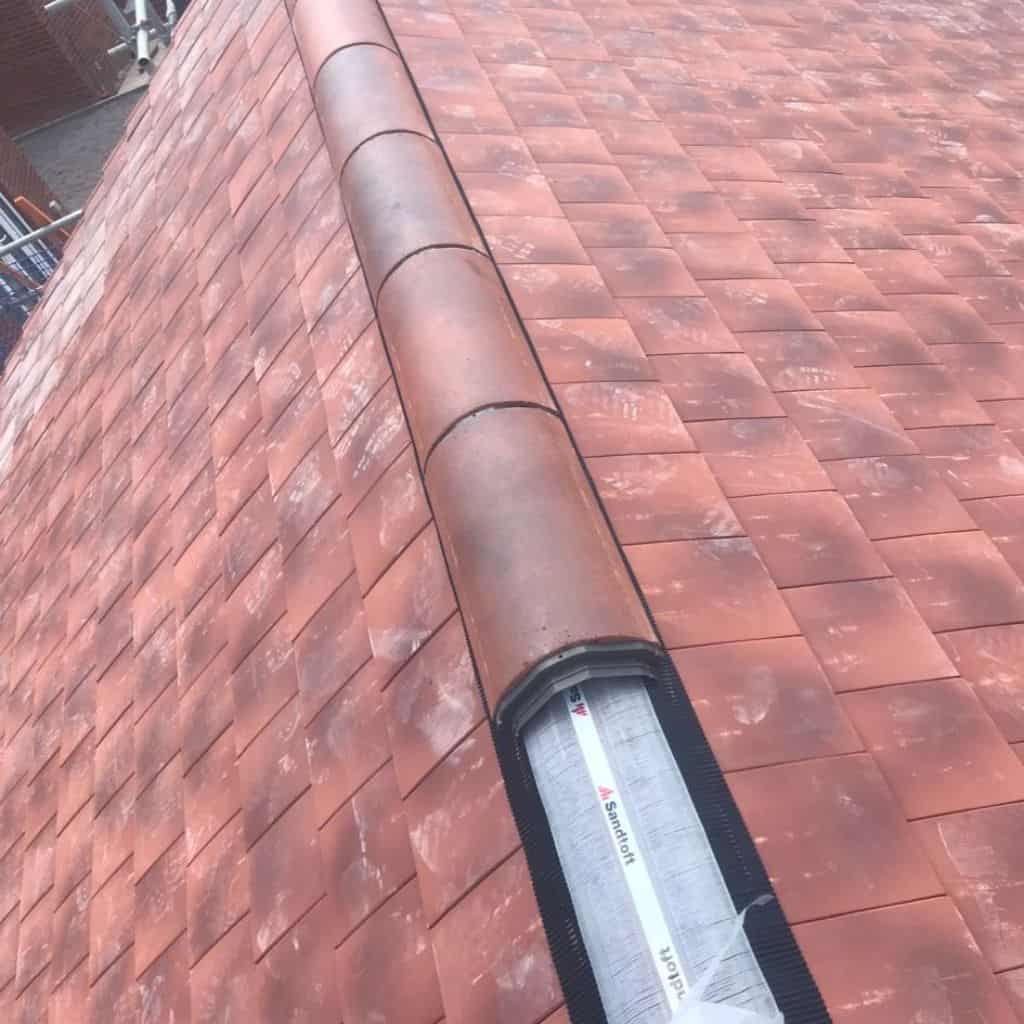
A standard straight ridge installation typically takes one working day. More complex roof geometries may extend this, though the work rarely runs beyond two working days.
Typical timings:
- Standard 8 to 10 metre straight ridge on a semi-detached property: 1 working day
- L-shaped, T-shaped, or hipped properties with multiple ridge sections: 2 working days
- Large detached property with several ridge runs: 2 to 3 working days
Dry conditions are essential for the underlay seal to bond, so we monitor the forecast and reschedule if necessary. You remain in your home throughout the installation, as all work occurs outside the building envelope.
Why Choose C J Roofing & Renewables Ltd for Roof Ridge Vent Installation in Hampshire?
Over 15 years of experience
Connor and Jack bring over 15 years of combined hands-on roofing experience, delivering everything from small domestic repairs to large-scale commercial projects across Hampshire.

Locally based in Hampshire
Based in Portsmouth with deep local roots, we understand Hampshire's homes, weather and building styles, which allows us to deliver roofing work that lasts.
5-star rated service
We are proud to be rated 5 stars on Google by our customers, reflecting the quality of our workmanship and our commitment to reliable, professional service.
Competent & highly trained team
Our team is fully trained and certified in asbestos awareness, working at height and manual handling, ensuring every project is carried out safely and to industry standards.
£5 million public liability insurance
We carry up to £5 million in public liability insurance, giving you complete peace of mind that your property is fully protected while we work.
10 year workmanship guarantee
All new roof installations and replacements come with a 10-year workmanship guarantee, so you are covered in the unlikely event of any issues.







Frequently asked questions
Take a look at the Frequently Asked Questions regarding our Roof Ridge Vent Installation service.
How do ridge vents work with soffit vents to improve airflow?
Soffit vents provide the intake side of the ventilation system, while ridge vents act as the exhaust. Both ends of the path are necessary for effective airflow. Cool air enters at the soffit, warms as it rises, and exits through the ridge slot. This process is driven by temperature differential and continues even on still days.
We verify the soffit airflow path during the survey, checking for blocked vents, insulation packed against the eaves, or sealed soffits without perforation. Where intake is missing or compromised, we recommend remedial work alongside the ridge vent installation.
What problems can occur if ridge vents are installed incorrectly?
Incorrect ridge vent installation can worsen the very problems it is intended to address. Common faults include wind-driven rain ingress at the ridge line from seal failure, accelerated tile slippage at exposed ridges from non-compliant fixings, worsened condensation from short-circuited airflow, and non-compliance with underlay manufacturer lap requirements.
We follow manufacturer specifications for ridge ventilator installation, seal the underlay correctly against the new vent, and confirm lap patterns before replacing ridge tiles. A photographic record is kept for each stage of the installation.
What roof types are best suited for roof ridge vent installation?
Ridge vents are suitable for any pitched roof with a slope of 17.5° or steeper, whether tiled or slated. Both cold-roof constructions (where insulation sits at ceiling level) and warm-roof constructions (where insulation sits at rafter level) benefit from ridge ventilation, though the airflow geometry differs. Flat roofs require different ventilation systems, typically using eaves or deck vents; ridge vents are not fitted to flat roofs.
The strongest candidates for retrofit are pre-2010 properties with bedded ridges, traditional 1F felt, and existing eaves intake but no ridge exhaust. These roofs typically show measurable improvement shortly after installation.
How do ridge vents affect attic moisture, mould, and roof lifespan?
Ridge vents remove moisture vapour before it is able to condense on the underside of the deck. Correct installation halts mould growth within weeks by drying previously damp surfaces between weather cycles. The benefit to roof lifespan is well documented: rafter and batten lifespan increases by 30 to 50% in retrofitted roofs, as timber is kept within its working moisture range. Insulation lifespan extends similarly.
Do ridge vents require maintenance after installation?
Ridge vents require minimal routine maintenance. A visual check during annual gutter cleaning is sufficient: examine for displaced tiles, debris accumulation at the ridge, and any signs of entry by birds or rodents.