Slate Roofing Hampshire
Slate Roofing Services in Hampshire
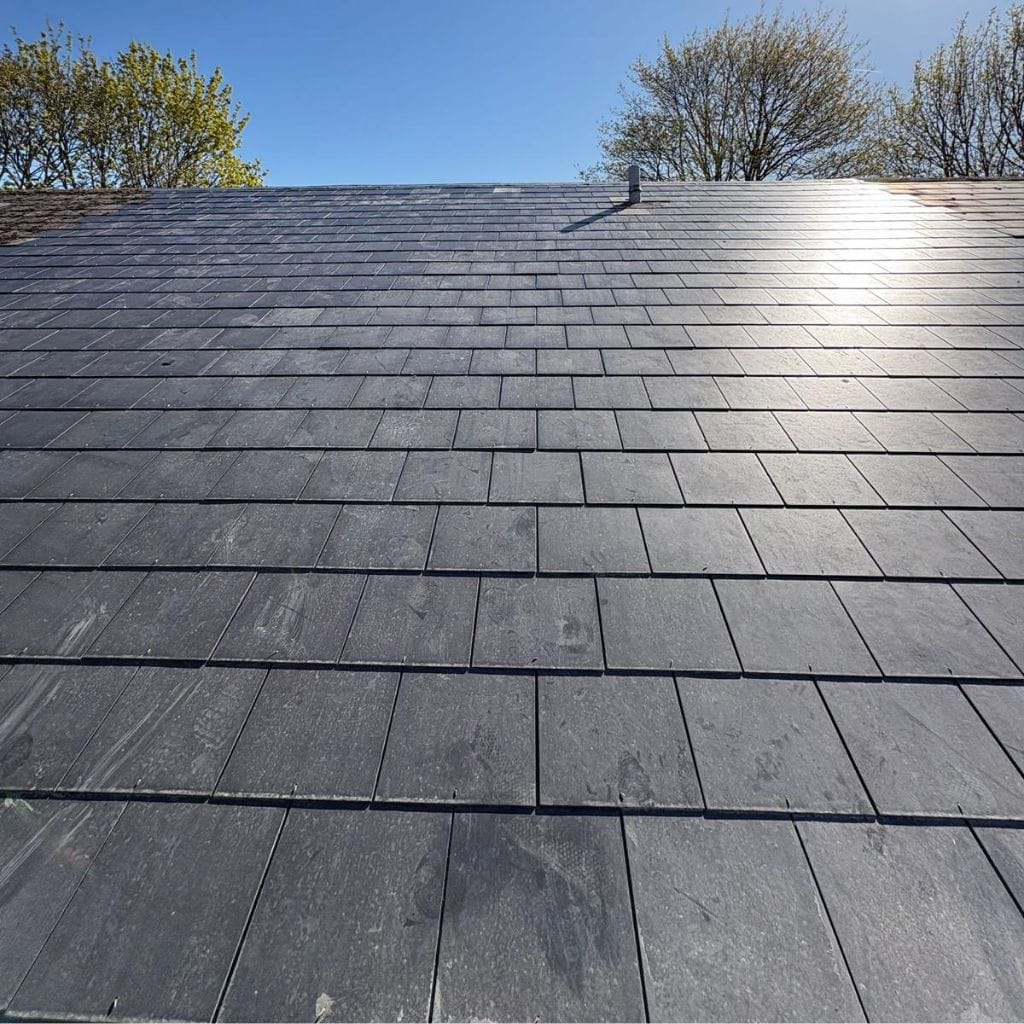
Slate roofing is a premium, long-lasting choice for pitched roofs across Hampshire. Welsh slate, when installed correctly, can last between 100 and 120 years; Spanish slate offers a service life of 80 to 100 years. The thin profile, matte finish, and natural colour variation make slate the preferred covering for listed buildings, conservation-area properties, and period homes from Victorian terraces to Georgian townhouses.
C J Roofing & Renewables Ltd specialises in installing and replacing slate roofs throughout Hampshire. We work with new Welsh and Spanish slate, reclaimed slate for heritage matches, and fibre-cement slate where structural loading or planning context requires it. Every new slate roof installation includes a 10-year workmanship guarantee.
Your written, itemised quote follows within 48 hours of the survey. Call 07512976384 for a free quote. We respond within 48 hours.
What factors should you consider when choosing the right slate roofing material for your home?
Choosing the right slate roofing material for your home involves considering property age, planning constraints, roof pitch, structural timber loading, and long-term lifespan priorities.
Welsh slate for listed buildings and conservation areas
Welsh slate is a premium material quarried in North Wales, with a lifespan of 100 to 120 years. We frequently specify it for listed buildings and conservation-area properties across Hampshire. Its thin profile, matte finish, and natural colour variation make it the preferred choice where planning consent or appearance demands the closest match to traditional coverings.
Properties in conservation areas (including those around Winchester, Portsmouth’s Old Town, and Hayling Island) often require Welsh or reclaimed slate. Where these constraints apply, we select the correct slate at the outset to avoid difficulties with planning consent later.
Spanish slate for high quality across a broader price range
Spanish slate provides high quality across a broader price range, with a lifespan of 80 to 100 years. It is available in colours including dark grey, black, and red-streaked variants. It is a sound choice for properties outside conservation zones where the full lifespan of Welsh slate is not required.
As with all slate selection, we take account of property age, planning constraints, roof pitch, structural timber loading, and long-term lifespan priorities.
Reclaimed slate for heritage matches and conservation consent
We use reclaimed slate, recovered from period roofs being dismantled elsewhere, where conservation consent requires weathered material that matches the existing appearance. On Victorian and Edwardian terraces where the original quarry has closed, original slate can be irreplaceable like-for-like. Sympathetic matching through our network of reclaim contacts is sometimes the only viable option.
Conservation areas often mandate like-for-like reclaim sourcing for visible elevations, with new slate permitted only on hidden or rear pitches. We advise on this at the survey stage so we specify the correct slate from the outset.
Fibre-cement slate for a lighter load outside conservation zones
Fibre-cement slate is a manufactured product with the appearance of natural slate, offering a lifespan of 50 to 60 years. It is suitable for properties outside conservation zones. It provides a lighter load on aged structural timber where the additional weight of natural slate would require structural assessment or reinforcement.
Roof pitch requirements: BS 5534 minimum 25 degrees
Roof pitch is a critical factor in slate roofing. BS 5534, the British Standard for slating and tiling, requires a minimum pitch of 25° for natural slate. Below this threshold, specialist underlay and fixing systems are necessary, and not all slate types are suitable. We confirm the pitch at survey before any slate is selected.
How do you ensure structural readiness before a slate roof installation?
Confirming a roof’s structural readiness is an essential part of any slate installation, given slate’s weight relative to materials such as fibre-cement or felt. A structural assessment is carried out before the strip begins, particularly when switching material categories. This may require a structural calculation under Building Regulations Part A.
Pre-installation checks include:
- Pitch confirmation: natural slate requires a minimum pitch of 25° per BS 5534; below this, specialist underlay and fixing systems are necessary, and not all slates are suitable
- Rafter sizing: the rafter section is checked against BS 8103 for the chosen slate weight, particularly when changing material types
- Deck condition: moisture meter readings and screwdriver probes are used at valleys, abutments, and ridge boards, with replacements made where readings exceed 18%
- Wall plate and eaves: rot checks are carried out at the wall-plate junction, with the condition of soffits and fascias assessed at the same time
- Chimney and abutment lead: the condition of Code 4 lead flashings is assessed, with full replacement typically scheduled alongside the re-slate to ensure integration with the new covering
Where material weight differences require structural calculations, we coordinate these with a chartered engineer before quotes are finalised.
What are the stages involved in a slate roofing installation?
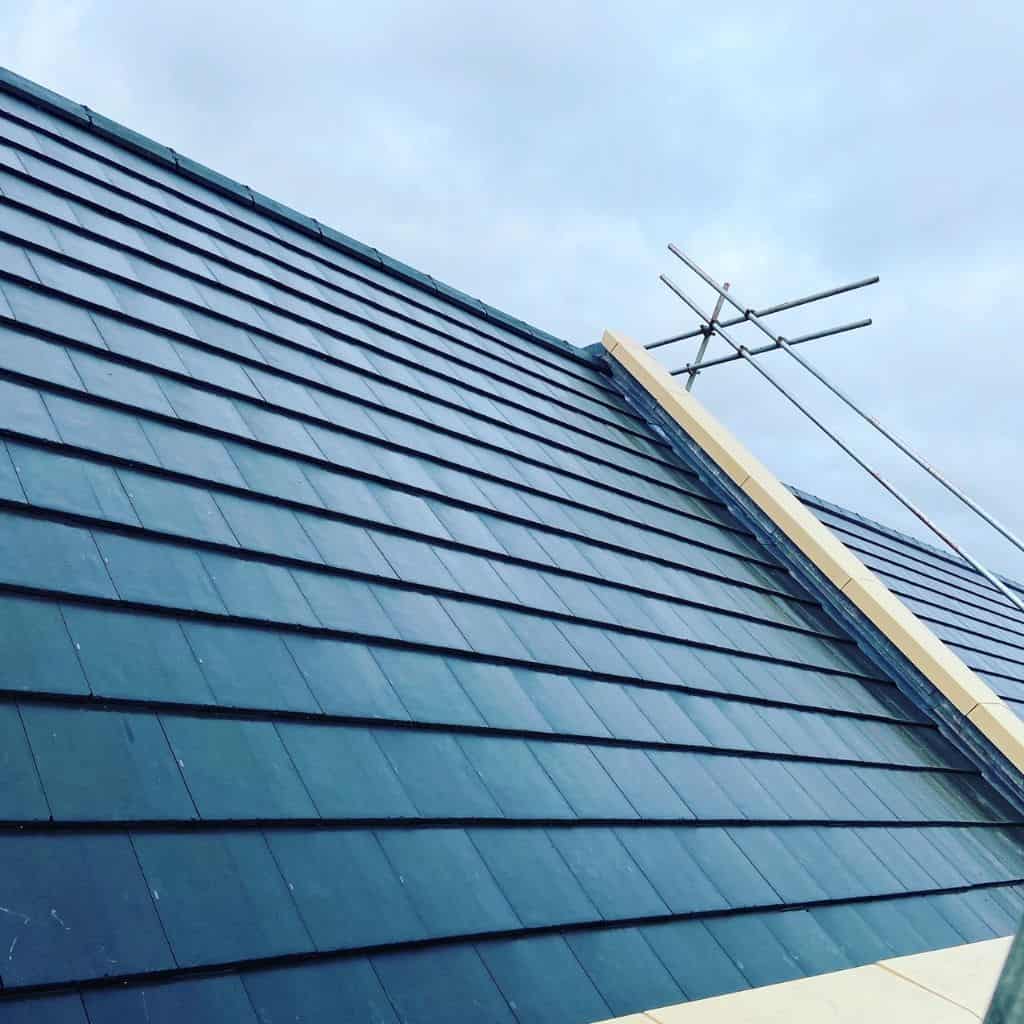
Installing a new slate roof involves a seven-stage process from survey to completion. Slate work progresses more methodically than tile work because each slate is individually nailed. The result is one of the most durable roof coverings available.
Our installation process includes:
Survey and selection: confirm pitch, agree slate sample, obtain conservation consent
At the survey and selection stage, we confirm the roof pitch, agree a slate sample, and obtain conservation consent where required. This step ensures that the chosen material is appropriate for the property’s planning context and structural condition before any work commences.
Scaffold and strip: erect edge protection, remove old coverings, set aside usable slate
Scaffold and edge protection are erected before any existing covering is disturbed. Old coverings and battens are then removed, with usable slate set aside on the scaffold for reclaim matching.
The stripping process is quieter than tile stripping, as slate creates less impact noise when set down on the scaffold. Slate work progresses more slowly than tile work due to the individual nailing of each piece. The resulting roof is among the most durable available.
Deck inspection and timber repair: moisture checks, replace splices, examine ridge board
With the covering removed, we carry out moisture checks, replace splices where necessary, and examine the ridge board. We ensure moisture readings do not exceed 18% before closing the roof.
Given the weight of slate relative to materials such as fibre-cement or felt, confirming the structural readiness of the deck is essential. A structural assessment is carried out before the strip begins, particularly when switching material categories. This may require a structural calculation under Building Regulations Part A.
Membrane and battens: lay breathable HR underlay, fix treated softwood battens to specification
Breathable HR underlay is laid and treated softwood battens are fixed in accordance with the slate manufacturer’s specifications. We confirm batten gauges with the manufacturer prior to laying, ensuring the fixing pattern meets both the product requirements and the BS 5534 standard.
Slate laying and detailing: nail slates with copper or 316 stainless, install Code 4 lead flashings
We nail slates using copper or 316 stainless nails in accordance with BS 5534, with doubled eaves and verge courses throughout. Ridge, hip, and verge detailing incorporates Code 4 lead flashings, installed using traditional or proprietary dry-ridge systems depending on conservation consent.
How long does a slate roofing installation typically take?
Slate roofing projects take longer than equivalent tile re-roofs due to the methodical process of nailing each slate individually. However, the resulting noise and disruption are minimal, and the finished roof offers exceptional longevity.
Typical project durations:
- Standard three-bedroom semi-detached: 5 to 7 working days
- Large detached and hipped properties: 10 to 14 working days
- Heritage or listed-building re-slates with reclaim sorting: 14 to 21 working days
Dry conditions are essential for slate work, and slates are not laid in heavy rain. The stripping process is quieter than tile stripping, as slate creates less impact noise when placed on the scaffold. Residents are able to remain in their homes throughout the project.
How can the long-term viability of a slate roof be assessed?
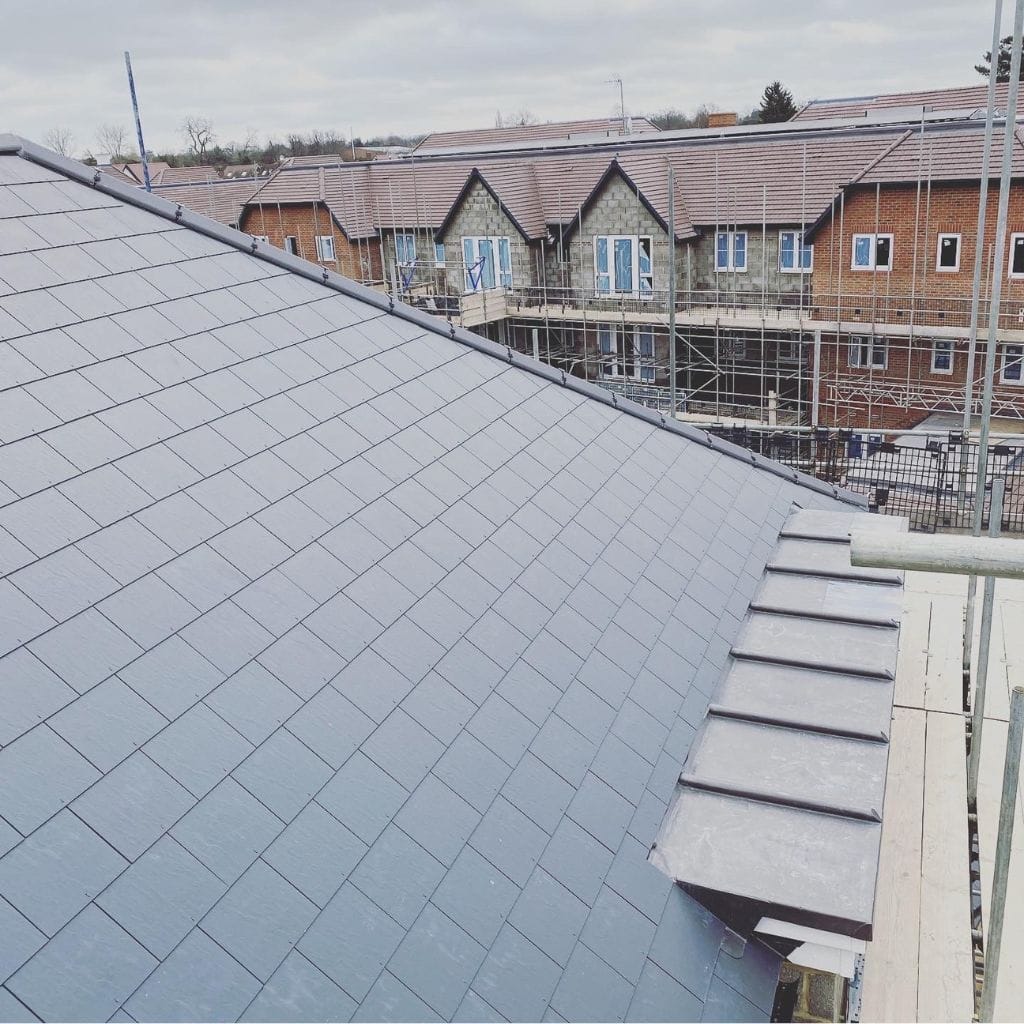
Slate roofing offers the longest lifespan of any pitched-roof covering. Its longevity justifies the higher initial cost of materials and labour, particularly where the roof makes a significant contribution to the appearance of the building.
Lifespan by material:
- Welsh slate: 100 to 120 years
- Spanish slate: 80 to 100 years
- Fibre-cement slate: 50 to 60 years
Re-roofing on slate properties is most commonly required due to nail sickness rather than slate deterioration. Although the slates themselves remain intact, the iron nails used in pre-1960 roofs often corrode, causing slates to slip. Using copper or 316 stainless nails extends the fixing lifespan to match the slate. This is standard practice in our installations.
Slate is particularly well suited to properties with a pitch above 25°, and to period and listed buildings where visual character is a priority. It also suits owners planning mid to long-term ownership, and structures whose timber is capable of supporting the weight. Where a lighter covering is preferred, tile roofing is often the better option. We assess each of these factors during the survey.
Why Choose C J Roofing & Renewables Ltd for Slate Roofing in Hampshire?
Over 15 years of experience
Connor and Jack bring over 15 years of combined hands-on roofing experience, delivering everything from small domestic repairs to large-scale commercial projects across Hampshire.

Locally based in Hampshire
Based in Portsmouth with deep local roots, we understand Hampshire's homes, weather and building styles, which allows us to deliver roofing work that lasts.
5-star rated service
We are proud to be rated 5 stars on Google by our customers, reflecting the quality of our workmanship and our commitment to reliable, professional service.
Competent & highly trained team
Our team is fully trained and certified in asbestos awareness, working at height and manual handling, ensuring every project is carried out safely and to industry standards.
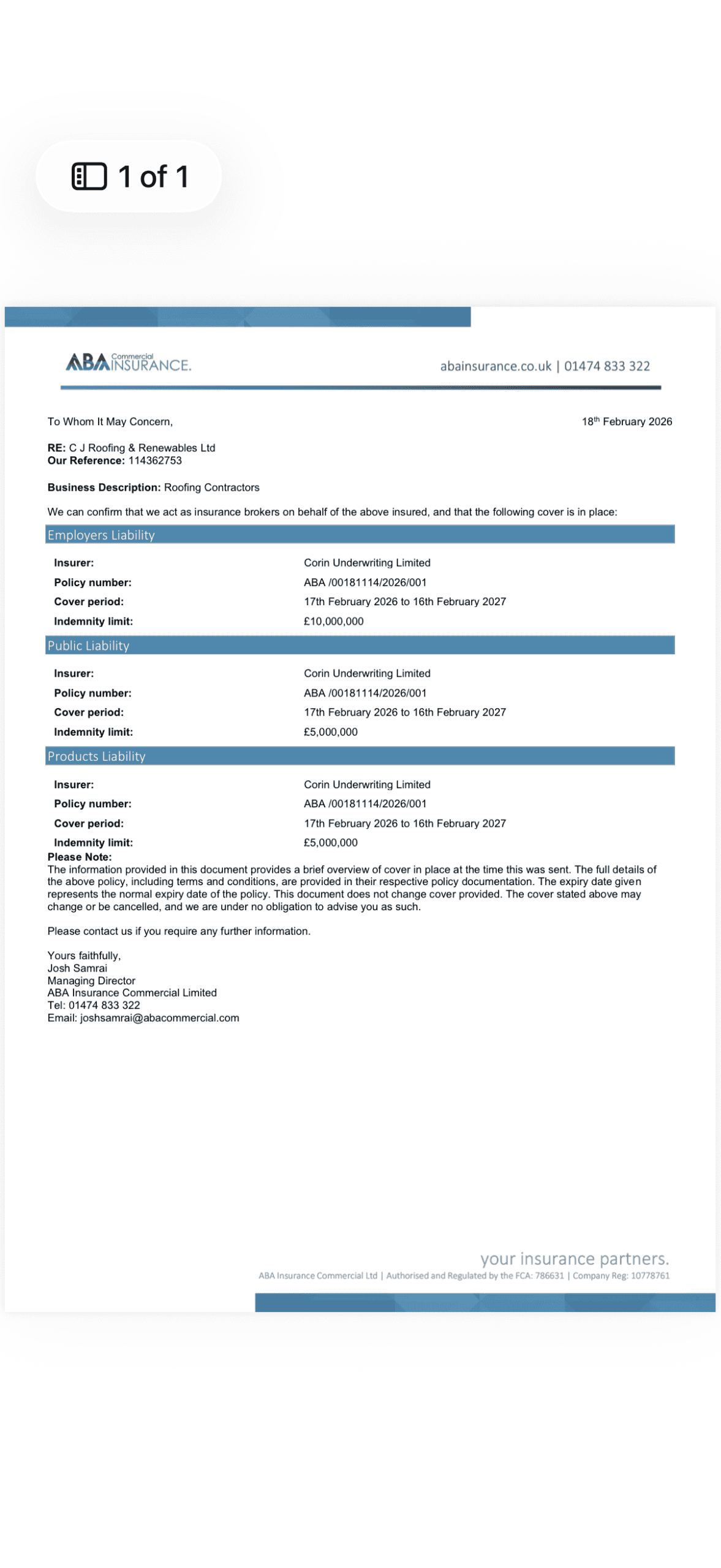
£5 million public liability insurance
We carry up to £5 million in public liability insurance, giving you complete peace of mind that your property is fully protected while we work.
10 year workmanship guarantee
All new roof installations and replacements come with a 10-year workmanship guarantee, so you are covered in the unlikely event of any issues.






Frequently asked questions
Take a look at the Frequently Asked Questions regarding our Slate Roofing service.
How do slate roofs perform in extreme weather?
Slate’s natural density provides excellent resistance to wind-driven rain. Its thin profile sheds water rapidly, and the lap pattern creates multiple layers of weatherproofing. Copper and 316 stainless fixings significantly outperform older iron nails in resisting wind uplift.
Welsh slate and high-grade Spanish slate demonstrate exceptional freeze-thaw resistance, tested to BS EN 12326 standards for thermal cycling. Lower-quality imported slates may fail these cycles within a decade, which is why we select slate by grade rather than by name alone. BS 5534 fixing standards are maintained regardless of slate type.
What maintenance does a slate roof require?
A correctly installed slate roof requires minimal routine maintenance. A typical maintenance schedule includes:
- Visual inspections every 2 to 3 years for slipped slates at verges and hips
- Gutter clearance twice annually
- Lead flashing checks every 10 years at chimneys and abutments
- Moss management to prevent moisture trapping against the slate face
No other routine work is necessary. Slates are inert, water-resistant, and do not require treatment.
What happens if a slate tile cracks or slips?
Individual slate replacement is a straightforward service. We source matching slate to replace individual cracked or slipped units, ensuring the new material integrates with the existing roof covering without disrupting the overall appearance.
Where multiple slips or cracks are present across a slope, this often indicates a broader underlying issue. Causes include nail sickness on roofs over 80 years old, storm damage, or movement at chimneys or abutments. In these cases, we identify the root cause rather than addressing only the visible damage.
Can slate roofing be matched to the style of an existing home?
New Welsh and Spanish slate is available in original-style sizes, both random and fixed. This allows the existing roof’s lay pattern to be replicated on the replacement. We use reclaimed slate for heritage matches where the visual weathering must correspond to an adjacent roof surface.
Extension match work employs the same slate type and lay pattern as the main roof, ensuring a cohesive result. Conservation areas often mandate like-for-like reclaim sourcing for visible elevations, with new slate permitted only on hidden or rear pitches.
What are the signs that a slate roof may need repair or replacement?
A slate roof provides clear indicators of required maintenance, often years before full replacement becomes necessary. Indications include:
- Slipped slates at verges, hips, or beneath chimneys
- Nail sickness, with loose slates despite the slates themselves remaining intact
- Failed Code 4 lead flashings at chimneys and abutments
- A sagging ridge line indicating timber movement below
- Moss build-up trapping moisture on north-facing slopes