GRP Roofing Hampshire
GRP Roofing Services in Hampshire
GRP roofing forms a hard, seamless surface that withstands foot traffic, hail and severe weather. Once cured, the laminate retains its integrity for 25 years or more, making it a dependable long-term solution for balconies, terraces, dormers and bay window tops.
C J Roofing & Renewables Ltd specialises in GRP roofing installations throughout Hampshire. Our process covers the removal of the old covering, the installation of a new deck where required, and the application of the laminate as a continuous skin. All new installations carry a 10-year workmanship guarantee.
Your written, itemised quote follows within 48 hours of the survey. Call 07512976384 for a free quote. We respond within 48 hours.
When does a flat roof need a GRP roofing installation?
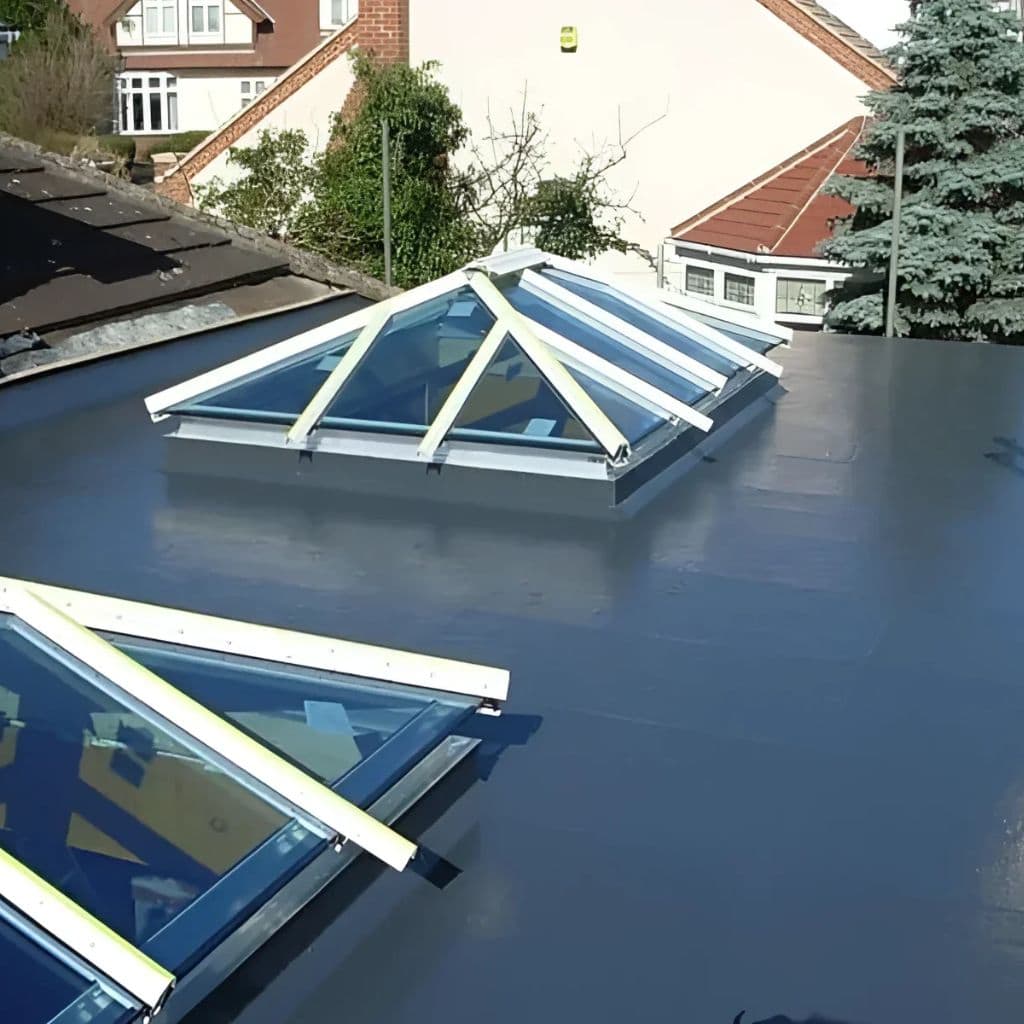
A flat roof is well suited to GRP when a durable, walkable finish is required for 25 to 30 years. This system is particularly appropriate for balconies, terraces, dormers and bay window tops.
Common indicators that a GRP installation is the right course of action include:
An ageing felt roof deteriorating under foot traffic
An ageing felt roof deteriorating under foot traffic indicates that the bitumen layers can no longer withstand regular use. Felt is prone to cracking under daily use, particularly on balconies or terraces where people walk frequently.
GRP roofing provides a resilient layer, forming a solid skin across the deck that endures foot traffic, hail and severe weather. A flat roof benefits from GRP when a durable, walkable finish is required for 25 to 30 years.
A balcony surface that flexes or splits during winter
A balcony surface that flexes or splits during winter indicates that the covering has lost its structural integrity and can no longer accommodate thermal movement. EPDM can dent under heavy objects, whereas GRP forms a hard, seamless surface.
The cured laminate accommodates approximately 3mm of expansion per metre, managing thermal variations from hot summer surfaces to sub-zero winter lows. Movement joints absorb this expansion without causing splits.
A bay window top with a worn, cracked surface
A bay window top with a worn, cracked surface indicates that the existing covering has reached the end of its useful life. Bay window tops are among the most common GRP installation applications, alongside balconies, terraces and dormers.
GRP roofing is well suited to situations where a durable, long-term solution is required. The laminate retains its finish for 25 years or more, making it a reliable choice across a wide range of roofing applications including bay window tops.
A new extension in need of a robust flat roof
A new extension requiring a robust flat roof benefits from a waterproof system designed to last 25 years or more without frequent maintenance. GRP installs as a continuous skin, providing a seamless, watertight barrier across the deck.
Our process involves removing the old covering, installing a new deck where necessary, and applying the laminate as a continuous skin. All new installations carry a 10-year workmanship guarantee.
A garage roof requiring a lifespan of 25 years or more
A garage roof requiring longevity of 25 years or more benefits from GRP’s resistance to UV rays, hail and biological growth. A garage roof used sparingly can maintain its full 25 to 30 year lifespan without significant intervention.
Felt is prone to cracking under daily use and EPDM can dent under heavy objects, whereas GRP provides a resilient hard skin. Three elements contribute to longevity: proper deck preparation, precise detail work with double-laminated corners, and topcoat maintenance every 10 to 15 years.
Felt is prone to cracking under daily use, and EPDM can dent under heavy objects, whereas GRP roofing provides a resilient layer that forms a solid skin across the deck.
If you observe any of these signs, contact us at 07512976384 for assistance. We respond within 48 hours.
What is GRP roofing and how does it cure on a flat deck?
GRP roofing is a system that uses liquid resin and chopped strand mat to create a hard, seamless surface. Once cured, it forms a continuous, walkable and watertight layer across the deck.
The flat roof installation involves placing new OSB3 boards across the joists at 600mm spacing, securing edge trims around the perimeter, and applying the resin and mat layers. A pigmented topcoat completes the surface.
Curing is influenced by weather conditions. Resin sets effectively between 5°C and 25°C with humidity below 80%, allowing for rapid curing on south-facing roofs during summer, while shaded north slopes may require additional time.
The cured laminate accommodates approximately 3mm of expansion per metre, managing thermal variations effectively. Movement joints absorb this expansion without causing splits.
What does our GRP roofing installation process involve?
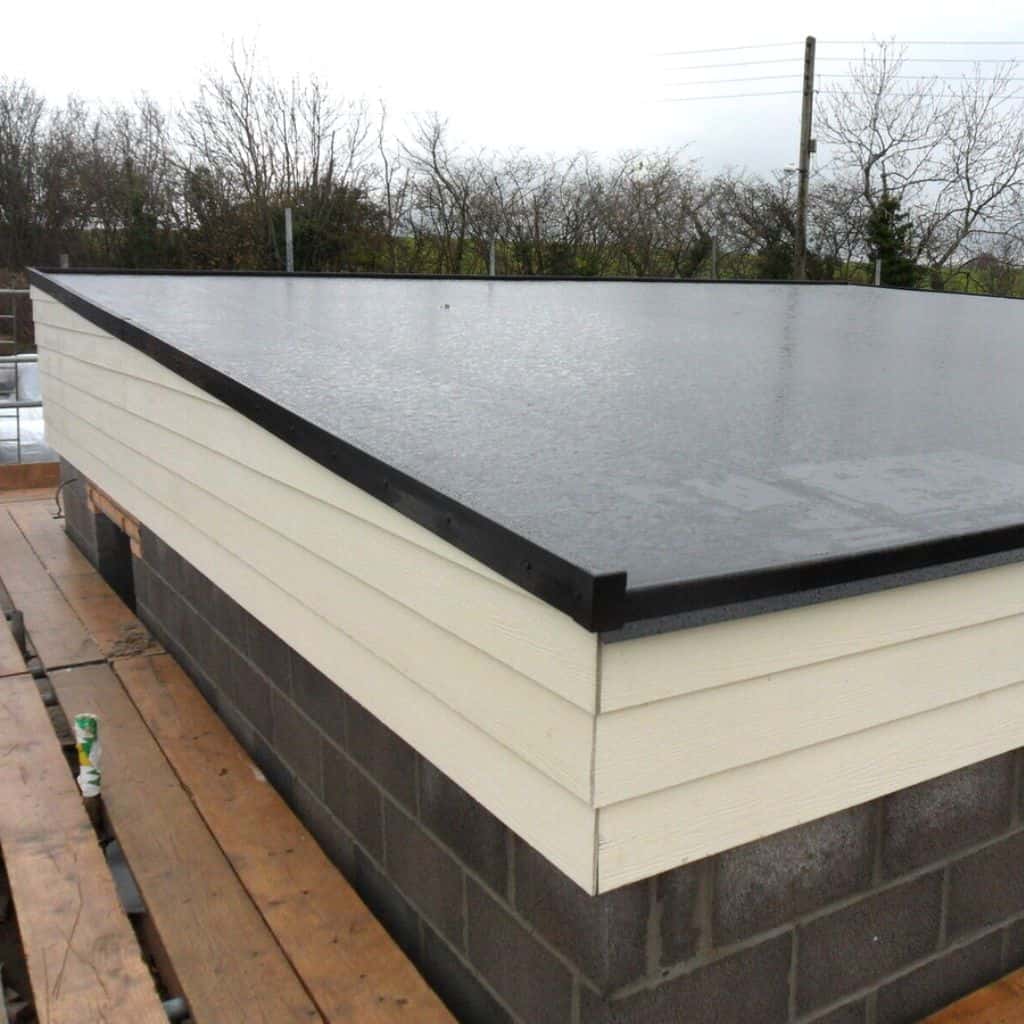
Our GRP roofing installation process follows five critical steps – survey, new deck, edge trims, laminate and topcoat.
On-site actions include:
Survey: moisture map the deck, assess joists, photograph upstands
We begin with a free site survey, moisture mapping the existing deck, assessing joist condition and photographing upstands. GRP requires a fresh OSB3 deck that is sanded smooth, dust-free and secured at 150mm centres.
Six common contaminants can prevent a GRP bond: bitumen residue, silicone residues, paint overspray, fungal growth, felt adhesive and mortar traces. Silicone residue can spread up to 50mm beyond visible traces, which is why we plane the top 2mm of affected areas before proceeding.
New deck: remove old covering, install OSB3 boards at 150mm centres
The old covering is removed down to the joists, and any weakened joists are reinforced or replaced. Fresh OSB3 boards are installed across the joists at 600mm spacing and secured at 150mm centres with screws.
Fixings are set 2mm below the surface to prevent protrusion through the laminate. All old felt, bitumen, silicone and paint must be removed before resin application to ensure the GRP system bonds correctly.
Edge trims: install pre-formed GRP trims along eaves, verges and parapets
Pre-formed GRP trims are installed along eaves, verges and parapets to create clean edges and termination points. Our kit includes six detail trims: internal angle trims, external angle trims, pre-formed corner mouldings, drip edges, gutter edge trims and lead flashing replacement profiles.
Edge trims give a finished appearance and protect the laminate edges from uplift. Some conservatory junctions involve three upstands meeting at one corner, which requires each piece to be cut and stippled in stages.
Laminate: apply resin, embed chopped strand mat, add second resin coat
Resin is applied, chopped strand mat is embedded and a second resin coat is added to create the hard skin. We typically use a 450gsm chopped strand mat with two resin coats for most domestic decks, while 600gsm reinforcement is applied for balconies and terraces.
The mat is cross-laid at 90° angles to distribute thermal stress effectively. Cross-laying prevents concentrated stress along fibre lines that can lead to hairline cracks in less rigorously installed systems.
Topcoat: apply pigmented topcoat in the desired colour
A pigmented topcoat is applied in the desired colour to complete the surface and provide a durable finish. Walkable surfaces require an anti-slip topcoat for safety on balconies and terraces.
Curing is influenced by weather conditions. Resin sets effectively between 5°C and 25°C with humidity below 80%, which allows for rapid curing on south-facing roofs during summer, whereas shaded north slopes may require additional time. Every new installation carries a 10-year workmanship guarantee.
How do you choose the right GRP specification for your roof?
The appropriate GRP specification is determined by deck size, foot traffic, exposure and aesthetic preferences. Mat weight, resin grade and topcoat colour are all adjusted to meet these factors.
We typically use a 450gsm chopped strand mat with two resin coats for most domestic decks, while 600gsm reinforcement is used for balconies and terraces. The mat is cross-laid at 90° angles to distribute thermal stress effectively.
Drainage considerations are shaped by pitch:
- Decks require a minimum 1:80 slope towards outlets at the lowest corner
- Decks with less than a 1:40 slope require tapered firrings or insulation
- Walkable surfaces require an anti-slip topcoat
We evaluate every factor thoroughly before providing a quote.
How long does a GRP roof last in Hampshire?
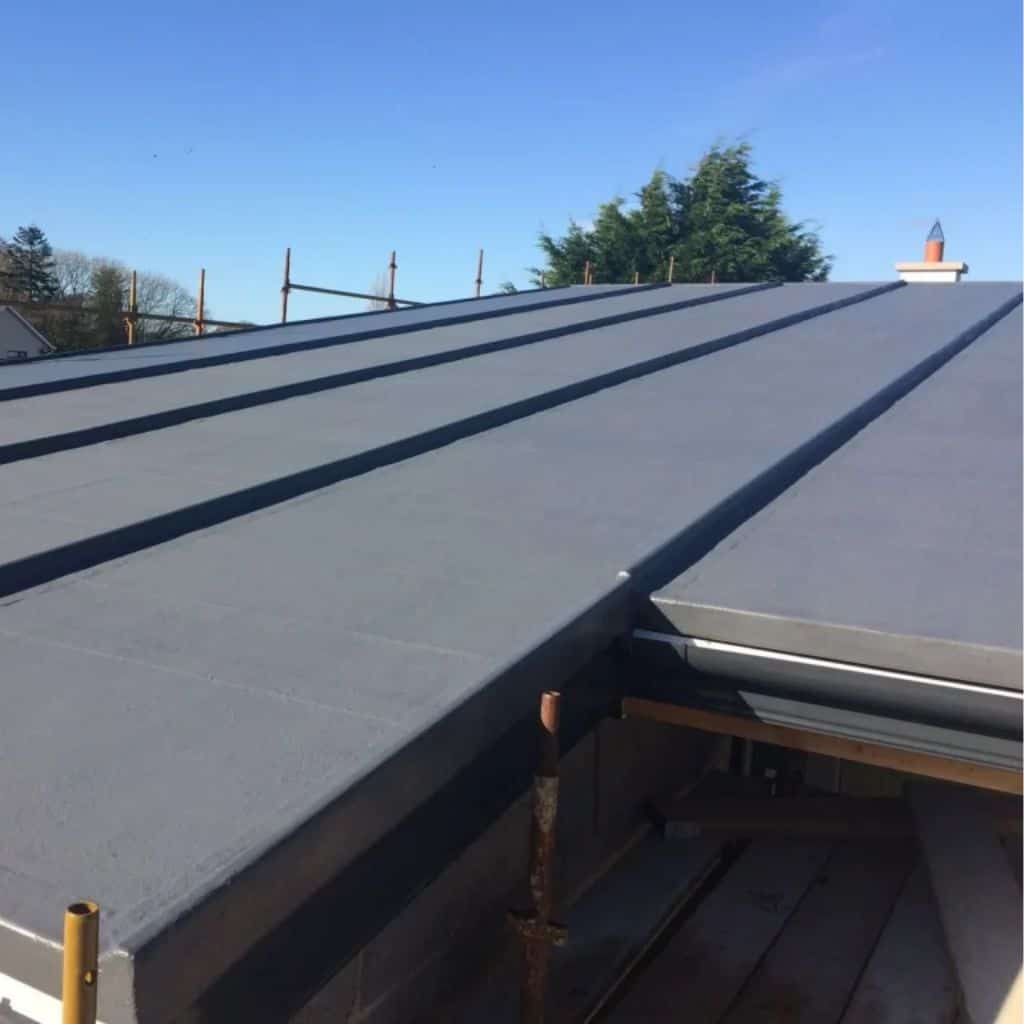
A GRP roof can last between 25 and 30 years when installed on a stable, dry deck.
The laminate is resistant to UV rays, hail and biological growth. Foot traffic on a balcony or terrace can reduce its lifespan, however. A garage roof used sparingly may maintain its full lifespan, while a frequently used balcony without an anti-slip topcoat may show wear more quickly.
Three elements contribute to the longevity of a GRP roof:
- Proper deck preparation: a stable, dry and securely fastened deck
- Precise detail work: double-laminated corners and upstands
- Topcoat maintenance: a fresh re-coat every 10 to 15 years
Every new installation carries a 10-year workmanship guarantee.
Why Choose C J Roofing & Renewables Ltd for GRP Roofing in Hampshire?
Over 15 years of experience
Connor and Jack bring over 15 years of combined hands-on roofing experience, delivering everything from small domestic repairs to large-scale commercial projects across Hampshire.

Locally based in Hampshire
Based in Portsmouth with deep local roots, we understand Hampshire's homes, weather and building styles, which allows us to deliver roofing work that lasts.
5-star rated service
We are proud to be rated 5 stars on Google by our customers, reflecting the quality of our workmanship and our commitment to reliable, professional service.
Competent & highly trained team
Our team is fully trained and certified in asbestos awareness, working at height and manual handling, ensuring every project is carried out safely and to industry standards.
£5 million public liability insurance
We carry up to £5 million in public liability insurance, giving you complete peace of mind that your property is fully protected while we work.
10 year workmanship guarantee
All new roof installations and replacements come with a 10-year workmanship guarantee, so you are covered in the unlikely event of any issues.






Frequently asked questions
Take a look at the Frequently Asked Questions regarding our GRP Roofing service.
What surface preparation does GRP require before laminating?
GRP requires a fresh OSB3 deck that is sanded smooth, dust-free and secured at 150mm centres. All old felt, bitumen, silicone and paint must be removed before resin application.
We remove the old covering down to the joists, reinforcing or replacing any weakened joists. New OSB3 sheets are fastened with screws every 150mm, with fixings set 2mm below the surface.
Six common contaminants can prevent a GRP bond:
- Bitumen residue from felt
- Silicone residues from previous repairs
- Paint overspray
- Fungal growth
- Felt adhesive
- Mortar traces from brickwork
Silicone residue can spread up to 50mm beyond visible traces, which is why we plane the top 2mm of the deck in affected areas.
Can GRP be laminated in cold or wet weather?
Resin cures effectively between 5°C and 25°C with humidity below 80%. Cold or wet weather can delay the process. Substrate temperature is more critical than air temperature, as resin cures from the deck upward.
How is GRP detailing handled around upstands and skylights?
GRP detailing around upstands and skylights uses double-laminated corners and 450gsm reinforcement. Upstands are elevated at least 150mm above the deck, with hand-cut mat patches applied behind the main lay-up at each junction.
Flat roof leaks frequently originate at junctions, so our detail work includes three resin passes rather than two. Diagonal mat patches are placed behind the main field laminate at internal corners, with pre-formed mouldings at external corners.
Our kit includes six detail trims:
- Internal angle trims
- External angle trims
- Pre-formed corner mouldings
- Drip edges
- Gutter edge trims
- Lead flashing replacement profiles
Some conservatory junctions involve three upstands meeting at one corner, which requires each piece to be cut and stippled in stages.
How is GRP prevented from cracking in Hampshire heat and cold?
Movement joints and double-laminated stress points prevent GRP from cracking across Hampshire’s varying temperatures. Cross-laid mat disperses stress, accommodating the thermal range from hot summer surfaces to sub-zero winter lows.
The laminate can expand approximately 3mm per metre across this range. Joints are placed over structural movement lines, and every fixing line and plane change is reinforced with stress patches.
Mat orientation is also important. Layers are cross-laid at 90° angles to distribute thermal stress across the membrane, preventing concentrated stress along fibre lines that can lead to hairline cracks in less rigorously installed systems.
How does GRP handle falls and drainage?
GRP requires a minimum 1:80 fall to outlets, confirmed with a laser level at 1-metre intervals. Ponding can significantly shorten the lifespan of any flat roof.
Falls are built into flat-built extensions using tapered firring strips or tapered insulation, sloping the new deck from the high point to the outlet. A well-constructed flat roof should shed water within 30 minutes of rainfall stopping, with no puddle exceeding 5mm in depth.
Every finished roof undergoes a flood test. Outlets are blocked, the deck is filled to a 25mm depth, then unblocked and the flow is timed. Your handover report includes gradient readings, flood test results and outlet flow measurements.