
Flat Roof Installation Hampshire
Flat Roof Installation Services in Hampshire
Flat roof installation in Hampshire involves particular considerations: wet winters, warm summers, and in coastal areas, exposure to salt-laden air. The system chosen must be well matched to these conditions, and to the specific demands of the roof: its size, its use, and how much exposure it faces. Felt, EPDM, GRP, and single-ply each offer different strengths, and selecting the right one at the outset is the most important decision in any flat roof project.
C J Roofing & Renewables Ltd specialises in flat roof installation throughout Hampshire. We tailor the system to each roof’s size, use, and exposure, and build to the correct falls so that water drains efficiently rather than pooling on the surface. All new installations are backed by our 10-year workmanship guarantee.
Your written, itemised quote follows within 48 hours of the survey. Call 07512976384 for a free site visit. We respond within 48 hours.
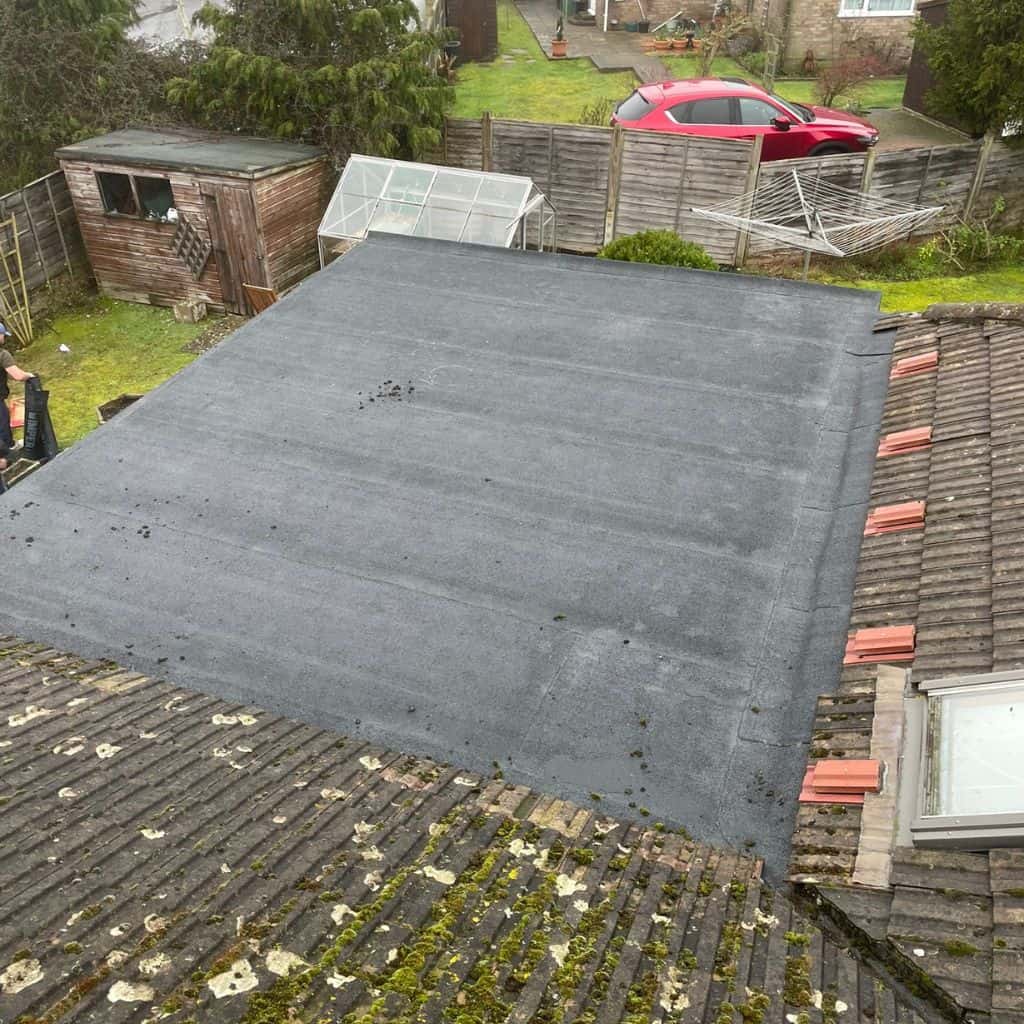
The types of Flat Roof Installations we provide
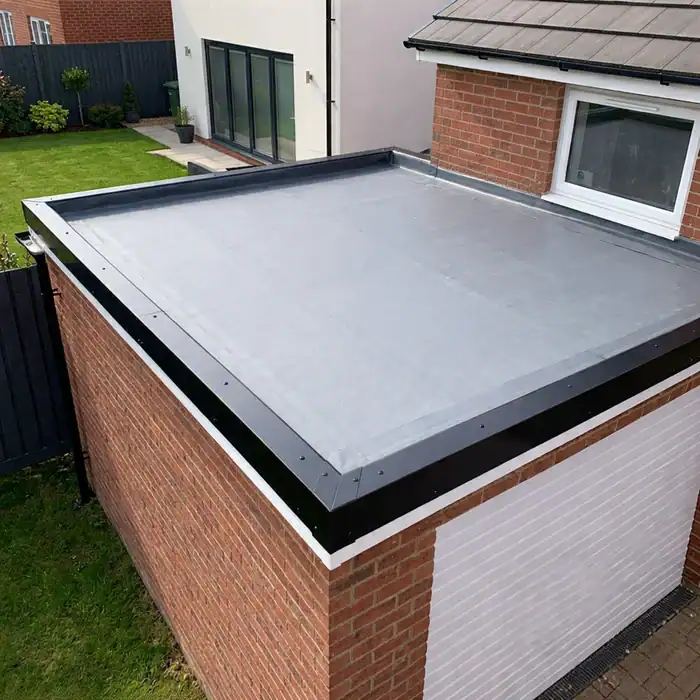
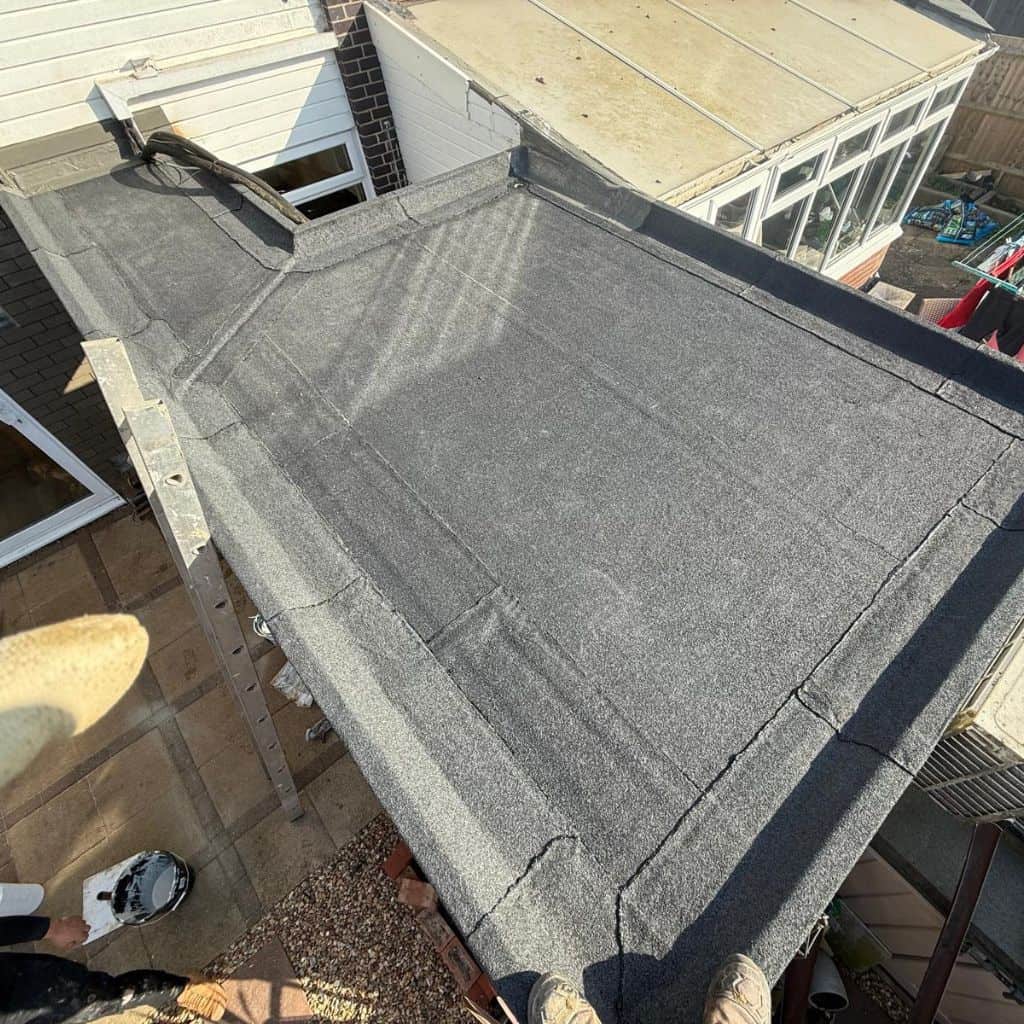
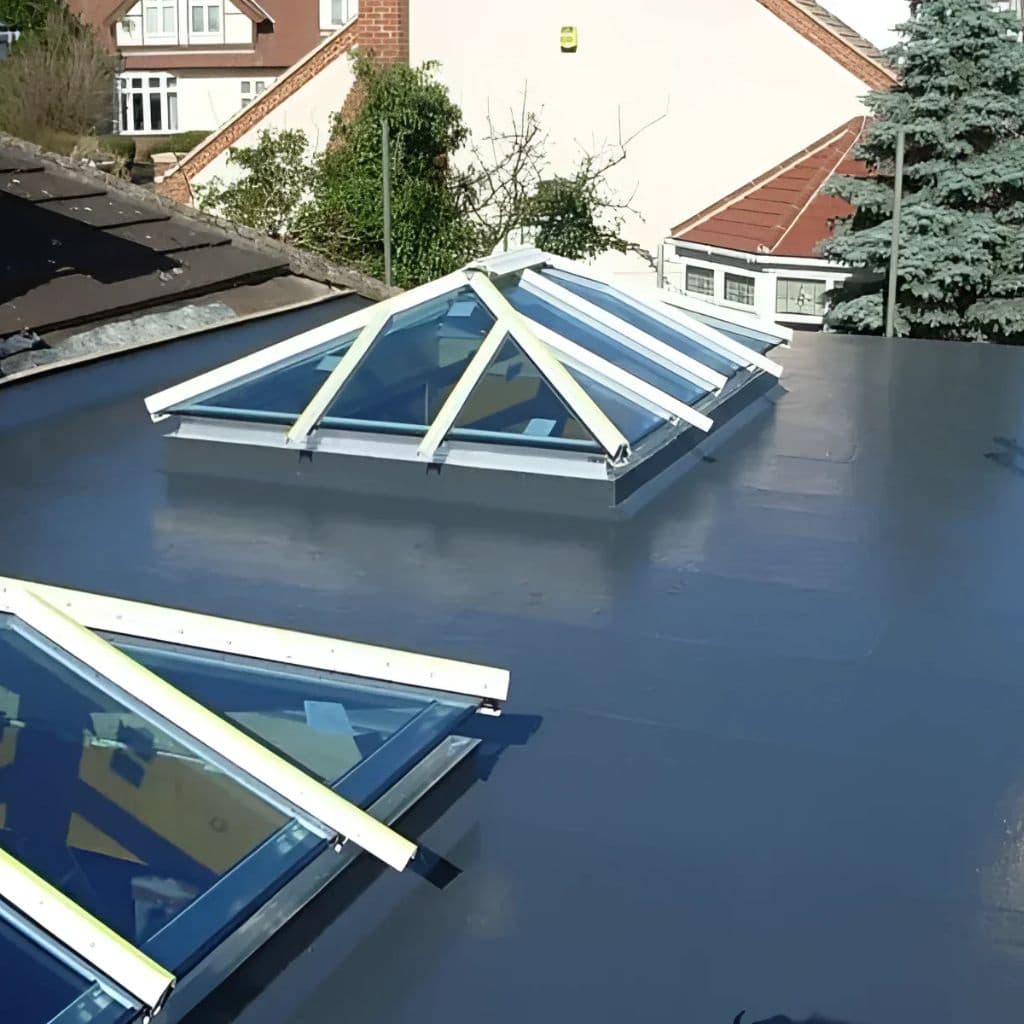
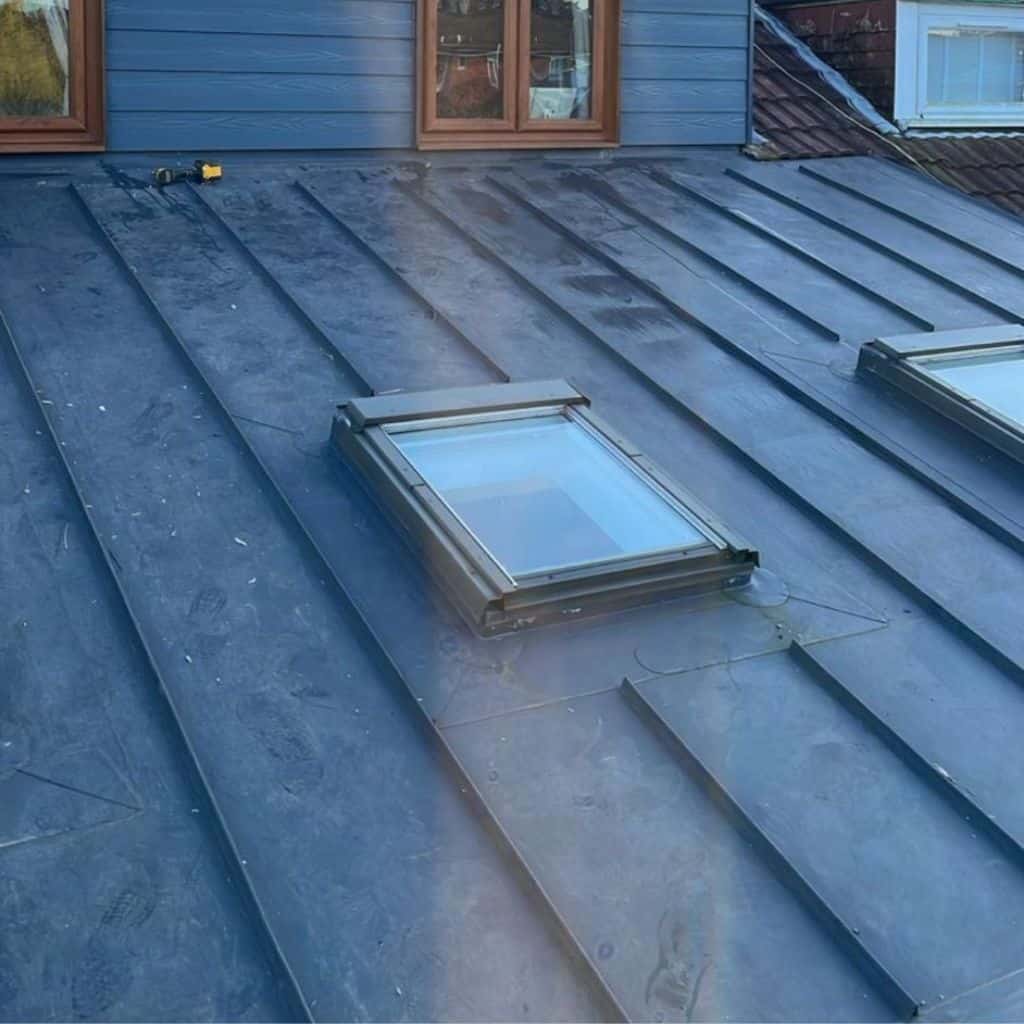
How do you know your flat roof needs a full replacement?
A flat roof requires full replacement when widespread surface damage is evident. A soft deck beneath can also make replacement necessary, as can a history of repeated patch repairs that have not held.
Flat roofs can signal the need for replacement when showing signs such as:
Bubbles or blisters spread across the surface
Bubbles or blisters spread across the surface indicate that moisture has become trapped beneath the membrane or between layers of felt. This is a reliable sign that the roof covering has reached the end of its service life and is no longer performing as intended.
When blisters appear across multiple areas, patch repairs are generally ineffective. A flat roof showing widespread surface damage requires full replacement, because repeated patching will not address the underlying moisture and deterioration.
Multiple lap seams open at once
Multiple lap seams opening at once indicate that the bonding between layers has failed across the roof. On felt roofs, lap seams are the critical points at which water enters when torch-on or cold-applied bonding breaks down.
Most flat roofs in Hampshire reach the end of their lifespan between 15 and 30 years. An old felt roof with multiple patches and open seams requires replacement, whereas a modern EPDM roof with minor isolated issues may need only a flat roof repair.
Brown ceiling stains in more than one room
Brown ceiling stains in more than one room indicate that water is penetrating the roof and travelling across the deck before dripping through. This pattern suggests widespread leakage rather than a single, isolated defect.
When water appears in multiple rooms, the membrane or covering has typically failed across a large area. A soft deck beneath may also make replacement necessary, as wet timber compromises the structural integrity of the roof.
Soft, spongy patches underfoot suggesting wet timber
Soft, spongy patches underfoot point to a damp, rotting deck that can no longer support a new membrane reliably. A flat roof installation requires a clean, dry, and structurally sound deck to ensure the new covering performs over its full design life.
Joist checks assess size, spacing, deflection, and rot before a new flat roof is installed. Soft spots, sagging, or rot at the bearing ends require reinforcement, and we can attach a 2×6 support to a compromised joist within one working day.
A previous patch repair that failed within two years
A patch repair that has failed within two years is a clear sign that the underlying problem has not been resolved and that the roof system is no longer reliable. At this stage, full replacement is the more cost-effective course of action.
Most flat roofs in Hampshire reach the end of their lifespan between 15 and 30 years. An old felt roof with multiple patches requires replacement, whereas a modern EPDM roof with minor isolated issues may need only a repair.
How do you choose the right flat roof system for your home?
Choosing the right flat roof system involves four considerations: deck size, foot traffic, exposure, and design life. Each system addresses these factors differently, and the correct choice at the outset determines both performance and longevity.
Deck size is the first consideration:
- Under 10m²: felt is well suited to small porches and bay tops
- 10 to 50m²: EPDM and GRP are appropriate for most domestic extensions
- Over 50m²: single-ply is the preferred choice for larger flat areas
Foot traffic influences the surface finish. GRP provides the most durable walkable surface for balconies or terraces, while EPDM and felt are suitable for roofs that will only be accessed for occasional inspection. Single-ply can also accommodate foot traffic with an additional walkway layer. We guide you through these options during the free survey.
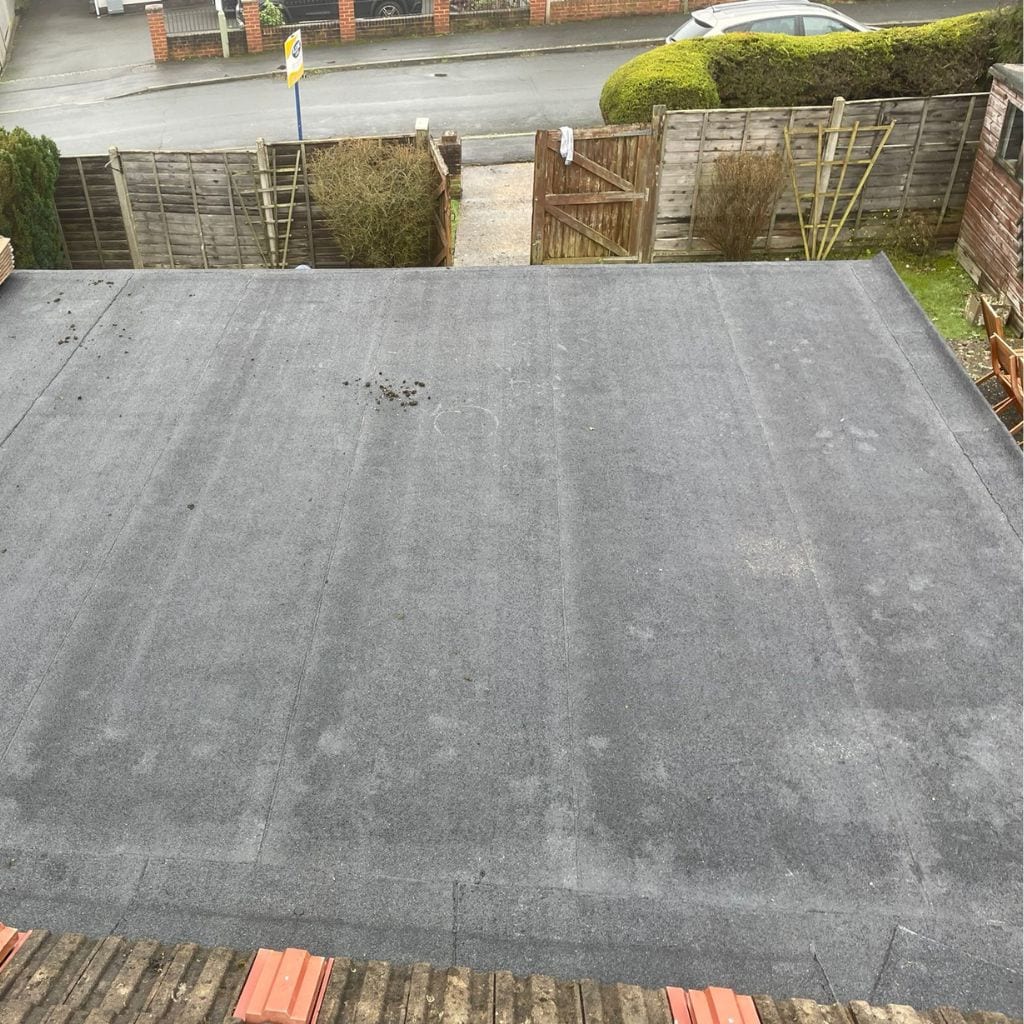
What does our flat roof installation process involve?
Our flat roof installation process follows five stages: survey, structural check, deck preparation, insulation, and membrane installation. Every project begins with a free site visit, and each stage is documented for your warranty and building control records.
On-site activities include:
Survey: measure deck, document fall, photograph upstands and outlets
We begin with a free site visit to measure the deck, document the fall, and photograph upstands and outlets. This survey establishes which system is best suited to your roof based on its size, use, and degree of exposure.
Our on-site process includes recording moisture levels and verifying falls with precision instruments. The survey forms part of your documentation pack for warranty and building control purposes.
Structural check: examine joists, verify deflection, confirm load capacity
We examine the joists, verify deflection, and confirm load capacity to ensure the structure can support the new roof. Building Regulations require that flat roof joists support a 0.75 kN/m² load.
We remove a section of the old covering to measure each joist. Older garages may require joist reinforcement before new roofing can proceed, and we can carry out this work during the same project visit if soft spots or rot are found.
Deck: remove old covering, lay fresh OSB3 or ply, secure at 150mm centres
The old covering is removed, fresh OSB3 or ply is laid, and the deck is secured at 150mm centres. Deck preparation involves removing the old covering, replacing any soft boards, and cleaning and priming the surface.
A single-ply membrane requires a clean, dry, and contaminant-free surface for bonding. The deck is probed systematically, and any areas of concern are addressed before membrane installation begins.
Insulation: install tapered PIR for drainage with vapour barrier as needed
Tapered PIR insulation is installed to create the required drainage fall, with a vapour barrier fitted as needed to prevent condensation. We specify warm-deck construction for most Hampshire projects, achieving the current 0.18 W/m²K U-value target.
Fall design is fundamental to protecting a flat roof from ponding. A finished slope of at least 1:80 directs water towards the outlets, and most projects are designed to 1:60 to provide additional security against deflection over time.
Membrane, detail and test: bond, weld or torch the system, dress upstands, conduct tests
The specified membrane is bonded, welded, or torched onto the roof, upstands are dressed, trims are fitted, and flood or hose tests are conducted. Each welded seam undergoes a seam-probe test and visual inspection, and is documented with a photograph.
We conduct a hose test on every junction before final approval. You receive a detailed test report before the final invoice is issued, and the fall plan is included in your handover file for warranty documentation.
How does fall design protect your flat roof from ponding?
Fall design protects a flat roof from ponding by ensuring that water drains efficiently to the outlets. A finished slope of at least 1:80 is the minimum required, and most projects are designed to 1:60 to allow for any deflection in the structure over time.
On warm-deck roofs, the fall is created using tapered insulation boards; on cold-deck builds, firring strips serve the same purpose. A central outlet handles one slope, and cross-falls direct water to twin outlets on larger decks.
Three elements prevent long-term ponding:
- A constructed fall meeting British Standard BS 6229
- Appropriately sized outlets: one 75mm outlet per 40m² of roof
- Overflow scuppers on parapeted roofs as a precaution against blockage
A completed roof can channel water away within 30 minutes of rainfall ending, and we conduct flood tests on every installation before approval.
Why Choose C J Roofing & Renewables Ltd for Flat Roof Installation in Hampshire?
Over 15 years of experience
Connor and Jack bring over 15 years of combined hands-on roofing experience, delivering everything from small domestic repairs to large-scale commercial projects across Hampshire.

Locally based in Hampshire
Based in Portsmouth with deep local roots, we understand Hampshire's homes, weather and building styles, which allows us to deliver roofing work that lasts.
5-star rated service
We are proud to be rated 5 stars on Google by our customers, reflecting the quality of our workmanship and our commitment to reliable, professional service.
Competent & highly trained team
Our team is fully trained and certified in asbestos awareness, working at height and manual handling, ensuring every project is carried out safely and to industry standards.
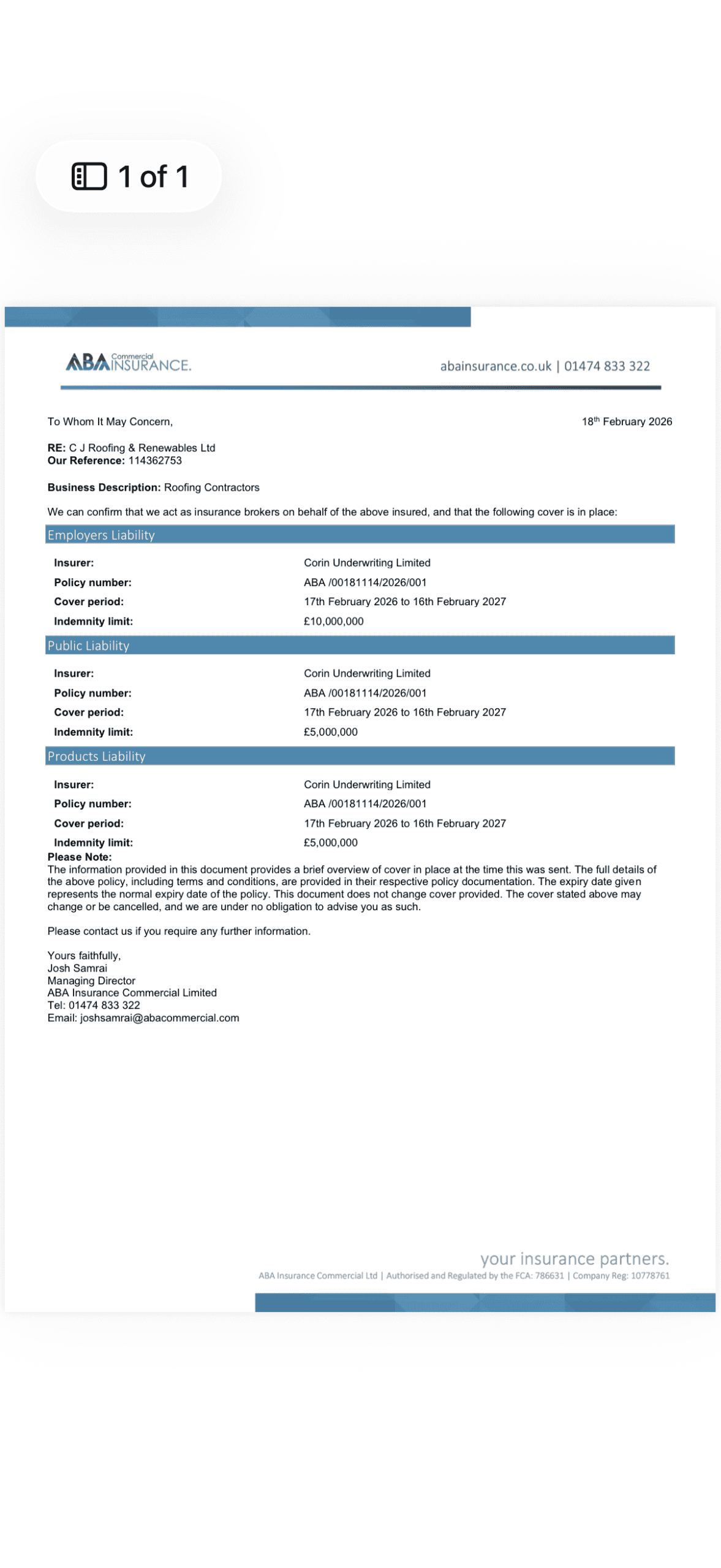
£5 million public liability insurance
We carry up to £5 million in public liability insurance, giving you complete peace of mind that your property is fully protected while we work.
10 year workmanship guarantee
All new roof installations and replacements come with a 10-year workmanship guarantee, so you are covered in the unlikely event of any issues.






Frequently asked questions
Take a look at the Frequently Asked Questions regarding our Flat Roof Installation service.
What warranties come with a new flat roof?
Every new flat roof includes a 10-year workmanship guarantee and a manufacturer product warranty. The duration of the product warranty varies depending on the system specified.
The workmanship warranty covers fixings, detailing, and flashings, while the product warranty protects against membrane integrity failure, seam delamination, and UV degradation.
How do you check the joists before a flat roof goes down?
Joist checks assess size, spacing, deflection, and rot before a new flat roof is installed. Building Regulations require that flat roof joists support a 0.75 kN/m² load.
We remove a section of the old covering to measure each joist. Soft spots, sagging, or rot at the bearing ends require reinforcement, and we can attach a 2×6 support to a compromised joist within one working day, preventing premature failure of the new roof.
Older garages may require joist reinforcement before new roofing can proceed, and we can carry out this work during the same project visit. Many older Hampshire properties need additional timber work before warm-deck insulation can be installed.
How do you handle upstands, parapets, and edges?
Upstands, parapets, and edges are secured with a 150mm membrane lap and a termination bar. A lead or cover flashing finishes the top, and precise detailing at these junctions has a significant bearing on the long-term performance of the roof.
Leaks on Hampshire flat roofs often originate at the perimeter. We wrap parapets in full membrane with specific capping details, and use pre-formed GRP, EPDM, or aluminium drip trims at edges.
Detailing varies according to the adjoining structure:
- Wall: 150mm upstand, trim bar, and chased lead flashing
- Parapet: full wrap, capping stone, and internal scupper
- Pitched abutment: 200mm lead apron under the lowest tile course
- Gutter: pre-formed drip trim into the gutter line
We conduct a hose test on every junction before final approval.
What about vapour control and insulation under the new roof?
Vapour control and insulation are integrated components of the deck and membrane system. A warm-deck construction places rigid PIR above the deck with a vapour barrier directly below it.
We specify warm-deck construction for most Hampshire projects, achieving the current 0.18 W/m²K U-value target. On a kitchen conversion with high humidity, such as one with an active cooker hood, we install 150mm of PIR with a full vapour barrier beneath it.
Cold-deck constructions require a continuous 50mm air gap above the insulation. Eaves vents provide 25,000mm² of airflow per metre run, and cross-ventilation through opposing eaves prevents condensation forming under the deck.
We calculate the construction to meet Building Regulations Part L, and the U-value certificate is included in your warranty documentation.
How do you tie a new flat roof into an existing pitched roof?
A new flat roof is tied into a pitched roof using a stepped lead soaker apron. The lead is fitted under the lowest two tile courses, with the flat membrane extending 150mm beneath that lead.
We remove the lowest tile courses, fit a new code 4 lead apron, position the new membrane behind it, and replace the tiles. This detail reliably handles wind-driven rain at the junction.
Prefabricated drip trims are used at gutter connections, ensuring water flows directly into the existing gutter line without overshooting. On semi-detached homes, a new chase may be cut into the brickwork above an existing extension, with sealed flashing set into the new chase before the membrane is applied.