Felt Roofing Hampshire
Felt Roofing Services in Hampshire
Felt roofing is a multi-layer bitumen system that provides a durable, waterproof covering for flat and low-pitched roofs. A three-layer torch-on installation on a sound deck will typically last between 15 and 25 years, and most projects are completed within a single day.
C J Roofing & Renewables Ltd specialises in felt roof installation across Hampshire. Our process begins with the complete removal of the existing covering, a thorough inspection of the deck beneath, and the application of three bonded layers to produce a lasting, weathertight finish. All new felt roof installations are backed by a 10-year workmanship guarantee.
Your written, itemised quote follows within 48 hours of the survey. For a free quote, please call 07512976384. We respond within 48 hours.
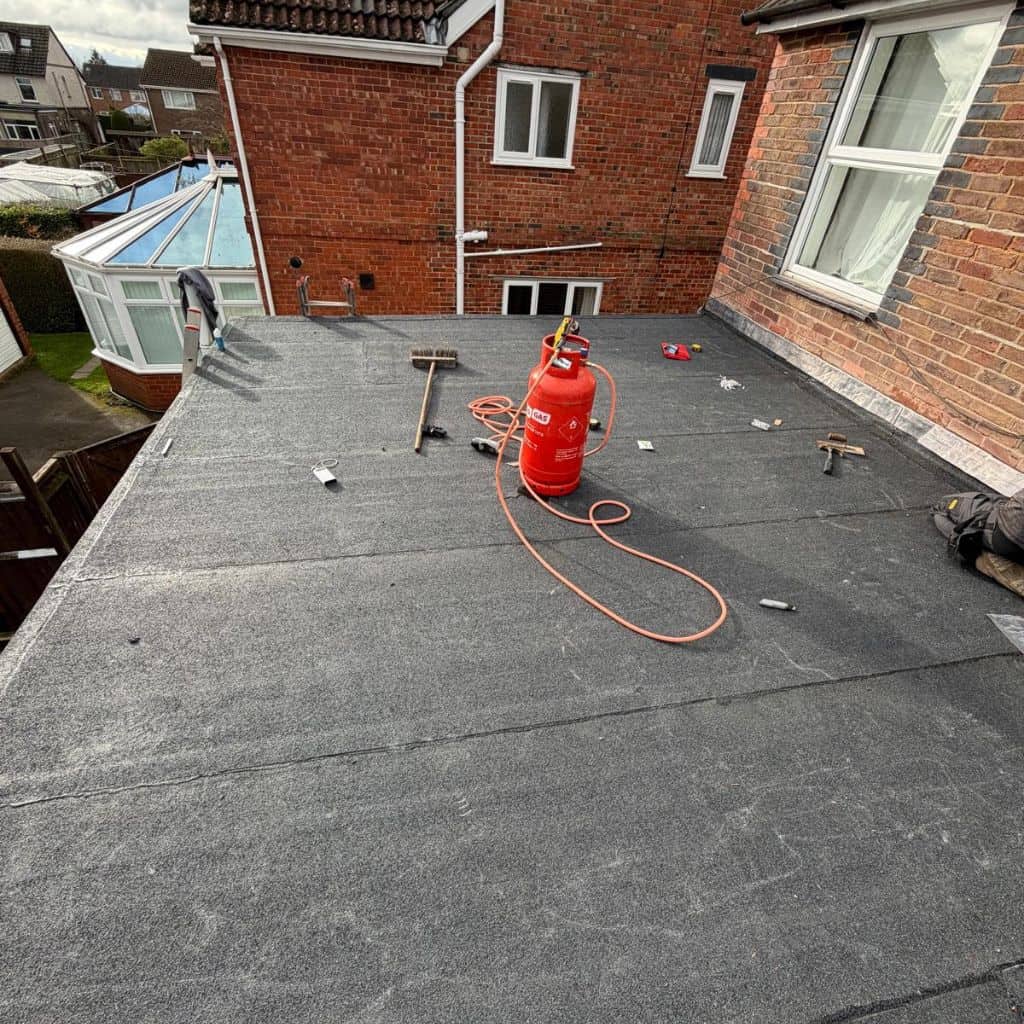
What are the indicators that a felt roof needs replacing?
Felt roofs require replacement when the surface blisters, seams split or mineral chippings wash away. Each of these signs indicates that the covering has reached the end of its useful life.
Be alert to the following warning signs:
Blisters forming that may burst in warm weather
Blisters forming on the felt surface indicate that moisture or air has become trapped between the bitumen layers. As temperatures rise, the blisters expand and can rupture, exposing the layers beneath to water ingress.
A well-maintained felt roof generally lasts between 15 and 25 years. When blistering appears, the covering has most likely reached the end of its serviceable life and requires full replacement rather than patch repairs.
Seam edges curling and allowing light to pass through
Seam edges that curl and allow light through indicate that the bitumen adhesive has failed and the laps are no longer bonded. Properly sealed laps are essential to the roof’s longevity.
When seams split or curl, replacement is necessary, as water will penetrate between the layers. The 100mm side laps and 150mm end laps must be fused with hot bitumen to prevent this failure.
Loss of mineral chippings from the surface
When mineral chippings are lost from the surface, the capsheet is exposed to direct UV radiation, which accelerates degradation. The mineral finish protects the layers beneath from ultraviolet exposure.
Chippings washing away indicates that the covering has reached the end of its useful life. Without this protection, the bitumen becomes brittle and the roof’s lifespan falls significantly short of the standard 15 to 25 years.
Brown stains appearing on ceilings below the roof
Brown stains on ceilings below the roof indicate active water ingress through the felt covering. Water penetrates through failed laps or ruptured blisters and tracks down through the deck into the room beneath.
Soft, spongy areas underfoot may also be present, pointing to water damage in the deck timbers. A deck inspection using a moisture meter, screwdriver and deflection test will reveal the extent of any damage before installation begins.
Soft, spongy areas indicating possible water damage beneath
Soft, spongy areas underfoot indicate possible water damage to the deck timbers beneath the felt. A dry, secure deck is essential for durability, and any compromised boards must be replaced before the new felt is installed.
The survey will establish the most suitable specification for your project, including checking for soft boards and confirming that the deck surface is clean and free from debris. Our process requires removing the existing covering and inspecting the deck in full before the three layers are applied.
A well-maintained felt roof generally lasts between 15 and 25 years. If you observe any of these signs, please contact us at 07512976384. We respond within 48 hours.
What is felt roofing?
Felt roofing consists of two or three layers of bitumen sheet, forming a waterproof barrier over a flat or low-pitched deck. It is one of several systems we fit during a flat roof installation, and each layer contributes to the structural strength of the system, with the top layer providing weather and UV resistance.
A typical three-layer felt roof is constructed as follows:
- A vented underlay is bonded to the deck to prevent direct contact with the timber
- An SBS-modified intermediate layer adds reinforcement and durability
- A mineral capsheet finishes the surface, offering UV protection for the layers beneath
Modern polyester-reinforced felts offer a longer service life than older materials. Each layer is permanently fused with a torch flame.
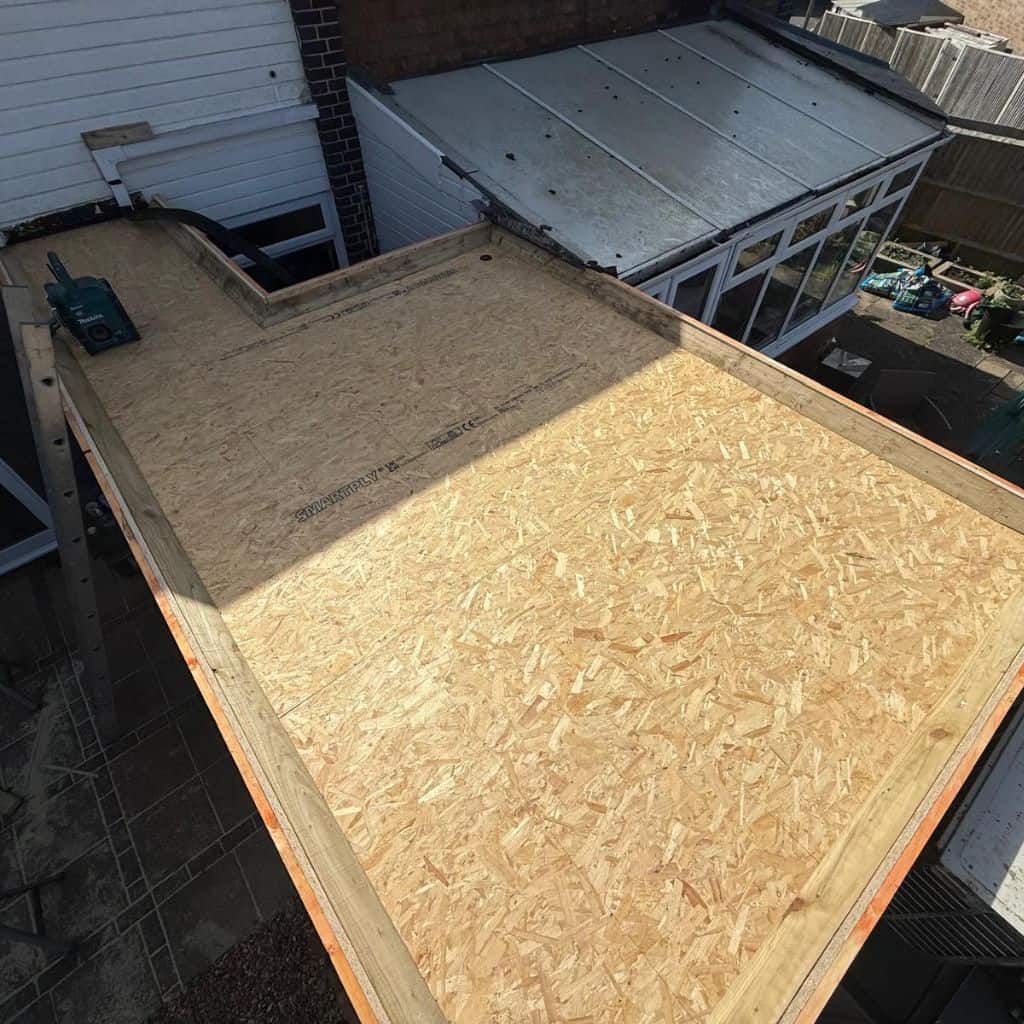
What does the felt roofing installation process involve?
Our felt roofing installation follows five stages: deck preparation, primer application, underlay, intermediate layer and capsheet. Each project begins with a free survey and written quote.
Our installation process includes:
Deck preparation: remove old covering, replace boards, confirm cleanliness
The old covering is removed in full and any compromised boards are replaced before work proceeds. Thorough deck preparation ensures the surface is dry and secure, which is essential for the longevity of the new felt roof.
A comprehensive inspection at this stage reveals potential issues beneath the surface, allowing structural concerns to be addressed before installation. The deck must be clean and free from dust, grit and loose material.
Primer application: apply bitumen primer and allow to cure
Bitumen primer is applied to the prepared deck and allowed to cure fully before the underlay is installed. Correct primer application ensures the first layer bonds reliably to the substrate.
Ideal installation conditions are temperatures between 5°C and 25°C, with no rain forecast for 24 hours. Cold temperatures can make bitumen brittle, while excessive heat can affect adhesives.
Underlay installation: bond vented underlay to prevent direct contact
A vented underlay is bonded to the deck to prevent direct contact between the felt and the timber. This layer is typically 1500gsm vented or polyester material.
The vented underlay prevents moisture from becoming trapped and allows the deck to breathe. Each layer is permanently fused using a torch flame, creating a seamless waterproof barrier.
Intermediate layer: torch reinforced layer with precise laps
An SBS-modified intermediate layer is torched on with precise laps, adding reinforcement to the roof system. This layer is typically 2000gsm SBS-modified polyester.
Each layer contributes to the overall strength of the roof, with the intermediate layer providing additional durability. Properly staggered laps prevent misalignment and ensure stability across varying weather conditions.
Capsheet application: finish with mineral capsheet, ensuring staggered laps
The roof is finished with a mineral capsheet, typically 4000gsm mineral-faced SBS, with staggered laps for maximum protection. The capsheet provides UV protection and weather resistance for the layers beneath.
Properly sealed laps and effective drainage are essential for maximising the roof’s lifespan. All new felt roof installations by C J Roofing & Renewables Ltd are backed by a 10-year workmanship guarantee, giving you confidence in 15 to 25 years of reliable service.
What factors determine the appropriate felt specification?
Selecting the right felt specification depends on factors including deck size, exposure to the elements and the intended use of the roof. The number of layers, weight and degree of reinforcement are adjusted to suit the conditions, and where felt is not the best match we may instead recommend an EPDM rubber membrane.
Felt weights vary according to their application:
- Underlay: 1500gsm vented or polyester
- Intermediate: 2000gsm SBS-modified polyester
- Capsheet: 4000gsm mineral-faced SBS
Our survey will establish the most suitable specification for your project.
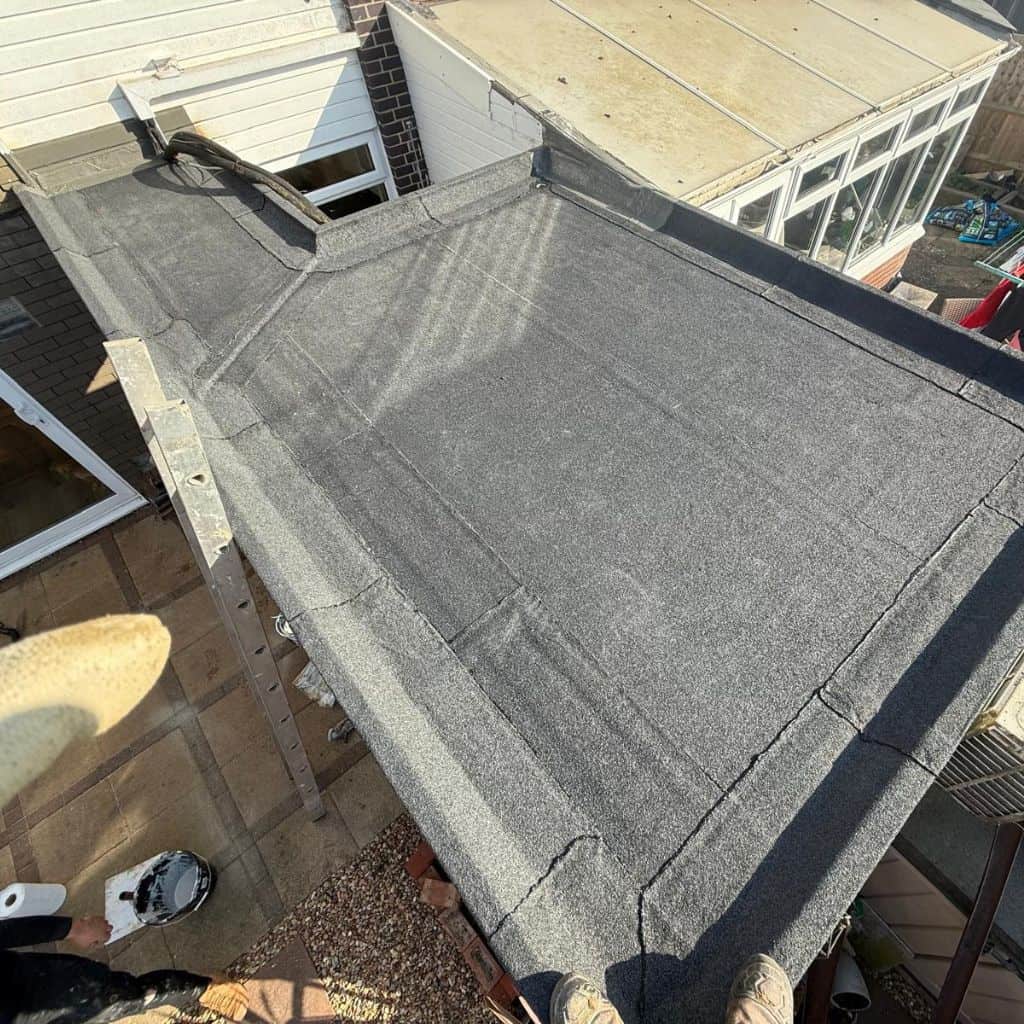
How long does a felt roof last?
A well-installed felt roof on a stable deck will typically last between 15 and 25 years. Properly bonded laps and effective drainage are essential to achieving the full service life.
Key factors in the roof’s durability include:
- Deck preparation: ensuring a dry, secure substrate before installation
- Quality of laps: correctly bonded side and end laps throughout all layers
- Effective drainage: sufficient slope to facilitate water runoff and prevent ponding
Our work is backed by a 10-year workmanship guarantee, providing confidence in the quality and longevity of the installation.
Why Choose C J Roofing & Renewables Ltd for Felt Roofing in Hampshire?
Over 15 years of experience
Connor and Jack bring over 15 years of combined hands-on roofing experience, delivering everything from small domestic repairs to large-scale commercial projects across Hampshire.

Locally based in Hampshire
Based in Portsmouth with deep local roots, we understand Hampshire's homes, weather and building styles, which allows us to deliver roofing work that lasts.
5-star rated service
We are proud to be rated 5 stars on Google by our customers, reflecting the quality of our workmanship and our commitment to reliable, professional service.
Competent & highly trained team
Our team is fully trained and certified in asbestos awareness, working at height and manual handling, ensuring every project is carried out safely and to industry standards.
£5 million public liability insurance
We carry up to £5 million in public liability insurance, giving you complete peace of mind that your property is fully protected while we work.
10 year workmanship guarantee
All new roof installations and replacements come with a 10-year workmanship guarantee, so you are covered in the unlikely event of any issues.






Frequently asked questions
Take a look at the Frequently Asked Questions regarding our Felt Roofing service.
What are the ideal conditions for installing a new felt roof?
Ideal installation conditions are temperatures between 5°C and 25°C, with no rain forecast for 24 hours. Cold temperatures cause bitumen to become brittle, while excessive heat can affect adhesives. Humidity and wind conditions are also significant factors: high moisture levels can lead to vapour becoming trapped, while strong winds can disrupt the installation process.
How are felt laps and edges sealed?
Sealing uses 100mm side laps and 150mm end laps, each fused with hot bitumen. Properly staggered laps prevent misalignment and ensure stability across varying conditions. Edge details are specific to each location, with particular techniques applied to prevent wind lift and ensure long-term durability.
How can ponding water be prevented on a felt roof?
A minimum design slope of 1:40 is required to prevent water from ponding on the surface. Correct slope construction ensures effective drainage and extends the service life of the roof. Our process includes forming adequate falls and installing appropriate drainage systems to maintain the roof’s integrity over time.
How does felt meet walls, chimneys and tile roofs?
Felt meets abutting structures using 150mm upstands and lead flashings. Properly dressed laps ensure a secure seal and protect against water ingress at these junctions. Precise techniques are used to ensure all penetrations and joints are effectively sealed, providing durable protection at every transition point.
What is the role of vapour control and insulation in a felt roof?
A warm felt roof incorporates a vapour control layer together with rigid insulation. This construction minimises condensation risks and improves energy efficiency. Ventilation requirements differ between warm-roof and cold-roof designs, and our approach is tailored to the specific requirements of each project.