Flat Roof Repair Hampshire
Flat Roof Repair Services in Hampshire
Flat roofs across Hampshire are exposed to sustained rain, strong sunlight and salt-laden air, and over time these conditions produce familiar faults: felt cracks, open seams, blocked outlets and standing water. Addressing these problems promptly protects the structure beneath and prevents what begins as a minor defect from becoming a more extensive repair.
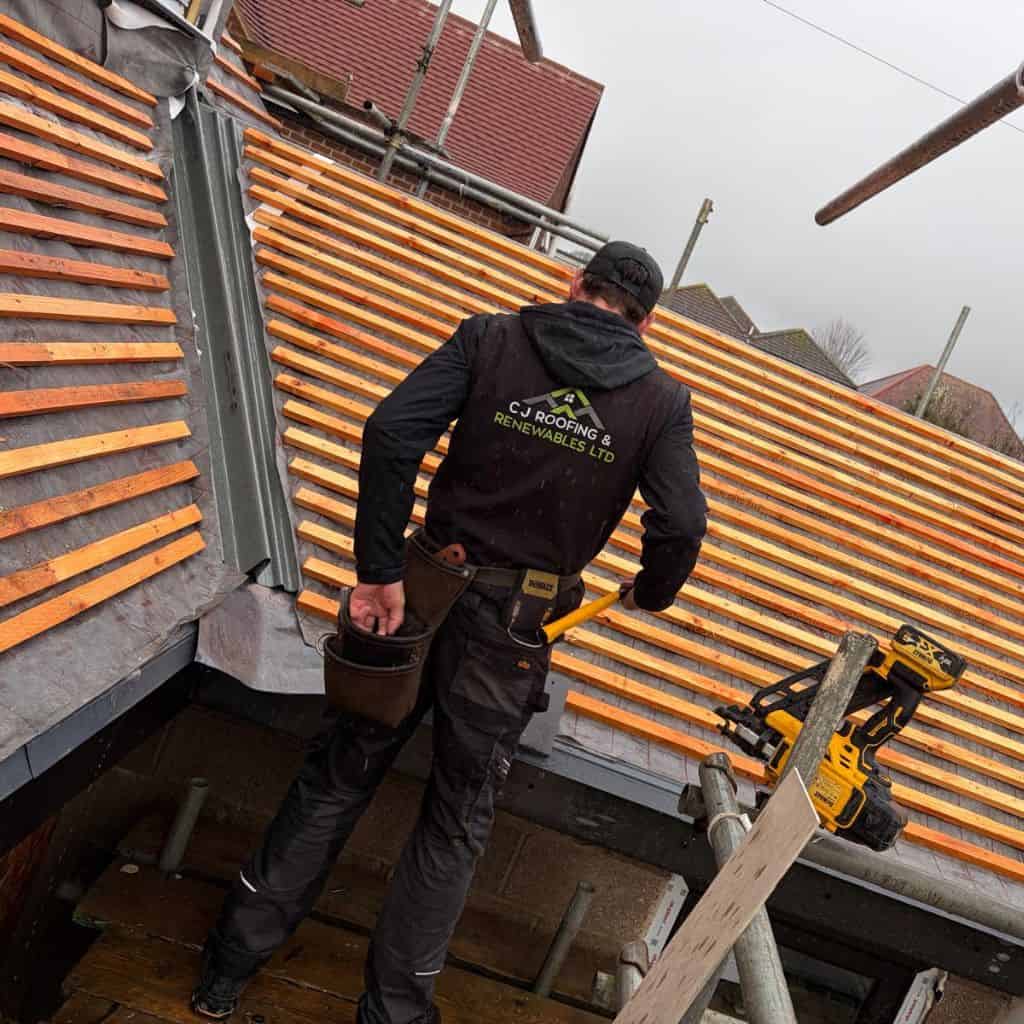
C J Roofing & Renewables Ltd specialises in repairing flat roofs throughout Hampshire, identifying faults accurately, patching membranes to a system-matched standard, and confirming that the deck is dry before sign-off.
Your written, itemised quote follows within 48 hours of the survey. Call 07512976384 for a free site visit. We respond within 48 hours.
How do you spot a flat roof that needs repair?
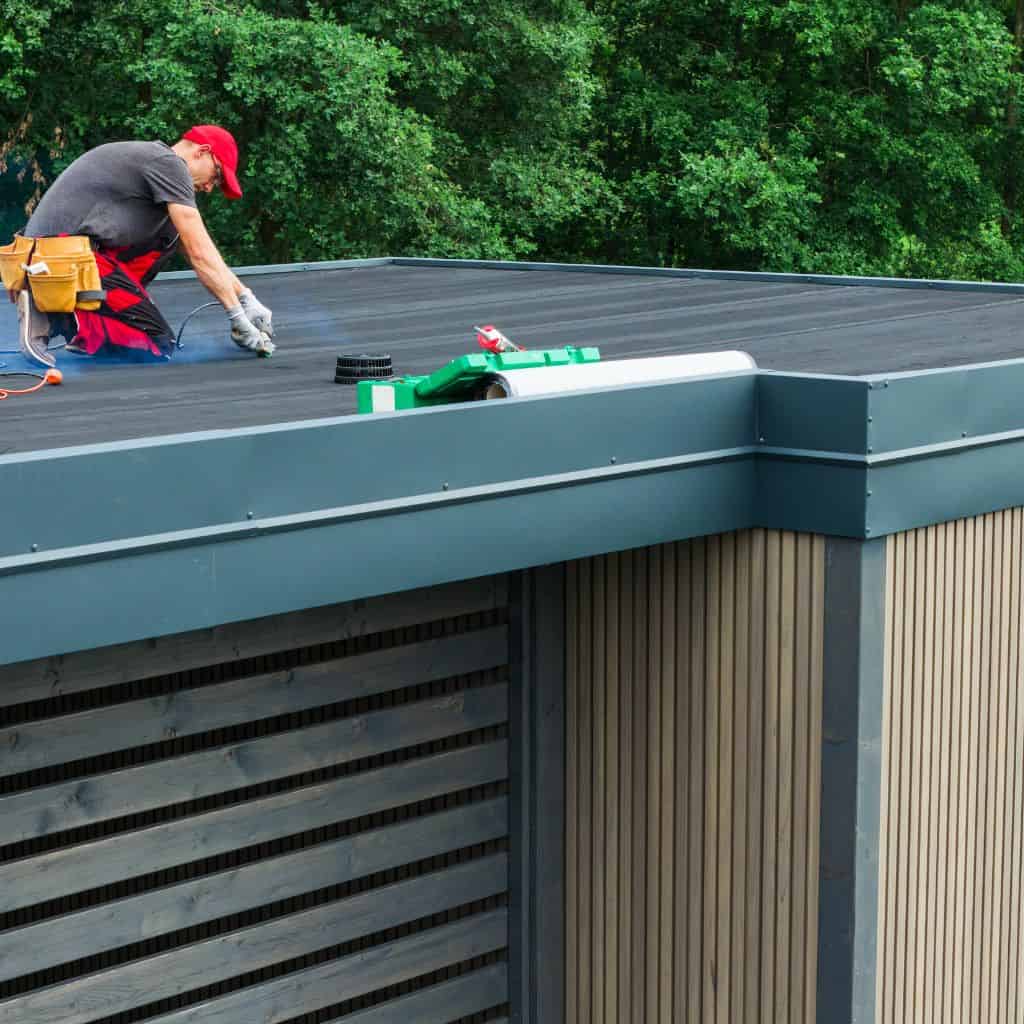
A flat roof warrants attention when you notice a leak, a blister, a split seam, or a puddle that persists for more than 48 hours. Each of these signs points to a fault that is likely to worsen without professional repair.
Look for these warning signs on a Hampshire flat roof:
Brown staining on the ceiling below the roof
Brown staining on the ceiling below the roof indicates active water ingress through the flat roof covering. Leaks frequently enter the building some distance from where the internal stain appears, as water travels along timber joists and insulation seams.
A drip above your kitchen sink can originate several metres away on the roof surface. Tracing the true source requires professional diagnostics using a moisture meter, thermal imaging, and a controlled water test.
Bubbles or blisters across the field membrane
Bubbles or blisters across the field membrane indicate trapped moisture or air between the membrane layers. A garage ceiling dripping after severe weather often points to a single seam fault, but blisters spread across the field may require more extensive repair.
Blisters can burst in warm weather, exposing the underlying layers to water ingress. Each of these signs points to a developing fault that requires professional flat roof repair to prevent further deterioration.
Open laps where two sheets meet
Open laps where two sheets meet show that the adhesive has failed and the joint is no longer watertight. Lap and seam failures form one of three main leak categories, alongside surface defects and detail failures.
Most recurring leaks begin at a poor edge or upstand rather than across the open membrane, which is why detail work receives the closest attention during repairs. Open laps require a matched membrane patch bonded with full overlap and primed preparation.
Cracks running parallel to upstands or trims
Cracks running parallel to upstands or trims indicate stress at the perimeter where the membrane meets walls or flashings. Detail failures at upstands, outlets, chimney aprons, and skylight curbs are a significant source of recurring leaks.
A leak at an upstand or chimney is addressed by lifting the existing flashing, re-dressing the membrane, and chasing a new lead apron into the wall. Applying mastic over the joint is not an effective solution and provides only temporary relief.
Puddles holding 48 hours after a shower ends
Puddles that remain 48 hours after rain has stopped show that the roof has insufficient fall or that drainage is blocked. Standing water in this way points to accumulation where the surface should be clear.
Flat roofs in Hampshire endure the combined effects of rain, sun, and salt air, which frequently leads to clogged outlets and water accumulation. Both garage seam faults and field blisters on porch roofs require professional flat roof repair to restore effective waterproofing.
A garage ceiling dripping after severe weather often points to a single seam fault, whereas a porch with blisters across the field membrane may require more extensive repair. Both situations call for professional flat roof repair.
If you notice any of these signs, call us at 07512976384. We respond within 48 hours.
How do you find the source of a flat roof leak?
We trace flat roof leaks using a moisture meter, thermal imaging, and a controlled water test. Leaks frequently enter the building some distance from where the internal stain appears, as water travels along timber joists and insulation seams, meaning a drip above your kitchen sink can originate several metres away on the roof surface.
Leaks are categorised into three groups:
- Surface defects: splits, blisters and punctures in the field.
- Lap or seam failures: separated joints and bond breakdown.
- Detail failures: upstands, outlets, chimney aprons and skylight curbs.
Most recurring leaks begin at a poor edge or upstand rather than across the open membrane, which is why detail work receives the closest attention during repairs.
What does our flat roof repair process involve?
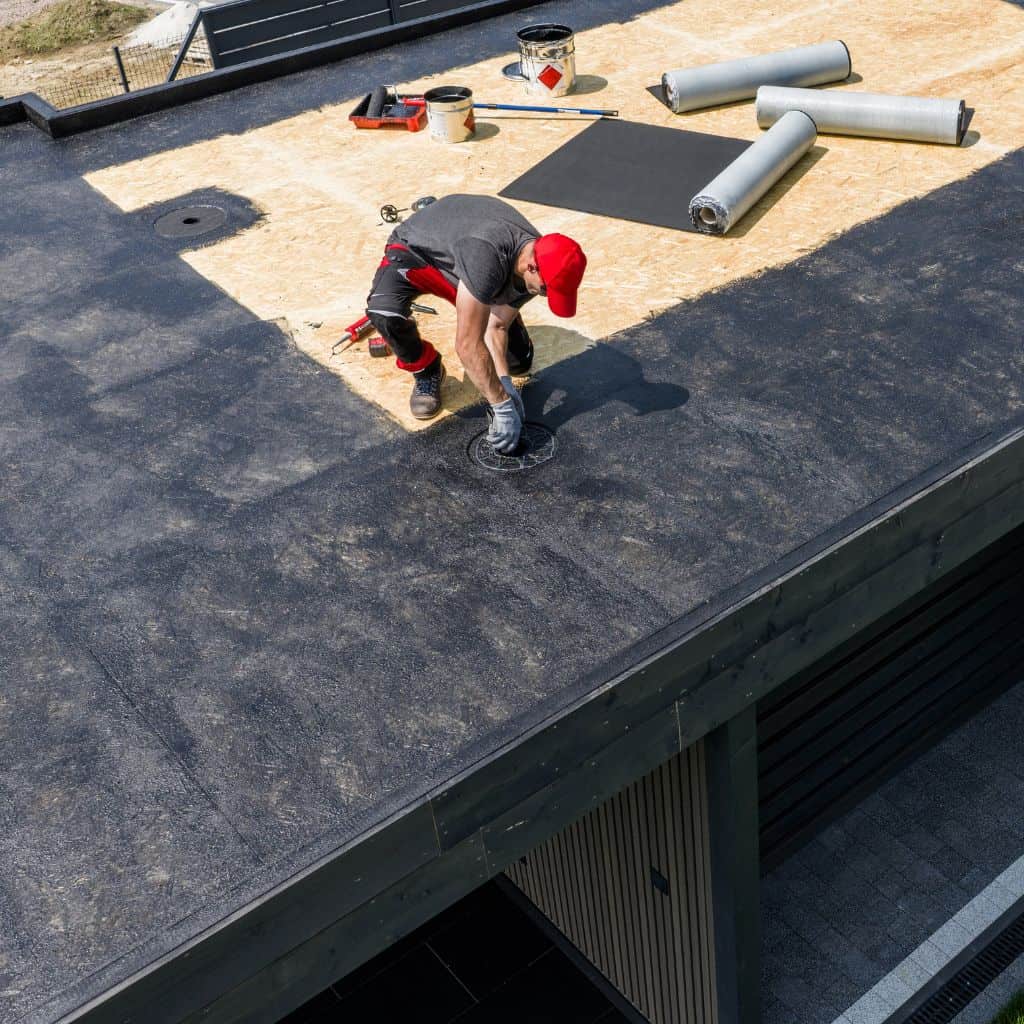
Our flat roof repair process follows five stages: survey, dry-out, patch, edge fix, and test. Each project begins with a free site survey carried out by a director.
Our on-site process includes:
Survey: moisture map the deck, photograph the membrane, log every defect
We begin with a free site survey, moisture mapping the deck, photographing the membrane, and recording every defect. Three factors help the visit proceed efficiently: a clear phone description of the leak, a photograph or short video of the ceiling stain, and safe parking with unlocked side access.
Leaks are categorised into three groups: surface defects (splits, blisters and punctures), lap and seam failures (separated joints and bond breakdown), and detail failures (upstands, outlets, chimneys and skylights). This diagnostic approach establishes the true source before any repair work begins.
Dry-out: lift wet sections and dry the deck when weather permits
Wet sections are lifted and the deck is dried when weather conditions allow. A rotten deck requires the replacement of affected boards before any membrane is applied, as bonding a new patch over wet timber risks failure within months.
We lift the patch zone and probe each board with a moisture meter, replacing any board with readings above 18%. We also inspect the joists beneath at their bearing ends for rot, then fix new OSB or plywood at 150mm centres.
Patch: bond a matched membrane patch with full overlap and primed preparation
A matched membrane patch is bonded with full overlap and primed preparation. Each flat roof repair is matched to the existing system: felt with felt, EPDM with EPDM, GRP with GRP, and single-ply with single-ply.
Felt roofs require SBS-modified torch-on or cold-applied patches. EPDM roofs need a primer-and-tape splice within the same rubber family. Reinforcement weight is a critical consideration, as a heavier patch on a lighter system can stress the joint line.
Edge fix: re-dress flashings, kerbs, and outlet collars at the perimeter
Flashings, kerbs, and outlet collars at the perimeter are re-dressed to ensure proper sealing. A durable flat roof repair depends on the deck being dry, the system being matched, and the perimeter being correctly re-dressed.
A proper repair at an upstand involves a fresh chase 25mm into a mortar joint, a code 4 lead apron dressed 75mm down, a bonded membrane upstand of at least 150mm, and a trim bar at 300mm centres. This detail is capable of withstanding five winters without movement.
Test: conduct a flood test or hose test before sign-off
A flood test or hose test of the repair is carried out before sign-off to confirm that the leak has been resolved. Each repair includes a deck moisture check and a system-matched patch, with a fresh seal applied to at least one perimeter detail.
A temporary application of mastic provides only short-term relief. Our van is equipped for emergencies with cold-applied bitumen patches, self-adhesive flashing tape, heavy-duty tarpaulins, and weighted sandbags for temporary coverage while the permanent repair is scheduled.
How do you match a repair to the existing flat roof system?
A flat roof repair is matched to the existing system: felt with felt, EPDM with EPDM, GRP with GRP, and single-ply with single-ply. Mixing systems risks bond failure at the joint.
The original membrane determines the repair method:
- Felt roofs require SBS-modified torch-on or cold-applied patches.
- EPDM roofs need a primer-and-tape splice within the same rubber family.
- GRP roofs require chopped strand mat applied over sanded laminate.
- Single-ply roofs require a hot-air welded patch in the same chemistry.
Reinforcement weight is an important consideration, as a heavier felt patch on a lighter system can stress the joint line. We verify batch and weight before applying any patch.
How does a proper flat roof repair last longer than a quick patch?
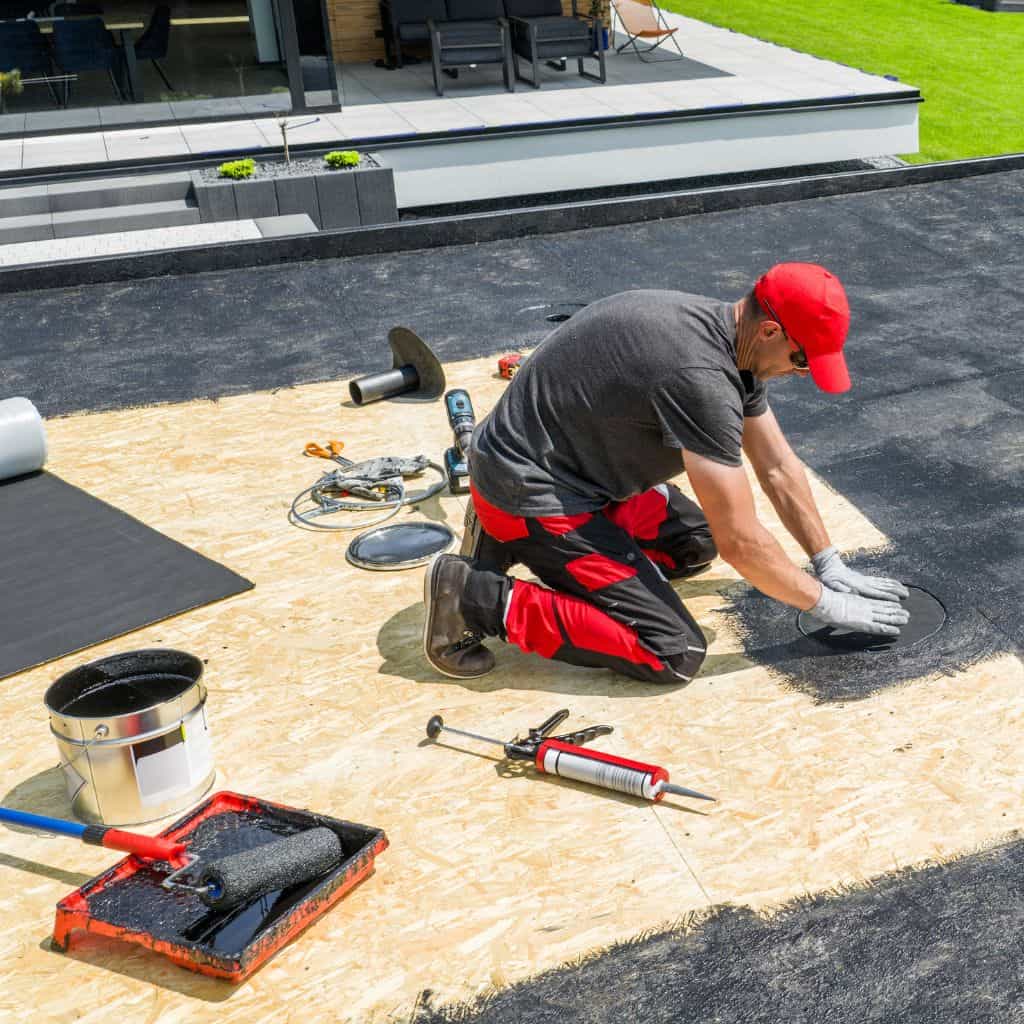
A durable flat roof repair depends on three things being done correctly: the deck is dried, the system is matched, and the perimeter is re-dressed. A temporary application of mastic addresses none of these and provides only short-term relief.
Every repair we carry out includes a deck moisture check and a system-matched patch, with a fresh seal applied to at least one perimeter detail.
Why Choose C J Roofing & Renewables Ltd for Flat Roof Repair in Hampshire?
Over 15 years of experience
Connor and Jack bring over 15 years of combined hands-on roofing experience, delivering everything from small domestic repairs to large-scale commercial projects across Hampshire.

Locally based in Hampshire
Based in Portsmouth with deep local roots, we understand Hampshire's homes, weather and building styles, which allows us to deliver roofing work that lasts.
5-star rated service
We are proud to be rated 5 stars on Google by our customers, reflecting the quality of our workmanship and our commitment to reliable, professional service.
Competent & highly trained team
Our team is fully trained and certified in asbestos awareness, working at height and manual handling, ensuring every project is carried out safely and to industry standards.
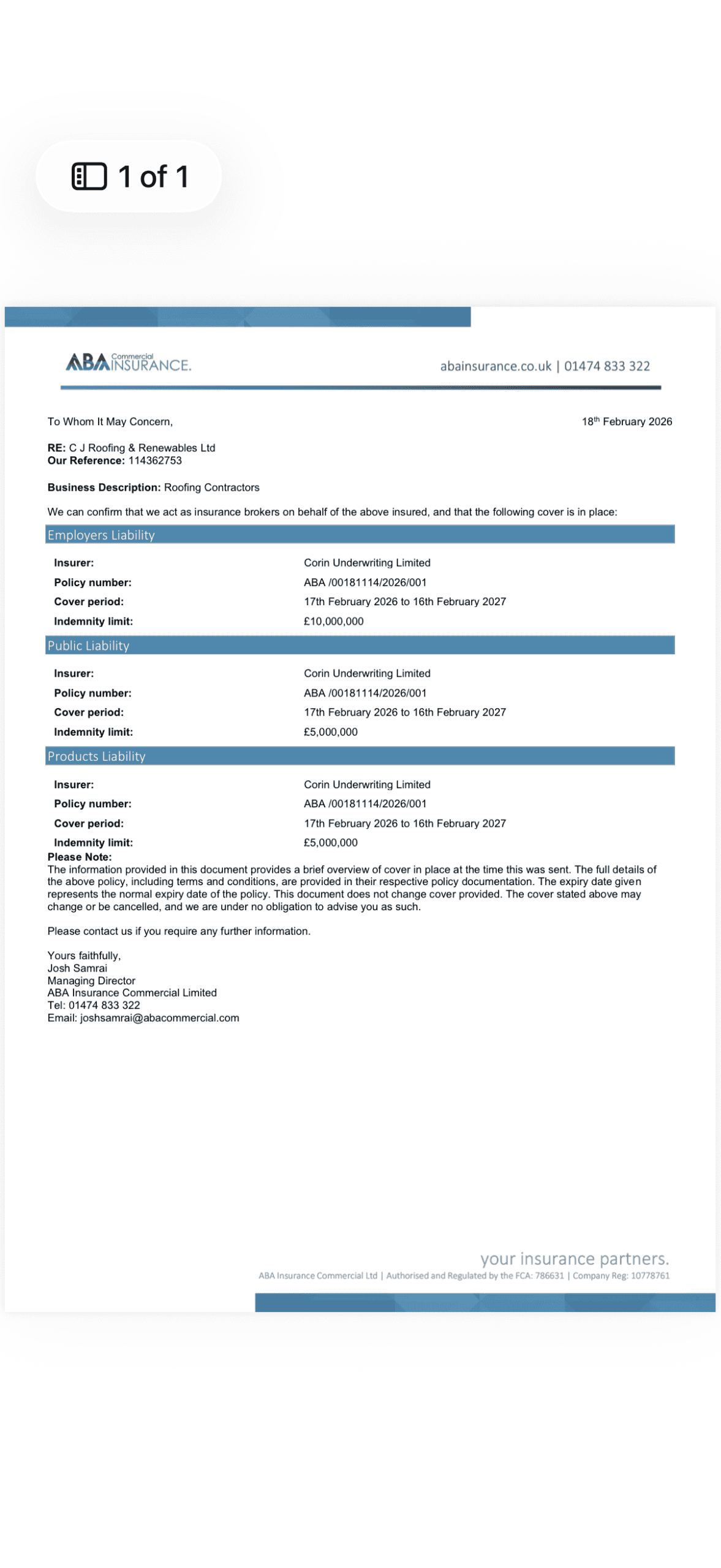
£5 million public liability insurance
We carry up to £5 million in public liability insurance, giving you complete peace of mind that your property is fully protected while we work.
10 year workmanship guarantee
All new roof installations and replacements come with a 10-year workmanship guarantee, so you are covered in the unlikely event of any issues.






Frequently asked questions
Take a look at the Frequently Asked Questions regarding our Flat Roof Repair service.
How fast can you reach a Hampshire flat roof leak?
We respond within 48 hours on every flat roof leak callout. If your flat roof requires an emergency roof repair, we will respond within 24 hours.
Three factors help speed up the visit:
- A clear phone description of the leak
- A photograph or short video of the ceiling stain
- Safe parking and unlocked side access on arrival
Can you repair a flat roof in wet weather?
A temporary patch can be applied in wet weather, with the permanent repair scheduled for the next dry window. We bond cold-applied membranes to damp substrates for short-term coverage.
We do not carry out hot-air welding during rain, as torch-on work requires a dry deck and liquid waterproofing requires a dry surface to cure.
Our van is equipped for emergencies with:
- Cold-applied bitumen patches
- Self-adhesive flashing tape
- Heavy-duty tarpaulins with brass eyelets
- Weighted sandbags
Your property remains protected while we schedule the permanent repair for the next suitable window.
How do you fix a leak around a flat roof upstand or chimney?
A leak at an upstand or chimney is resolved in three steps: lifting the existing flashing, re-dressing the membrane, and chasing a new lead apron into the wall. Applying mastic over the joint is not an effective long-term solution.
Most recurring leaks on Hampshire flat roofs that we attend begin at this detail. A semi-detached property with three previous mastic applications at the same point requires the lead to be lifted, the chase cleaned, and the joint re-bedded before the leak can be properly resolved.
A correct repair at this detail involves:
- A fresh chase 25mm into a mortar joint
- A code 4 lead apron dressed 75mm down
- A bonded membrane upstand of at least 150mm
- A trim bar at 300mm centres along the top
This detail is capable of withstanding five years without movement.
What happens if the deck below the membrane is rotten?
A rotten deck requires the replacement of affected boards before any membrane is applied. Bonding a new patch over wet timber risks failure within months.
We lift the patch zone and probe each board with a moisture meter, replacing any board with readings above 18%. We also inspect the joists below at their bearing ends for rot, then fix new OSB or plywood at 150mm centres.
Sound-looking felt can conceal a wet deck beneath, so the repair can only hold if the timber is addressed first.
Does flat roof repair work come with a warranty?
Flat roof repair work does not carry a workmanship guarantee. A 10-year workmanship guarantee applies only to a new flat roof installation.