Chimney Leak Repair Hampshire
Chimney Leak Repair Services in Hampshire
Chimney leak repair begins with identifying the precise point of water entry and sealing it correctly. The source may be worn flashing, cracked mortar, a porous brick face, or a failed pot. Each requires the appropriate remedy to prevent dampness from returning.
C J Roofing & Renewables Ltd specialises in chimney leak repair across Hampshire. We carry out a detailed survey of the chimney stack, locate the entry point, and seal it using materials suited to the structure and exposure.
Your written, itemised quote follows within 48 hours of the inspection. Call 07512976384 for a free quote. We respond within 48 hours.
What causes chimney leaks?
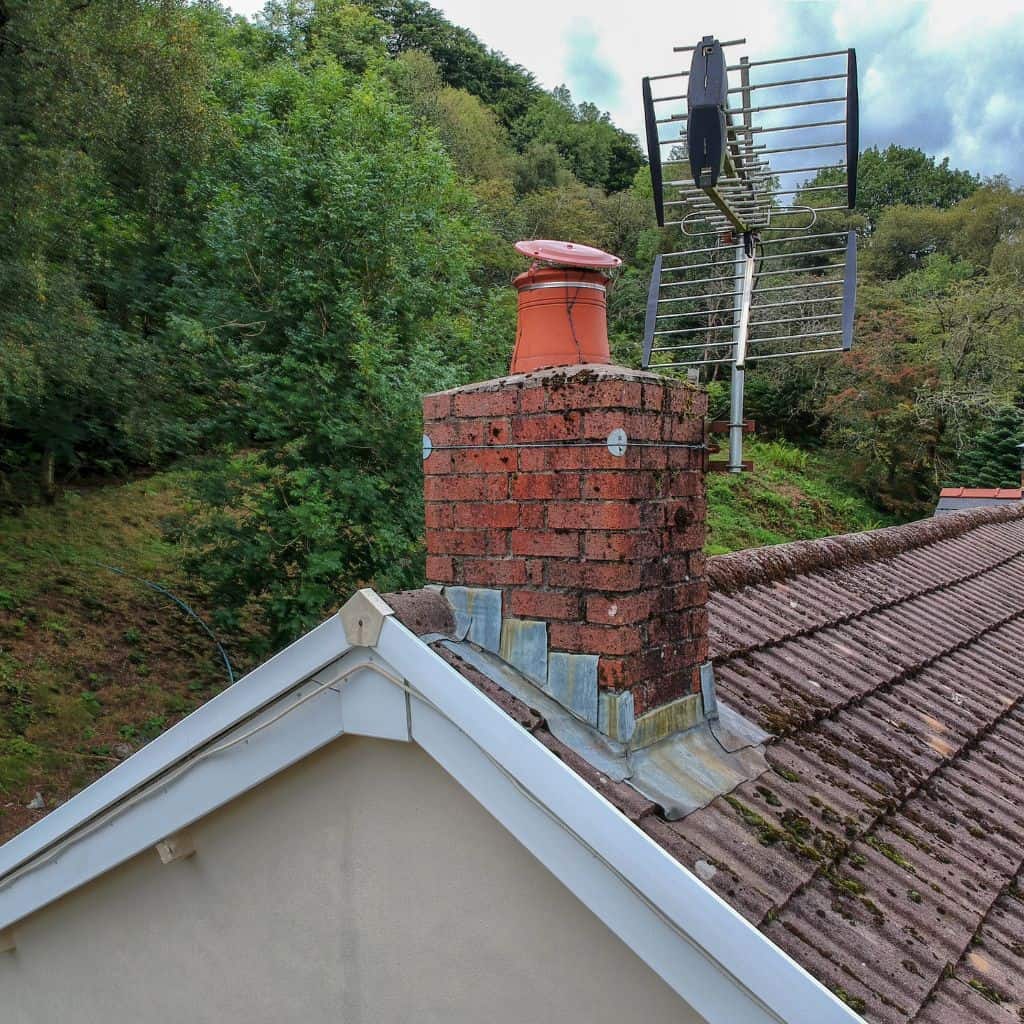
Chimney leaks occur when water penetrates through worn flashing, cracked mortar, or porous brick. Each entry point can open through age, weather exposure, or a combination of both.
Common causes include:
Lead flashing lifted by years of thermal movement
Lead flashing expands and contracts with temperature changes throughout the year. Over time, this repeated movement can cause the lead to lift away from the chimney or roof surface, particularly where it has been installed in long, unsupported runs, and chimney flashing repair is then needed.
Once the flashing lifts, even slightly, it creates a gap through which wind-driven rainwater can be pushed underneath. This is one of the most frequent causes of chimney leaks in exposed locations such as Hampshire, where repeated weather cycles accelerate the process.
Open mortar joints eroded by wind-driven rain
Mortar joints degrade naturally over time, but exposure to wind-driven rain can significantly accelerate this erosion. As the mortar weakens, small gaps form between the bricks and allow water to penetrate deep into the chimney structure.
In coastal areas, salt carried in the air further breaks down the mortar, making it more brittle and prone to crumbling. Once joints open up, water can track through the stack and appear internally as damp patches or staining.
Spalled brick faces allowing water to penetrate the wall
Spalling occurs when the outer face of a brick breaks down under the combined effect of moisture and freeze-thaw cycles. When this protective outer layer fails, the inner part of the brick becomes exposed and highly absorbent.
Rainwater can then soak directly into the chimney stack rather than being shed away. Over time, this leads to widespread dampness within the chimney breast and can accelerate structural deterioration if it is not addressed.
A cracked cement crown above the flue
The cement crown, or flaunching, at the top of the chimney is designed to shed water away from the flue and stack. When cracks develop in this area, water can seep directly into the chimney from above.
This type of leak is particularly damaging because it allows water to travel down inside the structure, often going unnoticed until internal damage becomes apparent. Frost can widen these cracks progressively, making the problem steadily worse over successive winters.
A missing or broken pot exposed since the last storm
A chimney pot helps direct smoke safely out of the flue while also limiting the amount of rain that can enter. If a pot becomes cracked, dislodged, or entirely missing, often as a result of storm damage, the flue is left exposed to the elements.
Rainwater can then fall directly into the chimney, saturating the internal brickwork and leading to damp issues further down the property. Fitting a chimney cap keeps rain and debris out of an exposed flue, and in more severe cases nesting materials may also enter, compounding the underlying problem.
Hampshire weather can accelerate these issues, as salt, frost, and wind-driven rain act aggressively on surfaces above the roofline. It is not uncommon for a chimney to be leaking from more than one point simultaneously.
If you notice staining on the chimney breast, contact us at 07512976384 for a free quote.
How does chimney leak repair protect your home?
Chimney leak repair protects your home by sealing every potential entry point above the roofline. Once sealed, problems such as deteriorating plaster, rotting loft timbers, and stained ceilings can be resolved and prevented from recurring.
Water can travel a considerable distance inside a chimney breast, causing wet brickwork to transfer moisture into bedroom plaster. As a result, wallpaper may lift, skirting boards may swell, and ceiling insulation may lose its thermal efficiency.
Damp wiring near the chimney can lead to electrical failures, and copper conductors may corrode within the wall cavity. This damage is often not visible until the wall begins to deteriorate.
A timely chimney repair can prevent these outcomes. If addressed within six months of the first signs, the work may be limited to repointing and flashing. Delaying the repair, however, can mean a partial stack rebuild becomes necessary.
What does our chimney leak repair process involve?
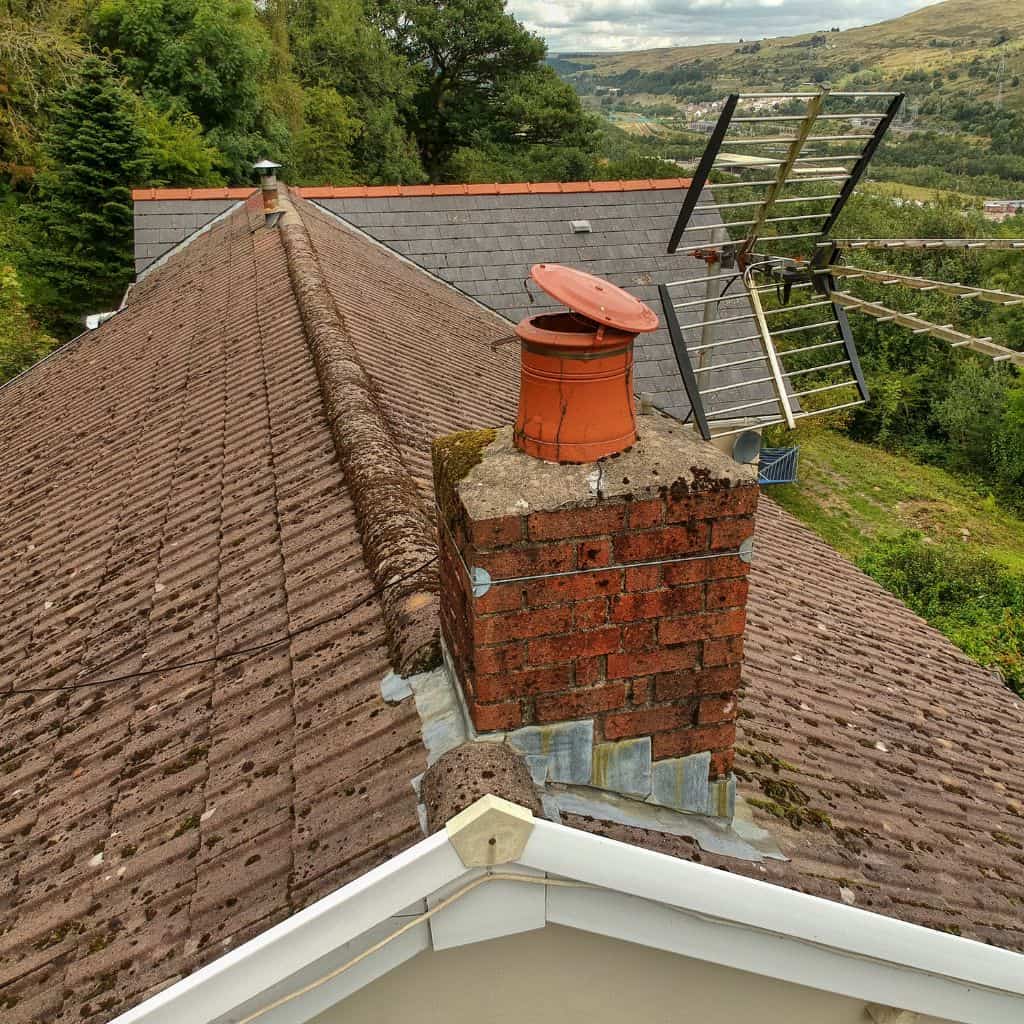
Our chimney leak repair process covers six stages: inspection, scaffold, strip, repoint, flashing, and soak test. Each project begins with a comprehensive survey and loft inspection.
Our on-site procedure includes:
Inspection: identify and document all leak entry points
We begin with a detailed inspection from ground level and at height, photographing all visible defects: cracked mortar, lifted flashing, damaged brickwork, and problems with pots or flaunching.
This step allows us to pinpoint the precise source of the leak and establish a clear, evidence-based repair plan before any work begins.
Access: install a safe working platform where required
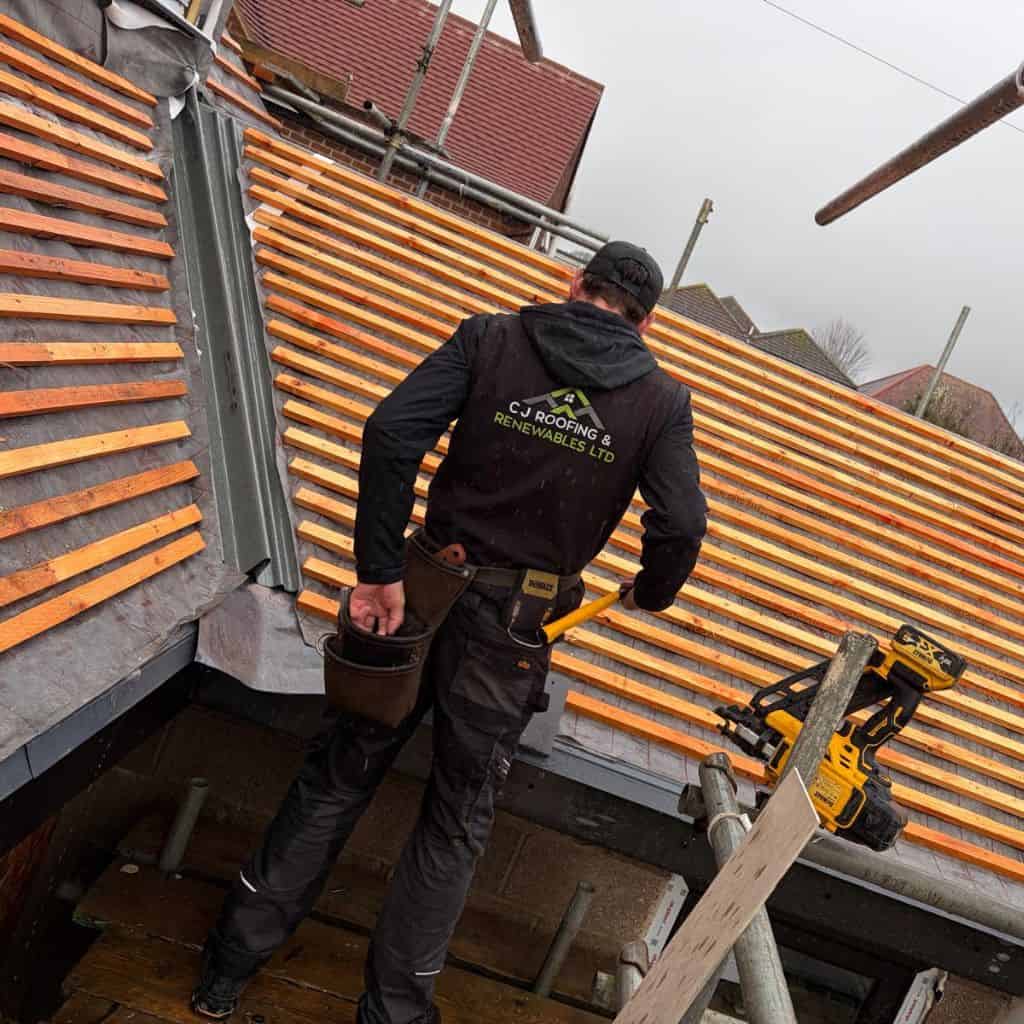
Where necessary, we erect a stable, fully boarded scaffold to give safe access to the chimney. This ensures that all repairs can be carried out accurately, particularly when working with lead or rebuilding sections of the stack.
The access method is determined by roof height, pitch, and complexity, and is always set out clearly in advance.
Strip: remove all failed materials back to a sound base
We remove all defective materials (worn lead flashing, loose mortar, cracked fillets, and debris) to expose the underlying condition of the chimney and eliminate concealed entry points for water.
Working back to a clean, sound base ensures the new repair is not undermined by previous failures left in place.
Repair: repoint brickwork and install new lead flashing
We restore the chimney by repointing joints with appropriate mortar or rebuilding damaged areas where required. New code 4 or code 5 lead flashing is then installed into freshly cut reglets and secured correctly.
This stage reinstates both the structural integrity of the stack and the weatherproof seal at the roof junction.
Test: verify the repair with a controlled soak test
Once the repair is complete, we carry out a soak test by applying water to the chimney stack. This confirms that all identified entry points have been sealed effectively.
The test provides immediate reassurance that the chimney is watertight before the job is signed off.
Why does prompt chimney leak repair protect long-term value?
Acting promptly keeps the repair scope manageable and the cost proportionate. A repair carried out when a problem is first identified typically involves only flashing and repointing, whereas a longer delay may require more extensive structural work.
Addressing a minor ceiling stain with a flashing dress and repointing, for example, keeps the scope of any future risk to a minimum.
Leaving the same stain unattended for an extended period can result in persistent wet brickwork, blown plaster, and weakened bedroom joists, ultimately requiring a more extensive repair including a half-stack rebuild and full redecoration.
How do chimney leaks differ from roof leaks?
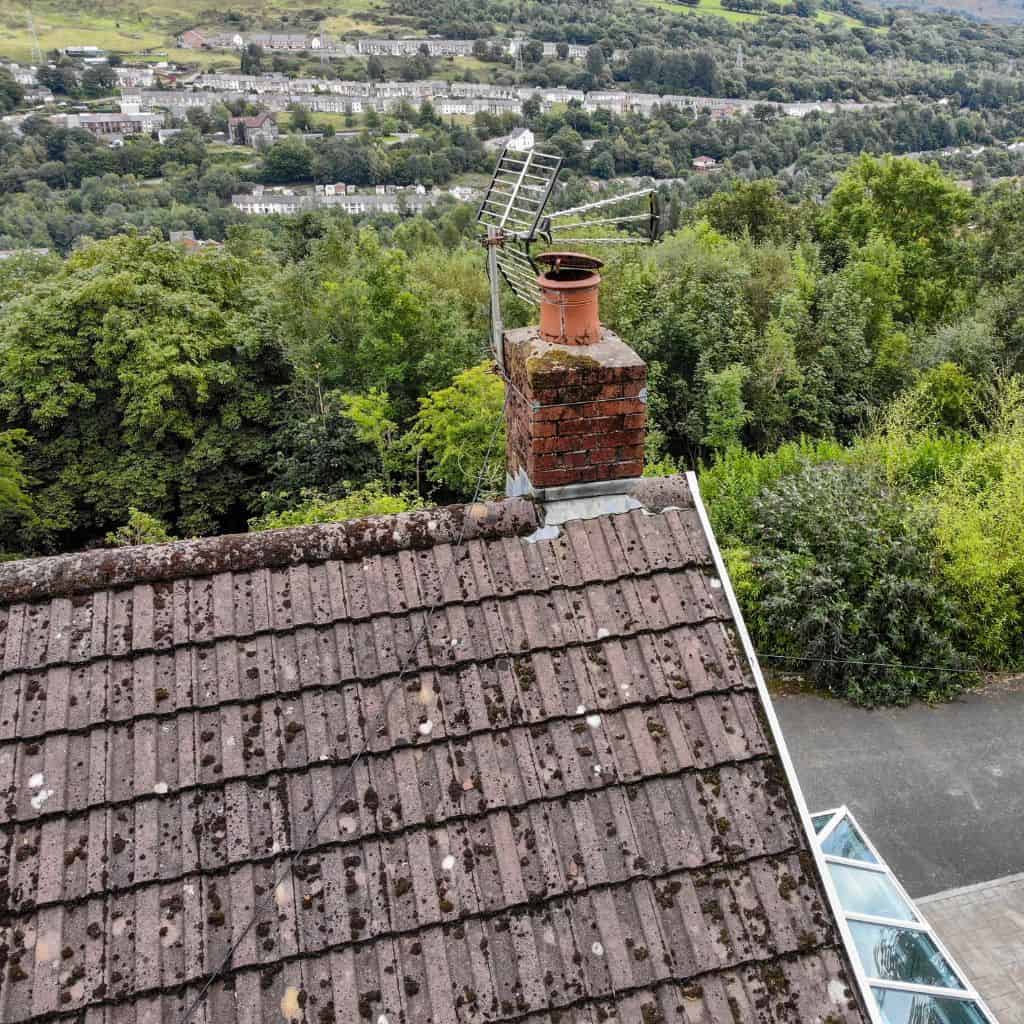
Chimney leaks pass through the stack itself, while roof leaks occur through tiles or felt in the surrounding area. The pattern of staining provides useful clues when tracing the source.
A roof leak near a chimney wets the felt beneath a broken tile, and the resulting drip in the loft forms a distinct pattern pointing towards the gap. The chimney breast itself may remain entirely dry.
A chimney stack leak, by contrast, can cause dampness on the breast several floors below the roof. Salt deposits may appear on the plaster because water travels through brick rather than down metal. The repair method differs depending on which source is confirmed.
Why Choose C J Roofing & Renewables Ltd for Chimney Leak Repair in Hampshire?
Over 15 years of experience
Connor and Jack bring over 15 years of combined hands-on roofing experience, delivering everything from small domestic repairs to large-scale commercial projects across Hampshire.

Locally based in Hampshire
Based in Portsmouth with deep local roots, we understand Hampshire's homes, weather and building styles, which allows us to deliver roofing work that lasts.
5-star rated service
We are proud to be rated 5 stars on Google by our customers, reflecting the quality of our workmanship and our commitment to reliable, professional service.
Competent & highly trained team
Our team is fully trained and certified in asbestos awareness, working at height and manual handling, ensuring every project is carried out safely and to industry standards.
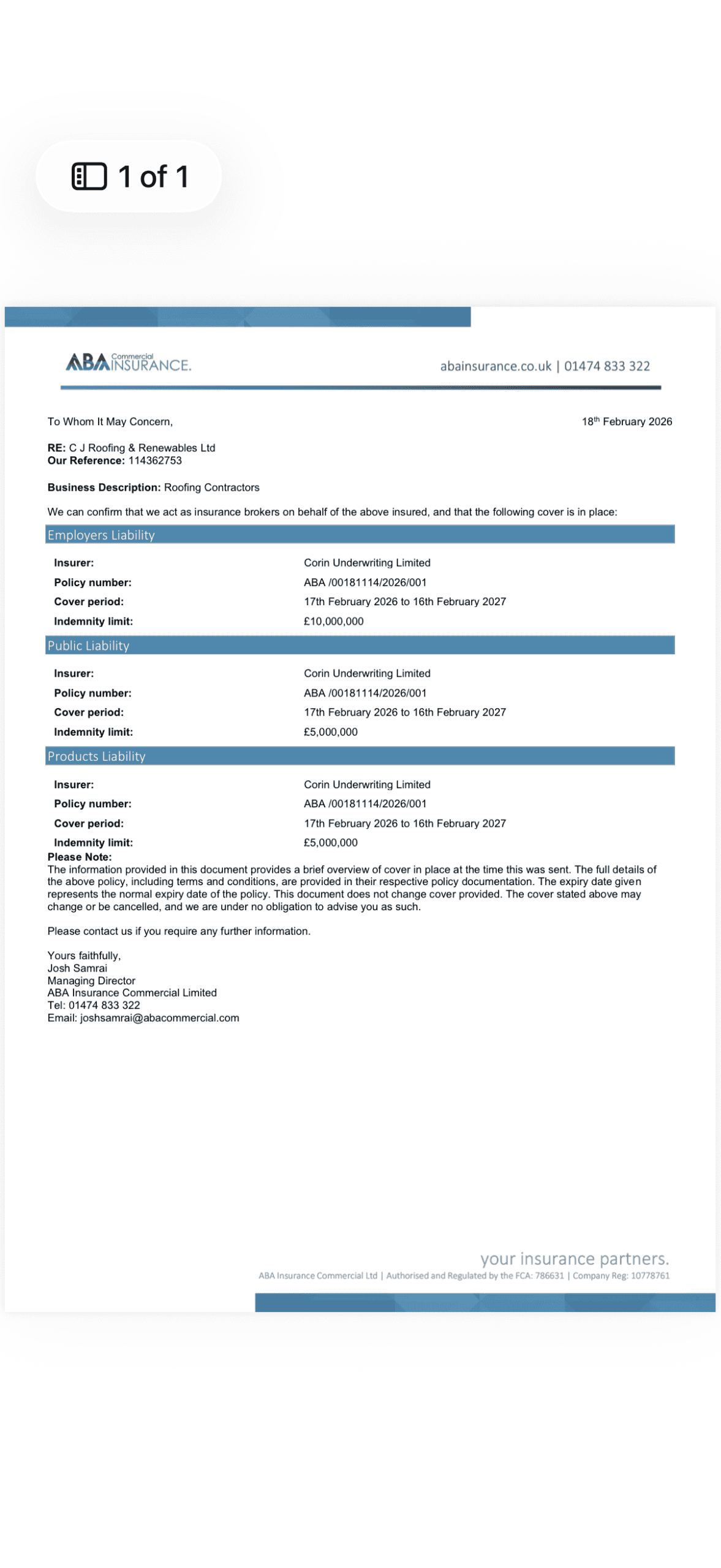
£5 million public liability insurance
We carry up to £5 million in public liability insurance, giving you complete peace of mind that your property is fully protected while we work.
10 year workmanship guarantee
All new roof installations and replacements come with a 10-year workmanship guarantee, so you are covered in the unlikely event of any issues.






Frequently asked questions
Take a look at the Frequently Asked Questions regarding our Chimney Leak Repair service.
What materials are suitable for Hampshire weather?
Milled lead, natural hydraulic lime mortar, and frost-resistant clay bricks are all well suited to Hampshire conditions. A fibre-reinforced cement crown tops the stack, with each material selected to withstand the specific loads it faces.
Milled lead accommodates thermal movement without splitting, whereas thin zinc covers can corrode in salt-laden coastal air. Milled lead installed on a well-sheltered roof can endure for several decades.
Hydraulic lime mortar is the appropriate choice for pre-1919 stacks, as modern OPC cement can trap moisture and cause brick faces to spall. A silane water repellent can be applied to reduce brick absorption where the exposure is particularly severe.
How long does a chimney leak repair take?
Most chimney leak repairs can be completed within one to two days. Work focused solely on the flashing may be finished in a single day, while a full repoint with new lead and a fresh crown will typically take longer.
Does a chimney leak repair affect home insurance?
A dated repair record can support an insurance claim by demonstrating active maintenance. Most UK policies cover sudden water ingress but exclude gradual wear and tear.
A loss adjuster identifying old staining and deteriorated flashing may categorise the damage as wear and tear. A receipt from C J Roofing & Renewables Ltd, supported by photographs and dates, clearly establishes the condition of the chimney before and after the work.
Insurers regard a thorough maintenance record favourably, and this documentation is equally useful during a property sale or remortgage.
Can a leak repair proceed without scaffolding?
For smaller jobs that meet HSE risk assessment criteria, a repair can proceed without scaffolding. Single-storey extensions, low pitches, and short-duration tasks may be suitable for a roof ladder.
Two-storey roofs and steeper pitches require scaffolding.
A leaking chimney on a three-storey Victorian terrace requires proper scaffolding. We provide quotes and explain the HSE guidelines that inform the decision when we assess the job.
Do you handle chimney sweep work as part of the repair?
We do not carry out chimney sweeping. This is handled by your chimney sweep, who cleans the flue and issues a sweep certificate on completion.
Our work covers the structure above the roof and the surrounding flashings. Arranging both services in the same year is worthwhile. Your sweep addresses the flue, while we attend to the masonry and leadwork.