Rooftop Solar Installation Hampshire
Rooftop Solar Installation Services in Hampshire
Rooftop solar installation converts daylight into electricity for your home. A properly designed and fitted system can last 25 years before meaningful performance degradation begins, and can reduce your electricity bill considerably over that period.
C J Roofing & Renewables Ltd specialises in rooftop solar installation across Hampshire, with our roofers handling the panels, flashings and fixings as a single, coordinated job rather than splitting the work between trades.
Your written, itemised quote follows within 48 hours of the survey. Call 07512976384 for a complimentary site assessment. We respond within 48 hours.
How do you know your Hampshire roof is suitable for rooftop solar installation?
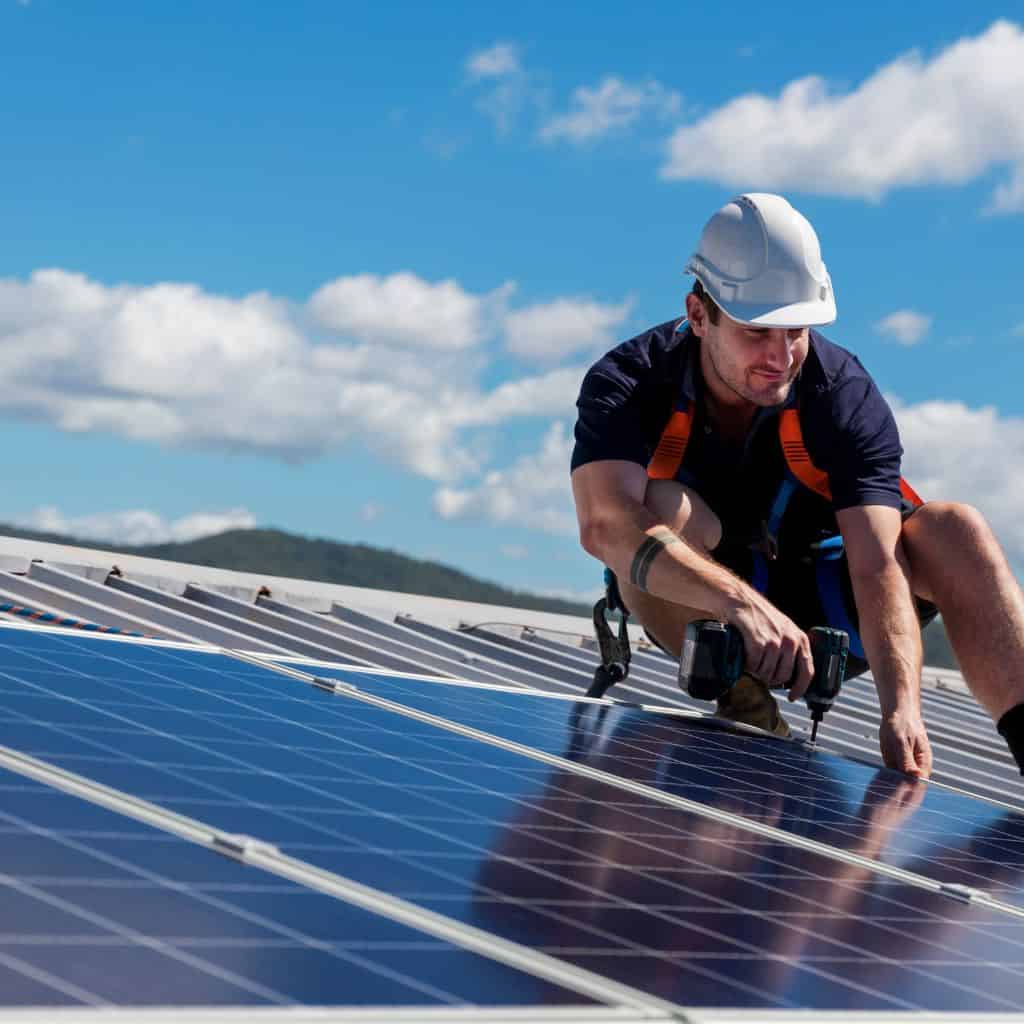
A Hampshire roof is suitable for rooftop solar installation when it is structurally sound, faces south or east-west, and is free from significant shading. The roof covering, age and pitch are each important factors for a system expected to last 25 years.
During our initial visit, we evaluate five key aspects:
Rafter spacing, depth and condition assessed from inside the loft
We inspect rafter spacing, depth and condition from inside the loft as a structural check before install, confirming that the roof structure can support the weight of the solar array. Older Hampshire roofs, particularly those near the coast, sometimes have weathered timbers that require reinforcement before installation can proceed.
Period properties may need additional timber strengthening at this stage. We provide written documentation of any necessary structural work before proceeding with a quote, ensuring the roof is sound for a 25-year system.
Condition of tiles, slates or membranes checked from roof level
The condition of tiles, slates or membranes is assessed from roof level to identify any that need replacing before the solar installation begins. Roof age matters more than the type of covering, since the system is expected to remain in place for 25 years.
Roofs with fewer than five years of remaining life are better suited to a full roof replacement first. We can provide quotes for both the roof covering and the solar installation in a single visit, ensuring long-term compatibility between the two.
Pitch angle and orientation analysed against a compass
Pitch angle and orientation are analysed against a compass to determine the optimal energy yield for your roof. We prefer installing on pitches between 30 and 40 degrees for maximum performance.
East-west arrays are designed to distribute power output throughout the day, while flat roofs use ballasted A-frames angled towards the sun. South-facing roofs deliver the highest annual output in Hampshire.
Shading from chimneys, dormers, trees and neighbouring structures
Shading from chimneys, dormers, trees and neighbouring structures is assessed carefully, as it has a significant effect on energy generation. We maintain a 400mm clearance from every skylight and chimney stack in accordance with building regulations.
For properties with complex roof shapes – including hips, valleys and dormers – we use shorter rail sections and split strings to optimise output across the varied roof structure. Shading analysis is carried out during the survey.
Cable routing from the roof to the consumer unit
Cable routing from the roof to the consumer unit is planned to ensure safe and efficient electrical connections. The route determines where the inverter will be located and how the DC wiring runs through the property.
We assess the most direct path with the least disruption, ensuring compliance with electrical regulations. Correct cable routing is essential for G98/G99 grid notification and Smart Export Guarantee tariff activation.
We prefer installing on roof pitches between 30 and 40 degrees for optimal energy yield, and we design east-west arrays to distribute power output throughout the day. On flat roofs, ballasted A-frames angled towards the sun are used in place of fixed rail systems.
Roof age matters more than the type of covering. Roofs with fewer than five years of remaining life should be re-covered first, and we can provide quotes for both tasks in a single visit.
What does MCS-certified rooftop solar installation give you?
MCS-certified rooftop solar installations provide eligibility for the Smart Export Guarantee, 0% VAT and warranty-backed manufacturer coverage.
The Smart Export Guarantee allows you to sell surplus electricity back to the grid, and the major UK suppliers accept MCS-certified installations. Without MCS certification, access to SEG tariffs is not available.
Under current UK regulations, 0% VAT applies to residential rooftop solar. An installation that lacks MCS certification does not qualify, so maintaining MCS compliance is essential.
ECO funding for low-income households also requires an MCS certificate, and we verify eligibility during the survey. Without the certificate, no funding can be accessed. The certificate is equally necessary for satisfying mortgage lenders during property sales.
UK suppliers require the MCS certificate number before activating your SEG tariff.
What does our rooftop solar installation process cover?
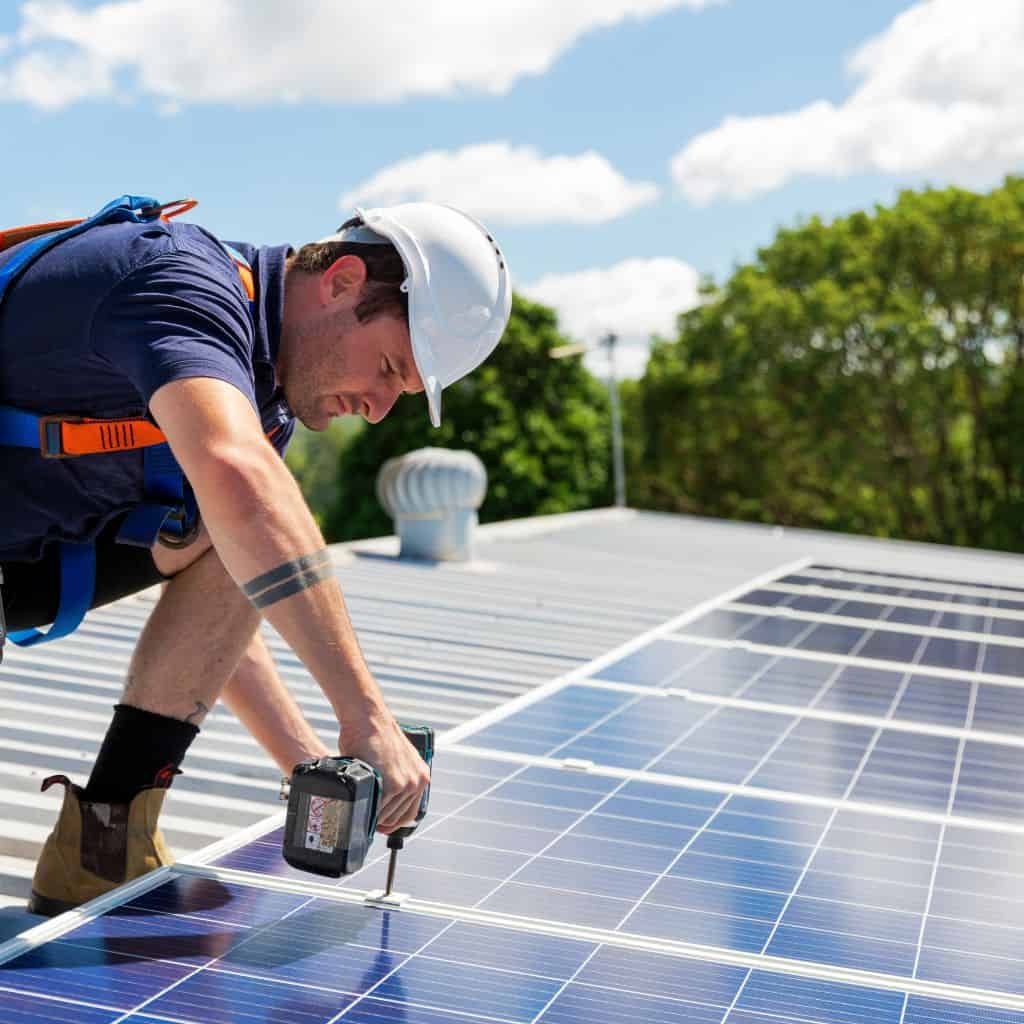
Our rooftop solar installation process is structured into four stages: survey, roof preparation, panel and inverter installation, and grid notification. Each stage includes a written sign-off.
Our on-site process involves:
Survey: loft inspection, roof assessment, shading analysis, written quotation
We begin with a comprehensive survey covering loft inspection, roof assessment, shading analysis, cable routing evaluation and a written quotation. PVGIS data is used to model your specific yield before a quote is provided.
This ensures accuracy without reliance on marketing figures. The survey also identifies any roof preparation work required before installation can proceed.
Roof preparation: scaffold setup, tile lifting, rafter fixings, sealing flashings
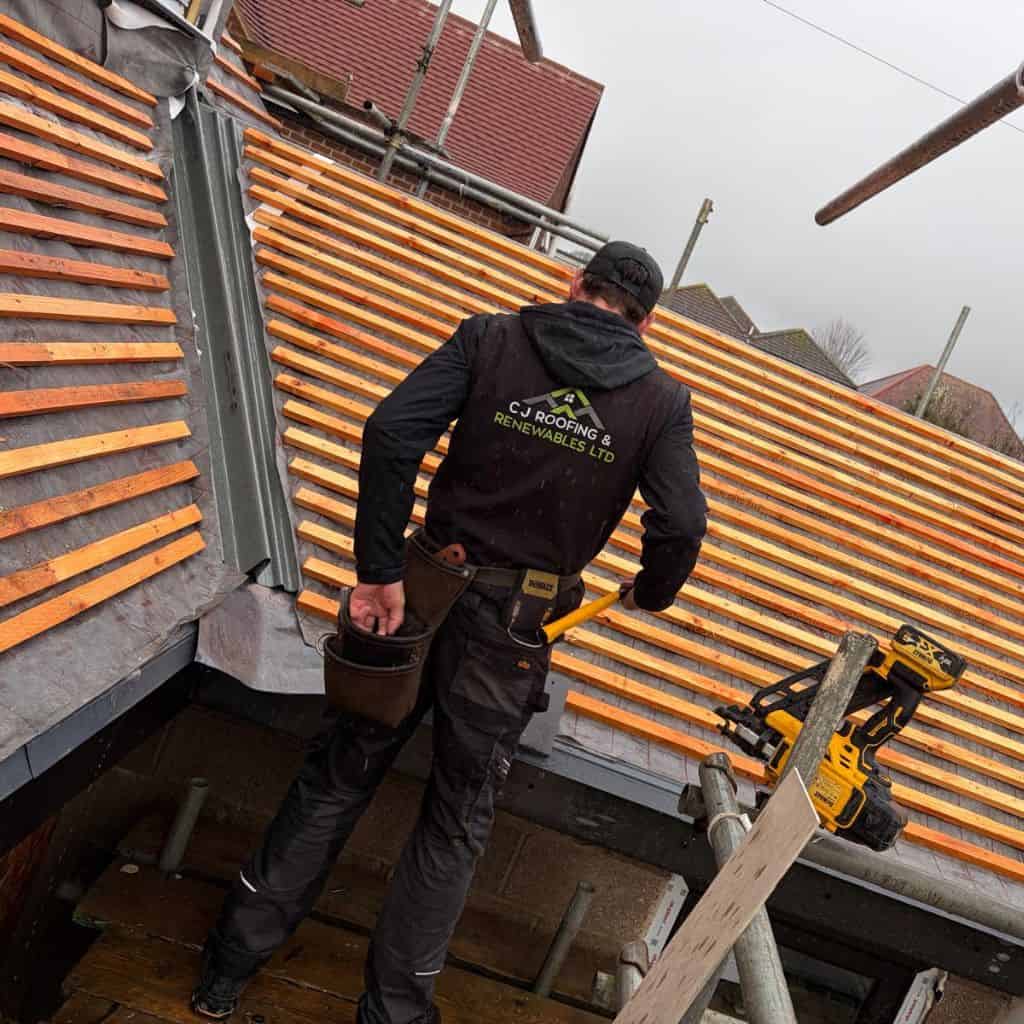
Scaffolding is erected first on most pitched roofs, with working platforms spanning the eaves. Tiles are lifted, rafter fixings are installed, and flashings are sealed to ensure waterproofing before the rails are mounted.
Tools and panels are hoisted from ground level, and two-person lifts are used for any panel over 20kg. Tiles are stacked on padded boards to prevent damage during the installation process.
Installation: mounting rails, panels, DC wiring, inverter, AC connection, isolators
Mounting rails are installed, panels are fixed, DC wiring is completed, the inverter is set up, the AC connection is made and isolators are fitted. Most Hampshire homes are completed within one to three days, though larger systems with battery storage may take four to five days.
Panel wattage is particularly important for smaller roofs, where modern 430W modules outperform older 300W panels within the same area. This difference is significant for terraced homes with limited roof space.
Grid notification: G98/G99 paperwork to SSEN, SEG application, handover package
G98 or G99 paperwork is submitted to SSEN (the local distribution network operator), the Smart Export Guarantee application is processed, and a handover package is provided. G98 notification applies to systems up to 3.68 kW per phase.
G99 pre-approval is required before any panel installation for larger systems. The MCS certificate number is provided for SEG tariff activation with your energy supplier.
Sign-off: written documentation, warranty certificates, MCS certificate
Written documentation is provided at completion, including warranty certificates for panels (25 years), inverter (10 to 12 years) and our 10-year workmanship guarantee. The MCS certificate is essential for SEG eligibility, 0% VAT compliance and mortgage lender satisfaction.
ECO funding verification for low-income households is completed during the survey. All paperwork is organised and available for future buyers, ensuring documented compliance at the point of property sale.
Most Hampshire homes are completed within one to three days, although larger systems with battery storage may take four to five days. Cottage roofs with dormers and chimneys can add additional time to the programme.
G98 notification applies to systems up to 3.68 kW per phase, and we submit the paperwork to your local distribution network operator. G99 pre-approval is required before any panel installation on larger systems.
How do we select the right rooftop solar system for your home?
Selecting the right rooftop solar system involves matching it to your roof shape, daily usage pattern and budget. Each Hampshire home receives a customised quote, with systems tailored to your specific half-hourly energy consumption.
Three key decisions shape every quote:
- Panel count and wattage determine the kWp rating and roof coverage
- Inverter type influences how shading and battery connections are managed
- Battery size balances daytime surplus against evening electricity import
For most three-bedroom semi-detached homes using 3,500 to 4,500 kWh per year, we install a 4kW system. Larger homes with four bedrooms, an EV charger or a heat pump may require a 6kW system. Larger arrays are particularly beneficial for households that are at home during the day.
Panel wattage is important for smaller roofs, where modern 430W modules outperform older 300W panels within the same area. This is a significant consideration for terraced homes with limited roof space.
We size the battery according to your evening energy needs. A 5kWh battery typically covers six to eight hours of basic use for most Hampshire households, while those with EVs and heat pumps often opt for 10kWh or larger. We carry out the necessary calculations before providing a quote.
How much energy does rooftop solar generate on a Hampshire home?
A 4kW rooftop solar system in Hampshire can generate approximately 3,400 to 3,800 kWh annually, based on PVGIS estimates. This output can cover a substantial portion of household electricity needs. Hampshire, situated on the south coast, benefits from higher irradiance levels than the Midlands or the North.
Energy production peaks between April and September, with winter months contributing a smaller share of the annual total. Output varies according to pitch, orientation, shading and panel wattage.
A 6kW system offers a higher annual output on the same model. Pairing it with a battery increases self-consumption by storing excess daytime power for use in the evening.
We use PVGIS data to model your specific yield before providing a quote, ensuring accuracy without reliance on marketing figures.
Why Choose C J Roofing & Renewables Ltd for Rooftop Solar Installation in Hampshire?
Over 15 years of experience
Connor and Jack bring over 15 years of combined hands-on roofing experience, delivering everything from small domestic repairs to large-scale commercial projects across Hampshire.

Locally based in Hampshire
Based in Portsmouth with deep local roots, we understand Hampshire's homes, weather and building styles, which allows us to deliver roofing work that lasts.
5-star rated service
We are proud to be rated 5 stars on Google by our customers, reflecting the quality of our workmanship and our commitment to reliable, professional service.
Competent & highly trained team
Our team is fully trained and certified in asbestos awareness, working at height and manual handling, ensuring every project is carried out safely and to industry standards.
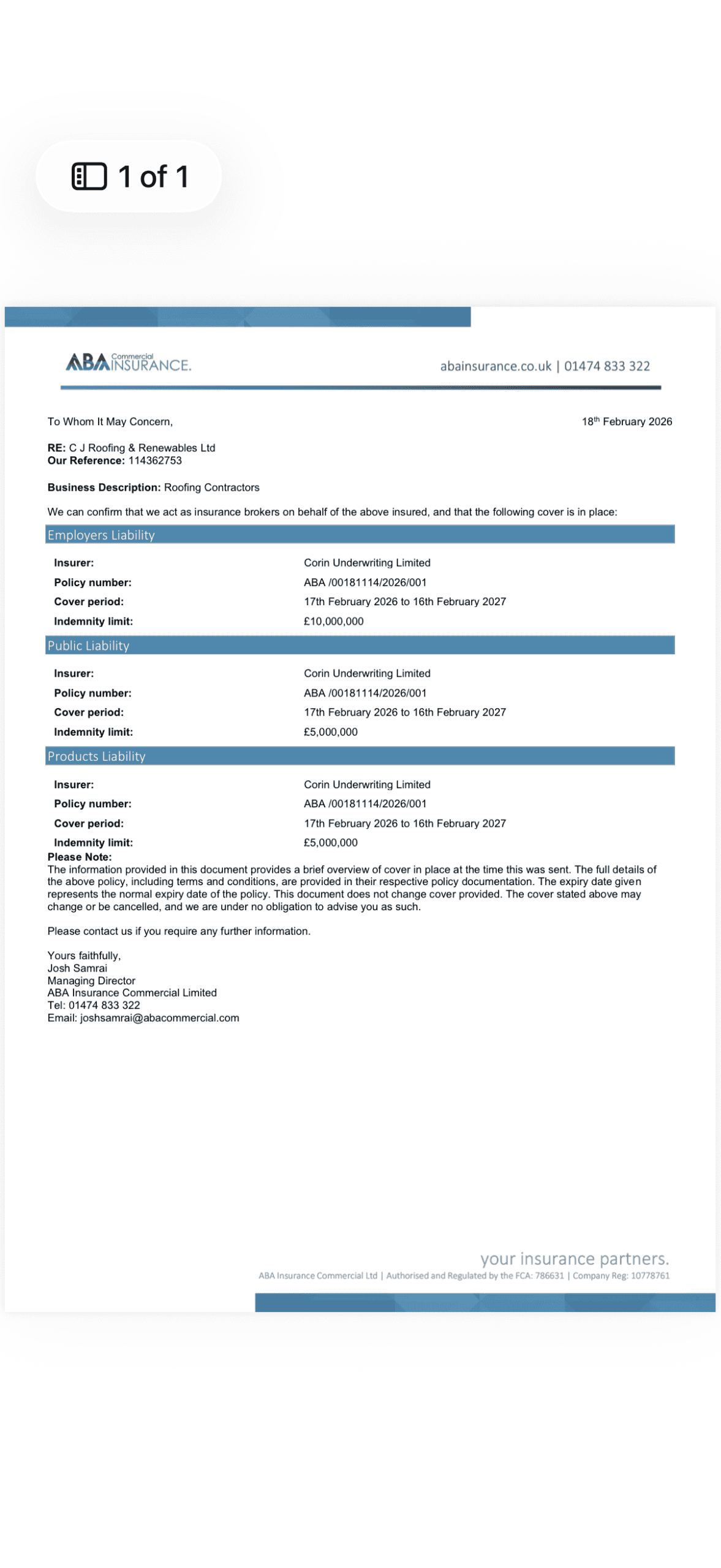
£5 million public liability insurance
We carry up to £5 million in public liability insurance, giving you complete peace of mind that your property is fully protected while we work.
10 year workmanship guarantee
All new roof installations and replacements come with a 10-year workmanship guarantee, so you are covered in the unlikely event of any issues.






Frequently asked questions
Take a look at the Frequently Asked Questions regarding our Rooftop Solar Installation service.
Does rooftop solar work during cloudy Hampshire weather?
Rooftop solar functions during cloudy weather, though at reduced output levels. Modern monocrystalline panels use PERC cell technology to capture diffuse light, ensuring output does not fall to zero during daylight hours.
Bright haze and light cloud can produce stronger output than heavy overcast conditions, which can still power essential appliances such as fridges, freezers and home offices without drawing from the grid.
Hampshire falls within a strong UK irradiance zone according to PVGIS estimates, and summer surpluses offset winter shortfalls over the course of the year. Your electricity bills reflect the true picture across four quarters.
A battery stores surplus energy from sunny days, and the Smart Export Guarantee compensates for any units returned to the grid during bright periods.
What warranties cover a rooftop solar installation?
Rooftop solar installations carry three levels of warranty cover: panel product cover, inverter cover and workmanship cover. Each warranty protects a distinct component of the system.
Panel manufacturers typically provide 25-year product and performance warranties on Tier 1 modules, guaranteeing at least 85 percent of rated output after 25 years.
Inverter warranties generally range from 10 to 12 years, with most brands offering paid extensions to 20 years.
Our workmanship guarantee covers every new installation for 10 years, protecting against leaks, fixing failures and wiring faults arising from the installation. Should a fault appear later, our solar panel repair service resolves damaged panels and failed fixings in a single visit.
How do you keep workers safe on a Hampshire roof?
Worker safety is maintained through scaffolding, harnesses and edge protection on every project, in compliance with the Working at Height Regulations 2005. We begin with a written risk assessment that identifies fall hazards, fragile surfaces and overhead cables.
Scaffolding is erected first on most pitched roofs, with working platforms spanning the eaves. Tools and panels are hoisted from ground level, and two-person lifts are used for any panel over 20kg.
Our team holds certifications in asbestos awareness, working at height and manual handling. Public liability insurance is held at £5 million and employers’ liability insurance at £10 million.
Tiles are stacked on padded boards, the driveway is kept clear and tidy, and the loft is protected with dust sheets throughout the work.
Can you install rooftop solar around a chimney or skylight?
Rooftop solar installations can be designed around chimneys, skylights, vents and dormers. Most Hampshire homes have at least one roof obstacle, and we plan installations around these features rather than over them.
We maintain a 400mm clearance from every skylight and chimney stack. This gap meets building regulations and preserves roofer access to flashings in the future.
For properties with complex roof shapes – such as hips, valleys and dormers – we use shorter rail sections and split strings to optimise output across the varied roof structure.