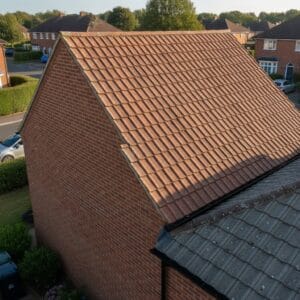
What is the Life Expectancy of a Tile Roof in Hampshire?
24 September 2026
The life expectancy of a tile roof in Hampshire is 40 to 100 years, depending on the tile material and…

To repair a valley roof, a roofer strips out the failed valley lining, inspects and rebuilds the substrate beneath, then fits new lining material and re-beds the tiles either side. The junction is sealed so water runs cleanly into the gutter. Most valley repairs take one to two days from survey to completion.
Below we explain the repair process step by step, the lining options we use across Hampshire, and how we decide whether a section repair or a full replacement is the right call. This complements our main Roof Valley Repair service page, which covers the warning signs in detail.
A proper roof valley repair follows a set sequence. Skipping stages is where short-lived fixes come from. Here is how we approach the work on a typical pitched roof.
Each stage is checked before we move to the next. That is how a valley repair performs for years rather than months.
A roof valley leak repair starts with locating exactly where water enters, which is rarely where the stain appears inside. Water tracks along rafters and battens before it drips, so the ceiling mark can sit a metre or more from the fault.
We trace the leak by inspecting the lining for splits and pinholes, checking the mortar fillets for cracks, and looking at the tile cuts either side of the channel. Undersized tile gaps and lifted laps are common culprits on older Hampshire properties. Getting the diagnosis right means we repair the cause, not just the symptom.
The right lining depends on the roof pitch, the existing construction and the surrounding tile type. Options we commonly fit include:
We recommend the material during your free site survey, based on what we find rather than a one-size-fits-all approach.
Fixing a leaking roof valley can mean a localised section repair or a full valley replacement, and the survey decides which. A single split in otherwise sound lining may only need a section addressed. Widespread corrosion, rotten valley boards or repeated failures usually point to full replacement.
We assess the whole valley length, not just the visible fault, so you are not paying to reopen the same area later. Where the substrate timber is wet or perished, we always deal with it before relining. A new lining over rotten boards will not hold.
A valley moves large volumes of water, so a small fault escalates faster than an isolated slipped tile. Once moisture reaches the rafters and insulation, the scope of work grows. Booking an inspection when you first notice a stain or a slipped tile keeps the repair contained to the valley itself.
Many homes in Portsmouth, Southampton, Fareham, Gosport, Havant and Waterlooville have older mortar-bedded valleys that reach the end of their service life. Coastal exposure on Hayling Island and around the Solent adds wind-driven rain that finds any weak lap or cracked fillet.
We work across Eastleigh, Basingstoke, Andover, Fleet, Petersfield, Romsey, Lymington and the wider South of England. As a Portsmouth-based team with over 15 years of combined hands-on roofing experience, we know the tile types and construction styles common to the region. Every new installation carries our 10-year workmanship guarantee, and we hold £5 million public liability insurance.
Most valley repairs take one to two days from survey to completion. A localised section repair can be quicker, while a full valley replacement with substrate renewal takes longer. Access setup and weather also affect the timeline, which we confirm at survey.
Yes, where the lining is sound apart from a single split or lifted lap, a section repair is often enough. If we find widespread corrosion or rotten valley boards, a full replacement is the reliable option. Our survey tells us which applies to your roof.
Common causes include corroded or split lining, cracked mortar fillets, tiles cut too tight to the channel, and rotten valley boards beneath. On exposed Hampshire roofs, wind-driven rain works into any weak lap over time. Correct diagnosis at survey identifies the true source.
If you have noticed a stain, a slipped tile or water tracking near a valley, we can take a look. Our director-led site surveys are free, and we will give you honest advice on whether a section repair or full replacement is right for your roof. Get a free quote by calling 02393873756. We respond within 48 hours.
Posted by: Connor Stanley
Date: 27 August 2026