External Cladding Repair Hampshire
External Cladding Repair Services in Hampshire
A single cracked board can allow water to track behind your cladding skin. When the problem is identified early, repair can remain minimal; when it is left unattended, the damage may extend to the point where a full cladding replacement becomes necessary.
C J Roofing & Renewables Ltd specialises in external cladding repair across Hampshire. We replace damaged boards, reseal joints, and secure loose fixings before water is able to infiltrate the wall behind.
Your written, itemised quote follows within 48 hours of the inspection. Call 07512976384 for a free site visit. We respond within 48 hours.
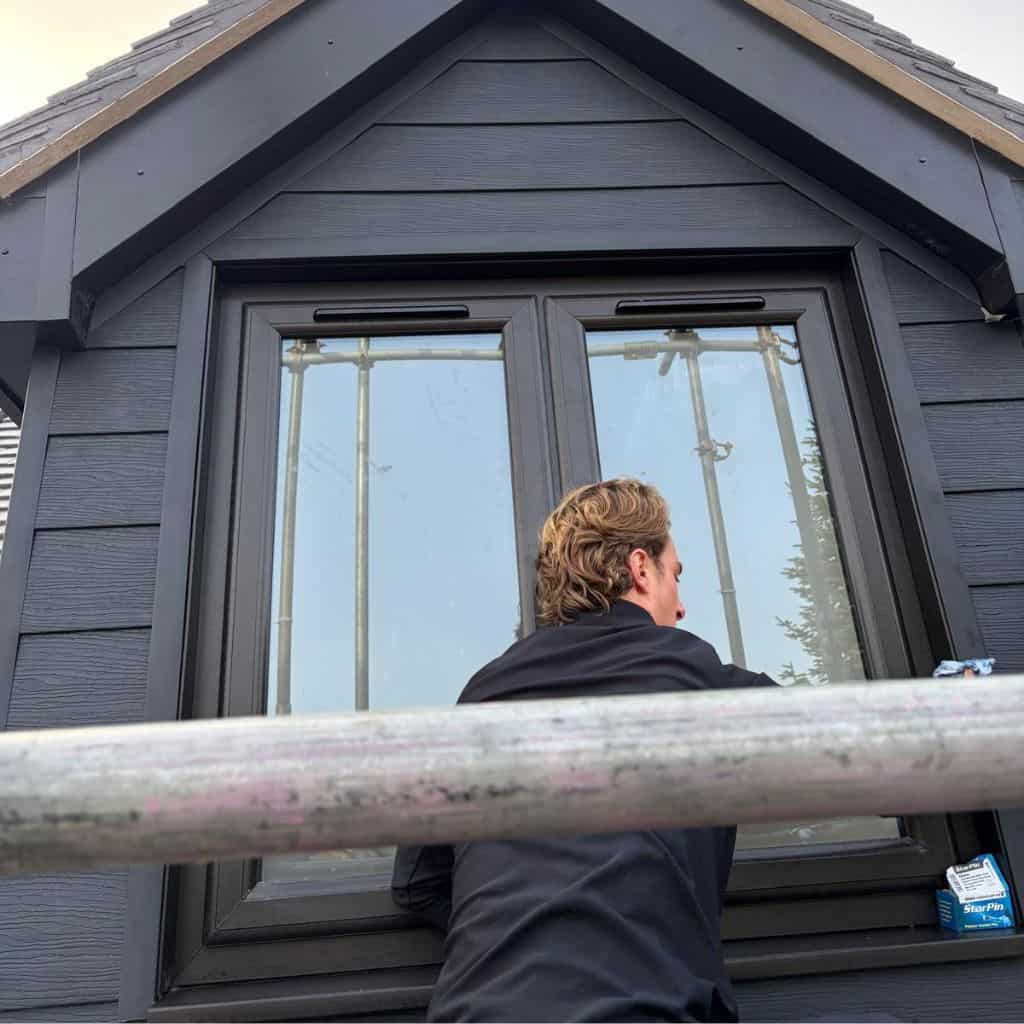
What are the signs that your cladding needs repair?
Cracked boards, soft patches, loose fixings, and damp staining inside the property each indicate that the cladding’s weather-protective layer has failed at some point along its length.
Common signs visible from the ground include:
Hairline splits running along the grain of timber boards
Hairline splits along the grain of timber boards are an early indication of weathering and moisture absorption. These cracks often begin small but can widen over time, allowing wind-driven rain to penetrate behind the cladding layer.
Timber is particularly vulnerable to thermal movement and UV breakdown. When the problem is identified at this early stage, individual boards can be replaced without the need for full re-cladding.
Yellowed, bubbled, or sagging uPVC on south-facing walls
uPVC boards that are yellowed, bubbled, or sagging on south-facing elevations show advanced UV degradation and thermal stress. South-facing walls can reach surface temperatures of 60°C, pushing PVC beyond its designed expansion limits.
Boarding that was nailed in place rather than allowed to float can split as it expands. Early repair prevents water from infiltrating behind the panels and damaging the breather membrane beneath.
Paint flaking off PPC aluminium panels
Paint flaking from powder-coated aluminium (PPC) panels indicates that the protective coating has failed, exposing the metal beneath to moisture and the risk of corrosion over time.
Flaking also reduces the visual integrity of the building. Repairing affected panels and resealing joints can restore full protection without the cost of complete replacement.
Rattling boards in winter gales
Boards that rattle during winter gales indicate loose or failed fixings. This can result from clip corrosion (particularly in coastal areas), thermal movement, or fixing stress accumulated over time.
Loose boards allow water to enter behind the cladding and the problem can worsen during storms. Securing or replacing fixings before boards become fully detached keeps the scope of repair to a minimum.
Sealant pulling away from window reveals
Sealant pulling away from window reveals creates gaps through which water can enter the cavity behind the cladding. This is common as sealants age and lose flexibility as a result of UV exposure and repeated thermal cycling.
Water entering at reveals can cause damp staining inside the property, often appearing above skirtings. Resealing these joints prevents further infiltration and protects the underlying wall structure.
A single damaged board does not require a full re-clad. Early detection keeps cladding repair minimal, as the breather membrane behind the boards often remains dry and the wall’s integrity is preserved.
If you have noticed any of these signs, contact us at 07512976384 for an inspection.
What are the causes of cladding damage?
Cladding can crack and warp as a result of thermal movement, water ingress, UV breakdown, and fixing stress. Each cause leaves distinct evidence on the wall surface.
Thermal movement is the most common cause. UK summers can push south-facing PVC and composite boards beyond their expansion limits, with surface temperatures reaching 60°C on dark facades. Boards fixed in place rather than being permitted to float can split as they expand.
Cold weather has the opposite effect. Joints contract until the sealant tears, allowing water to infiltrate behind the panel. Where water settles in the cavity, frost cycles can cause further cracking of the boards.
In coastal Hampshire, clip corrosion is accelerated by salt-laden air affecting hidden steel components on shoreline properties. UV light can also degrade plasticisers in older uPVC, leaving boards brittle over time.
We diagnose the root cause before beginning any work, because replacing a board over the same underlying fault is likely to result in repeated service calls.
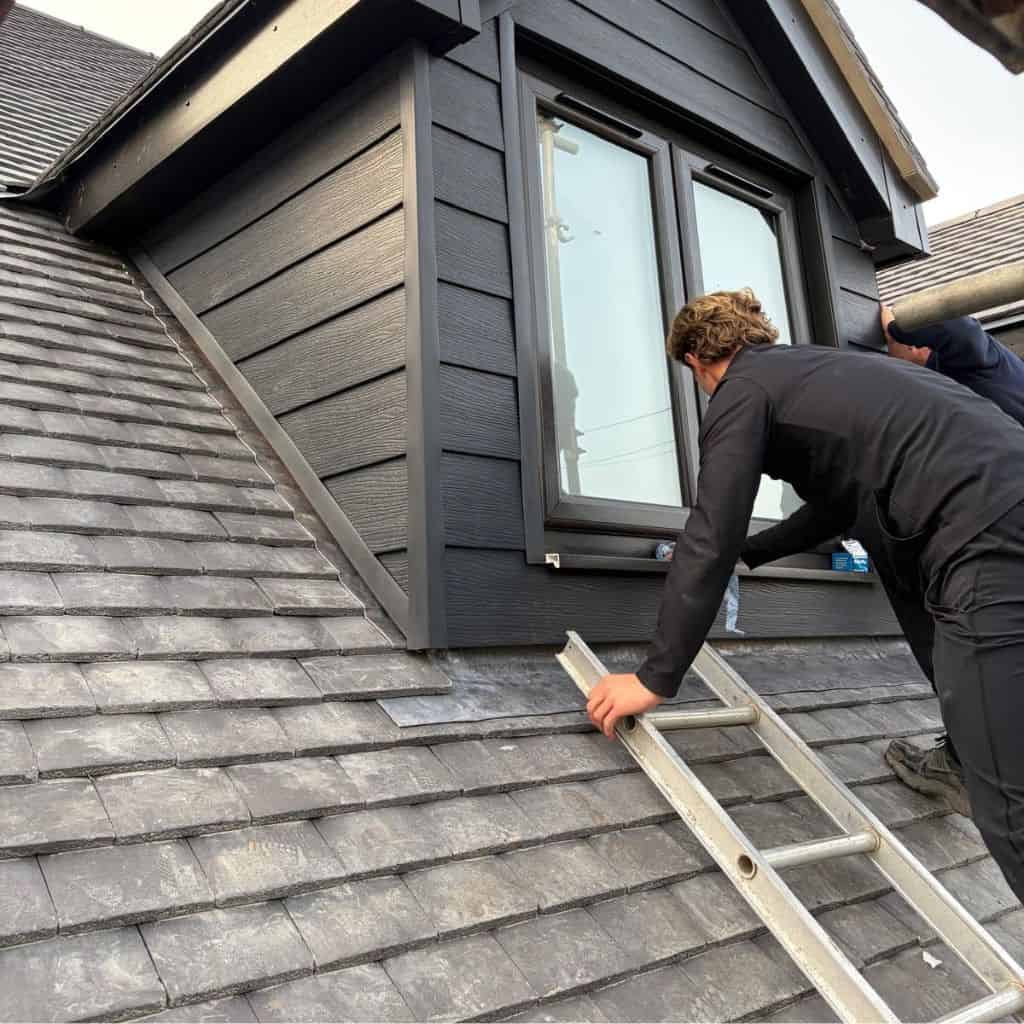
What is our cladding repair process?
Our cladding repair follows five stages: inspect, isolate, strip, refit, and weather-seal. Each is designed to protect the undamaged boards surrounding the affected area.
Our on-site process:
Inspect: close visual examination with moisture readings
We conduct a close visual examination from a tower or ladder, taking moisture readings behind suspect joints. This establishes the extent of the damage and confirms whether the breather membrane behind the cladding remains dry.
The inspection also identifies the root cause: thermal movement, UV breakdown, fixing stress, or water ingress. Diagnosing the cause first prevents repeated service calls.
Isolate: score-cut the damaged section
We score-cut the damaged section to prevent the fault from spreading to sound boards, isolating the problem area and protecting the undamaged cladding around it.
Cutting back to sound material ensures the repair is founded on a stable base and reduces the likelihood of the defect recurring.
Strip: remove old fixings without damaging the membrane
Old fixings are removed carefully to avoid damaging the breather membrane behind the cladding. Rotten battens are cut back to sound timber, and treated softwood is spliced in using stainless screws driven into the original studwork.
Preserving the breather membrane is essential, as it maintains the wall’s integrity and prevents further moisture ingress into the structure.
Refit: cut new boards to match with correct spacing
New boards are cut to match the existing profile and installed clipped or screwed at the manufacturer’s recommended spacing, following the same standards as a full wall cladding installation. A trial dry-fit is carried out to verify the lap and corner trim before final fixation.
Where matching is required, we may extract a sample from a concealed area and send it to the supplier for colour matching, or plane down modern boards to fit older profiles.
Weather-seal: apply EPDM tape or low-modulus sealant at joints
EPDM tape or low-modulus sealant is applied at every joint to ensure long-term weatherproofing. End-of-board overlaps are re-bedded with the appropriate tape or sealant for the substrate, and return trims, drip edges, and corner profiles are restored to their original alignment.
Every stage is documented with photographs for the job pack. Repair work does not carry a guarantee; the 10-year workmanship guarantee applies only to new installations.
How long do cladding repairs typically take?
Most cladding repairs take between half a day and three working days, depending on access height, board type, and the extent of the damage. A single uPVC board swap on a ground-floor bay rarely exceeds four hours.
A fibre cement repair on a two-storey gable can typically be completed in one day with tower access. Multi-elevation work requiring scaffolding may extend to two or three days, with scaffolding erection and removal each taking approximately a morning.
Weather conditions can affect timings, particularly during colder months. Heavy autumn rain can delay sealant work because low-modulus products require a dry substrate to cure, so a small weather buffer is built into every quote we provide.
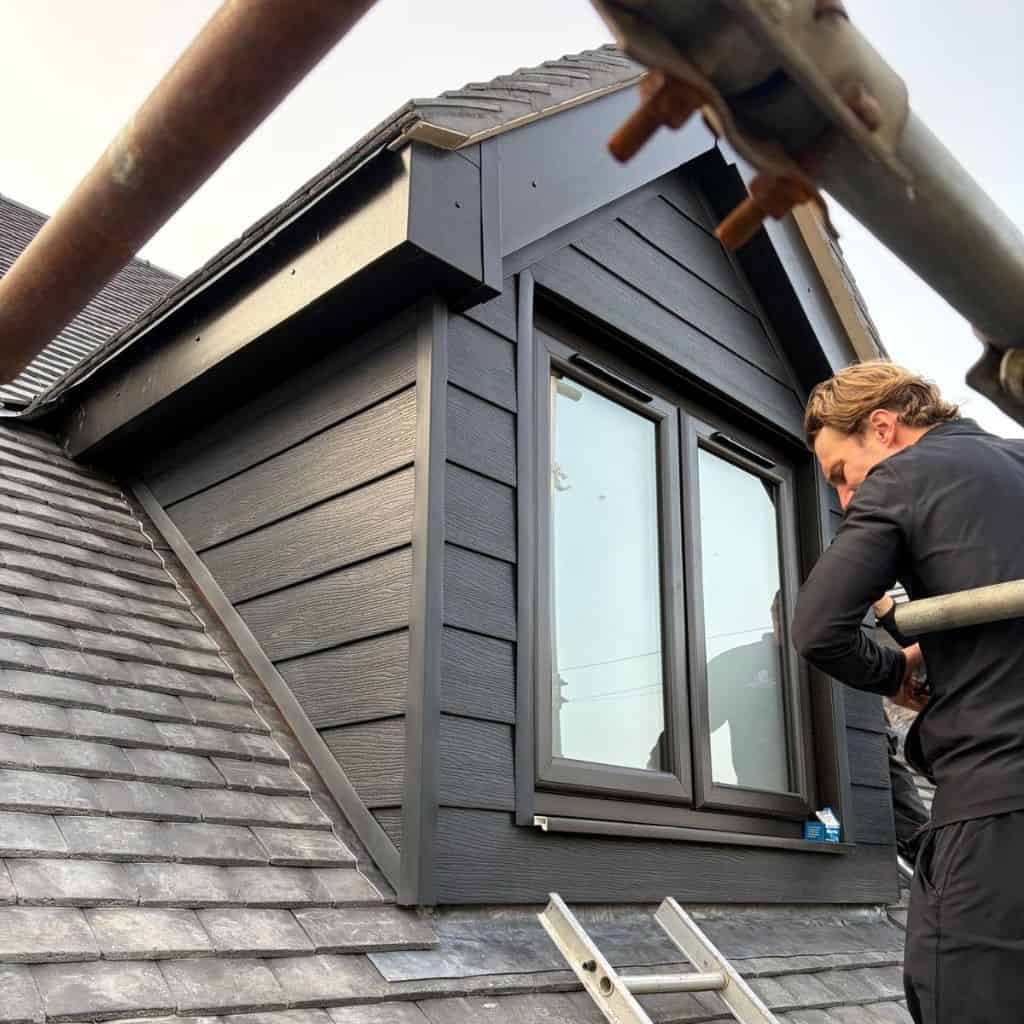
How do you match new boards to existing cladding?
We match new boards by profile, colour, surface texture, fixing pattern, and weathered appearance. A straightforward swap on a five-year-old wall rarely achieves a perfect match on the first attempt, as UV exposure will have lightened the surrounding panels over time.
We extract a sample from a concealed area, often behind a downpipe, and send it to the supplier for a colour match. Profile is as important as colour, and properties in Hampshire frequently feature a combination of shiplap, V-groove, feather-edge, and tongue-and-groove patterns across the same neighbourhood.
Older facades require particularly careful attention. We measure board width, lap depth, and corner trim sizes to identify the closest current product available. A 1990s shiplap board measuring 167mm often corresponds to a modern 170mm product, which we plane down to fit the existing profile.
We test the match on an offcut before installing any board, and where appropriate we can apply a grey-toning oil to silvered cedar boards to achieve a weathered appearance quickly. The aim is a repair that becomes unnoticeable after a week of exposure to the elements.
Why Choose C J Roofing & Renewables Ltd for External Cladding Repair in Hampshire?
Over 15 years of experience
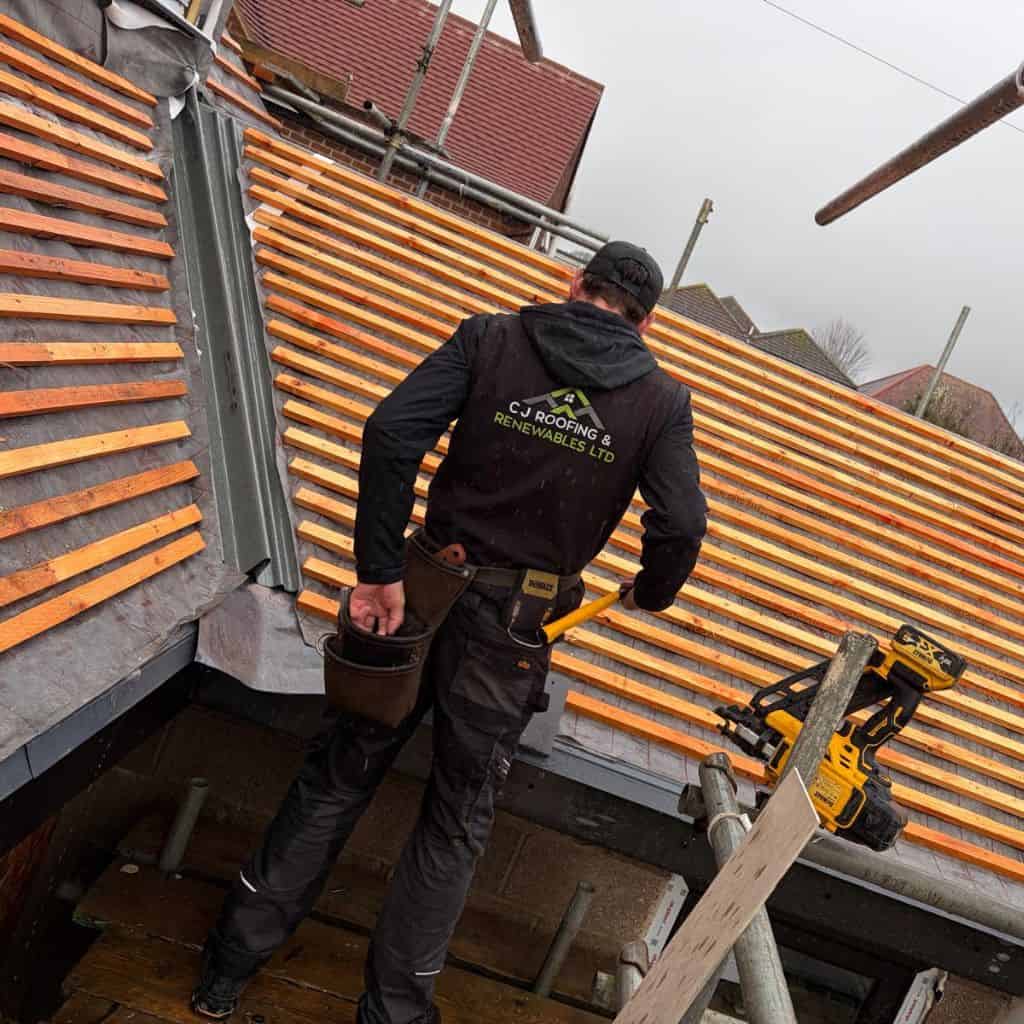
Connor and Jack bring over 15 years of combined hands-on roofing experience, delivering everything from small domestic repairs to large-scale commercial projects across Hampshire.

Locally based in Hampshire
Based in Portsmouth with deep local roots, we understand Hampshire's homes, weather and building styles, which allows us to deliver roofing work that lasts.
5-star rated service
We are proud to be rated 5 stars on Google by our customers, reflecting the quality of our workmanship and our commitment to reliable, professional service.
Competent & highly trained team
Our team is fully trained and certified in asbestos awareness, working at height and manual handling, ensuring every project is carried out safely and to industry standards.
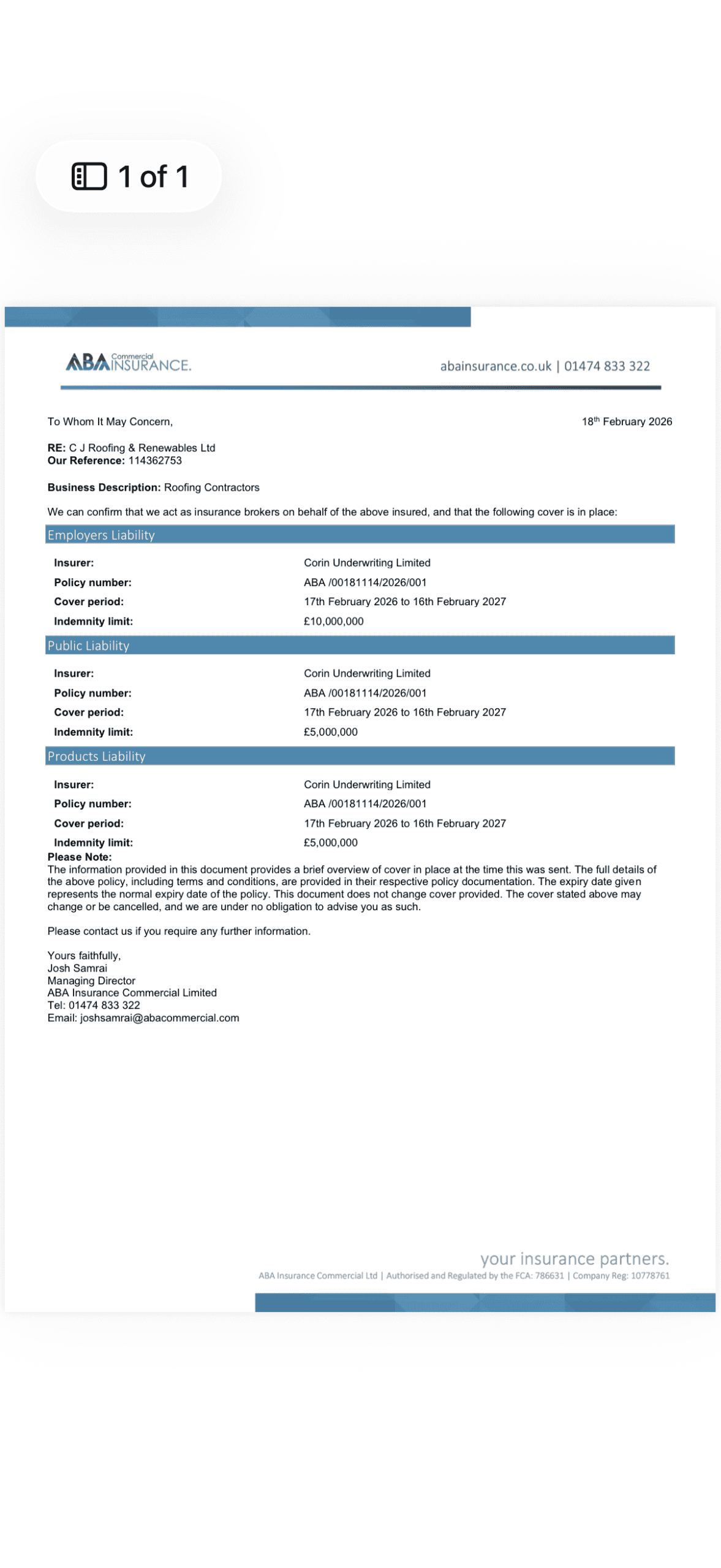
£5 million public liability insurance
We carry up to £5 million in public liability insurance, giving you complete peace of mind that your property is fully protected while we work.
10 year workmanship guarantee
All new roof installations and replacements come with a 10-year workmanship guarantee, so you are covered in the unlikely event of any issues.






Frequently asked questions
Take a look at the Frequently Asked Questions regarding our External Cladding Repair service.
Do you offer a free inspection before cladding repair?
Yes. Every cladding repair quote begins with a free, no-obligation site inspection.
We assess the building from ground level and use a ladder to inspect joints, fixings, and movement gaps. Our aim is to repair the cladding, not to promote a complete strip-out.
What guarantee accompanies the repair work?
We are unable to provide a guarantee on repair work. The 10-year workmanship guarantee we offer applies only to new installations.
Can you repair cladding on listed or conservation-area properties?
Yes, with the appropriate listed-building consent from the local planning authority. Hampshire is home to a significant number of Grade II properties across its towns and villages.
Original timber weatherboarding is often part of the protected structure. Most conservation officers are supportive of repairing original timber but will not permit its replacement with modern composites on Grade II properties.
What about asbestos cement boards on older homes?
Asbestos cement cladding installed before 1999 requires removal by a licensed contractor. C J Roofing & Renewables Ltd does not conduct licensed asbestos removal.
If asbestos is suspected during a survey, we halt work immediately and refer you to a UKAS-accredited testing laboratory. The laboratory provides a report within 48 hours, and confirmed asbestos is handled by a licensed contractor under separate consignment notes.
We resume work once the boards have been removed and the area has been cleared, ensuring full legal compliance and site safety throughout.
How is waste managed during a cladding repair?
Most uPVC and fibre cement offcuts are sent to a building recycling facility, and sound timber recovered from weatherboard repairs is repurposed where possible.