Wall Cladding Installation Hampshire
Wall Cladding Installation Services in Hampshire
Wall cladding gives a property a renewed appearance and a more robust layer of weather protection. When installed correctly, with a proper rainscreen build-up behind the boards, it performs reliably for decades with minimal maintenance.
C J Roofing & Renewables Ltd specialises in wall cladding installation across Hampshire. We assess the wall type, match the material to the substrate and street context, construct the full rainscreen build-up, and back every new installation with a 10-year workmanship guarantee.
Your written, itemised quote follows within 48 hours of the survey. Call 07512976384 for a free site visit. We respond within 48 hours.
The types of Wall Cladding Installations we provide
How do you know wall cladding is right for your home?
Wall cladding suits Hampshire homes that need a fresh weather skin, better thermal performance, or a change in appearance. Each goal calls for a different material and build-up specification.
The main reasons driving most installations are as follows:
Tired pebbledash, render, or hanging tiles that have outlived their service life
Pebbledash, render, and hanging tiles eventually crack, crumble, or discolour as they age. Once these finishes have reached the end of their service life, they no longer protect the wall behind and can allow water to penetrate the structure.
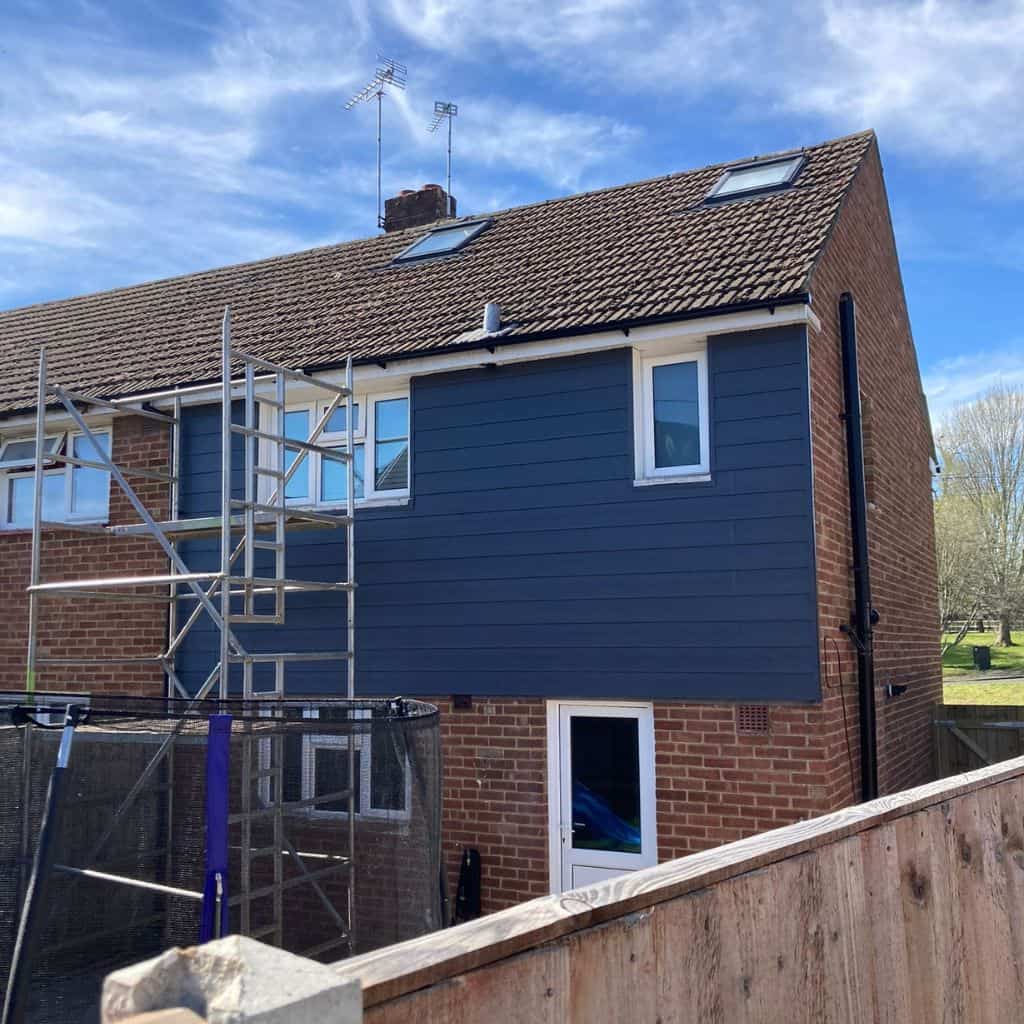
Wall cladding provides a fresh weather skin that seals the building envelope and restores that protection. It covers the deteriorated surface without the disruption of stripping and repointing. Where the wall already carries cladding, we remove every existing board and carry out the work as a full cladding replacement.
A cold wall increasing heating bills each winter
Single-skin walls, or walls with poor insulation, lose heat rapidly during winter and drive up heating costs. Cladding can be installed with insulation run between the battens to improve the wall’s thermal performance meaningfully.
A properly installed rainscreen build-up includes a ventilated cavity and optional insulation board, reducing heat loss and improving comfort throughout the year. This is particularly valuable on solid brick walls common in older Hampshire homes.
A dated facade diminishing the overall appearance
An outdated facade can make a property appear worn and reduce its visual appeal. Modern cladding materials offer clean lines, contemporary colour options, and a refreshed aesthetic that improves the overall character of the building.
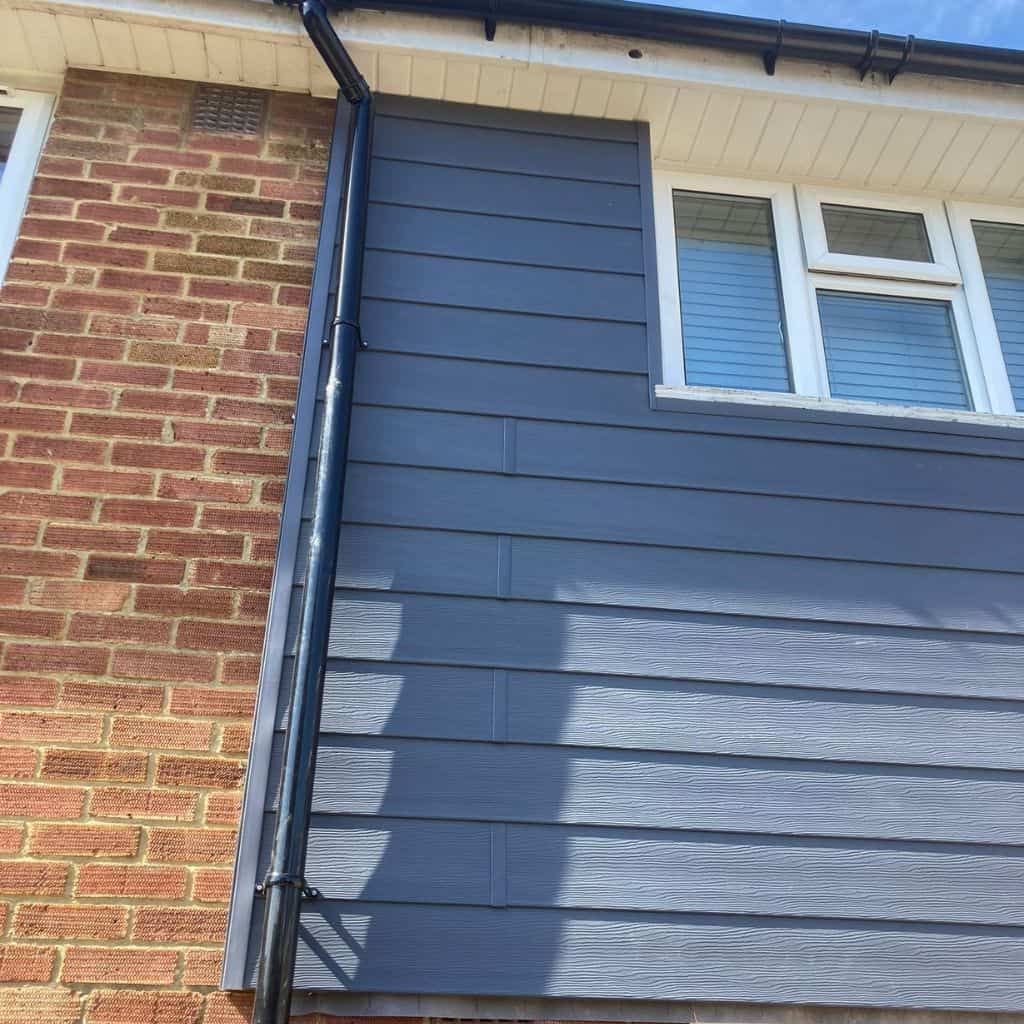
Cladding can transform the appearance of a home whilst simultaneously improving weather protection. Popular finishes include anthracite grey, chalk white, and sage green for a contemporary result.
A new extension that requires a finish to match the original house
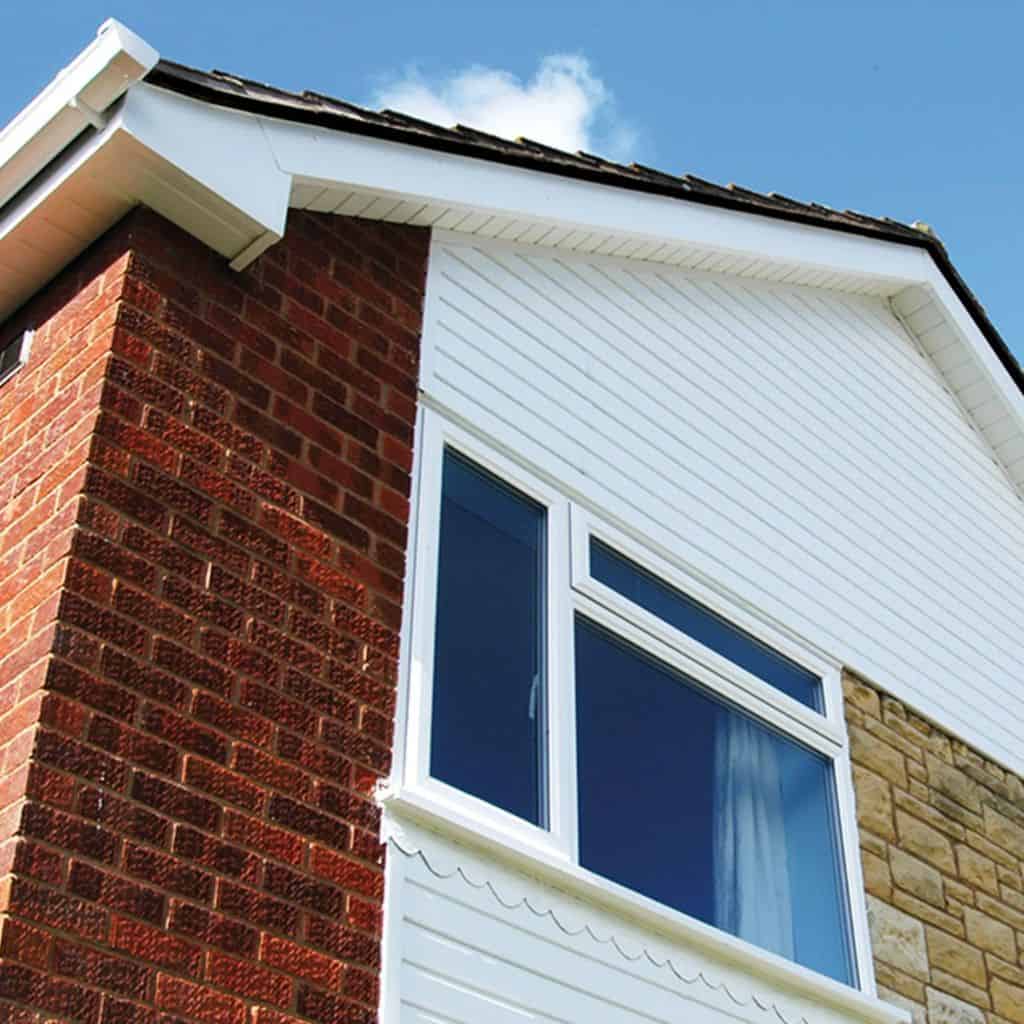
New extensions often require a cladding finish that aligns with the original house to maintain visual continuity across the building. Fibre cement cladding, uPVC wall cladding, or cedar can each be selected to complement the existing materials.
We guide you through the material options during the survey to ensure the extension integrates naturally with the original property. Single-batch ordering ensures colour consistency across the entire elevation.
Hampshire's coastal stretch challenges cladding with salt-laden winds
Shoreline properties in Hampshire face salt-laden south-westerlies that can corrode metal fixings and degrade softer materials over time. The right material choice and rainscreen build-up can withstand these conditions for decades.
Stainless A4 ironmongery is used on all coastal projects, and the ventilated cavity allows moisture to drain and the rear face to dry between weather events. Eurocell Coastline uPVC and fibre cement are both well suited to coastal exposure.
Why does a proper rainscreen build-up matter?
A proper rainscreen build-up is what keeps the wall behind your cladding dry, ventilated, and insulated. It is this layered system, rather than the boards alone, that transforms cladding into comprehensive weather protection.
We construct the system from the inside out:
- Original wall, repointed or repaired as necessary
- UV-stable facade breather membrane, taped at every overlap
- Treated vertical battens at 600mm centres, with insulation between where specified
- 25mm ventilated cavity that drains incidental moisture
- Boards fixed with stainless A4 ironmongery
- Trim detail at every corner, reveal, and edge
Omitting the cavity can lead to batten rot within five years; neglecting the breather membrane can allow rain to reach the wall behind; using non-stainless fixings on a coastal project can result in corrosion. Each layer serves a purpose, and removing one compromises the integrity of the whole system. Where individual boards on an existing installation have failed, we replace them as a separate external cladding repair.
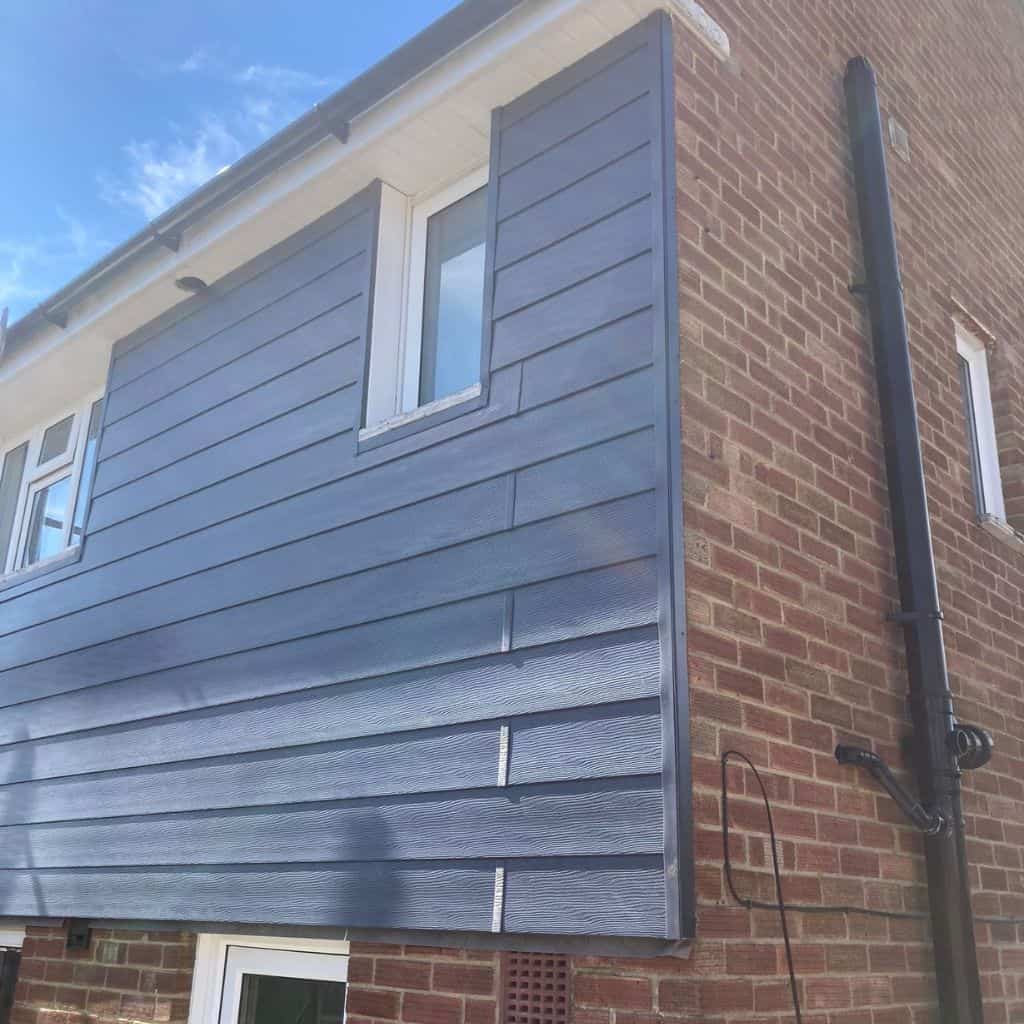
What does our wall cladding installation process involve?
Our wall cladding installation follows five stages: survey, scaffold, prep, fit, and snag walk. Each stage is documented so you have a clear account of what was agreed and what was completed.
Survey: measure elevations, check substrate, agree on material and colour
We begin by measuring every elevation, assessing the substrate condition, and agreeing on the material and colour with you. This ensures the cladding is suited to both the wall type and the appearance of the street.
The survey also identifies any access requirements, such as pavement licences for town centre properties. A single production batch is ordered to maintain colour consistency across the full installation.
Scaffold: erect tower or system scaffold, protect driveways and planting
We erect tower or system scaffold as required, protecting driveways and planting throughout the project. System scaffold is secured to the building at 4-metre intervals with boarded lifts at every 2 metres.
For more demanding elevations such as split-level gables, we still use tower or system scaffold. Every access decision is set out in the method statement, which is signed and agreed before work begins.
Prep: fix breather membrane, set out battens, run insulation between
We fix a UV-stable facade breather membrane with every overlap taped, then set out treated vertical battens at 600mm centres. Insulation is run between the battens where specified for thermal improvement.
A 25mm ventilated cavity is maintained to drain incidental moisture and allow the rear face to dry. Omitting this cavity can lead to batten rot within five years.
Fit: cut and fix boards to manufacturer specifications with stainless fixings
Boards are cut and fixed to manufacturer specifications using stainless A4 fixings. Fibre cement is cut with a diamond-blade shear or wet-cut saw with M-class dust extraction to minimise silica dust.
Hurricane clips are installed on coastal projects, and hidden-clip systems are used wherever possible to protect fixings from UV and rain. Trim detail is applied at every corner, reveal, and edge.
Snag walk: final inspection from scaffold and ground with photo handover
A final inspection is carried out from both scaffold and ground level, with photographic documentation of the completed work. Any minor adjustments are addressed during this snag walk before we leave site.
The installation is backed by a 10-year workmanship guarantee covering fixings, junctions, and weatherproofing details. Your job completion pack includes both the workmanship certificate and the manufacturer product warranty.
How long does a wall cladding installation take?
A wall cladding installation typically takes between 4 and 14 working days on a standard Hampshire home. The duration depends on the size of the elevations, the board type chosen, and the condition of the substrate.
Small porch facelifts can be completed in 2 days. A standard three-bedroom semi typically takes 4 to 10 days, and full four-elevation jobs on detached homes may extend to 10 to 14 days.
The substrate condition influences the programme significantly. Battens can be fixed to a sound brick wall within a day, whereas a deteriorated timber frame requires preliminary carpentry work, adding 2 to 3 days before the new cladding is installed.
Weather also plays a role. Our sealants and tapes require a dry substrate to cure correctly, so heavy rain or frost may delay work by a day or two.
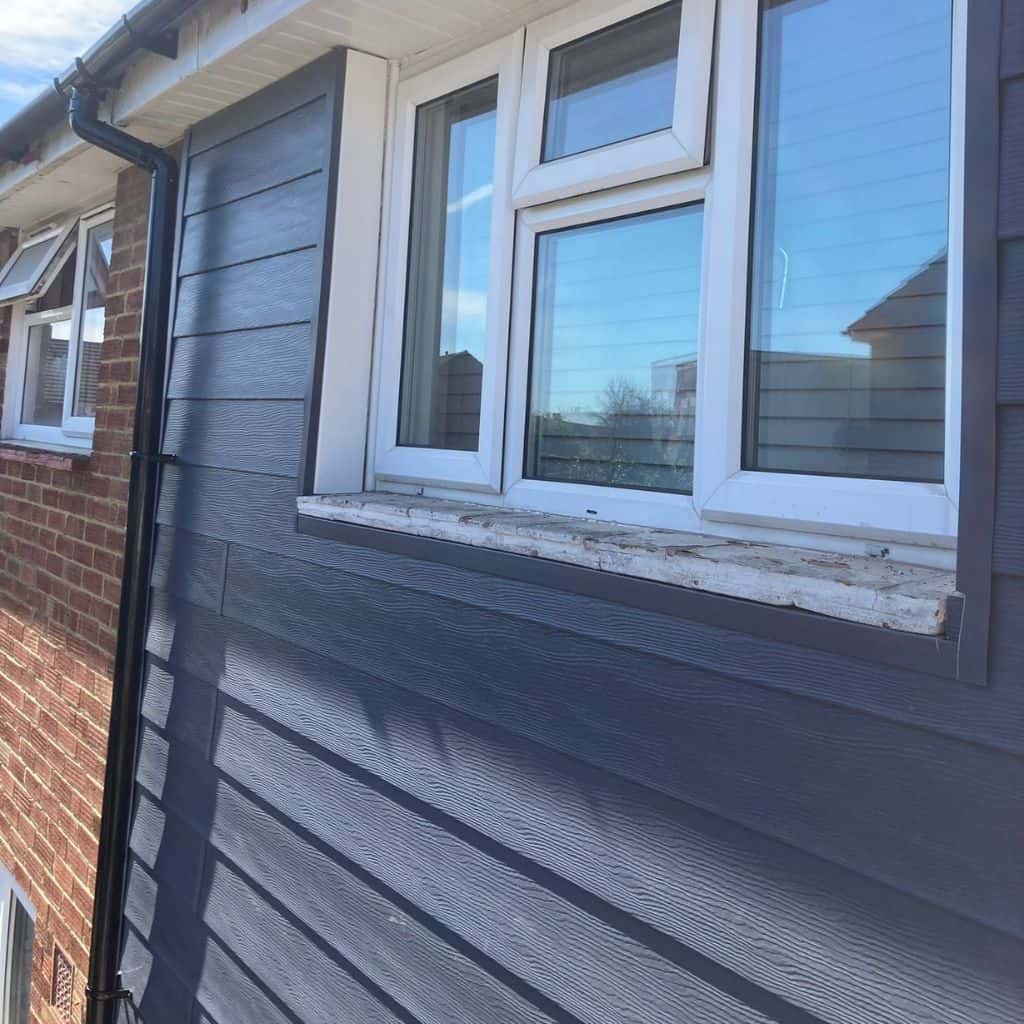
Why Choose C J Roofing & Renewables Ltd for Wall Cladding Installation in Hampshire?
Over 15 years of experience
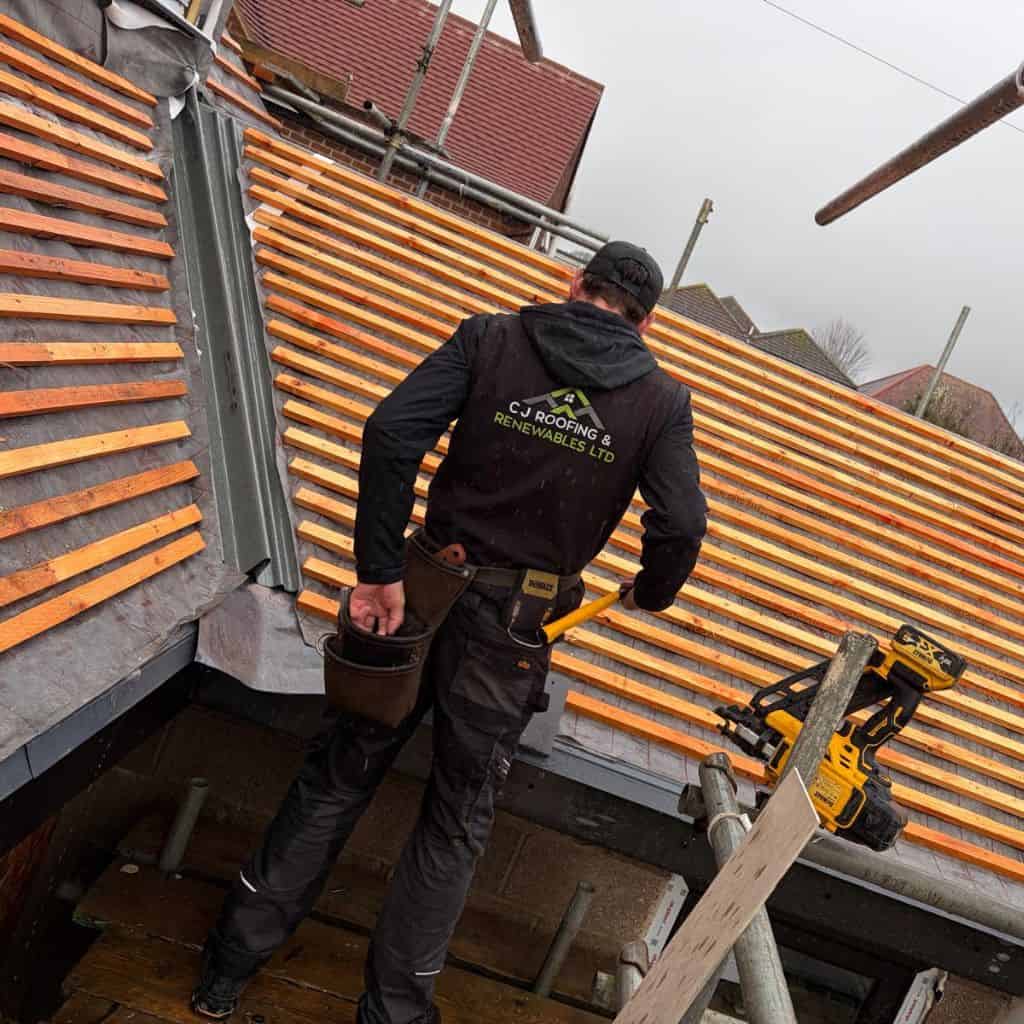
Connor and Jack bring over 15 years of combined hands-on roofing experience, delivering everything from small domestic repairs to large-scale commercial projects across Hampshire.

Locally based in Hampshire
Based in Portsmouth with deep local roots, we understand Hampshire's homes, weather and building styles, which allows us to deliver roofing work that lasts.
5-star rated service
We are proud to be rated 5 stars on Google by our customers, reflecting the quality of our workmanship and our commitment to reliable, professional service.
Competent & highly trained team
Our team is fully trained and certified in asbestos awareness, working at height and manual handling, ensuring every project is carried out safely and to industry standards.
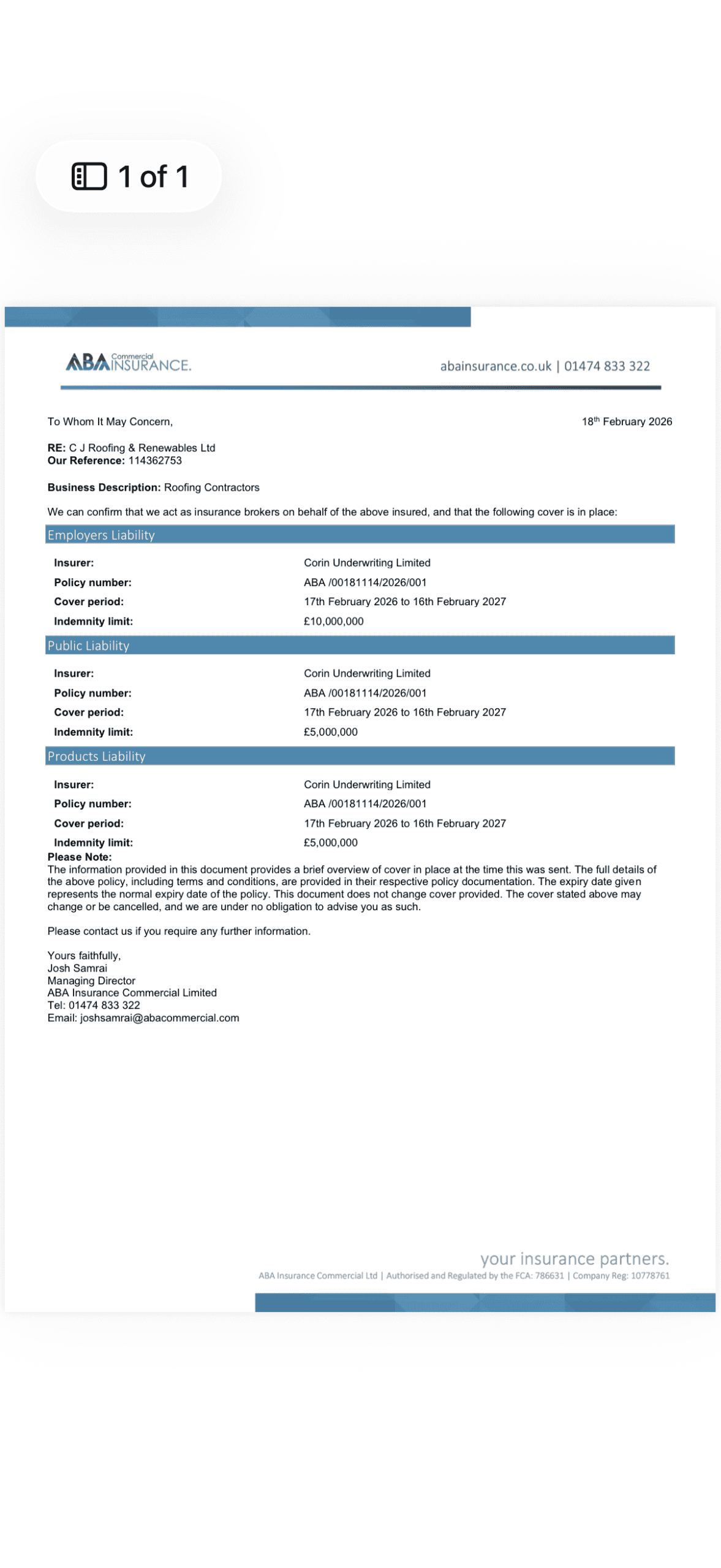
£5 million public liability insurance
We carry up to £5 million in public liability insurance, giving you complete peace of mind that your property is fully protected while we work.
10 year workmanship guarantee
All new roof installations and replacements come with a 10-year workmanship guarantee, so you are covered in the unlikely event of any issues.






Frequently asked questions
Take a look at the Frequently Asked Questions regarding our Wall Cladding Installation service.
What guarantee comes with wall cladding installations?
Our wall cladding installations are backed by a 10-year workmanship guarantee covering fixings, junctions, and the weatherproofing details we implement.
The board manufacturer provides a separate product warranty, with terms published by the manufacturer. Both certificates are presented within your job completion pack on the day we finish.
Do you offer a free survey before quoting a cladding installation?
Yes. Every wall cladding quote begins with a free, no-obligation site survey so we can assess the elevations, substrate, and access before providing a detailed written estimate.
Can wall cladding be installed during winter months?
Wall cladding installation can proceed during winter when air temperatures remain above 5°C and surfaces are dry. We work through November and February on many days across Hampshire without difficulty.
We work at a reduced pace through December and January due to shorter daylight hours, and frost can further limit the working window on any given day. Cold-weather sealants rated to 0°C extend our operating range, whilst storm-grade winds can halt work regardless of temperature.
Hampshire’s coastal properties experience stronger onshore gusts than inland areas, and we account for this when scheduling work through the winter months.
How do you handle scaffold and access on tall or awkward elevations?
System scaffold is secured to the building at 4-metre intervals, with boarded lifts every 2 metres and double handrails at each level. This configuration covers the majority of semi-detached and detached homes in Hampshire.
For more demanding elevations such as split-level gables, access is by tower scaffold or system scaffold only. Three-storey terraces in town centres often require pavement licences from the council, and we apply for these in advance.
Every access decision is set out in the method statement, which is agreed and signed before work begins.
Will wall cladding affect your home insurance?
Wall cladding can affect home insurance if the new material alters the building’s fire rating. Standard two-storey Hampshire homes clad with A2 fire-rated materials rarely see a change in premiums.
We recommend informing your insurer in writing before work begins. Most insurers request the product datasheet, the BBA certificate, and confirmation of our public liability coverage – all of which we can provide if required.
Homes within conservation areas may be subject to restrictions on colour palettes and material choices, and non-compliant installations can result in enforcement notices and insurance disputes. It is worth reviewing your deeds and the local planning portal before proceeding.