Fibre Cement Cladding Hampshire
Fibre Cement Cladding Services in Hampshire
Fibre cement is a composite material made from Portland cement, cellulose fibres, and silica, combined to form dense, stable panels. As a cladding material it provides a robust exterior that resists salt, frost, UV exposure, and fire for up to 50 years, a durability that makes it well suited to the coastal environment of Hampshire, where softer materials can struggle with the conditions.
C J Roofing & Renewables Ltd specialises in the installation of wall cladding across Hampshire, ensuring the board profile and colour complement your home. All installations are backed by a 10-year workmanship guarantee.
Your written, itemised quote follows within 48 hours of the survey. Call 07512976384 for a free site visit. We respond within 48 hours.
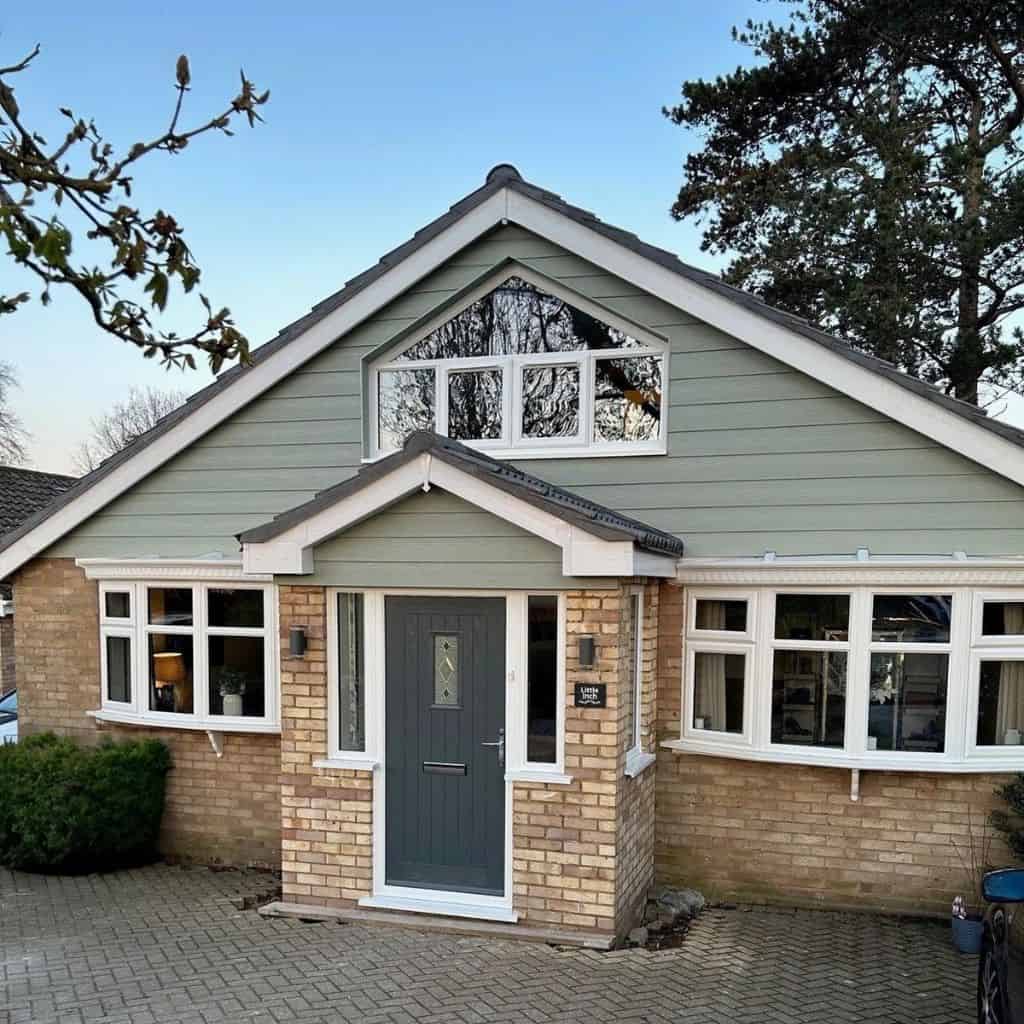
How do you know whether fibre cement cladding suits your home?
Fibre cement cladding is well suited to Hampshire homes that require a long-lasting, low-maintenance, fire-rated exterior. The boards, made from Portland cement, cellulose fibres, and silica, form a dense panel that withstands salt, frost, and UV exposure.
Fibre cement cladding is likely the right choice if:
Your home is near the Solent coast
Homes near the Solent coast face harsh exposure to salt spray, wind-driven rain, and airborne sand from the shoreline. Fibre cement remains stable in these conditions, where timber and softer boards can warp, split, or degrade quickly.
The cement matrix resists salt mist and maintains its integrity across seasonal changes, making fibre cement particularly suitable for coastal Hampshire properties.
You want a low-maintenance exterior that cleans easily
Fibre cement requires minimal upkeep, needing only a soft wash every 12 to 18 months. Like uPVC wall cladding, it does not require staining, oiling, or sanding.
A garden hose and soft brush are generally sufficient to keep the boards clean. Through-coloured boards retain their shade for the full lifespan of the panel, reducing the need for repainting.
Your property is close to a boundary where fire safety matters
Fibre cement boards carry an A2-s1,d0 non-combustible Euroclass fire rating, meeting post-Grenfell standards. This is particularly important for boundary walls where non-combustible cladding is required under Building Regulations.
The material does not melt, drip, or ignite under EN 13501-1 testing. Fire-rated cavity barriers are installed to seal ventilated gaps at each floor level on multi-storey projects.
Your existing timber weatherboard has deteriorated
When timber weatherboard has warped, split, or allowed water ingress, fibre cement offers a durable replacement. Timber is vulnerable to rot, insect damage, UV breakdown, and thermal movement.
Fibre cement dries without warping or splitting and resists rot and insect damage, providing a long-lasting solution where timber has failed to perform.
Painted boards retain their colour for years
Painted fibre cement boards retain their colour for years, even on sun-exposed walls. Through-coloured boards maintain their shade for the entire lifespan of the panel.
If painted boards do chalk over time on sun-exposed walls, a gentle wash can restore their appearance. Manufacturers also supply colour-matched touch-up paint kits for repairing corner chips.
Exposure to coastal conditions can quickly wear down timber and softer boards, whereas fibre cement maintains stability across seasonal changes. Painted boards retain their colour for years, and through-coloured boards hold their shade for the full lifespan of the panel.
If you notice any of these signs, contact us at 07512976384 to arrange a survey.
Why does fibre cement cladding outlast other materials?
Fibre cement cladding can endure for 50 to 60 years. The cement matrix resists rot, insect damage, UV rays, and frost, drying without warping or splitting.
Manufacturers offer extensive warranties on through-coloured fibre cement boards, ensuring longevity through harsh UK winters. Frost poses a minimal threat, as Hampshire rarely experiences temperatures severe enough to damage the material.
Where painted boards chalk on sun-exposed walls over time, a gentle wash can restore their appearance. Fibre cement boards carry an A2 fire rating, meaning they are non-combustible and do not contribute to fire spread.
Hidden-fix Click systems are used to extend the lifespan of installations, as the fixings are protected from rain inside the cavity. Stainless A4 ironmongery is used exclusively on coastal Hampshire projects.
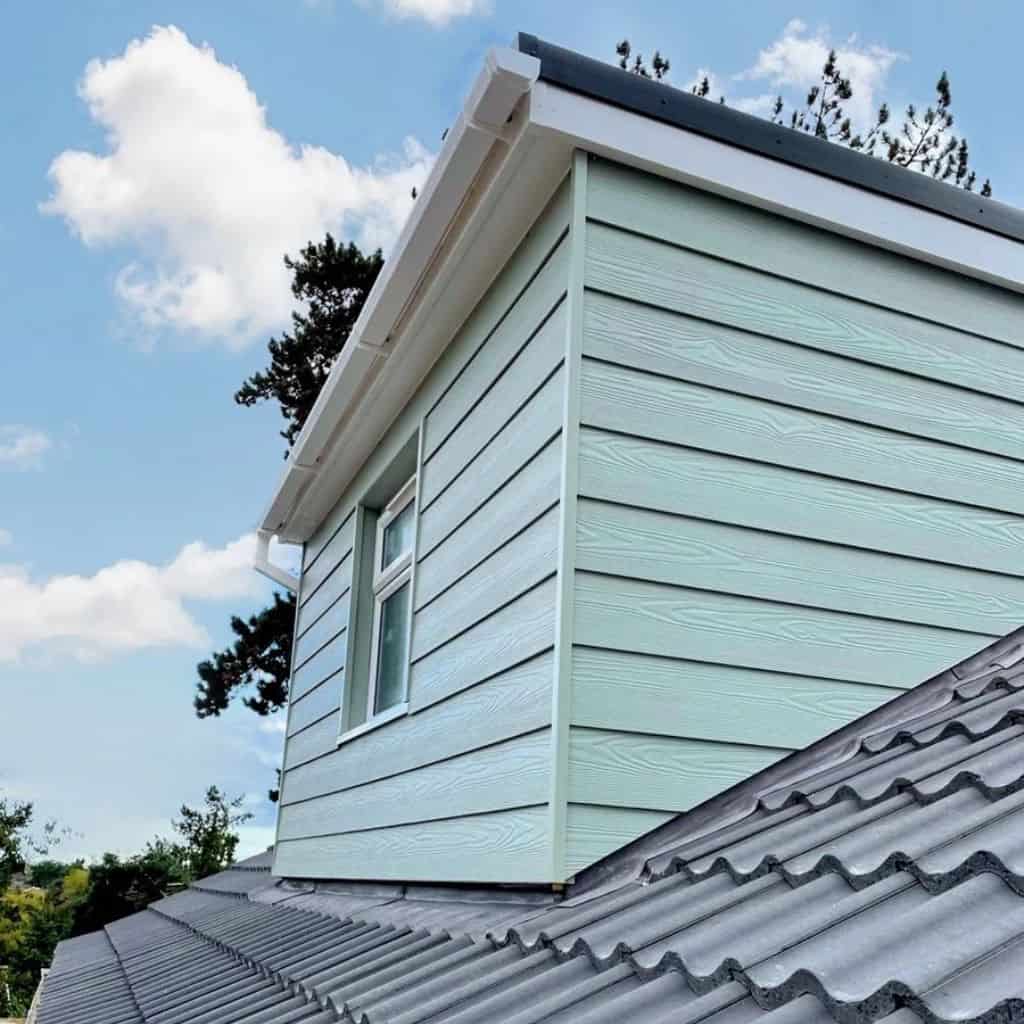
What does our fibre cement cladding installation involve?
Our fibre cement cladding installation follows five stages, each contributing to the completed rainscreen build-up. Careful planning and execution at every step ensures a weathertight, durable result.
Substrate preparation: ensure the wall is plumb and sound
We begin by confirming the wall is plumb, repointing any loose bricks, and replacing soft timber. A solid, level substrate is essential for a stable cladding installation.
Any rotten battens are removed and replaced with treated timber. This stage ensures the new cladding has a secure foundation and prevents future structural issues.
Breather membrane: install a UV-stable facade breather
A UV-stable facade breather membrane is installed over the substrate, with all overlaps taped to prevent water ingress. This membrane protects the wall behind while allowing moisture to escape.
The breather membrane is essential for maintaining the wall’s integrity and preventing condensation accumulating within the cavity.
Battens: place treated vertical battens at 600mm centres
Treated vertical battens are positioned at 600mm centres, using counter-battens where necessary for ventilation. This creates the 25mm rear-ventilated rainscreen cavity required for proper air circulation.
Insect mesh is fitted at the top and bottom of the cavity, with mesh vents positioned 150mm above ground level to prevent splashback and deter pest entry.
Boards: lap or click boards with stainless fixings
Boards are lapped or clicked together and secured with stainless A4 ring-shank nails or screws. For coastal projects, stainless A4 ironmongery is used exclusively to prevent corrosion.
Hidden-fix Click systems are used where possible to extend installation lifespan, as the fixings are protected from rain inside the cavity. Hurricane clips are installed on gable-end runs for additional wind resistance.
Trim detail: fit corner trims, drip edges, and reveals
Corner trims, drip edges, and window reveals are fitted to complete the system. Mastic at window reveals lasts between 15 and 20 years, with joint inspections recommended after severe weather.
All materials are cut on-site using a diamond-blade shear or wet-cut saw with M-class dust extraction to minimise silica dust exposure. The installation is backed by a 10-year workmanship guarantee covering all fixings, junctions, and weatherproofing details.
What maintenance does fibre cement cladding need?
Fibre cement cladding requires minimal upkeep: a soft wash every 12 to 18 months, with fixings visually inspected every five years. It does not require staining, oiling, or sanding.
A garden hose and soft brush are sufficient to keep the boards clean, with a low-pressure jet as an alternative. High-pressure nozzles should be avoided, as they can damage painted surfaces.
Algae on north-facing elevations can be removed with a diluted benzalkonium chloride solution. Mastic at window reveals lasts between 15 and 20 years, and joint inspections are recommended after severe weather to identify any separation.
Manufacturers provide colour-matched touch-up paint kits for repairing corner chips, and regular gutter cleaning prevents staining from overflow.
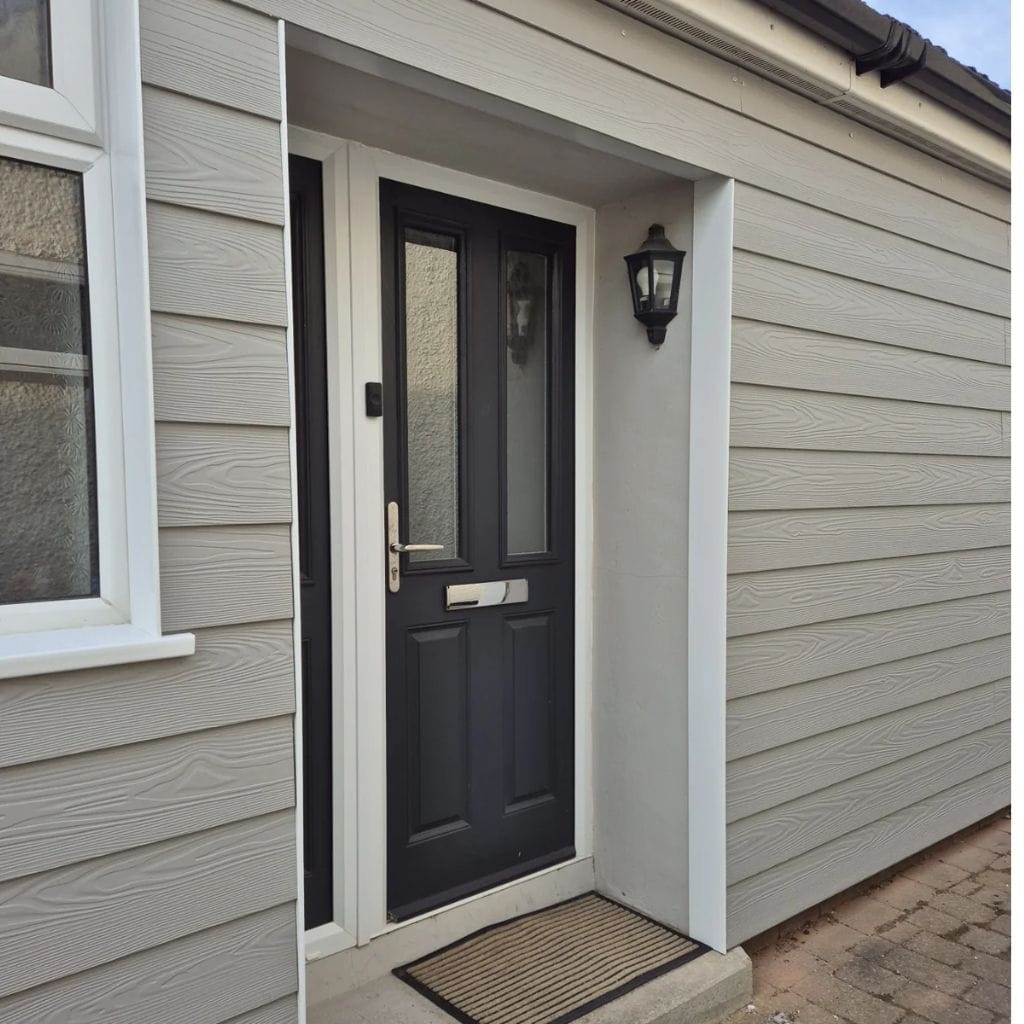
How does fibre cement perform in Hampshire's coastal weather?
Fibre cement withstands harsh coastal weather, including horizontal rain, salt spray, and strong winds. The cement matrix remains stable where timber and softer panels are prone to failure.
The material is engineered to resist wind-driven sleet, hail, and airborne sand from the Solent shoreline without surface damage. To manage the strong winds common in the region, specific elements are incorporated at installation:
- Stainless A4 fixings secured to pressure-treated battens
- A 25mm rear-ventilated rainscreen cavity
- Hurricane clips on gable-end runs
- Capped end profiles at corners and reveals
Why Choose C J Roofing & Renewables Ltd for Fibre Cement Cladding in Hampshire?
Over 15 years of experience
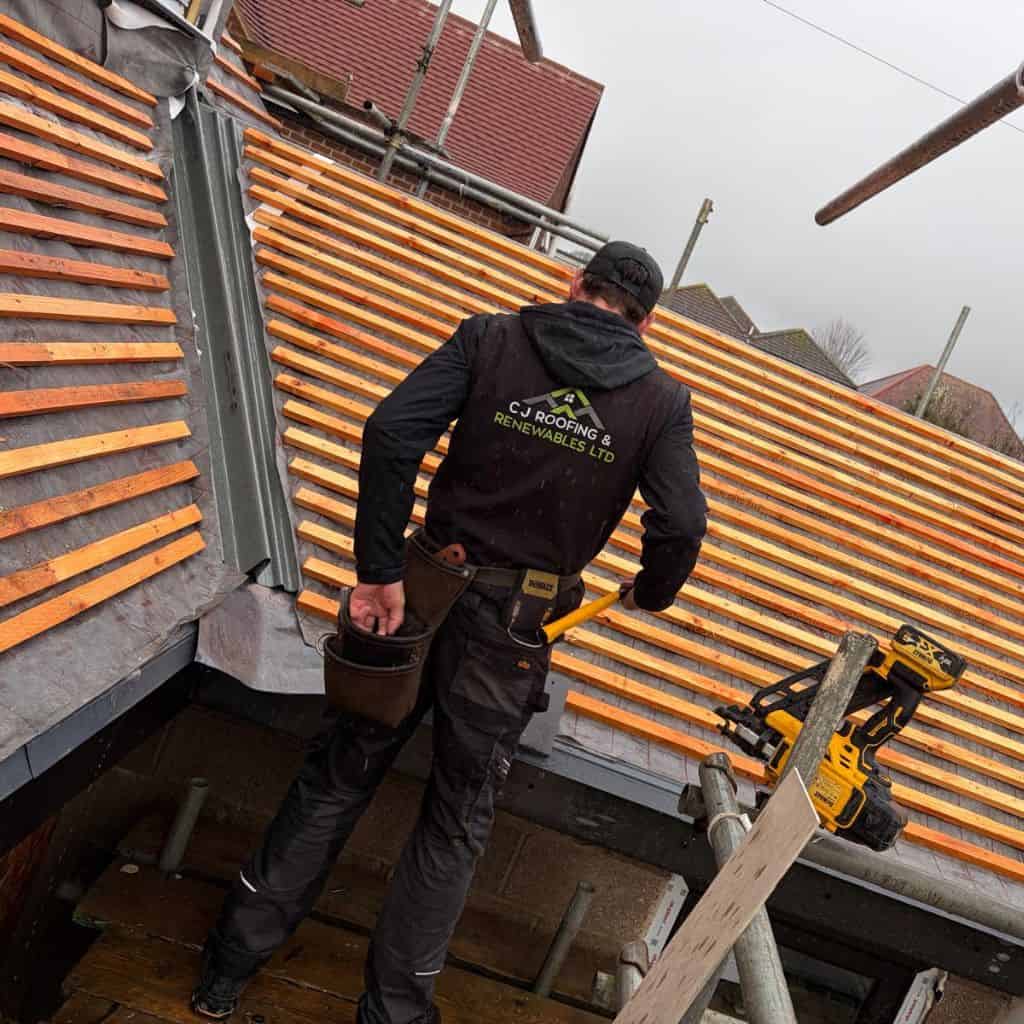
Connor and Jack bring over 15 years of combined hands-on roofing experience, delivering everything from small domestic repairs to large-scale commercial projects across Hampshire.

Locally based in Hampshire
Based in Portsmouth with deep local roots, we understand Hampshire's homes, weather and building styles, which allows us to deliver roofing work that lasts.
5-star rated service
We are proud to be rated 5 stars on Google by our customers, reflecting the quality of our workmanship and our commitment to reliable, professional service.
Competent & highly trained team
Our team is fully trained and certified in asbestos awareness, working at height and manual handling, ensuring every project is carried out safely and to industry standards.
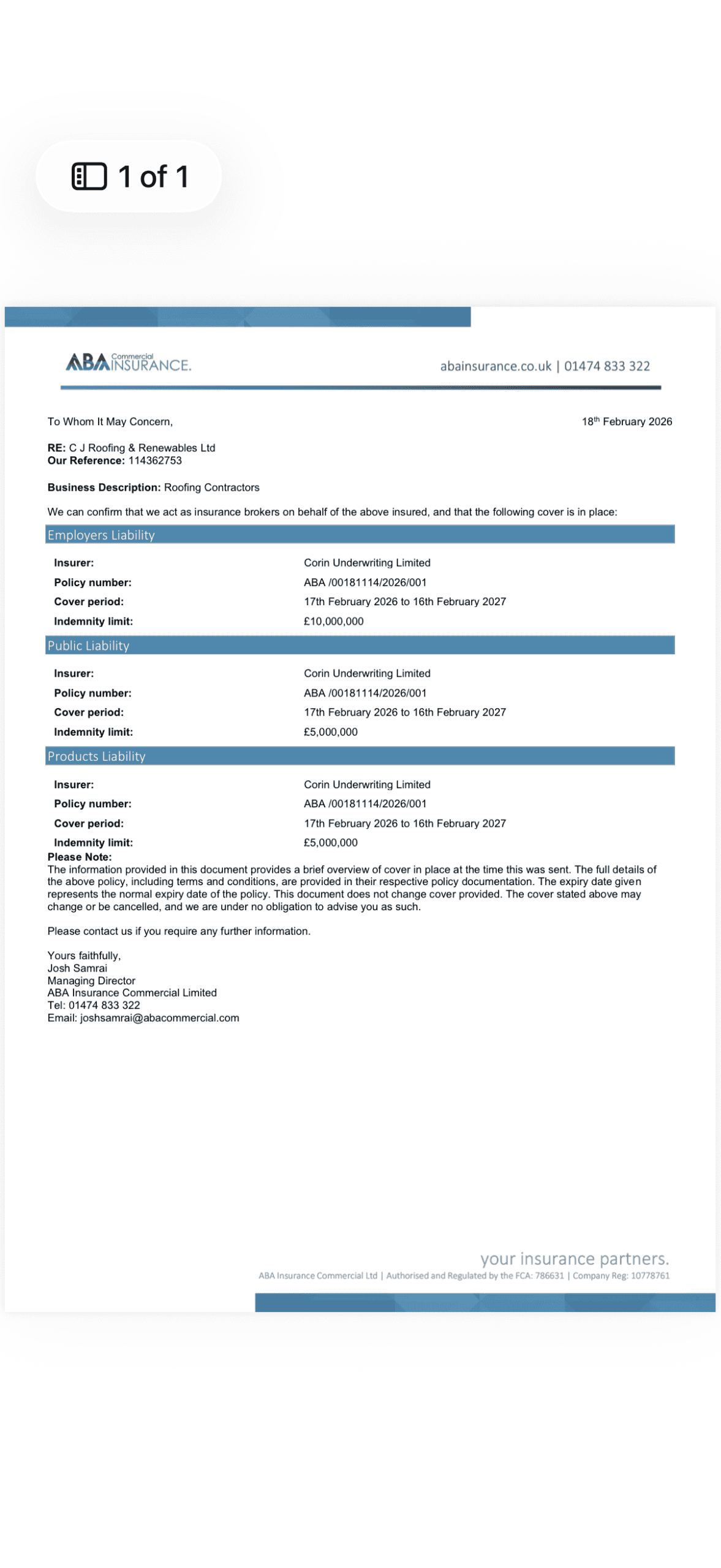
£5 million public liability insurance
We carry up to £5 million in public liability insurance, giving you complete peace of mind that your property is fully protected while we work.
10 year workmanship guarantee
All new roof installations and replacements come with a 10-year workmanship guarantee, so you are covered in the unlikely event of any issues.






Frequently asked questions
Take a look at the Frequently Asked Questions regarding our Fibre Cement Cladding service.
What guarantee comes with a C J Roofing & Renewables Ltd installation?
Our fibre cement installations are backed by a 10-year workmanship guarantee, covering all fixings, junctions, and weatherproofing details.
Manufacturers add their own product warranty, providing long-term cover on through-coloured boards. Both certificates are provided with the completed job pack.
Do you offer a free survey before quoting for fibre cement cladding?
Yes. Every quote for fibre cement cladding begins with a free, no-obligation site survey.
Is fibre cement cladding fire-rated for boundary walls?
Fibre cement boards carry an A2-s1,d0 non-combustible Euroclass fire rating, meeting post-Grenfell standards for high-rise residential buildings.
This rating is equally relevant for domestic homes, as boundary walls require non-combustible cladding under Building Regulations. Fibre cement boards achieve A1 or A2 classification, meaning they do not melt, drip, or ignite under EN 13501-1 testing.
Fire-rated cavity barriers are installed to seal ventilated gaps at each floor level on multi-storey projects. The same A2 specification is applied to boiler flues and log burner external walls for safe clearance.
Can fibre cement cladding be installed on listed or conservation-area homes?
Yes, with the appropriate listed-building consent from the local planning authority. Many Grade II properties are found across Hampshire’s towns and villages.
We install modern fibre cement weatherboard profiles that closely resemble traditional painted timber, with through-coloured options in chalk white, slate grey, and dusky beige to complement Hampshire’s architectural character.
A conservation officer evaluates sample panels before granting approval for main works, ensuring that boards are affixed to a rainscreen frame and that the original masonry is preserved behind the breather membrane. This reversibility assists in obtaining consent for protected properties.
What colours does fibre cement cladding come in?
Fibre cement cladding is available in a wide range of through-coloured shades and paint-to-order heritage tones. Manufacturers provide ranges with RAL and NCS cross-references.
Hampshire architectural styles often favour chalk whites, weathered greens, and dusky New Forest browns. We fit sample boards on a concealed return for a week, allowing you to observe how natural light affects the tone throughout the day before making a decision.
Colours may appear brighter on south-facing walls compared to north-facing gables, so we verify the match directly on the wall rather than relying on a screen or printed swatch.