How to Repair a Valley Roof: The Process Explained
27 August 2026
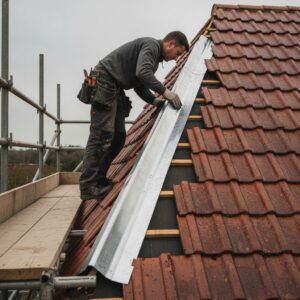
To repair a valley roof, a roofer strips out the failed valley lining, inspects and rebuilds the substrate beneath, then…
The right flat roofing material for your Hampshire home depends on the roof’s size, how it is used, how much foot traffic it sees, and how exposed it is to coastal weather. EPDM suits extensions and garages, GRP works well for roofs that take regular footfall, felt remains a dependable all-rounder, and single-ply covers larger domestic and commercial areas. Below we explain how to match each system to your specific roof.
Our Flat Roof Installation service covers all four systems. This guide goes a step further, helping you understand which factors should guide your choice before the survey.
There is no single best flat roofing material in Hampshire. The right choice depends on the roof in front of you. A small garage roof has different needs to a flat roof over a kitchen extension, and a coastal property in Hayling Island faces different conditions to one in Basingstoke.
The variables that matter most are roof size, intended use, expected foot traffic, exposure to wind and salt-laden air, and the detailing around upstands, outlets and abutments. We assess all of these during a free director-led site survey before recommending a system.
You choose a flat roof material by weighing four practical factors in order: the size and shape of the roof, how it will be used, how exposed it is, and how the water will drain. Get these right and the material almost selects itself.
Each flat roofing system has conditions where it performs at its best. Here is how we tend to match them across the properties we survey.
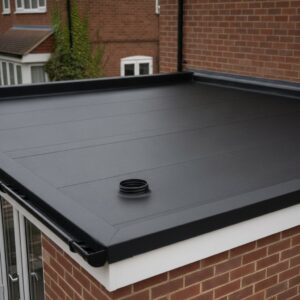
EPDM is a flexible single-piece rubber membrane that suits extensions, garages and outbuildings with simple shapes. On smaller roofs it can often be laid as one sheet, which keeps joints to a minimum. Its flexibility handles the temperature swing between Hampshire’s warm summers and cold winters without becoming brittle.
GRP, or glass-reinforced plastic, cures into a seamless, rigid surface. It is a sound choice where a roof will take regular foot traffic, such as a balcony or a dormer roof that is accessed often. The seamless finish leaves no joints for water to work into, which matters on exposed South Coast properties.
Modern torch-on felt is laid in bonded layers to create a robust weatherproof finish. It remains a practical option for a wide range of domestic flat roofs and copes well with awkward detailing around chimneys, parapets and outlets.
Single-ply membranes are lightweight and cover large areas efficiently with few joints. They are well suited to bigger flat roofs on commercial buildings, large extensions and flat-roofed blocks across Southampton, Portsmouth and Basingstoke.
Yes. Coastal exposure is a genuine factor across much of Hampshire. Properties near the water in Portsmouth, Gosport, Lee-on-the-Solent and Hayling Island face sustained wind uplift and salt-laden air that inland roofs do not.
On exposed roofs we pay particular attention to the fixing method, the perimeter detailing and the quality of the upstands, because these are the points where wind and water test a flat roof first. A system that performs well in a sheltered Waterlooville garden may need a different specification two miles away on the seafront.
The cost of a flat roof depends on the roof’s size, the material specified, the condition of the existing deck, the complexity of the detailing, and whether insulation or structural repairs are needed. Because every roof differs, we never quote a figure without seeing the roof.
After a free site survey we provide a written, itemised quote within 48 hours, so you can see exactly what is included. All new installations are backed by our 10-year workmanship guarantee.
Choosing the right flat roofing material is the single most important decision in a flat roof project, and it benefits from someone who knows the local conditions. We are based in Portsmouth and work throughout Hampshire, from Fareham and Havant to Eastleigh, Romsey, Petersfield, Fleet and Lymington.
Our team is fully trained and certified in working at height, manual handling and asbestos awareness, and we carry £5 million public liability insurance. With over 15 years of combined hands-on roofing experience, Connor and Jack assess each roof in person and give honest, no-pressure advice on the system that fits.
The best way to decide between your Hampshire roofing options is a free director-led site survey. We will look at the roof, talk through how you use it, and recommend the material that matches its size, use and exposure.
Get a free quote by calling 07512976384. We respond within 48 hours.
Posted by: Connor Stanley
Date: 15 October 2026