
Tile Roofing Hampshire
Tile Roofing Services in Hampshire
Tile roofing is the predominant pitched-roof covering in Hampshire. When installed correctly, a tile roof can last between 40 and 100 years, depending on the material chosen. It performs reliably in the south-coast climate without requiring special maintenance, and it suits property styles ranging from post-war semis to listed period homes. The correct tile, fixed in accordance with BS 5534, provides decades of dependable cover.
C J Roofing & Renewables Ltd specialises in installing and replacing tile roofs throughout Hampshire. Our expertise spans concrete, clay, and reclaimed tiles, enabling us to match original profiles on heritage properties and draw on current manufacturer ranges for new builds and re-roofs. Every new tile roof installation is backed by our 10-year workmanship guarantee.
Your written, itemised quote follows within 48 hours of the survey. For a free quote, call 07512976384. We respond within 48 hours.
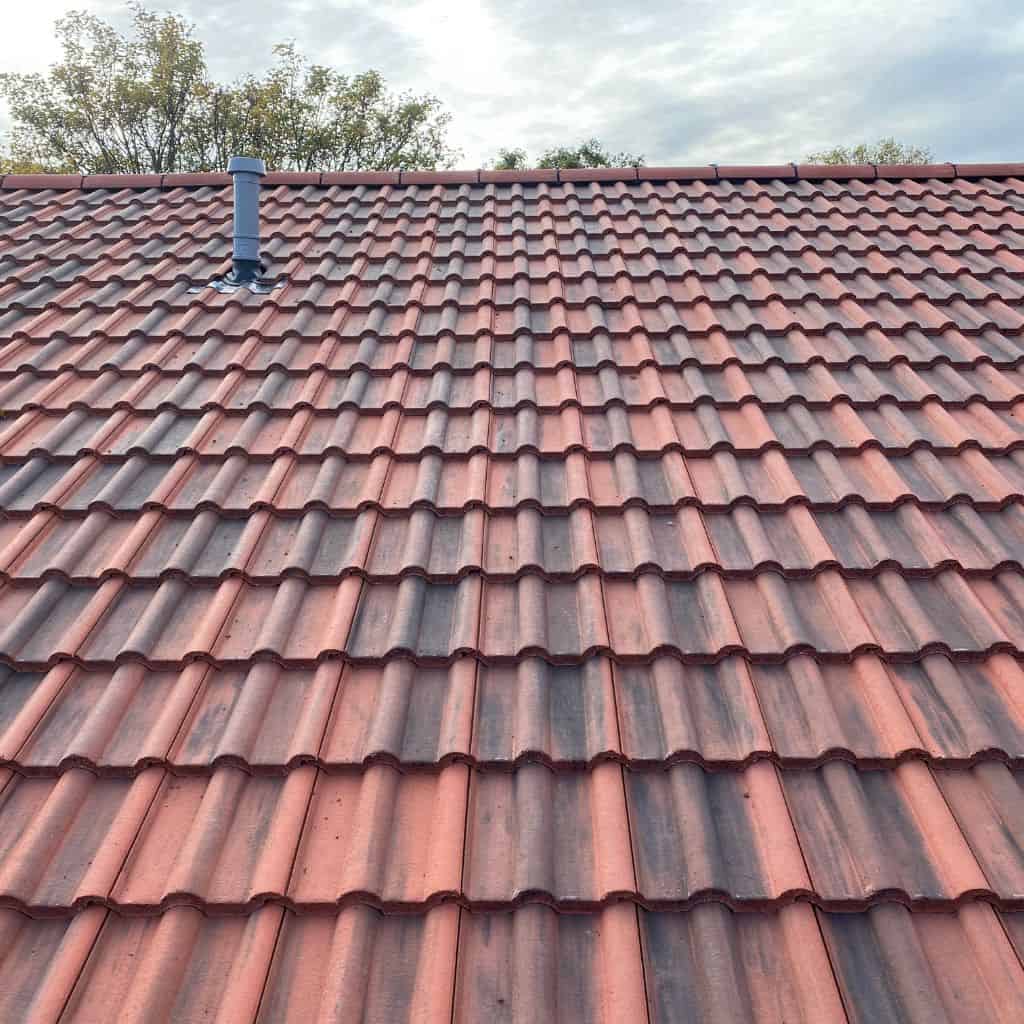
How do you choose the right tile roofing material for your home?
Selecting the appropriate tile roofing depends on factors including the property’s age, planning context, roof pitch, and site exposure. Four main tile types cover nearly every application in Hampshire.
The options are:
Concrete interlocking tiles for modern properties and 1950s-onwards housing
Concrete interlocking tiles are large-format tiles that lay quickly and carry a lifespan of 40 to 60 years. They are well suited to most modern properties and re-roofs of 1950s and later housing stock. Selecting the right tile roofing depends on the property’s age, planning context, roof pitch, and site exposure.
Inter-war and post-war homes typically use concrete interlocking or matched clay tiles. Tile roofing is the predominant pitched-roof covering in Hampshire. When installed correctly, a tile roof can last between 40 and 100 years, depending on the material.
Clay plain tiles for period properties, conservation areas, and listed buildings
Clay plain tiles are small-format, double-lap tiles with a lifespan of 80 to 100 years. They are typically specified for period properties, conservation areas, and listed buildings. Selecting the right tile roofing depends on the property’s age, planning context, roof pitch, and site exposure.
Homes built before 1900, particularly those that are listed or within conservation areas, almost always require clay plain or reclaimed clay tiles. Properties in conservation areas (including those around Winchester, Portsmouth’s Old Town, and Hayling Island) require planning consent before any change in tile type is made.
Clay interlocking pantiles for Victorian and Edwardian housing stock
Clay interlocking pantiles are large-format tiles with a single curve, common on Victorian and Edwardian housing stock across Hampshire. Selecting the right tile roofing depends on the property’s age, planning context, roof pitch, and site exposure.
Tile roofing suits property styles from post-war semis to listed period homes. Our expertise spans concrete, clay, and reclaimed tiles, enabling us to match original profiles on heritage properties and draw on current manufacturer ranges for new builds and re-roofs.
Reclaimed clay tiles for conservation consent and original colour matching
Reclaimed clay tiles are sourced to match the original colour and weathering, and they are often required under conservation-area consent. Selecting the right tile roofing depends on the property’s age, planning context, roof pitch, and site exposure.
Original slate is frequently impossible to replace on a like-for-like basis, particularly on Victorian and Edwardian terraces where the source quarry has closed. Sympathetic matching through our network of reclamation contacts is sometimes the only practical route. Conservation areas regularly require like-for-like reclaim sourcing, as new clay tiles remain visually distinct from weathered originals for the first 10 to 20 years.
Property age the primary consideration, with roof pitch a critical factor at 22.5° minimum
Property age is the primary consideration in tile selection. Homes built before 1900, particularly those that are listed or within conservation areas, almost always require clay plain or reclaimed clay tiles. Roof pitch is equally important: roofs with a pitch below 22.5° are restricted to specialist low-pitch interlocking ranges with reinforced underlay.
We verify consent requirements during our survey. Four main tile types cover nearly every application in Hampshire. Call 023 9387 3756 for a free quote. We respond within 48 hours.
How do you confirm that a roof is structurally ready for tile installation?
Verifying the structural readiness of a roof before tile installation is essential, because tile weight places a direct load on the rafters. A concrete tile adds approximately 50 kg per square metre, while a clay plain tile adds around 75 kg. Changing material categories on a re-roof can require a structural calculation, so we assess the structure before quoting the covering.
Pre-installation structural checks include:
- Rafter sizing: confirming the rafter section against BS 8103 for the chosen tile weight, particularly in retrofits where the original covering was lighter
- Deck condition: using moisture-meter readings and a screwdriver probe near valleys, abutments, and ridge boards, with splice replacement where readings exceed 18%
- Wall plate and eaves: checking for rot at the wall-plate junction and assessing the condition of soffits and fascias
- Chimney and abutment: checking the condition of lead flashing and including a replacement allowance where Code 4 lead has reached the end of its serviceable life
Building Regulations Part A covers the structural integrity of the roof, so any increase in weight from a lighter to a heavier covering requires a structural calculation. We coordinate this with a chartered engineer when necessary, before the strip begins.
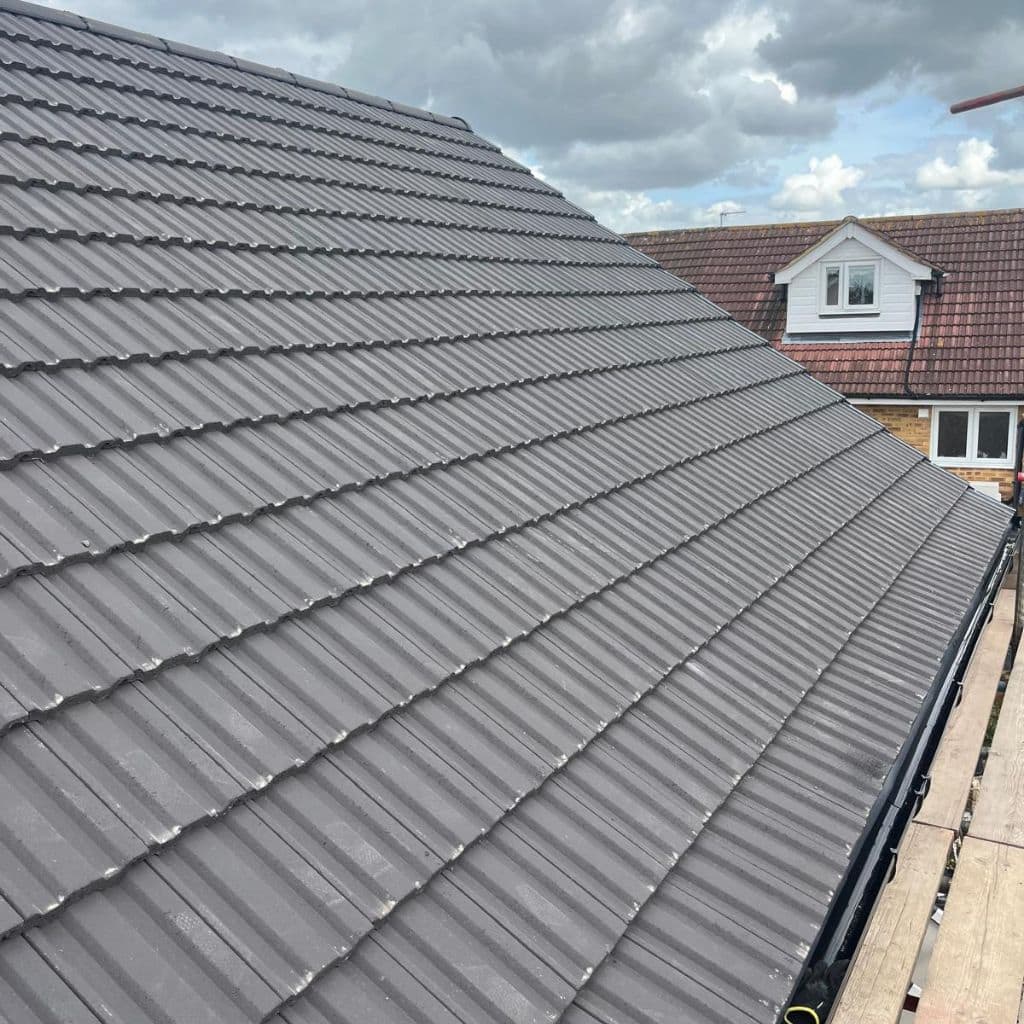
What does the tile roofing installation process involve?
Installing a new tile roof follows a five-stage process from survey through to completion. We document each stage with photographs and share the records with the homeowner.
Our installation process includes:
Survey and design: confirm pitch, agree tile choice, check planning for conservation properties
During the survey and design stage, we confirm the pitch, agree the tile choice, and check planning requirements for any conservation-area properties. Selecting the right tile roofing depends on the property’s age, planning context, roof pitch, and site exposure.
Scaffold and strip: edge protection on day one, old covering removed down to the deck
Edge protection is erected on day one, with a debris tunnel installed where access requires it. The old covering, battens, and underlay are then removed down to the deck during the strip stage.
Deck check and membrane: moisture readings taken, breathable HR underlay laid
Timber moisture readings are taken during the deck check stage, and any sections are spliced or replaced as needed. We do not proceed to the next stage where readings exceed 18%.
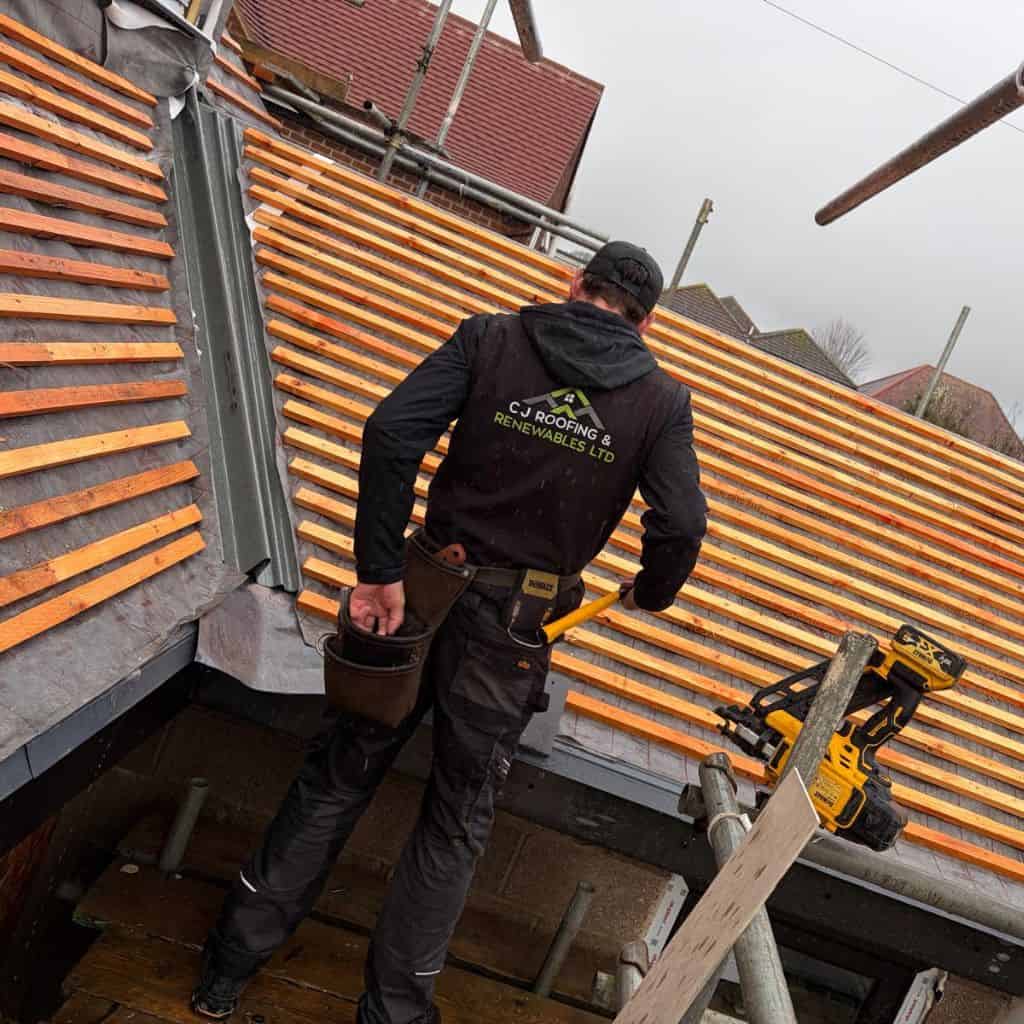
Breathable HR underlay is then laid and treated softwood battens are fixed at the tile manufacturer’s specified gauge, using stainless ring-shank nails.
Tile laying: start at eaves course, mechanically fix per BS 5534, every tile fixed in exposure zones
Tile laying begins at the eaves course. Tiles are mechanically fixed in accordance with BS 5534, with every tile fixed in exposure zones and alternate rows secured in sheltered locations.
The correct tile, fixed to BS 5534 standards, provides decades of reliable cover for the building.
Ridge and verge: dry-fix system as standard, mortared bedding only where conservation requires
A dry-fix system is used as standard at the ridge and verge. Mortared bedding is applied only where conservation consent specifically requires it.
How long does tile roofing installation typically take?
Tile roofing installation typically takes between four and ten days, depending on the size of the property and the complexity of the roof geometry.
Typical timings are:
- Standard three-bedroom semi-detached: 3 to 5 working days
- Detached property with hips and dormers: 7 to 10 working days
- Larger or more complex properties: up to 14 working days
Dry conditions are essential for underlay seating and any mortar work at the ridge. Work is halted on wet, frosty, or windy days with gusts above 25 mph for safety reasons, so winter installations generally allow for a number of weather-related delays. The scaffold remains in place for the entire project duration, with the noisiest period concentrated in days one and two during the strip. Homeowners can remain in their properties throughout the work.
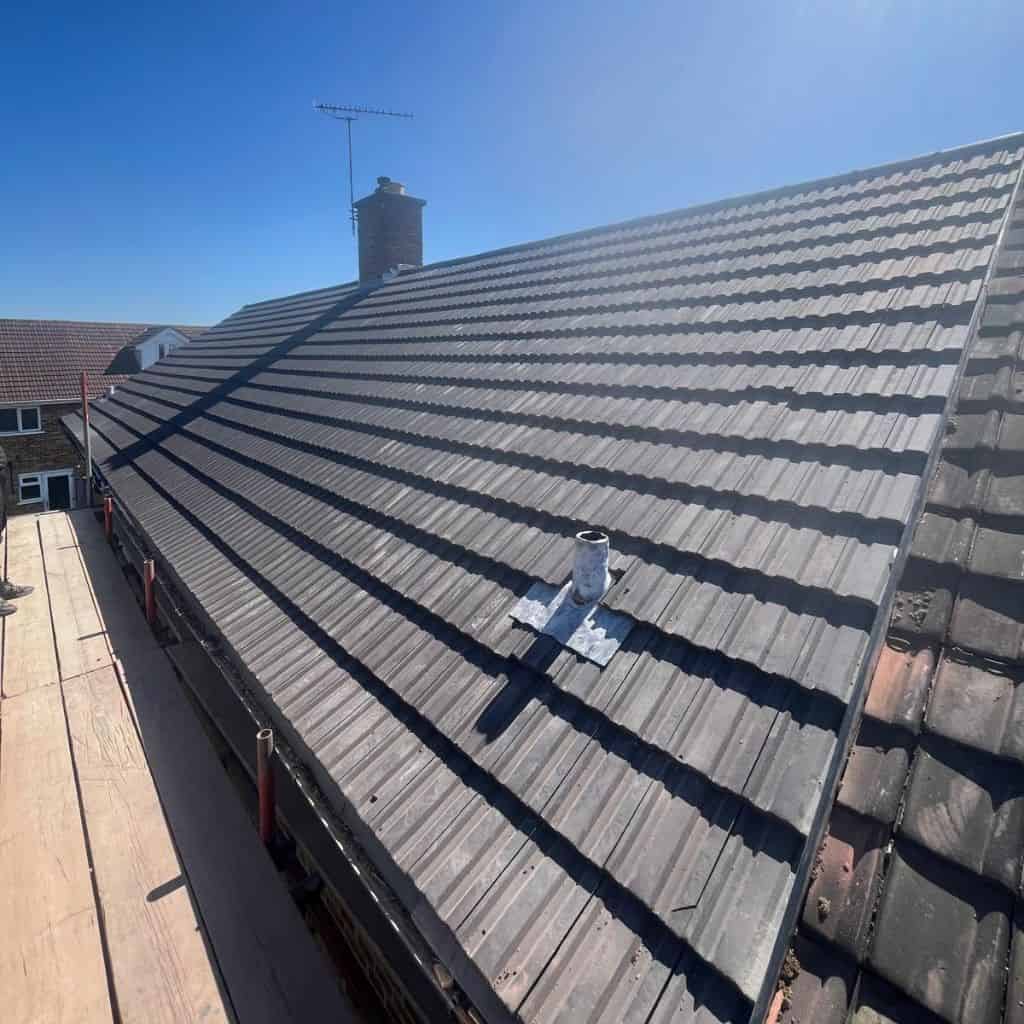
When is tile roofing the right long-term choice for a property?
Tile roofing offers one of the longest available lifespans for a pitched roof, with mid-range material costs and installation methods that a competent roofing contractor can carry out reliably.
Lifespan ranges by material:
- Concrete tiles: 40 to 60 years
- Clay plain tiles: 80 to 100 years
- Clay pantile: 70 to 90 years
The fixing system often reaches the end of its life before the tile does. Re-roofs on properties over 50 years old are usually required because of failed battens or nails rather than because the tiles themselves are worn out. Using 316 stainless ring-shank nails on new installations extends the fixing lifespan to match that of the tile, which is why we use stainless fixings on every coastal job and most inland ones.
Tile is an excellent long-term choice where the pitch is above 25°, where the owner plans to remain in the property over the medium to long term, and where the property’s age and planning context support tile use. For listed and conservation-area homes, slate roofing is often the more appropriate covering, and other coverings may suit shallow-pitch extensions and very modern building styles.
Why Choose C J Roofing & Renewables Ltd for Tile Roofing in Hampshire?
Over 15 years of experience
Connor and Jack bring over 15 years of combined hands-on roofing experience, delivering everything from small domestic repairs to large-scale commercial projects across Hampshire.

Locally based in Hampshire
Based in Portsmouth with deep local roots, we understand Hampshire's homes, weather and building styles, which allows us to deliver roofing work that lasts.
5-star rated service
We are proud to be rated 5 stars on Google by our customers, reflecting the quality of our workmanship and our commitment to reliable, professional service.
Competent & highly trained team
Our team is fully trained and certified in asbestos awareness, working at height and manual handling, ensuring every project is carried out safely and to industry standards.
£5 million public liability insurance
We carry up to £5 million in public liability insurance, giving you complete peace of mind that your property is fully protected while we work.
10 year workmanship guarantee
All new roof installations and replacements come with a 10-year workmanship guarantee, so you are covered in the unlikely event of any issues.







Frequently asked questions
Take a look at the Frequently Asked Questions regarding our Tile Roofing service.
How do tile roofs perform in strong wind and heavy rain?
Tile roofs are designed to withstand strong winds and heavy rain. BS 5534 divides the UK into wind-uplift zones, and coastal Hampshire properties from Portsmouth through Southampton to Lymington fall within exposure category 4 or 5. In these zones, every tile requires mechanical fixing rather than just alternate rows.
316 stainless ring-shank nails and proprietary tile clips significantly improve wind-uplift resistance on coastal roofs, which is why we use them on every job in exposure category 4 or 5 zones. Heavy rain is managed by the underlay beneath the tile covering: breathable HR underlay acts as a secondary defence against wind-driven rain that penetrates past the tile face, and the lap pattern ensures that any water reaching the underlay drains down the rafters to the gutter.
What maintenance does a tile roof require after installation?
Tile roofs require minimal routine maintenance. The maintenance schedule depends on the ridge type and the surrounding environment.
A typical maintenance schedule includes:
- Gutter clearance twice yearly, particularly in autumn after leaf fall
- Ridge mortar checks every 10 years on mortared ridges. Dry-fix eliminates this requirement entirely
- Valley flashing inspection after major storms
- Loft inspection every 2 to 3 years for unexpected damp or daylight
No other routine work is necessary. Moss and lichen growth on the tile face is generally cosmetic rather than structural and rarely requires intervention.
What happens if a roof tile is cracked or broken after installation?
If a single tile is broken, it is replaced using matched stock from the original delivery. For this reason, we leave 5 to 10 spare tiles with the property owner at handover, making replacement a straightforward service call rather than a sourcing exercise.
More extensive failures (multiple cracked tiles across a slope or whole-course damage) indicate a more significant issue. Common causes include storm damage and end-of-life fixings, both of which we address as separate services. We assess the scale of the problem during a survey and quote accordingly.
Can tile roofing be matched to the style of an existing home?
Yes, tile roofing can be matched to the style of an existing home. For current manufacturer ranges, we match the colour and profile to the original. For discontinued profiles, we source tiles from reclamation yards across the south of England.
Conservation areas often require like-for-like reclaim sourcing, as new clay tiles remain visually distinct from weathered originals for the first 10 to 20 years. We coordinate the reclaim search before starting the strip so that the project does not stall waiting for materials.
Extensions and additions use the same tile type and lay pattern as the main roof, ensuring the building presents as a single coherent covering rather than a patchwork.
What signs indicate that a tile roof may need repair or replacement?
A tile roof provides warning signs as it approaches the need for repair or replacement, with issues typically developing gradually.
Look for:
- Slipped or missing tiles across more than one slope
- Daylight visible from inside the loft through the deck or felt
- Damp patches on upper-floor ceilings after rain
- Cracked ridge mortar along the apex and hip lines
- Brittle fixings exposed at patched areas where earlier repairs have failed