Skylight Installation Hampshire
Skylight Installation Services in Hampshire
Skylights are designed to draw natural light into spaces where conventional windows are not practical – lofts, kitchens and bathrooms being the most common. A between-rafter unit can typically be installed within a single working day; a wider opening that requires rafter trimming usually adds half a day to the programme.
C J Roofing & Renewables Ltd specialises in skylight installation throughout Hampshire. The work covers cutting the opening, trimming rafters where required, and integrating the unit into the surrounding roof covering, whether on an existing roof or as part of a new roof installation. Each installation is supported by our 10-year workmanship guarantee.
Your written, itemised quote follows within 48 hours of the survey. Call 07512976384 to arrange a free quote. We respond within 48 hours.
Which roof types can accept a skylight?
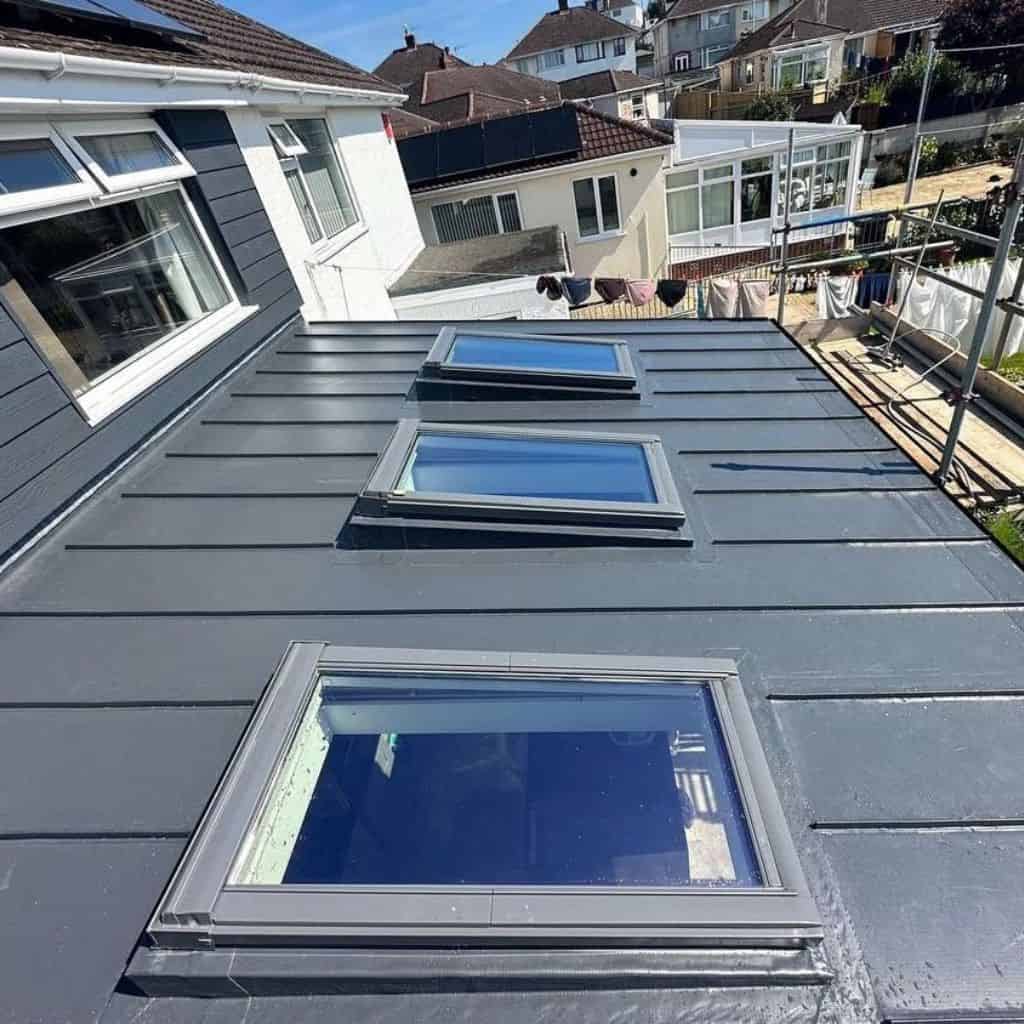
Pitched tiled roofs, slate roofs and flat roofs can all accommodate skylights, though each requires a different flashing approach. Most homes in Hampshire feature pitched roofs with angles ranging from 15 to 60 degrees.
The appropriate flashing method for each roof type includes:
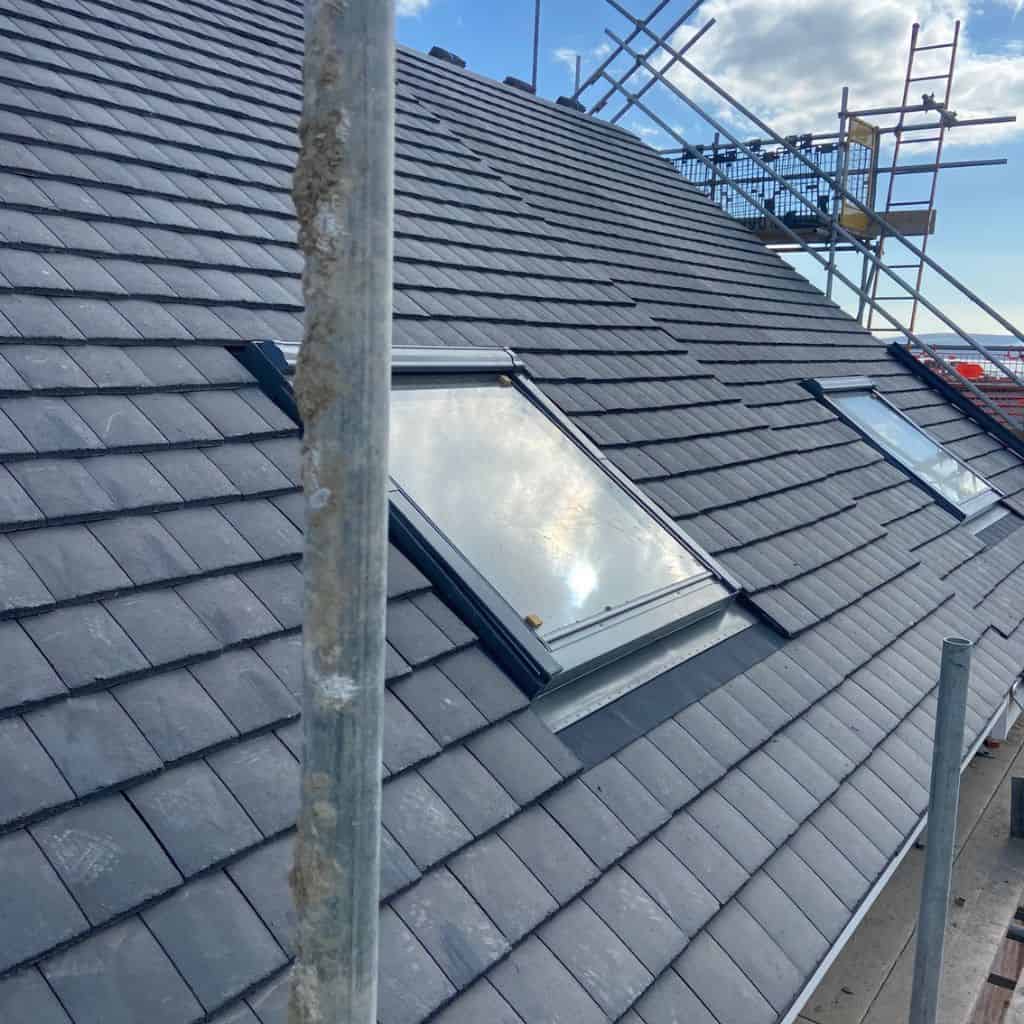
Pitched tiled roofs with interlocking tile flashings
Pitched tiled roofs can accommodate skylights using interlocking tile flashings tailored to the tile profile. Most homes in Hampshire feature pitched roofs with angles ranging from 15 to 60 degrees.
Slate roofs requiring deeper soakers for tight courses
Slate roofs can accommodate skylights, though they require deeper soakers to account for the tightly spaced courses. The appropriate flashing kit for slate roofs includes deeper soakers matched to that close spacing.
Flat roofs with 150mm timber kerb and membrane dressed over
Flat roofs can accommodate skylights by means of a 150mm timber kerb with the membrane dressed over it. On most extensions we bond EPDM to plywood, with counter-flashing crossing the top of the upstand to complete the weathering detail.
Steel-decked outbuildings with specialised fixings
Steel-decked outbuildings can accommodate skylights using specialised fixings matched to the deck thickness. The flashing kit selected for this roof type is chosen specifically to suit the deck profile and gauge.
Thatched cottages and listed buildings with additional regulations
Older thatched cottages are generally unsuitable for skylights, and listed buildings are subject to additional planning regulations. Conservation area properties are similarly governed by additional rules.
We always verify planning requirements before ordering the unit. Most pitched roof installations fall under permitted development.
Call 07512976384 to arrange a free quote. We respond within 48 hours.
How long does skylight installation take?
Most skylight installations are completed within one to two days from start to finish. The duration depends on roof access, unit size and the extent of the opening cut.
A standard roof window installed through pitched tiles takes four to six hours. Creating a new opening in the joists may add half a day to the programme, and heavy rain can cause minor delays.
For a twin skylight installation in a loft conversion, a two-person team typically completes the work within one working day. Some projects require a return visit for plastering around the skylight reveal.
Demand for skylight installations across Hampshire rises sharply in spring, so it is advisable to plan ahead during March, April and May. We provide a detailed day-by-day programme before any work begins.
What does our skylight flashing process involve?
Our skylight flashing process wraps the frame in five staged layers: apron, soakers, head flashing, counter-flashing and flat roof kerb detailing. Proper metal flashing is essential for a watertight installation – sealant alone is not sufficient.
Our on-site procedure includes:
Apron: dressed lead at the base, positioned over the tiles below
During the apron stage, we install dressed lead at the base of the unit, positioned over the tiles below. Our flashing process wraps the frame in four staged layers: apron, soakers, head flashing and counter-flashing.
Soakers: interleaved up each edge with each course of tiles or slates
During the soakers stage, we install individual soakers interleaved up each edge with every course of tiles or slates. A key indicator of quality workmanship is that no fixing penetrates the waterline.
Head flashing: tucked under the tiles above the unit
During the head flashing stage, we install flashing tucked under the tiles immediately above the unit. Properly fitted metal flashing is essential for long-term weather resistance; sealant alone is not an adequate substitute.
Counter-flashing: seals the lap where the apron meets the ridge
During the counter-flashing stage, we install the counter-flashing that seals the lap where the apron meets the ridge. This completes the four-stage sequence of apron, soakers, head flashing and counter-flashing around the frame.
Flat roofs: 150mm timber kerb with membrane dressed over and EPDM bonded
For flat roof installations, we fit a 150mm timber kerb with the membrane dressed over it, and bond EPDM to plywood on most extensions with counter-flashing crossing the top of the upstand. Galvanised or lead-coated steel is used where durability demands it.
Does the install need structural reinforcement?
Skylight installation requires structural reinforcement when the unit is wider than two rafters – a category that includes most medium and large frames.
The standard rafter spacing in Hampshire homes is 400mm or 600mm centres, which means any unit over 550mm wide will intersect at least one rafter. We reinforce the opening with doubled-up timbers and headers to redirect the load safely.
A medium-width unit can fit between 600mm-spaced rafters using header trimmers above and below, which often removes the need for engineer sign-off.
Structural engineer approval is required on certain projects. Steel beams are introduced when openings span three or more rafters, though domestic work rarely reaches that point.
Our survey establishes the full extent of the timber work needed before any cutting begins. Bypassing that assessment risks sagging joists and cracked plaster.
Where should skylights be positioned for the best light spread?
Skylights distribute light most effectively when positioned high on the roof slope, facing south or southwest. Higher placements outperform lower ones, and twin units set 600mm to 900mm apart provide even light distribution without creating hotspots.
North-facing units produce a cooler, more consistent light well suited to studios and bedrooms. Positioning a skylight directly above a desk is worth avoiding where glare is a concern.
Our layout planning follows a practical guideline: one square metre of glazing for every eight square metres of floor space. During the survey we use a sun-path model to illustrate how light will fall throughout the year.
For a kitchen extension, three north-facing units can be installed to limit summer heat gain, keeping the room cooler in July while maintaining consistent, well-distributed light.
We splay reveals at a 45-degree angle to further improve light distribution, and plaster the reveals white to maximise reflection.
Why Choose C J Roofing & Renewables Ltd for Skylight Installation in Hampshire?
Over 15 years of experience
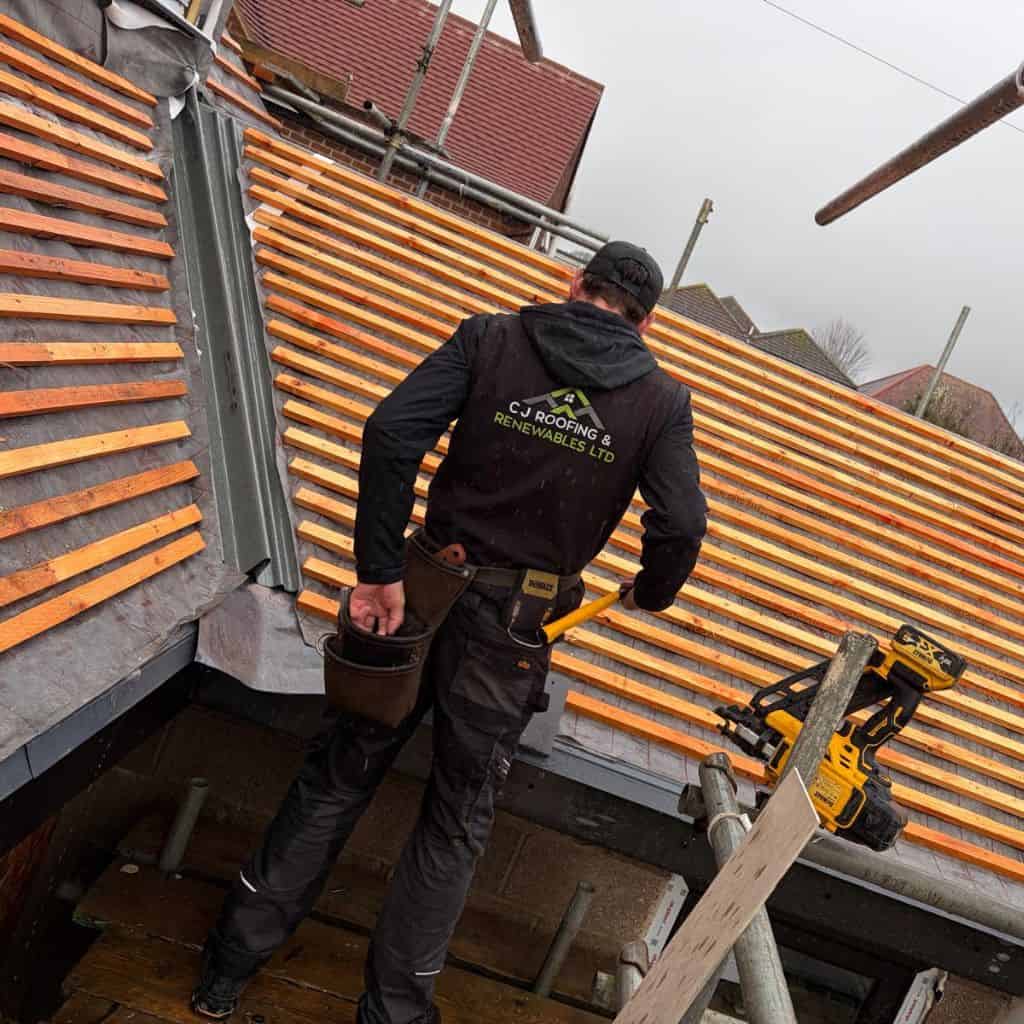
Connor and Jack bring over 15 years of combined hands-on roofing experience, delivering everything from small domestic repairs to large-scale commercial projects across Hampshire.

Locally based in Hampshire
Based in Portsmouth with deep local roots, we understand Hampshire's homes, weather and building styles, which allows us to deliver roofing work that lasts.
5-star rated service
We are proud to be rated 5 stars on Google by our customers, reflecting the quality of our workmanship and our commitment to reliable, professional service.
Competent & highly trained team
Our team is fully trained and certified in asbestos awareness, working at height and manual handling, ensuring every project is carried out safely and to industry standards.
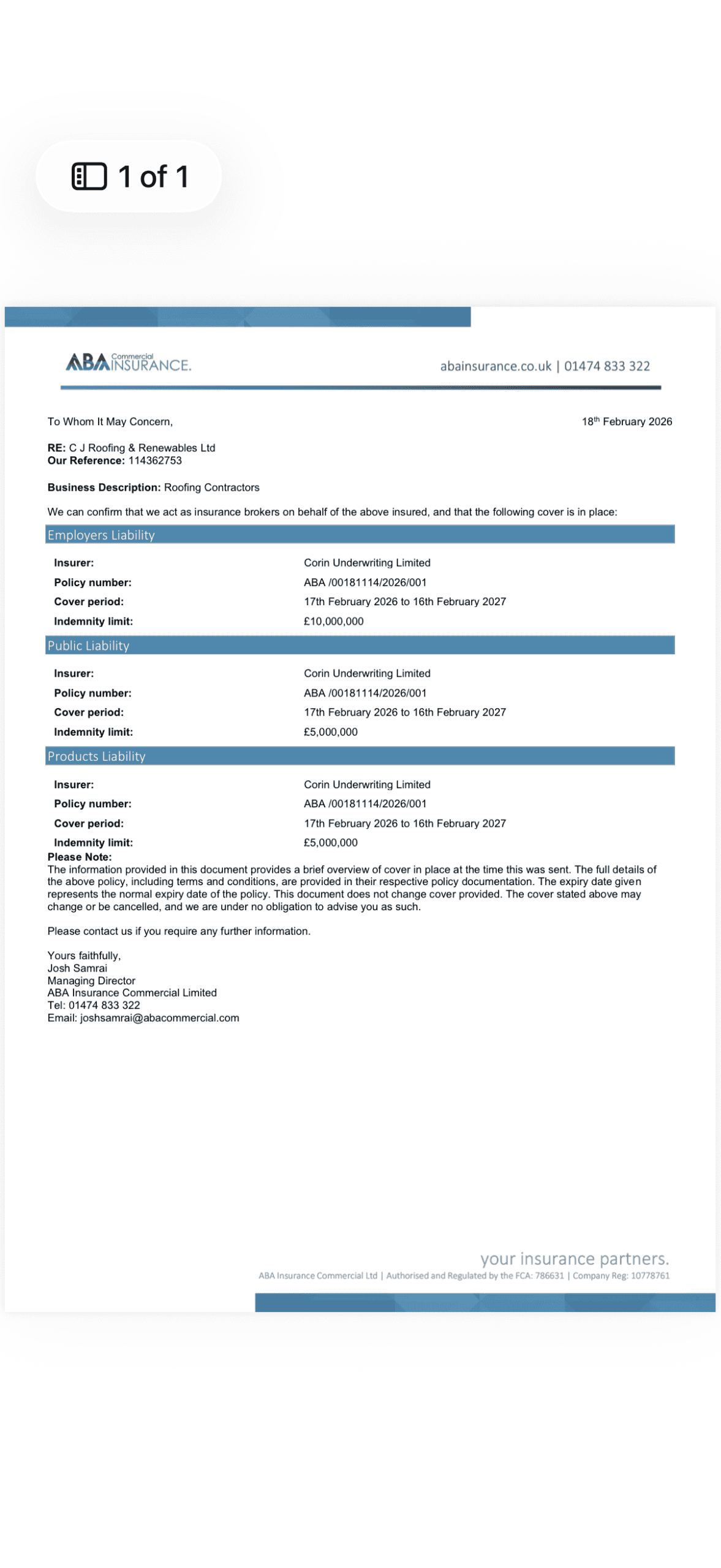
£5 million public liability insurance
We carry up to £5 million in public liability insurance, giving you complete peace of mind that your property is fully protected while we work.
10 year workmanship guarantee
All new roof installations and replacements come with a 10-year workmanship guarantee, so you are covered in the unlikely event of any issues.






Frequently asked questions
Take a look at the Frequently Asked Questions regarding our Skylight Installation service.
How does the cut affect ventilation and insulation?
Cutting the opening disrupts both the insulation layer and the ventilation path. We restore both using airtight detailing and continuous insulation around the frame.
A compromised vapour barrier can lead to condensation within the rafter zone over one or two winters. We seat the frame on a thermal collar that links wall insulation to roof insulation without creating a cold bridge.
We install tile vents above and below the opening to maintain airflow through the batten space, as most post-installation damp problems arise from disrupted vapour control rather than from leaks in the flashing.
Breathable membranes lap up and over the frame edges with taped joints. Insulation is butted tightly to the frame without compression, as compressed mineral wool loses thermal efficiency. Our airtightness standard keeps lofts warm and dry over the long term.
What building regulations apply?
Building Regulations Parts A, B, F and L each apply to skylight installation. Units in habitable rooms must achieve a U-value of 1.6 W/m²K or better; most modern units exceed this standard.
Means of escape provisions under Part B apply to loft conversions, requiring at least one skylight per room that opens to a clear 450mm by 450mm aperture.
Rafter trimming is governed by Part A, with timber sizes following the span tables in BS 5268. We notify building control when structural work alters the load path.
Listed buildings and conservation areas are subject to additional planning rules. We always verify planning requirements before ordering the unit. Most pitched roof installations fall under permitted development.
How do you protect the roof if weather closes in?
Heavy-duty PE sheets, battened down across the opening, provide protection against rain. Where possible, we aim to fit the frame on the same day as the cut.
Four primary weather risks influence every Hampshire installation:
- Squalls from the Solent during autumn
- Heavy rain in the New Forest causing schedule delays
- Winds above 25mph making scaffold work unsafe
- Frost on tiles before 9am during winter mornings
If a squall develops mid-afternoon, we pause the installation and tarp the opening promptly. We carry spare battens, tarps and tape on every job to prevent internal plaster damage from a single rain event, and every raw opening is securely covered overnight.
How do you clean and check the seals after fitting?
Skylights benefit from cleaning twice a year and a seal check every three to five years. Safe access is planned during the survey, not after installation.
We install top-pivot roof windows that rotate 180 degrees, allowing the exterior pane to be cleaned from inside the room. Units that are otherwise out of reach can be cleaned with a telescopic pole or a roof ladder.
On bungalow installations, we can fit a fixed pole hook to allow glass cleaning without the need for climbing.
Our standard installations are designed to last 25 to 30 years before the unit requires replacement, and as part of a skylight repair seal replacement kits can be fitted in approximately 30 minutes. For routine maintenance, use a dry PTFE spray on the handle mechanism and avoid solvent cleaners on the glazing seals.