Chimney Rebuilding Hampshire
Chimney Rebuilding Services in Hampshire
Chimney rebuilding involves dismantling a failed chimney stack and reconstructing it from the roofline up, addressing lean, cracked mortar and spalled brickwork in a single procedure. Where a stack has shifted structurally, patch repairs are no longer sufficient – a full rebuild is the most effective and lasting solution.
C J Roofing & Renewables Ltd specialises in chimney stack rebuilding throughout Hampshire. We ensure the brick, mortar and pot match your existing roof, rebuilding from a stable foundation. Every project is backed by our 10-year workmanship guarantee.
Your written, itemised quote follows within 48 hours of the survey. Call 07512976384 for a free quote. We respond within 48 hours.
What are the signs your chimney needs rebuilding?
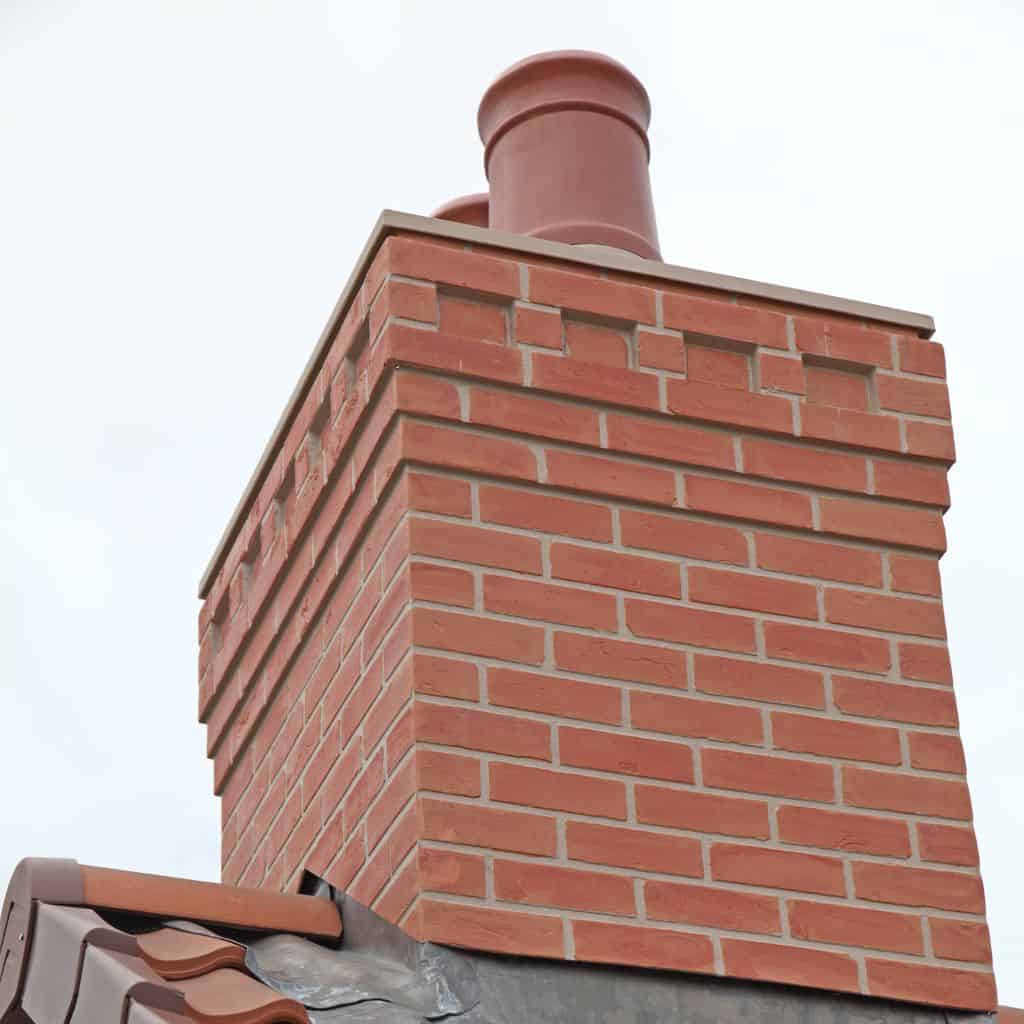
A leaning stack, crumbling mortar and spalled brick faces are clear indications that a chimney requires rebuilding. A patch chimney repair may provide temporary relief, but a complete rebuild addresses the root cause.
Common signs include:
A chimney stack that tilts from vertical when viewed from ground level
A leaning chimney stack is the most serious sign that rebuilding is necessary. Even a slight tilt when viewed from the ground indicates that the stack has shifted out of alignment, often due to foundation movement, frost damage or long-term mortar decay that has moved beyond chimney mortar repair.
A leaning stack is a structural risk. It can place stress on the roof structure and potentially collapse in severe weather. Once the stack has moved, patch repairs are no longer adequate.
Accumulation of pink-orange brick dust in the gutter
Pink-orange dust in the gutter or on the roof is a sign that the brick faces are spalling and breaking down. This material is the outer layer of the brick wearing away under the combined effect of moisture and freeze-thaw cycles.
This type of deterioration weakens the entire stack over time. The loss of brick material reduces structural integrity and usually indicates that the chimney is beyond simple repointing.
Open joints with mortar disintegrating into sandy powder
When mortar crumbles into sandy powder and falls out of the joints, the stack is no longer securely bonded. This level of mortar failure is common in older chimneys where lime mortar has reached the end of its service life.
Open joints allow water to penetrate deep into the stack, accelerating decay. When this is widespread, the chimney is often too compromised for repointing alone.
Cracked or missing chimney pot above the flaunching
A cracked or missing chimney pot exposes the flue to rain, debris and animals. This is often the result of storm damage, age or poor installation of the flaunching.
When the pot is damaged, water can enter the flue and deteriorate the internal structure. In severe cases, a missing pot can lead to internal damp and require a full rebuild if the surrounding brickwork is also compromised.
Damp tide marks visible on the chimney breast interior
Visible damp tide marks on the internal chimney breast indicate that water has already penetrated the stack and moved into the property. These marks are often brown or grey and may appear on multiple floors.
This indicates that the chimney’s weatherproofing has failed and water is tracking through the brickwork. If the stack is also showing external signs of decay, a rebuild may be the only long-term solution.
Chimney stacks in Hampshire, particularly along the coast, endure more rapid weathering due to salt, wind and frost. A visual inspection from your garden will identify most of these defects.
If you notice any of these issues on your chimney stack, contact us at 07512976384.
How does chimney rebuilding protect your home?
Rebuilding a chimney safeguards your home by restoring its vertical alignment. Unlike patch repairs, a complete rebuild integrates the chimney with the roof structure to ensure long-term stability.
Our process involves anchoring the new stack into the gable with stainless steel ties, fitting lead trays at gutter and apex levels to prevent water ingress, and installing a fresh flue liner to protect against acidic condensates.
The choice of mortar is important. We use natural hydraulic lime for period stacks and a cement-lime mix for modern stacks, both formulated to accommodate seasonal movement without cracking.
A properly rebuilt chimney also facilitates future sweep visits. It results in a straight flue, eliminating the offsets that older stacks often develop over time.
What does our chimney rebuilding process involve?
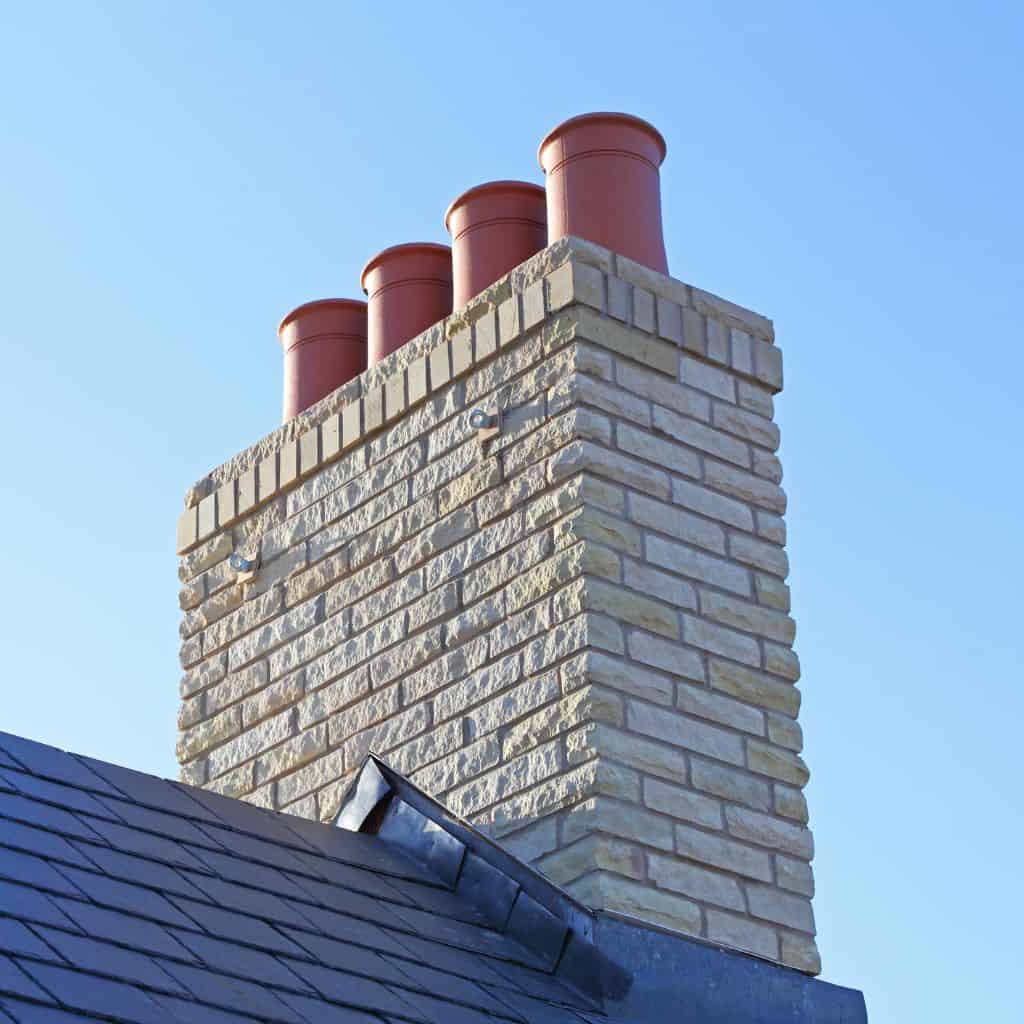
Our chimney rebuilding process follows six stages: survey, scaffold, dismantle, source, rebuild and weatherproof. The process begins with a comprehensive survey and a detailed sketch of each chimney face.
On-site activities include:
Survey: document the stack and plan the rebuild
We begin with a comprehensive survey, photographing all four elevations and documenting the brick bond, pot heights and flashing details. A detailed sketch is produced to guide the rebuild and ensure accuracy.
This stage ensures the new stack matches the original and that all defects are addressed in the plan before work begins.
Scaffold: erect safe access around the stack
We install scaffolding with a chimney horse to provide a stable, safe platform for bricklayers. This is essential for dismantling and rebuilding the stack without compromising the roof structure.
Scaffold requirements are determined by height and location and are clearly set out in the quote.
Dismantle and source: remove old bricks and match replacements
The stack is carefully dismantled from the top down, with sound bricks salvaged for reuse. New bricks are sourced to match the original in colour, size and texture, using salvaged handmade bricks for older or listed properties.
This preserves the chimney’s character while ensuring all damaged units are replaced.
Rebuild: install ties, liners and fresh mortar
The stack is rebuilt with stainless steel ties anchoring it to the gable, fresh flue liners for safety, and lead trays to prevent water ingress. Mortar is selected to suit the property’s age – natural hydraulic lime for period stacks and a cement-lime mix for modern ones.
This produces a structurally sound, weather-resistant chimney that meets current safety standards.
Weatherproof: fit pots, flaunching and flashings
The final stage includes installing new pots, laying fresh flaunching and dressing lead flashings to weatherproof the top of the stack. This ensures water sheds properly and the chimney is fully protected.
The rebuild is documented with photographs and backed by a 10-year workmanship guarantee.
What scope of rebuild does your chimney need?
The scope of your chimney rebuild is determined by stack height, the depth of decay and the degree of roof access required. We categorise the work into three tiers: roofline-up, partial rebuild and full rebuild.
A roofline-up rebuild addresses the top three to six courses while preserving the integrity of the stack below. It includes installing new pots, fresh flaunching and matched bricks to restore weather resistance.
A partial rebuild extends to the gutter line and is typical where brick decay has spread but the loft area remains sound.
A full rebuild involves the chimney breast inside the loft, often necessary after severe frost damage, a lightning strike or prolonged neglect. Plaster repairs to the bedroom walls below may also be required.
We provide quotes for all rebuild scopes during the survey, so you can compare your options with a clear understanding of what each involves. Where a stack is no longer in use, chimney removal can be a more economical alternative to rebuilding.
Why does proper chimney rebuilding protect long-term safety?
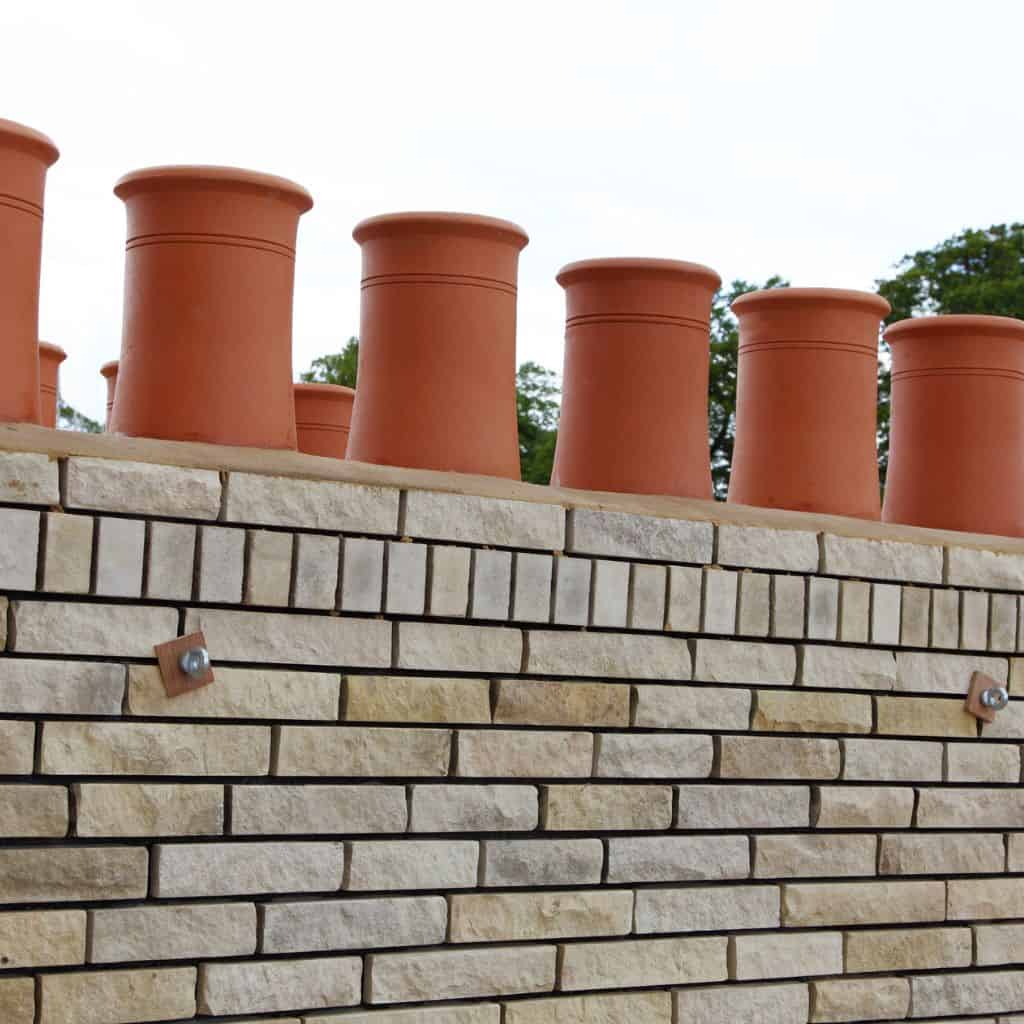
A properly rebuilt chimney enhances long-term safety by ensuring the stack can support its own weight and withstand winter storms. A neglected chimney stack can pose a risk to the roof, the rooms beneath it and people at ground level.
Hampshire stacks must cope with coastal winds and inland frost, and a correctly rebuilt stack is designed to handle both. We use frost-resistant bricks that withstand freeze-thaw cycles for decades, and hydraulic lime mortar on period stacks to prevent moisture from becoming trapped within the masonry.
Modern liners play an important role in safety by preventing flue gases from entering the living space. A new clay or pumice liner closes off the pathways through which gases might otherwise migrate, providing a safer environment for the property’s occupants.
Every rebuild is documented with photographs and a written guarantee, available for future reference by surveyors or insurers.
Why Choose C J Roofing & Renewables Ltd for Chimney Rebuilding in Hampshire?
Over 15 years of experience
Connor and Jack bring over 15 years of combined hands-on roofing experience, delivering everything from small domestic repairs to large-scale commercial projects across Hampshire.

Locally based in Hampshire
Based in Portsmouth with deep local roots, we understand Hampshire's homes, weather and building styles, which allows us to deliver roofing work that lasts.
5-star rated service
We are proud to be rated 5 stars on Google by our customers, reflecting the quality of our workmanship and our commitment to reliable, professional service.
Competent & highly trained team
Our team is fully trained and certified in asbestos awareness, working at height and manual handling, ensuring every project is carried out safely and to industry standards.
£5 million public liability insurance
We carry up to £5 million in public liability insurance, giving you complete peace of mind that your property is fully protected while we work.
10 year workmanship guarantee
All new roof installations and replacements come with a 10-year workmanship guarantee, so you are covered in the unlikely event of any issues.







Frequently asked questions
Take a look at the Frequently Asked Questions regarding our Chimney Rebuilding service.
How long does a chimney rebuild take?
A roofline-up rebuild on a typical Hampshire semi-detached home takes a few working days. A partial rebuild to the gutter line generally requires a week, while a full rebuild extending to the loft breast takes longer.
Weather conditions can affect the timeline, particularly in winter when low temperatures impede mortar curing. We allow additional time between November and March to accommodate adverse conditions.
We provide a detailed schedule outlining start and finish dates and each stage of the process, so you understand exactly what to expect before work begins.
How do you match period brickwork on Hampshire stacks?
We match period brickwork by sourcing handmade clay bricks from salvage yards. Georgian and Victorian stacks require bricks that correspond to the original kiln colour, texture and size.
The old stack is carefully dismantled and sound bricks are salvaged and cleaned for reuse. New bricks are introduced to fill gaps, maintaining the original bond pattern throughout.
For listed properties, conservation officers review the specifications before work begins. We provide sample panels for approval prior to commencing the main rebuild.
Does a chimney rebuild affect home insurance?
A documented chimney rebuild can positively influence home insurance by reducing the perceived risk associated with a deteriorated stack. We supply photographs, a written guarantee and a clear scope of work for your records.
Loss adjusters investigating storm damage claims look for evidence of a sound stack. Our rebuild documentation distinguishes clearly between sudden damage and pre-existing issues.
Surveyors writing pre-purchase reports frequently flag deteriorated stacks as defects, and a documented rebuild can address this concern. Mortgage lenders recognise it as proof of completed work.
Do you rebuild listed chimney stacks?
Yes, we rebuild listed chimney stacks across Hampshire. Listed building consent is required for properties built before 1840 and those within conservation areas.
Work on listed stacks uses lime mortar, salvaged bricks and matched pot profiles, with conservation officers reviewing the specifications before consent is granted.
Is scaffolding always required for chimney rebuilding?
Yes, scaffolding is required to provide bricklayers with a stable platform around the stack. This requirement is set out in the HSE Working at Height Regulations 2005.
For most semi-detached and terraced homes, we erect full scaffolding around the gable end. The platform supports the dismantling, rebuilding and removal of debris, with a chimney horse providing additional stability at the stack.
For smaller projects, lighter alternatives may apply. A chimney scaffold can be used for partial rebuilds. The access method is quoted separately during the survey.