uPVC Wall Cladding Hampshire
uPVC Wall Cladding Services in Hampshire
uPVC wall cladding encloses your home in a durable, weather-resistant layer that holds its shape and colour for over 25 years with very little effort. The boards are cleaned with a garden hose, removing the need for painting, oiling or sanding – a significant benefit for Hampshire homeowners who want a dependable exterior finish without ongoing maintenance.
C J Roofing & Renewables Ltd specialises in installing wall cladding across Hampshire, matching the profile, colour and trims to your home. Every installation is backed by our 10-year workmanship guarantee.
Your written, itemised quote follows within 48 hours of the survey. Call 07512976384 for a free quote. We respond within 48 hours.
How do you know whether uPVC wall cladding suits your home?
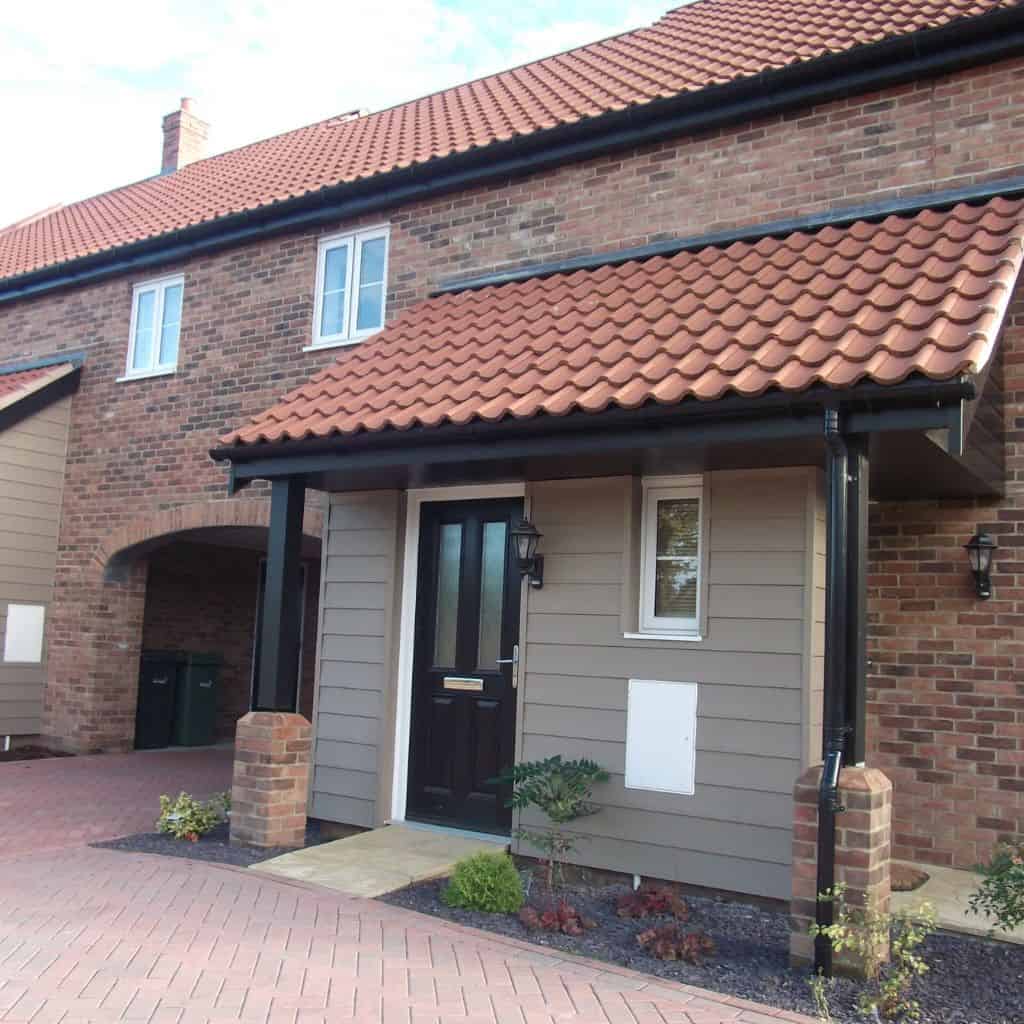
uPVC wall cladding provides a long-lasting, low-maintenance finish well suited to Hampshire homes where longevity is a priority. The boards are resistant to rot and require no painting, and routine cleaning with a garden hose is all that is needed to keep them in good condition.
Circumstances that point towards uPVC wall cladding as the right choice include:
A preference for a finish that requires no painting or oiling
uPVC wall cladding removes the cycle of painting, oiling and sanding that timber cladding demands. The boards hold their shape and colour for over 25 years with minimal intervention.
Maintenance is limited to a gentle wash every 6 to 12 months using a garden hose, warm soapy water and a soft brush. This makes uPVC a sound choice for homeowners who want a durable finish without the commitment of regular upkeep.
Proximity to the coast, where salt can corrode other materials
Homes near the coast are exposed to salt spray that corrodes metal fixings and degrades softer materials such as timber. uPVC is impervious to salt air corrosion and does not rot or chalk as older PVC formulations can.
Eurocell Coastline composite uPVC cladding is BBA-certified for coastal use, making it appropriate for homes along Hampshire’s coastline. Stainless A4 fixings are specified throughout to prevent rust in marine exposure zones.
A preference for a clean, modern appearance in white, grey or anthracite
uPVC cladding offers a sleek, contemporary aesthetic available in white, grey, anthracite and woodgrain foil finishes. Through-coloured boards resist fading more effectively than woodgrain foils and retain their hue throughout the warranty period.
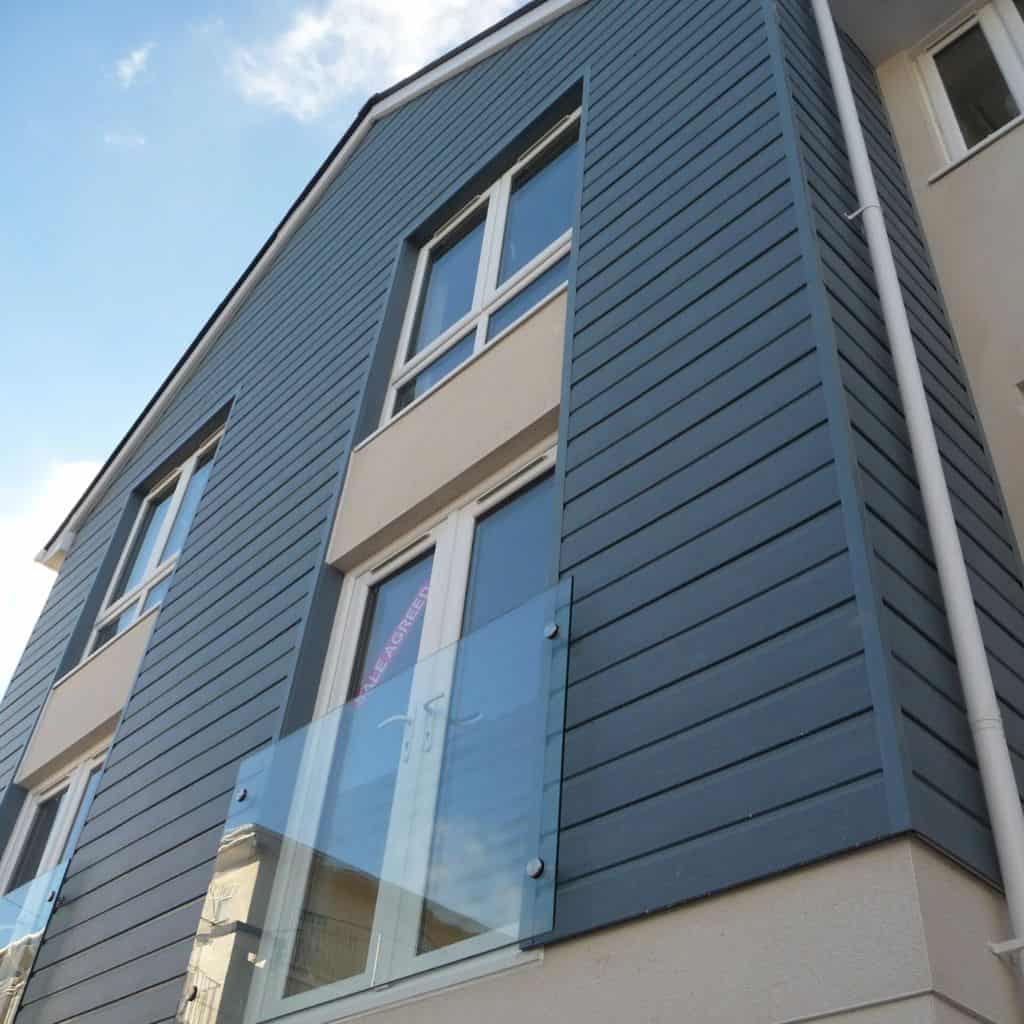
Anthracite Grey 7016 is a frequently chosen option for Hampshire extensions. Smooth boards with through-colour give a clean, contemporary result that sits well alongside modern home designs.
A requirement for faster installation compared with fibre cement
uPVC cladding installation is generally quicker than fibre cement, as the boards are lighter and easier to cut on site. This reduces labour time and the overall duration of the project.
The tongue-and-groove system with hidden clips allows efficient assembly. For homeowners who need a fast turnaround without compromising durability, uPVC is a well-suited option.
A need for a cost-effective, long-lasting exterior solution
uPVC wall cladding offers a cost-effective alternative to fibre cement cladding while still delivering 25 to 30 years of durability. It represents strong value for homeowners seeking longevity without the higher cost of premium materials.
Quality uPVC products frequently carry a manufacturer guarantee alongside the 10-year workmanship guarantee. Through-coloured boards maintain their tone more reliably than foil-laminated woodgrain, ensuring the investment endures.
uPVC wall cladding is available in a range of profiles, including weatherboard, shiplap and V-groove. Smooth boards with through-colour resist fading more effectively than woodgrain foils. Anthracite Grey 7016 is a frequently chosen finish for Hampshire extensions.
If you are considering uPVC wall cladding for your home, contact us at 07512976384 to arrange a survey.
Why does quality uPVC outlast thin-walled boards?
Quality uPVC wall cladding is built to last 25 to 30 years on Hampshire homes when installed to BBA-certified standards. The cellular foamed core is engineered not to swell, split or rot over time.
Our installations use polyvinyl chloride enhanced with UV stabilisers and impact modifiers. This polymer resists photo-degradation, preventing discolouration of white boards on south-facing elevations, and the factory finish is unaffected by salt-laden coastal air.
We specify hidden-clip tongue-and-groove systems, which outlast face-fixed weatherboards by shielding fixings from UV light and rain. Thin-walled boards are prone to cracking from minor impacts, which is why we offer only BBA-certified options.
Through-coloured boards maintain their hue throughout the warranty period, whereas woodgrain foils may peel at exposed edges after extended sun exposure. Quality uPVC products frequently carry an additional manufacturer guarantee.
What does our uPVC wall cladding installation involve?
Our uPVC wall cladding installation follows five defined stages. Each phase addresses the potential points at which water might otherwise enter the wall.
The on-site process includes:
Substrate preparation: confirm the wall is plumb and sound
We begin by confirming the wall is plumb, repointing any loose brickwork and replacing compromised timber. A solid, level substrate is essential for a stable cladding installation.
Any rotten battens are removed and replaced with treated timber. This step ensures the new cladding has a secure foundation and prevents structural issues from developing beneath the boards.
Breather membrane: fix a UV-stable facade breather membrane
A UV-stable facade breather membrane is secured over the substrate, with every overlap taped to prevent water ingress. The membrane protects the wall behind the cladding while allowing moisture to escape.
This layer is critical for maintaining the integrity of the wall and preventing condensation from building up within the cavity behind the boards.
Battens: install treated vertical battens at 600mm centres
Treated vertical battens are installed at 600mm centres, with additional battens included for cross-ventilation patterns. For coastal projects near the shore, batten centres are reduced to 400mm to improve wind-load resistance.
A continuous 25mm cavity is maintained for air circulation, with insect mesh fitted at the top and bottom to prevent pest entry and allow moisture to drain freely.
Boards: assemble tongue-and-groove boards with stainless fixings
Tongue-and-groove boards are assembled and secured with stainless A4 ring-shank nails or screws. Hidden-clip systems are used where possible, as they shield fixings from UV light and rain and outlast face-fixed weatherboards in service.
Hurricane clips are installed at each batten intersection to provide wind uplift resistance on exposed elevations. We specify only BBA-certified uPVC options, as thin-walled boards are susceptible to cracking from minor impacts.
Trim detail: apply starter, J-trims, corner and reveal trims
Starter trims, J-trims, corner trims and window-reveal trims are applied to seal every edge. Closed-end profiles are used at corners and reveals on coastal projects to prevent water ingress at exposed junctions.
Window reveal mastic can last up to 15 years and is replaced during service visits. The installation is backed by a 10-year workmanship guarantee covering fixings, junctions and weatherproofing details, with the manufacturer product warranty included in the job pack.
How does uPVC wall cladding perform in coastal Hampshire conditions?
uPVC wall cladding withstands the demanding conditions of exposed Hampshire elevations through the use of stainless A4 fixings and hurricane clips. The polymer boards are impervious to salt air corrosion and do not rot like timber or chalk as older PVC formulations can.
Eurocell Coastline composite uPVC wall cladding is BBA-certified for coastal use and is appropriate for homes along Hampshire’s coastline.
Wind uplift is a critical design consideration on exposed elevations:
- Hurricane clips installed at each batten intersection
- Batten centres reduced from 600mm to 400mm near the shore
- Closed-end profiles used at corners and reveals
- Stainless A4 fixings rated for marine exposure throughout
This specification improves wind-load resistance on elevations where strong south-westerly winds frequently apply pressure. We apply the full coastal build-up to every project with sea views.
What maintenance does uPVC wall cladding require?
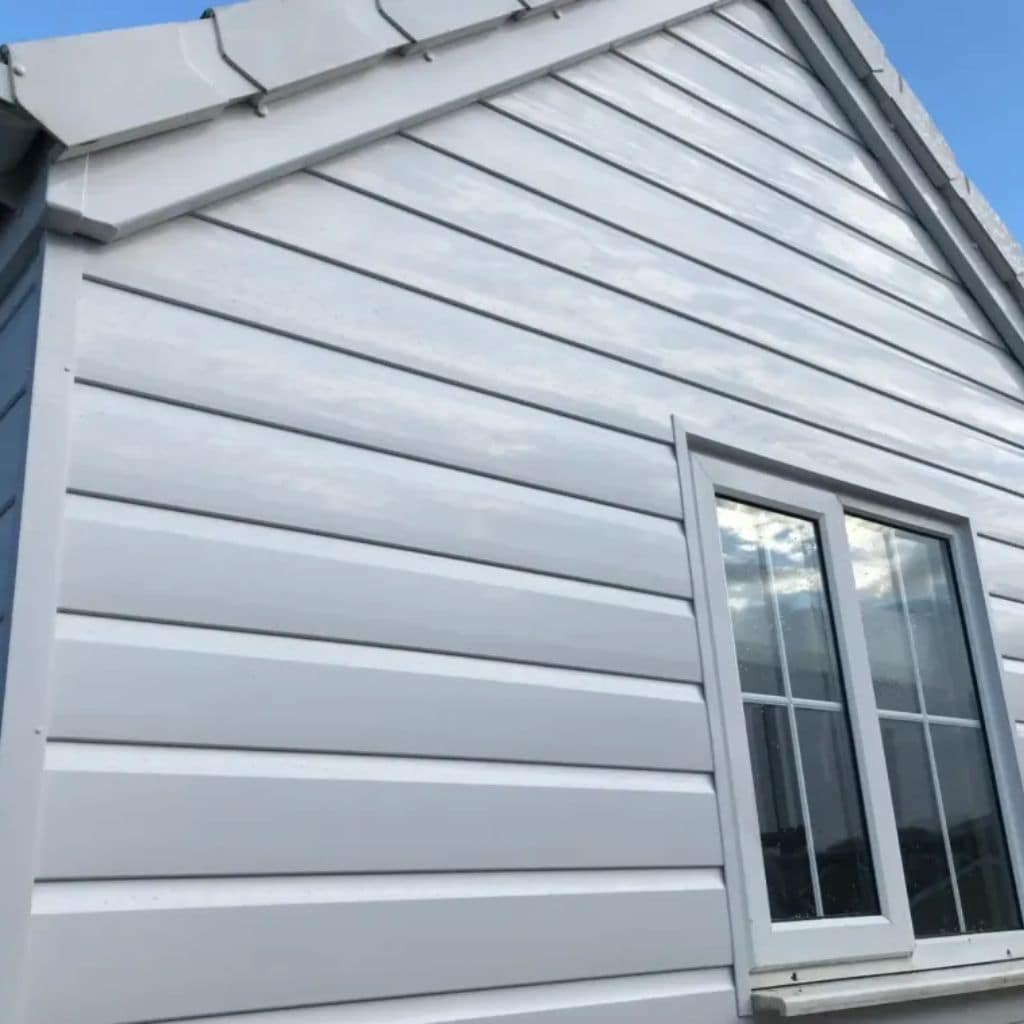
uPVC wall cladding requires a gentle wash every 6 to 12 months and a visual check of the fixings every five years. No painting, oiling or sanding is necessary at any stage.
Routine cleaning uses a garden hose, warm soapy water and a soft brush. High-pressure jets should be avoided, as they can damage the gloss of textured woodgrain foils and force water past window reveal upstands.
Algae on north-facing elevations can be treated with a diluted bleach solution or a benzalkonium chloride wash. Window reveal mastic has a service life of up to 15 years and is replaced during service visits.
We repair impact damage using colour-matched fillers, and annual gutter cleaning prevents overflow staining from marking the boards. Inspect your elevations each year for any rust staining at fixing heads.
Why Choose C J Roofing & Renewables Ltd for uPVC Wall Cladding in Hampshire?
Over 15 years of experience
Connor and Jack bring over 15 years of combined hands-on roofing experience, delivering everything from small domestic repairs to large-scale commercial projects across Hampshire.

Locally based in Hampshire
Based in Portsmouth with deep local roots, we understand Hampshire's homes, weather and building styles, which allows us to deliver roofing work that lasts.
5-star rated service
We are proud to be rated 5 stars on Google by our customers, reflecting the quality of our workmanship and our commitment to reliable, professional service.
Competent & highly trained team
Our team is fully trained and certified in asbestos awareness, working at height and manual handling, ensuring every project is carried out safely and to industry standards.
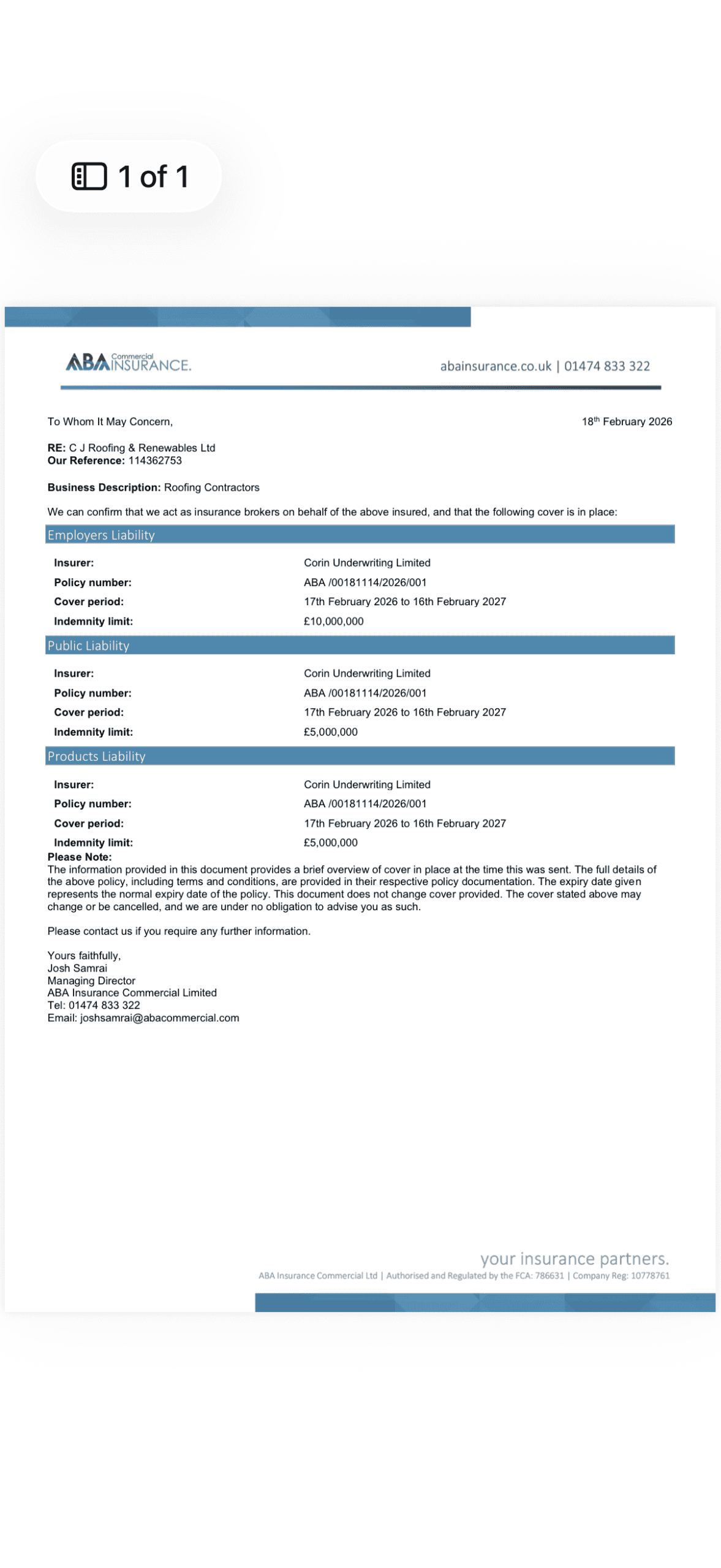
£5 million public liability insurance
We carry up to £5 million in public liability insurance, giving you complete peace of mind that your property is fully protected while we work.
10 year workmanship guarantee
All new roof installations and replacements come with a 10-year workmanship guarantee, so you are covered in the unlikely event of any issues.






Frequently asked questions
Take a look at the Frequently Asked Questions regarding our uPVC Wall Cladding service.
What guarantee comes with a uPVC wall cladding installation?
Our uPVC wall cladding installations include a 10-year workmanship guarantee covering fixings, junctions and weatherproofing details. The board manufacturer provides an additional product warranty, and both certificates are issued with your job pack at completion.
Do you carry out a site survey before providing a quote?
Yes. Every uPVC wall cladding quote begins with a free, no-obligation site survey so that the specification can be confirmed before any costs are presented.
Can uPVC wall cladding be used on listed or conservation-area properties?
uPVC wall cladding can sometimes be approved for Grade II conversions and curtilage outbuildings, subject to written listed-building consent being obtained. It rarely meets the approval criteria for Grade I or II* buildings.
Hampshire is home to a significant number of listed structures. Conservation officers typically inspect sample boards first, and approval depends on how closely the chosen profile matches the original facade. We install uPVC in profiles that replicate the appearance of painted softwood when viewed from three metres.
Reversibility assists in obtaining consent, as the boards are fixed to a rainscreen frame that preserves the underlying masonry.
What colours are available for uPVC wall cladding?
Popular choices across Hampshire include chalk whites, anthracite greys, sage greens and dusky browns. Near the Solent, Agate Grey RAL 7038 and Cream 9001 are frequently specified for their ability to hold up in bright coastal light.
Through-coloured boards retain their tone more reliably than foil-laminated woodgrain finishes. Final colour selection is confirmed using sample boards viewed in daylight on the actual elevation, as printed swatches often differ from the panel in situ.
How is ventilation maintained behind uPVC wall cladding?
A continuous 25mm cavity provides air circulation behind the uPVC boards. Insect mesh is installed at the top and bottom of the cavity, allowing it to drain moisture and dry the rear face of the boards between weather events.
Mesh vents at the base are positioned 150mm above ground level to prevent splashback and deter pest ingress. Eaves vents at the top transfer rising air into the roof space, and stainless mesh prevents rodents and insects from entering the cavity.
Without this cavity, condensation can cause batten decay within five years. For this reason, we always install the complete ventilated build-up on every uPVC wall cladding project.